Seeing insect bites baby on soft skin can be startling: a fast-rising bump, a swollen eyelid that seems to appear from nowhere, a baby who keeps rubbing their face against your shoulder. Is it “just a mosquito”? Is it infected? Could it be an allergy? The reassuring part is that most insect bites baby reactions stay local and settle with simple care: cooling, cleansing, and protecting the skin barrier, while a small set of warning signs tells you when to seek help quickly.
Insect bites baby: the first 10 minutes (clean, cool, protect)
A good reflex is to look at your baby before you look at the bite. Are they breathing comfortably? Feeding normally? Alert in their usual way? If yes, you can move step by step.
- Wash hands, then rinse the area with mild soap and lukewarm water. Pat dry, rubbing increases inflammation in thin infant epidermis.
- If the skin is open (scratching, tiny break), apply an alcohol-free antiseptic.
- If you see a stinger (honeybee), remove it fast by scraping with a dull edge (card). Avoid squeezing.
- Apply a cold compress (wrapped cold pack or cool wet cloth) 5 to 10 minutes, pause, repeat. No ice directly on skin (cold burn risk).
- On intact skin, add a thin layer of fragrance-free emollient or petroleum jelly to reduce friction.
- Cut nails short, file edges, mittens at night can help if tolerated.
You wonder if “doing nothing” is safer? Usually, gentle cooling plus skin protection is exactly the right “something”.
What to watch in the first hours
Local redness and swelling are expected. What matters is whether the reaction stays local or becomes generalized.


Call for urgent help if you notice whole-body symptoms such as:
- hives far from the bite
- repeated vomiting
- wheeze, noisy breathing, or a hoarse cry
- swelling of lips, tongue, or face
- drooling or trouble swallowing
Those patterns can fit anaphylaxis, which needs emergency care.
What is typical after insect bites baby, and what is not
Why reactions can look big in infants
Infant skin is thinner and more permeable, and immune responses (histamine release, local inflammation) can look exaggerated. Two mechanisms explain the classic “large bump”:
- Vasodilation (blood vessels widen): redness, warmth
- Edema (fluid shifts into tissues): swelling, especially on the face where tissues are looser
A puffy eyelid can therefore be impressive and still remain a localized reaction. Monitor closely.
Usual timeline
Most insect bites baby lesions:
- itch more than they hurt
- peak in redness and swelling within 24 to 48 hours
- fade over a few days (sometimes a week)
A common pattern: swelling “moves” with gravity (forehead bite: puffy eyelid the next day). Not automatically a worsening.
One bite versus many bites
A single lesion often points to mosquitoes. Multiple bites, especially after sleep or in clusters, suggests repeated exposure: mosquitoes indoors, bed bugs, fleas, or grass mites.
More bites also means more scratching, more skin barrier breakdown, and a higher chance of secondary infection.
When it starts to look concerning
Seek medical advice if you notice:
- redness that keeps spreading hour by hour, increasing tenderness (pain more than itch)
- fever, poor feeding, unusual sleepiness, irritability that is hard to soothe
- oozing, pus, or expanding crusts
Identifying insect bites baby: practical clues (plus common look-alikes)
Many skin reactions look similar (papules, wheals, redness), so context often matters more than the exact shape. Think about where your baby has been in the last 24 hours: grass, pets, travel, open windows, a new daycare nap mat.
Mosquito bites
Round itchy bumps on exposed areas (face, arms, legs). Some babies develop a large local reaction (sometimes called “Skeeter syndrome” in older children), which is uncomfortable but not the same as an infection.
Clues: dusk exposure, open windows, bites on uncovered skin.
Bed bugs
Clusters or lines (often 3 to 4) appearing after sleep, on neck, shoulders, arms, or face.
If it repeats, inspect mattress seams and bed frame, hot wash plus high-heat drying for textiles helps.
Fleas
Small, very itchy papules in groups, often ankles and lower legs.
Clues: pets, rugs, visiting another home.
Grass and mites (chigger-like pattern)
After time in grass, itchy bumps near tight clothing lines: socks, waist, behind knees, diaper edges.
Ticks
The key sign is the tick attached, often painless at first. Check scalp and hairline, behind ears, neck folds, armpits, groin, behind knees, diaper edges.
After removal, watch for weeks for fever, unusual fatigue, or a new expanding rash.
Spiders, horseflies, ants, and wasps
True spider bites are uncommon, many suspected cases are actually infections or other bites. Seek care if there is severe pain, blistering, a dark center, or fever.
Horsefly bites tend to hurt more and swell hot and wide. Ant stings can appear as multiple painful spots, sometimes with tiny blisters. Wasps and hornets cause immediate sharp pain, honeybees can leave a stinger.
When it may not be a bite
Consider look-alikes if the pattern does not fit exposure:
- Atopic dermatitis flare (eczema): dry, scaly, itchy patches
- heat rash: tiny bumps in sweaty folds
- contact dermatitis: where wipes, diapers, detergents touch
- viral rash: widespread spots with cold symptoms or fever
- scabies: intense itch, worse at night, may affect caregivers
Home care: soothe itch, prevent the itch-scratch spiral
The biggest complication of insect bites baby is not the bite itself, it is scratching that breaks the skin barrier and lets bacteria in.
Cooling and barrier care
- Cold compresses reduce histamine-driven itch.
- Moisturize with a simple, fragrance-free cream, on intact skin, a thin petrolatum layer can reduce rubbing.
- Dress in light cotton, heat worsens pruritus (itch).
Simple itch helpers that often work
Parents often ask, “Is there something baby-safe I can put on it?” Options vary with age and skin condition.
- Colloidal oatmeal bath can soothe widespread itch, pat dry, then moisturize.
- Calamine can be dabbed sparingly on intact skin, away from eyes and mouth, stop if irritation appears.
- If bites are near the diaper area, change diapers promptly and use a barrier cream to reduce friction (urine and stool can sting inflamed skin).
Aloe vera (when appropriate)
A baby-appropriate aloe gel can be soothing if alcohol-free and fragrance-free. Patch test on a small area, stop if redness increases.
Sleep and comfort
Itch often intensifies at night. A cooler room, breathable pajamas, and the usual calming routine can reduce rubbing. If your baby scratches during sleep, mittens may help, but only if they do not frustrate or overheat your baby.
What to avoid on insect bites baby
Delicate infant skin absorbs more than adult skin. Some popular “tricks” backfire.
Avoid:
- suction gadgets (bruising, skin injury)
- ammonia, vinegar, toothpaste, rubbing alcohol (irritant dermatitis)
- undiluted essential oils or homemade blends (burns, allergy, toxicity)
- topical benzocaine or lidocaine (absorption risk, benzocaine can trigger methemoglobinemia)
- strong topical antihistamines on the skin (irritation and absorption)
- adult-strength topical steroids
Indoor scented diffusers or “anti-mosquito” candles may irritate airways, prefer screens and physical barriers.
When medication may help (talk with a clinician first)
Sometimes simple care is not enough: itch is intense, swelling interferes with sleep, or the bite is on the face.
A clinician may suggest:
- Low-strength hydrocortisone (0.5 to 1 percent) for a short course on a small area of intact skin. Extra caution on the face, avoid eyelids unless explicitly advised.
- An antihistamine (usually oral, depending on age and symptoms). Dosing and choice must match your baby’s age and weight.
- For pain-dominant stings (wasp, horsefly), weight-based acetaminophen may be considered. Ibuprofen is generally used from about 6 months, avoid it if infection is suspected.
If there is no clear improvement in 2 to 3 days, or if things worsen, recheck with a clinician.
Complications: infection, allergy, emergency signs
Secondary bacterial infection
Call for medical advice if the area becomes more red, hot, swollen, and tender, or if it spreads beyond the original bite. Pus, weeping, or thick crusting also matters.
“Honey-colored” crusts can suggest impetigo (a superficial skin infection caused often by Staphylococcus aureus or Streptococcus pyogenes) and needs assessment.
Allergic reaction beyond the bite
More concerning than local swelling:
- widespread hives
- facial or lip swelling away from the bite
- vomiting, wheeze, hoarse cry
Anaphylaxis (emergency)
Call emergency services immediately for trouble breathing, swelling of lips, tongue, or throat, drooling or trouble swallowing, repeated vomiting, pallor, limpness, collapse, or unusual drowsiness.
If your child has a prescribed epinephrine auto-injector, use it at the first signs, then go to emergency care for observation.
When to contact a clinician
Babies under 3 months
Any significant insect bites baby reaction deserves prompt medical contact. Fever (rectal 38°C / 100.4°F or higher), poor feeding, or lethargy needs urgent evaluation.
For any age, seek advice if
- symptoms are not clearly improving after 24 to 48 hours
- swelling affects vision, feeding, sleep, or limb movement
- the bite is near the eye or mouth and swelling progresses quickly
- your baby seems unwell, with or without fever
Travel or high-exposure areas change the threshold: fever after multiple bites should be assessed.
Tick bites: remove safely, then monitor
Tick checks after outdoor time
After parks, gardens, hikes, or playing near bushes, check:
- scalp and hairline, behind ears
- neck folds
- armpits and elbow creases
- belly button, groin, behind knees
- diaper edges, skin folds, between toes
Removing a tick
- use fine-tipped tweezers
- grasp close to the skin
- pull straight up with steady pressure (no twisting)
- wash hands and skin with soap and water
Avoid oil, petroleum jelly, alcohol, nail polish, ether, or heat to force detachment, these may increase regurgitation.
After removal
Note the date and location and watch for fever, new expanding rash, or behavior changes over the next weeks.
Sensitive areas and special scenarios
Bites on the face or eyelid
Eyelid tissue is loose, so fluid collects fast. Use cold compresses and prevent rubbing.
Seek prompt care if the eyelid is swollen shut, painful, there is discharge, or fever appears. Clinicians may want to rule out periorbital cellulitis (a bacterial infection around the eye).
Multiple bites or widespread rash
Multiple new bites raise the possibility of fleas, bed bugs, or repeated mosquito exposure indoors. Check pets, bedding, carpets, and sleep spaces.
Seek advice if the rash is widespread, extremely itchy, or paired with fever.
Blistering reactions
Do not pop blisters. Keep the area clean and covered with soft clothing. Ask for pediatric advice if blisters are large, painful, surrounded by spreading redness, or if your baby seems unwell.
Prevention: fewer bites, calmer nights
Preventing insect bites baby often works best with layers of simple measures.
Physical barriers
- long sleeves and pants when feasible
- light-colored, loose clothing
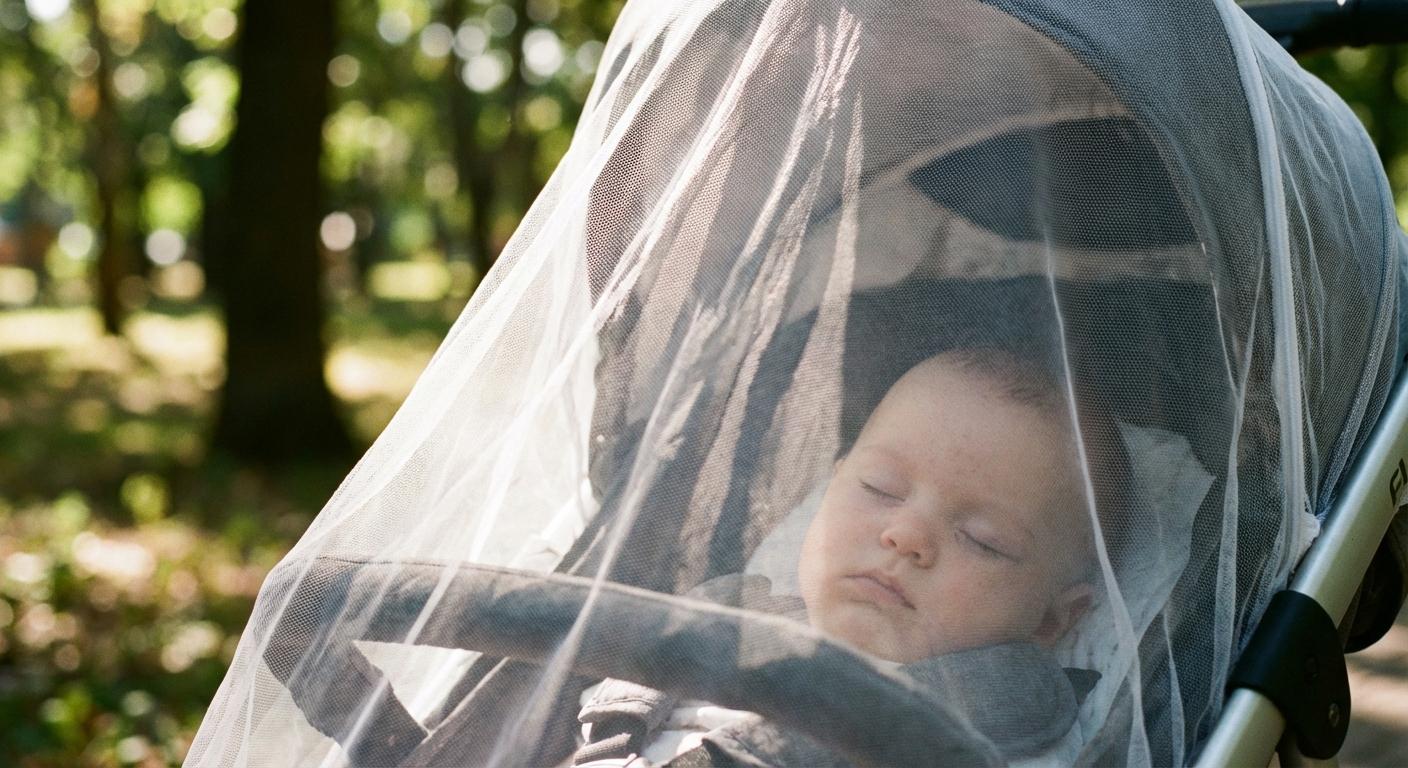
- stroller or crib netting (safe fit, good airflow)
- intact window and door screens
- a fan in the room can reduce mosquito landings (do not aim airflow directly at your baby)
Reduce exposure at home
- empty standing water outside (mosquito breeding)
- avoid peak mosquito hours when possible (often dusk)
- address bed bugs and fleas by treating the environment (hot wash, vacuuming, treat pets when needed)
Avoid spraying insecticides in baby sleep areas.
Baby-safe repellents
For babies 2 months and older, choose an EPA-registered repellent with DEET or picaridin and follow the label.
- Under 2 months: no repellent on the baby: use barriers only.
- Avoid oil of lemon eucalyptus/PMD under 3 years.
Safer application:
- apply to your hands first, then smooth onto exposed skin or clothing
- use the lowest effective concentration for the time outdoors
- avoid eyes, lips, hands and fingers (hand-to-mouth behavior), broken skin, and eczema flares
- do not apply under clothing (occlusion can irritate)
- wash skin when back indoors, launder clothing normally
Key takeaways
- insect bites baby reactions are usually localized (itchy red bump, swelling) and peak within 24 to 48 hours.
- Clean gently, cool the area, protect the skin barrier, and reduce scratching to prevent infection.
- Warning signs for infection include spreading redness, warmth, increasing pain, pus or crusting, and fever.
- Emergency signs include breathing trouble, swelling of face, lips, or tongue, widespread hives with vomiting, pallor, limpness, or collapse.
- For support, your healthcare team can guide treatment choices, and you can download the Heloa app for personalized guidance and free child health questionnaires.
Questions Parents Ask
Can a baby have a fever from an insect bite?
A mild temperature can happen if your baby is uncomfortable, but a true fever is more often linked to a virus or, more rarely, a skin infection. If your baby is under 3 months, any fever deserves prompt medical advice. For older babies, consider checking in if fever comes with increasing redness, warmth, tenderness, pus, or a baby who seems unusually sleepy or hard to feed. You’re not overreacting—fever changes the picture and it’s normal to want reassurance.
What does an infected insect bite look like on a baby?
A typical bite is usually itchy and peaks in swelling within 1–2 days. Infection tends to look different: the area becomes more painful than itchy, redness keeps expanding, the skin feels hot, and there may be oozing, pus, or thick crusting. Some babies also develop swollen glands nearby. If you’re seeing a steady “worsening trend” over 24–48 hours, a clinician can help decide whether treatment is needed.
Are insect bites contagious? Can my baby “catch” them from someone else?
The bite itself isn’t contagious: mosquitoes, fleas, and other insects have to bite each person. If several family members have new bites, it often points to shared exposure (open windows, pets, bedding). If the spots spread without new exposure or the itch is intense at night for multiple people, it can be helpful to rule out look-alikes such as scabies with a healthcare professional.