
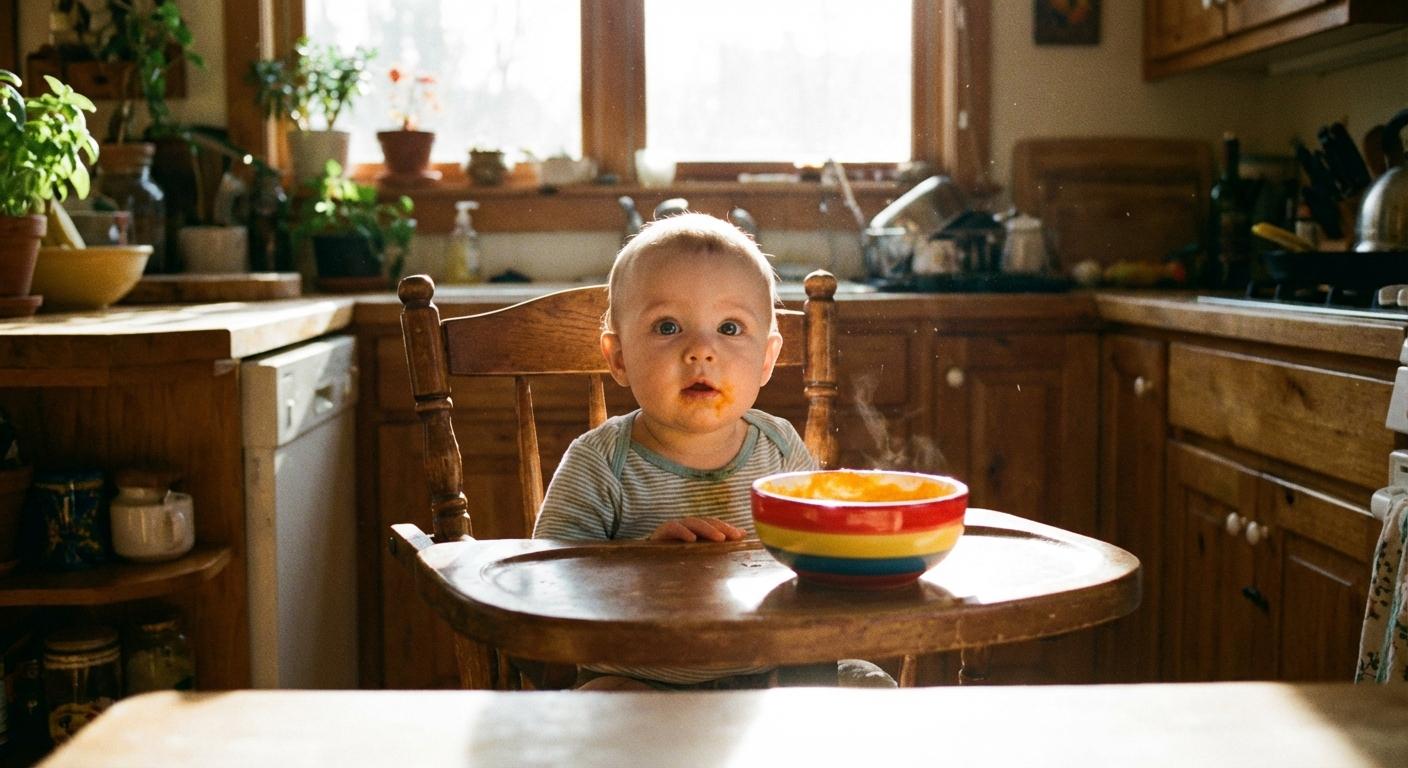
Starting solids can feel wonderfully ordinary, until a single spoonful brings a rash, a vomit, or a cough you can’t quite place. If you’re worried about fish allergy baby reactions, you’re balancing two things at once: keeping meals nutritious and keeping your child safe. The good news? Clear patterns exist, testing is available, and practical routines can reduce risk without turning food into a daily stress.
Fish allergy baby: what it is (and what it isn’t)
A fish allergy baby situation usually means the immune system reacts to proteins from finned fish (cod, salmon, tuna, haddock, sardine, sole, hake). Most often, it’s an IgE-mediated allergy: the body produces IgE antibodies that “recognise” fish proteins, and symptoms can appear fast.
Fish allergy vs intolerance
Parents often ask: “Is this just a tummy that doesn’t like fish?” An intolerance is not driven by IgE and tends to cause isolated digestive discomfort. A true fish allergy baby reaction can involve:
- Skin (hives, itching, swelling)
- Airways (cough, wheeze, breathing difficulty)
- Gut (vomiting, diarrhoea)
Because early symptoms can overlap with reflux or a virus, any repeatable reaction after fish deserves medical assessment.


Fish allergy vs shellfish allergy
Fish (finned fish) and shellfish (crustaceans like shrimp/crab, molluscs like mussels/squid) are different allergen families. A fish allergy baby may tolerate shellfish, or react to both. Kitchens often handle them together, so cross-contact still matters.
Why fish can trigger reactions: the biology in simple terms
No, a fish allergy is not caused by “doing weaning wrong.” It’s immune development.
IgE, histamine, and rapid symptoms
In IgE-mediated allergy, IgE antibodies sit on mast cells and basophils. When fish protein enters the body again, those cells release mediators (including histamine). That chemical cascade can produce hives, swelling (angioedema), vomiting, or wheeze, sometimes simultaneously.
Parvalbumin: the main fish allergen
A major allergen in fish is parvalbumin, a muscle protein that is relatively heat-stable. Translation: baked fish, steamed fish, boiled fish, none is automatically “safer” for a fish allergy baby.
Why fish allergy often appears during weaning
Fish is often first offered around 6 months, so that’s when reactions get noticed. Sensitisation (the immune system becoming primed) may occur after several exposures, which is why a baby might eat fish once or twice without issues and react later.
Risk factors worth knowing
Some babies are statistically more likely to develop food allergy:
- Atopic dermatitis (eczema), especially early or hard-to-control (skin barrier disruption may allow allergen exposure through the skin)
- Family history of allergic disease (eczema, asthma, allergic rhinitis, food allergy)
- Existing food allergy (for example egg)
Risk is not destiny. It’s simply a reason to introduce foods thoughtfully and seek help quickly if something feels off.
“My baby reacted without swallowing”: contact and cooking exposure
You may wonder if a fish allergy baby can react when fish only touched the skin, or when fish was cooked nearby. For some already sensitised children, the answer is yes. Residues on hands, bibs, highchair trays, or a caregiver’s kiss after tasting fish can trigger local hives. In certain cases, proteins carried in steam may provoke coughing or wheeze.
It’s also true that many babies do not react this way. That contrast is exactly why the history matters: what was the exposure (eating, touching, inhaling), what happened, and how quickly?
Fish allergy baby symptoms: what parents can actually see
Symptoms vary. Patterns matter: timing, body systems involved, and how quickly things change.
Skin symptoms
- Hives (urticaria): raised itchy welts that can appear and disappear, moving around the body
- Redness around the mouth (sometimes irritation, sometimes allergy)
- Swelling of lips/eyelids/face (angioedema)
- Eczema flare (not diagnostic alone, but relevant if paired with other signs)
Digestive symptoms
- Vomiting soon after eating fish
- Diarrhoea
- Belly pain (hard to prove in infants, but watch for sudden crying, curling up, feeding refusal)
- Pallor or unusual tiredness
One vomit can happen for many reasons. Repetition after fish, with a similar delay each time, is far more suggestive.
Breathing and throat symptoms
- Sudden runny nose, cough
- Wheeze, noisy breathing
- Hoarse cry, drooling, trouble swallowing
- Visible effort to breathe (rib retractions, faster breathing)
Breathing symptoms after fish should always be treated seriously in a fish allergy baby.
Immediate vs delayed patterns (IgE vs FPIES)
- IgE-mediated fish allergy: usually within minutes to about 2 hours.
- FPIES (Food Protein-Induced Enterocolitis Syndrome): typically delayed, often 1–4 hours after ingestion, with repetitive vomiting, marked lethargy, pallor, usually no hives and no wheeze. IgE tests can be negative.
If your baby has repeated delayed vomiting episodes after fish, clinicians may explore FPIES alongside IgE allergy.
When it’s an emergency: anaphylaxis
Anaphylaxis is a severe generalised allergic reaction. In infants it may look different than in older children.
Red flags that require urgent emergency help
Call emergency services if, after fish exposure, you notice:
- Swelling of face, lips, tongue, or throat
- Breathing difficulty, wheeze, persistent cough, hoarse voice/cry
- Marked pallor, collapse, fainting, or a baby who becomes limp/floppy
- Repeated vomiting with hives/swelling or breathing symptoms
What to do right away
- Stop feeding, clear the mouth, wipe hands/face.
- If prescribed, use the epinephrine auto-injector immediately for suspected anaphylaxis.
- Call emergency services and state “suspected anaphylaxis.”
- Lay baby flat, on their side if vomiting, keep warm.
- No food or drink.
Even if symptoms improve, observation is often needed because symptoms can return later (a biphasic reaction).
Fish allergy baby triggers: where fish hides and how exposures happen
Cross-reactivity across fish species
Many fish share similar proteins, so reacting to multiple species is common. But it’s not universal: some children react to one fish and tolerate another. That decision belongs with a clinician, not kitchen experiments.
Hidden fish ingredients
Fish can appear where you least expect it:
- Fish sauce
- Anchovy paste/extract (including some Caesar-style dressings)
- Worcestershire sauce (some recipes)
- Stocks/broths (including dashi-style preparations)
- Processed foods: fish cakes, croquettes, patties
- Surimi (imitation crab/seafood sticks, often fish-based)
Cross-contact at home
A fish allergy baby can react to tiny residues, depending on sensitivity. Common cross-contact pathways:
- Shared cutting boards, knives, blenders
- Shared grill/frying oil
- Hands, bibs, highchair trays
Practical habits help: hot soapy water cleaning, separate utensils when possible, and preparing baby’s meal away from fish cooking if contact reactions have occurred.
Introducing fish safely when there’s no prior reaction
Families often feel stuck: “Should we introduce fish at all?” Many babies can.
When to try fish
Usually around 6 months, when your baby can sit with support, has good head control, and manages purées or soft textures.
Choosing fish and preparing it
- Fully cook until it flakes.
- Remove all bones and skin.
- Offer a safe texture: puréed, mashed, or finely flaked.
- Keep the recipe simple (one new food at a time).
Choose low-mercury options more often (cod, haddock, pollock, salmon, sardines, trout). Limit high-mercury predators (shark, swordfish) and be cautious with certain tuna choices.
A calm first-taste plan
- Start tiny (for example 1/4 teaspoon).
- Offer earlier in the day.
- Observe for at least 2 hours.
- Avoid introducing several new foods in the same meal.
If your baby has severe eczema or a known food allergy, discuss first fish exposure with your clinician, supervised introduction is sometimes considered.
If your baby reacts to fish: what to do next
Stopping exposure is step one. Then severity.
Mild symptoms
A few hives or mild itching, no breathing issues, baby otherwise well:
- Stop fish, clean skin.
- Monitor closely.
- Contact your clinician for guidance and documentation.
Moderate symptoms
Widespread hives, facial swelling, persistent vomiting:
- Seek urgent same-day medical advice.
- Symptoms can escalate in infants.
Severe symptoms
Any breathing trouble, collapse, floppy/pale baby:
- Emergency services immediately.
- Use epinephrine if prescribed.
What to document for the appointment
Write down (or note in your phone):
- Time eaten, amount
- Fish species/brand
- Cooking method
- First symptom and timeline
- Any illness that day (fever, cold)
- Medications given and response
Photos of rash/swelling and packaging labels are extremely helpful.
How doctors diagnose fish allergy in a baby
A diagnosis rests on the story plus targeted tests.
Skin prick test
Measures IgE sensitisation in the skin. A positive test supports allergy when the history fits, it does not reliably predict severity.
Specific IgE blood test
Measures IgE antibodies to particular fish species. Useful, but still not a perfect “yes/no.”
Component testing
Sometimes used to look at IgE to proteins such as parvalbumin. It may help refine cross-reactivity questions.
Oral food challenge (supervised)
The reference test when history and testing don’t align, or to check if tolerance has developed. Not a home experiment, especially after a rapid reaction.
When tests are negative but symptoms fit
Delayed repetitive vomiting with lethargy can point to FPIES. Clinicians lean heavily on reproducible patterns: same food, similar delay, similar symptoms.
Conditions that can look like fish allergy
Not every “vomit after fish” is a fish allergy baby problem. Two examples come up often. Scombroid (histamine) poisoning happens when fish has been poorly stored, it is not an immune allergy, and more than one person at the meal may flush or feel unwell. And of course, viral gastroenteritis can strike by coincidence, especially in childcare settings.
If episodes are repeatable with fish, keep the safest stance: stop fish and arrange an evaluation. If you’re unsure, take a short video of breathing or behaviour changes.
Medicines: what helps, and what does not
For mild isolated hives, clinicians sometimes advise an age-appropriate antihistamine. It can ease itch, but it does not protect the airway. For anaphylaxis, only epinephrine treats the dangerous combination of airway swelling and circulation changes. If you have an action plan, follow it.
Living with fish allergy baby: daily life without overload
Avoidance plans are individual
Some children avoid all finned fish, others avoid selected species. Follow your allergist’s plan, trial-and-error at home can backfire.
Label reading and “may contain”
Ingredient lists change. Check every purchase. Advisory labels (“may contain fish”) relate to cross-contact risk, your allergist can help set the right level of strictness.
Daycare and relatives
Provide:
- A written action plan
- A clear safe/unsafe foods list
- Medication location and training (if prescribed)
Consistency protects your child and reassures caregivers.
Nutrition if fish is avoided
A fish allergy baby can thrive without fish, growth comes from overall diet quality.
Nutrients fish often provides
Fish is known for omega-3 (DHA/EPA), iodine, vitamin D, vitamin B12, selenium, and protein.
Fish-free options
- Algae-based DHA (discuss with your clinician)
- Protein: lentils, beans, chickpeas, tofu, yogurt/cheese if tolerated, eggs if tolerated, poultry/meat
- Vitamin D: often supplemented in infancy per local guidance
- Iodine: can come from dairy/eggs if included, discuss needs with a clinician (especially if multiple restrictions)
A pediatric dietitian can be very helpful when several foods are excluded or if growth falters.
Key takeaways
- Fish allergy baby reactions are often IgE-mediated, typically within minutes to 2 hours, severe reactions can be anaphylaxis.
- Symptoms may involve skin (hives, angioedema), gut (vomiting), or breathing (wheeze, effort), and can escalate.
- Delayed repetitive vomiting 1–4 hours after fish, with lethargy and pallor, can suggest FPIES.
- Fish can hide in sauces, broths, anchovy-containing condiments, and surimi, cross-contact in the kitchen is a common cause of accidental exposure.
- Diagnosis combines a careful timeline with skin testing, specific IgE blood tests, and sometimes a supervised oral food challenge.
- Support exists: your pediatrician, an allergist, and a pediatric dietitian can guide safe feeding. For personalised tips and free child health questionnaires, you can also download the Heloa app (https://app.adjust.com/1g586ft8).
Questions Parents Ask
Can my baby be allergic to fish but tolerate salmon or tuna?
Yes, it’s possible. Many babies react to several finned fish because proteins (like parvalbumin) can be similar across species, but cross-reactivity isn’t identical for everyone. Some children may tolerate certain fish while reacting to others. If you’re wondering about “safe fish,” it’s important to discuss it with an allergist—controlled testing or a supervised oral food challenge can clarify tolerance without adding stress at home.
How long after eating fish can symptoms start in a baby?
Timing can vary, which is why it’s normal to feel unsure. With classic IgE-mediated allergy, symptoms often appear quickly—within minutes, and usually within 2 hours (hives, swelling, vomiting, cough, wheeze). Some babies, however, have a delayed pattern such as FPIES, where repetitive vomiting and marked tiredness can start 1–4 hours later, often without hives. If a similar timing happens more than once, you can note the delay and share it with your clinician.
Will my baby outgrow a fish allergy?
Many parents ask this, and there is hope. Some children do develop tolerance over time, but fish allergy can persist longer than allergies like milk or egg. Progress is usually checked with follow-up appointments and, when appropriate, supervised challenges. In the meantime, a clear plan (avoidance level, daycare instructions, and emergency steps if prescribed) can make daily life feel much more manageable.

Further reading :