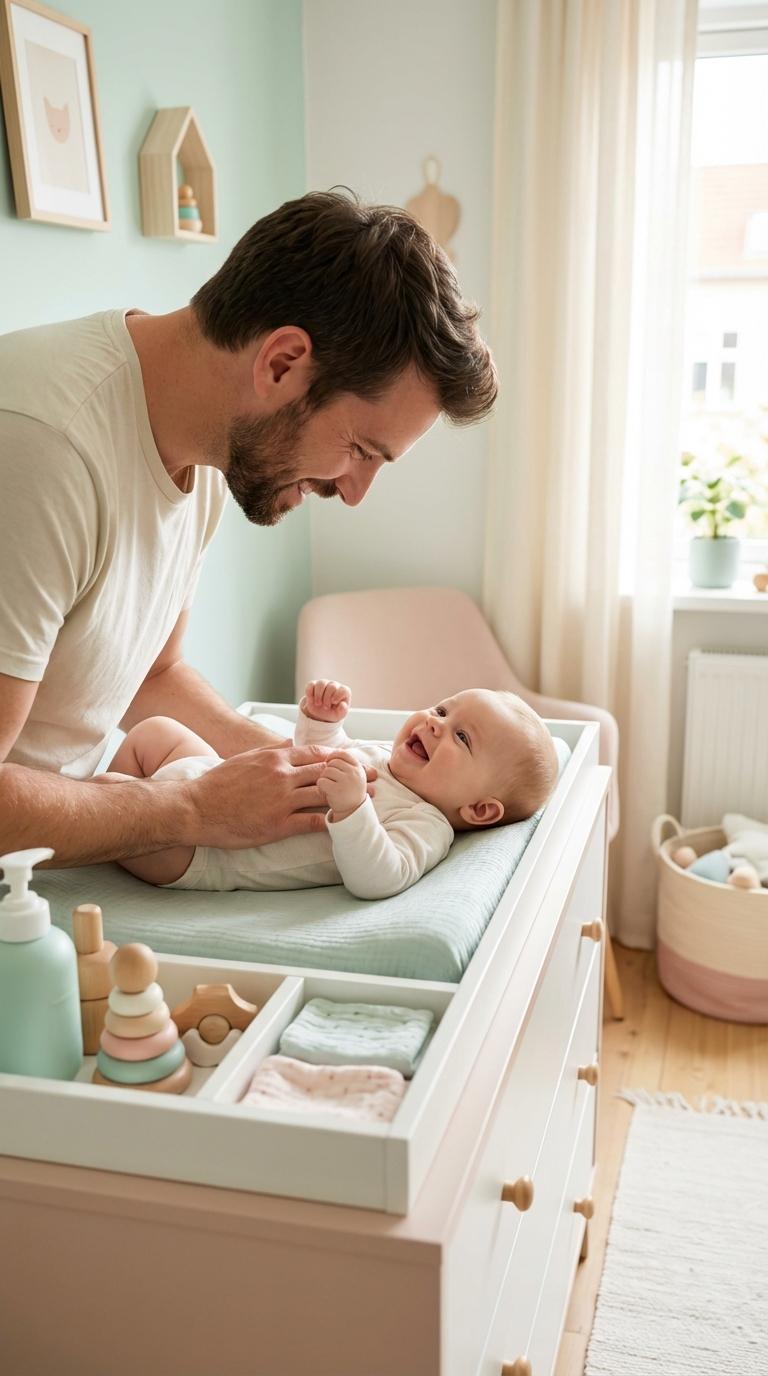
Few daily tasks are as repetitive, and as loaded with questions, as a diaper change. Is the skin too red? Should you wake a sleeping baby? Why do leaks happen right after you fasten a fresh diaper? A simple, consistent routine usually answers most of it: clean without over-rubbing, dry with care, protect when needed, and keep safety front and center.
Diaper change basics parents can trust
What a diaper change is (and how it differs from “bath time”)
A diaper change is a short, repeatable sequence: remove the soiled diaper, clean the diaper area (including folds), dry thoroughly, then apply a clean diaper with the leak guards positioned correctly. The goals are straightforward: less moisture, less friction, less contact with urine and stool.
A bath is different. Bath time is full-body hygiene with water and (sometimes) cleanser, a diaper change is local care, frequent, fast, and focused on protecting an immature skin barrier (the outer skin layer, thinner in babies than in adults).
Why diaper changes matter for comfort, hygiene, and skin health
Inside a diaper, skin sits in a warm, humid microclimate. Prolonged moisture weakens the stratum corneum (top protective layer), softens the skin, and increases maceration (waterlogged skin that irritates easily). Stool can be even more irritating than urine because it contains digestive enzymes (lipases and proteases), especially with diarrhea or early food introduction.


A timely diaper change after poop, gentle cleansing, and careful drying reduces irritant diaper dermatitis (the medical term for most diaper rashes). Less redness, fewer cracks, less sting when wiping, and a baby who is more available to feed, play, and sleep.
Signs a diaper needs changing
Common cues:
- Wetness indicator stripe changes color (some diapers)
- Diaper feels heavy, swollen, or gel-like
- Urine or stool odor
- Leaks at thighs or up the back
- Baby seems uncomfortable: squirming, fussing, sudden crying
- Redness, shiny skin, damp folds
Unsure? A quick check beats waiting.
The key safety rule that helps prevent falls
Falls can happen fast, even before rolling is consistent. The rule stays the same: never leave your baby unattended on a bed, couch, or changing table.
Keep one hand on your baby on any elevated surface. Straps and raised edges can help, but they never replace supervision. If you need something, bring it closer while keeping contact, or switch to the floor.
How diaper changes can support bonding and a calming routine
Because a diaper change happens many times a day, it can become a soothing “known pattern.” A calm voice, a few repeated words, and gentle touch provide predictability. Eye contact, a short song, or narrating the steps (“open, clean, dry, close”) also supports early language exposure and self-regulation.
When to change a diaper (and how often by age)
After pee: every time, or depending on absorbency?
Young babies urinate often. With modern superabsorbent diapers, some families space changes when:
- skin looks healthy (not red, not glossy)
- baby seems comfortable
- the diaper is not saturated or leaking
If the diaper is swollen/heavy, the waistband leaves marks, leaks appear, or redness increases, more frequent diaper change moments are usually kinder to the skin.
After poop: change promptly
After a bowel movement, change quickly. Stool raises skin pH and, combined with moisture, accelerates rash. Even at night, suspected poop often merits a brief diaper change.
Nighttime: balancing sleep and skin
If your baby is sleeping deeply and the diaper is only mildly wet, waking is not always necessary when skin is healthy. Overnight diapers with higher absorbency can help.
Do change at night if there is poop, leaking, or already-fragile skin (redness, maceration, frequent irritation). Sleep and skin both matter.
Timing tips: before feeds, after feeds, before naps
Many babies tolerate a diaper change best before a feed (less pressure on a full belly, sometimes less reflux). Yet some babies poop after feeding, so a post-feed check can be more efficient.
Before naps and bedtime is a simple habit for comfort and longer sleep stretches.
Typical frequency by age
These are common ranges, your baby’s stool pattern and skin sensitivity make the final call.
Newborn (0–3 months)
- Often 6–10 changes per 24 hours
- Check about every 2–3 hours, and change after each poop
- While the umbilical stump is healing, keep the diaper below it (fold the waistband down or use a cutout diaper)
3–12 months
- Urine remains frequent, stool may become less frequent
- Adjust based on absorbency, leaks, and skin tolerance
Very active, wriggly babies
Preparation saves time. Set everything up first, then aim for short changes at predictable moments: after waking, before outings, before naps. Turning your baby slightly to the side to clean is often easier than lifting legs high.
Diaper change supplies and a low-stress setup
Diaper change essentials checklist
- Clean diaper in the right size
- Changing pad (wipeable) or a clean towel on a stable surface
- Fragrance-free wipes, or warm water + soft cloth/cotton pads
- Small towel or cloth for drying
- Disposal option (trash can, diaper pail, or sealable bags)
- Extra outfit
Helpful add-ons
- Barrier cream when skin looks fragile or pink
- Zinc oxide paste or petrolatum ointment (protective film)
- Tight-lid trash can/diaper pail
- Hand sanitizer for moments without a sink
Choosing your setup (changing table vs floor)
A changing table can spare your back and keep supplies organized, but the fall risk is higher. The floor is often the safest option for babies who roll or toddlers who resist.
Whatever you choose, keep supplies within arm’s reach before you start the diaper change.
Getting ready before each diaper change
Hand hygiene options
Soap and water is best. If you cannot reach a sink, sanitizer is a practical backup. Wash again after the diaper change.
A quick pre-check that can reduce mess
Before opening the dirty diaper:
- Place the clean diaper within reach
- Plan wipe direction (for girls: front to back)
- For boys, keep a wipe/cloth ready to briefly cover the penis
Newborn diaper change: a simple step-by-step routine
Step-by-step newborn change
- Gather supplies and wash hands.
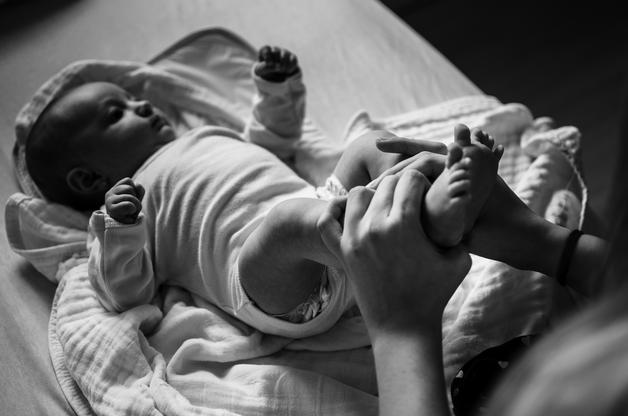
- Lay your newborn on the pad and keep a hand in contact.
- Open the diaper and fold the front down.
- If there is poop, use the clean inside of the diaper to remove bulk before wiping.
- Lift ankles gently, slide the soiled diaper out, fold it inward.
Cleaning and drying technique that protects skin
Warm water with a soft cloth/cotton is often very well tolerated. Wipe from clean to dirty and avoid scrubbing.
- Girls: wipe front to back, clean gently between folds without cleaning internally.
- Boys: clean surrounding skin and creases, including under the scrotum.
Then dry: pat, do not rub. Focus on folds. A diaper change that ends with damp skin increases maceration.
Barrier protection: when and how much
- Healthy skin: sometimes nothing, sometimes a thin layer.
- Pink/fragile skin: a thin barrier can prevent worsening.
- Red, irritated skin: a thicker paste-type barrier can better shield from moisture and friction.
Apply oily products only on clean, dry skin. If the rash worsens, simplify: water cleansing, thorough drying, then one barrier product.
Putting on a clean diaper
Center the clean diaper under your baby, fasten snugly, then pull the leg cuffs outward. Make sure the back sits high enough, back coverage helps prevent blowouts.
Special newborn situations
Meconium (black, sticky first stools) can cling. Warm water on a soft cloth often cleans more easily than repeated wiping.
If the umbilical stump is still present, keep the diaper below it to reduce friction and help it stay dry.
Diaper change for older babies and toddlers
Positioning tips for rolling, wriggling, and resistance
Many parents move to the floor once rolling starts. If you are on a table, stay close and keep a hand on the torso. A small distraction can help: a toy reserved for changes, a song, a mirror.
If your baby twists, turn them slightly to the side to clean rather than lifting legs high.
Wet vs poop diaper changes
- Wet diaper: gentle cleaning with water/cloth or wipes may be enough, then a quick dryness check.
- Poop diaper: clean thoroughly, especially in folds. For girls, keep front-to-back direction. For boys, clean surrounding skin, then point the penis downward before closing.
Faster toddler cooperation strategies
Offer two choices that do not change the goal: “Blue diaper or green?” “Hold the wipes or the diaper?” Some toddlers accept a standing diaper change for pee, but for stool a floor change is often cleaner.
Diaper change for boys vs girls
For girls
Wipe front to back to reduce transfer of stool toward the urethra. Clean gently in folds, then pat dry. Internal cleaning is not needed.
For boys
Cover the penis briefly with a wipe/cloth while the diaper is open. Before fastening, point the penis downward to reduce waistband leaks.
For uncircumcised boys: do not forcibly retract the foreskin, gentle external cleansing is enough.
Diaper rash: prevention, supportive care, and common pitfalls
Why diaper rash happens
Most diaper rash is irritant dermatitis: moisture + friction + stool enzymes. Fragranced wipes, frequent product switching, or vigorous wiping can add irritation.
Everyday prevention habits
- Prompt diaper change after poop
- Thorough drying every time
- A few minutes of diaper-free time when possible
- Overnight diaper with adequate absorbency
Common mistakes that can worsen irritation
- Scrubbing to feel “extra clean”
- Putting a clean diaper on damp skin
- Using many fragranced products
- Keeping a diaper that is too small (tight marks)
Rash patterns and when to seek medical advice
- Irritant rash: pink-red irritation where moisture and friction are greatest, often improves with frequent diaper change, careful drying, and barrier protection.
- Yeast (Candida) rash: bright red patches, often involving folds, sometimes with small surrounding “satellite” spots.
Seek medical advice if redness persists or spreads despite 48–72 hours of good care, or if you see oozing, bleeding, blisters, significant pain, or fever.
Choosing diapers and getting the right fit
Sizing signs and when to size up
Too small: clear red marks, frequent leaks/blowouts, tabs overstretched.
Too big: gaps at legs/waist, drooping, leaks despite correct placement.
Leak prevention details that matter: cuffs out, tabs even, diaper centered, back waistband high.
Diaper change on the go
A travel kit that makes everything easier
Pack: 2–3 diapers, wipes or cotton + small water option, sealable disposal bags, spare outfit, a small barrier product if redness is common, and sanitizer (backup).
Choose a flat, stable spot, use a changing pad, and keep a hand on your baby during the diaper change.
Troubleshooting common problems
Leaks and blowouts
Most leaks are fit issues: cuffs tucked in, waistband loose, wrong size, poor back coverage. Blowouts often improve when the back waistband sits higher, and sometimes when you size up.
Fighting and crying during changes
Try a diaper change after waking or before overtiredness. Keep steps predictable and quick. For toddlers, limited choices and involvement often reduce power struggles.
Key takeaways
- A good diaper change protects comfort and skin: gentle cleaning, careful drying, and a well-fitted diaper.
- Change promptly after poop, at night, you may skip waking for mild wetness if skin is healthy.
- Safety comes first: stable surface, supplies ready, and a steady hand on your baby.
- Seek medical advice for redness beyond 48–72 hours, spreading rash, oozing, bleeding, blisters, fever, or significant pain.
- There are professionals to support you, and you can download the application Heloa for personalized advice and free child health questionnaires.
Questions Parents Ask
Is diaper powder safe for babies?
Many parents consider powder to keep skin “dry,” so your hesitation is understandable. Most health professionals recommend avoiding loose powders (especially talc) because fine particles can be inhaled. If you like the “dry” feeling, you can instead focus on thorough pat-drying and a simple barrier (like zinc oxide or petrolatum) on clean, dry skin. That often provides the same comfort, with less risk.
Can I use diaper rash cream every day, even without a rash?
Yes, it can be an option—especially if your baby’s skin gets pink easily, you’re dealing with frequent stools, or nights are long. A thin layer of a bland barrier can reduce friction and protect from moisture. If skin looks perfectly comfortable, some families keep it minimal to make cleaning easier. Either approach can work, the “best” routine is the one that keeps skin calm.
What wipes are best for sensitive skin: wipes or water?
Both can be suitable. For very sensitive or irritated skin, warm water with soft cotton pads or a cloth is often the gentlest. If you prefer wipes, choosing fragrance-free, alcohol-free options and wiping with light pressure can help. If redness increases after a product change, you can simplify for a few days (water + barrier) and see if skin settles.
Further reading: