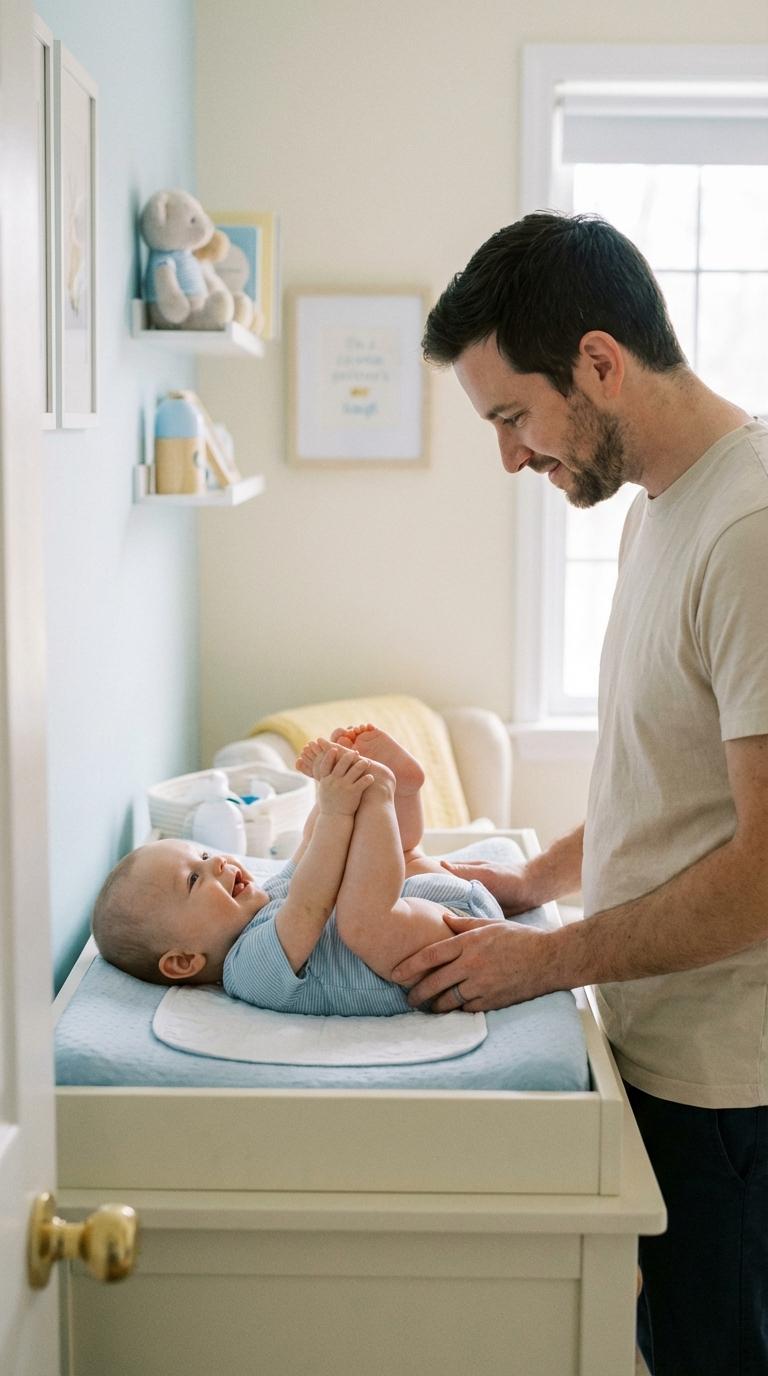
A diaper change looks easy on paper. Then reality arrives: a baby who twists like an eel, a surprise poop at 2 a.m., a damp onesie, or that warm red patch that makes you pause: “Am I cleaning enough… or too much?” Water, cotton, wipes, cleansing gel, liniment, zinc paste—choices multiply quickly.
The aim stays simple: keep the diaper area clean, dry, and protected, while keeping the moment safe and as peaceful as possible. Frequency, technique, products, fit, and a few medical warning signs all connect, like pieces of the same puzzle.
Why a good diaper change protects more than you think
Baby skin is not “adult skin in miniature.” The outer layer (the stratum corneum) is thinner, the lipid film is less stable, and the skin barrier becomes irritated faster. Add the diaper environment—warmth, moisture, friction—and you have a perfect setup for inflammation.
Urine raises skin pH, stool brings digestive enzymes (proteases, lipases) that can irritate rapidly. When moisture sits against the skin, it causes maceration (skin that looks soggy), which increases friction. That combination explains why a rough wipe can sting, and why redness can appear suddenly.


Comfort is part of skin health too. A heavy diaper can pull, rub, and disrupt movement. Some babies feed less calmly or resist sleep when they feel “wet and tight.” A steady diaper change routine can become a predictable pause, brief, gentle, and reassuring.
How often to do a diaper change: ranges that respect your baby’s rhythm
No timer fits every child. Output, feeding pattern, diaper absorbency, and skin sensitivity vary widely. Still, practical ranges help:
- Newborn (0–3 months): often 6–10 diaper change moments per 24 hours (sometimes more), typically every 2–3 hours and after every stool.
- 3–6 months: many families check every 2–3 hours and change when clearly wet or after stool.
- 6–12 months: often every 3–4 hours, plus right away after poop.
- Toddler: often every 4–6 hours, and promptly after poop.
A mildly wet diaper can sometimes wait if the skin looks calm and intact. A poop diaper is different—enzymes irritate fast—so a timely diaper change matters.
When it’s time: quick clues parents can trust
You may not need to open the diaper every time. Look for:
- A wetness indicator stripe changing color (if the diaper has one)
- A diaper that feels heavy, swollen, sagging, or misshapen
- Odor or visible stool
- Even a small leak (often saturation or fit)
- Early pinkness, especially in skin folds
- Baby cues: sudden fussing, arching, squirming, grabbing the diaper area
If you notice repeated leaks, treat it as data: either absorbency, size, or fit likely needs adjusting.
Pee vs poop: the diaper change is not identical
Pee-only diapers
For urine alone, the goal is to remove moisture and residue without overdoing friction.
- Warm water + cotton pads or a soft washcloth works well.
- If you’re out, fragrance-free wipes (no alcohol) can be practical.
- Avoid repeated back-and-forth wiping, that mechanical rubbing can inflame skin.
Poop diapers
For stool, clean wider and deeper—without scrubbing.
- Include the groin folds, upper thighs, and between the buttocks.
- If stool sticks, a mild cleansing gel can help, remove any residue afterward.
- Then dry by patting, not rubbing.
One detail changes everything for sensitive skin: pat dry. Rubbing equals friction, friction plus moisture equals redness.
Nighttime diaper change: protect skin, preserve sleep
At night you balance two needs: skin care and rest.
- If your baby is sleeping and the diaper is only mildly wet, many families let sleep win—especially with an absorbent nighttime diaper.
- If there is poop or a leak, do a quick diaper change: low light, minimal talking, slow hands.
Some babies poop after feeding due to the gastrocolic reflex (a normal intestine response). A short check after a night feed can prevent “poop + long sleep” irritation.
Diaper change essentials: what to prepare at home and on the go
Core supplies (simple, sufficient)
- Clean diaper, correct size
- Warm water + cotton/cloth and/or fragrance-free wipes
- Wipeable changing mat
- Soft towel/cloth for drying
- A barrier product when needed (often petrolatum or zinc oxide)
Cleaning options: water, wipes, cleansing gel
- At home: warm water + cotton is often enough, especially for pee.
- Outside: choose wipes for sensitive skin, without perfume.
- Cleansing gel: helpful when stool is sticky or the skin feels “coated.” Pick a simple formula, then remove residue so it doesn’t irritate.
A practical rule: choose what leaves the skin clean without triggering redness.
Protective care: liniment, barrier cream, zinc paste
Apply any product only on clean, fully dry skin—otherwise moisture gets trapped.
- Liniment (oil-lime liniment): can leave a lipid film on healthy skin. It does not replace cleaning.
- Barrier cream (often zinc oxide): useful during high-risk phases (frequent stools, diarrhea, teething-related loose stools, friction).
- Zinc paste: thicker, more covering when redness is already present, spread gently in a generous layer.
On healthy skin, no product is mandatory. Sometimes “less” is kinder.
Extras that save the day
- Sealable disposal bags + a wet/dry bag for clothes
- Spare outfit (blowouts are part of baby physics)
- Hand sanitizer for emergencies (then proper handwashing later)
- A small distraction item for wiggly babies
- A dim nightlight for nighttime changes
A diaper change station that supports safety
Choose one main spot. Keep supplies within arm’s reach so you never have to turn away. Restock often. For early rollers, a floor mat diaper change can feel far safer.
Safety during a diaper change: one rule, every time
Babies can roll “out of nowhere.” Falls happen fast.
- Never leave your baby alone on an elevated surface—even with a strap.
- Keep one hand on your baby.
- If you must move, take your baby with you.
For toddlers: a small choice can help cooperation—“Hold the wipes or the clean diaper?”
Hygiene basics: hands, surfaces, and sensible cleaning
Hand hygiene
A diaper change involves contact with stool, which can carry viruses and bacteria.
- Soap and water before and after is ideal.
- Hand sanitizer is a backup when you’re out, wash properly later.
Cleaning the changing surface
After poop changes, clean the surface. Daily harsh disinfectants can leave residues that irritate skin, a regular wipe-down with an appropriate cleaner is usually enough. Prefer a wipeable or washable cover.
Disposal and odor control
Seal poop diapers in a bag before they go in the bin or diaper pail, empty regularly. In public, carry waste in a sealed bag if no trash is available.
Step-by-step diaper change routine (smooth and skin-friendly)
1) Prepare first
Hands clean, supplies ready, clean diaper open. This prevents the unsafe “just one second” reach.
2) Position baby securely
Back on a stable surface, keep one hand in contact. Eye contact and a calm voice often reduce squirming.
3) Remove the dirty diaper without spreading mess
Open tabs. Fold the front down. Use the inside of the diaper to remove bulk stool, then fold it onto itself.
To lift hips, avoid pulling hard on ankles. A gentle side-roll is often kinder for hips and lower back.
4) Clean based on what’s there
- Pee: water + cotton, including folds.
- Poop: clean wider (buttocks, folds, upper thighs). Add mild cleansing gel if needed, then remove residue.
Girls: wipe front to back to reduce moving germs toward the vulva and urethra.
Boys: clean the groin and the folds under the scrotum, where moisture lingers.
5) Dry completely, then protect if needed
Pat dry carefully, especially folds. Skin must be dry before cream.
- Healthy skin: no product required.
- Red, irritated skin: apply a barrier layer (zinc oxide cream or paste) to reduce contact with urine/stool and calm inflammation.
A brief diaper-free pause can help evaporation.
6) Put on the clean diaper and reduce leaks
Fasten symmetrically.
- Pull leg cuffs outward.
- Snug, not tight (two fingers at the waistband).
- For boys, point the penis downward before fastening to reduce upward leaks.
Deep red marks, frequent leaks, or difficult fastening often mean size/fit needs a change.
7) Finish
Dispose, clean the surface if needed, and wash hands.
Newborn specifics: early skin and umbilical cord care
Newborn skin reacts quickly. Warm water and minimal-ingredient wipes or cotton are often best. Pat dry, avoid heavily fragranced products.
For the umbilical cord stump, keep it clean and dry. Fold the diaper down (or use a notched diaper) so the waistband doesn’t rub. Seek medical advice if you see spreading redness, swelling, pus, or a foul smell.
Intimate hygiene details during a diaper change
For girls
Front-to-back cleaning helps lower the risk of urinary tract infection. Gently clean folds.
In newborn girls, a temporary whitish discharge can occur due to maternal hormones. Gentle hygiene is enough—no scrubbing.
For boys
Clean externally: penis, base, and folds under the scrotum.
Do not force foreskin retraction. In many babies, the foreskin is naturally adherent, forcing it can cause tears and inflammation.
Preventing surprise pee sprays
Cool air can trigger urination:
- Open the diaper and wait a few seconds.
- Place a cotton pad on the lower belly.
- Use the clean diaper briefly as a shield if helpful.
Preventing diaper rash: habits that support the skin barrier
Early signs
Redness tends to start on contact areas—buttocks, groin folds, around the anus. The skin may look shiny, feel warm, and your baby may react during wiping.
Common causes
- Prolonged moisture and maceration
- Friction (fit issues, fragile skin)
- Stool left on skin, especially with diarrhea
- Irritating products (perfume, harsh surfactants)
- Cleaning that is too vigorous
Sometimes Candida (yeast) overgrows on top of irritation. Clues: very bright red rash, involvement of folds, and small “satellite” spots. This may need an antifungal recommended by a clinician.
A simple routine when redness starts
1) Clean gently
2) Dry thoroughly
3) Protect with a generous barrier layer
Increase diaper change frequency temporarily, especially after stool. Add short air time if possible.
Leaks and fit issues: what to check first
Leaks are often mechanical:
- Diaper too small (compression leaks, deep marks) or too big (gaps)
- Leg cuffs tucked in
- Tabs uneven
- For boys, penis pointing upward
Quick fit checks:
- Two fingers at waistband
- Leg cuffs fully out
- Back high enough
- For newborns with a cord stump, fold the diaper down to avoid rubbing
Night leaks may improve with a more absorbent nighttime diaper, depending on body shape, some babies do better with a size up.
Diaper change away from home: practical, hygienic, realistic
Pack: diapers (extras), wipes, portable mat, disposal bags, hand sanitizer, barrier cream, spare outfit.
Choose a stable surface and place a barrier under your baby. In the car, change only when parked on a flat surface. Outdoors, pick a sheltered spot and keep supplies contained.
Leave the area clean, and seal waste before disposal.
Cloth and eco-friendly diaper change options
The steps stay similar: remove, clean, dry, re-diaper.
- Cloth diapers typically go into a wet bag or pail until wash day.
- Disposable liners can simplify poop cleanup.
Trade-offs are real: cloth reduces trash but increases laundry (water, energy, detergent). Disposables are convenient for childcare and travel. Many families mix both.
When to contact a healthcare professional
Seek advice if:
- Redness lasts several days despite gentle care and frequent diaper change
- Skin oozes, bleeds, becomes very painful, or lesions spread
- You suspect allergy (rash after a product, significant itching)
- Fever, unusual sleepiness, or your baby seems unwell
- Significant diarrhea, blood in stool, or dehydration signs (dry mouth, fewer wet diapers, unusual drowsiness)
Key takeaways
- A steady diaper change routine supports comfort, hygiene, fewer leaks, and healthier skin.
- Change promptly after stool, pee-only diapers can sometimes wait briefly if skin looks healthy.
- Clean gently, pat dry, and use a barrier only when needed.
- Fit prevents mess: correct size, leg cuffs out, tabs even, and for boys, penis pointing down.
- Safety comes first: keep one hand on your baby and never leave them alone on an elevated surface.
- If redness persists, worsens, or looks unusual (especially in folds with satellite spots), contact a health professional.
- Support exists: your pediatrician, midwife, pharmacist, or child health nurse can help, and you can download the Heloa app for personalized tips and free child health questionnaires.
Questions Parents Ask
How long can a baby stay in a wet diaper?
It depends on skin sensitivity and the diaper’s absorbency, so there’s no single “right” number. If your baby seems comfortable and the skin looks calm, a mildly wet diaper can sometimes wait a little. When the diaper feels heavy, the wetness indicator has changed, or you notice early pinkness (especially in folds), a change often helps prevent irritation. And if there’s poop, a quick change is usually kinder to the skin—enzymes can irritate fast.
Is it OK to use wipes at every diaper change?
Yes—many parents do, and it can work well, especially when you’re out. If your baby gets red easily, choosing fragrance-free, alcohol-free wipes and using a gentle “press and lift” motion (rather than rubbing) can make a big difference. At home, some families alternate: warm water and soft cotton for pee, wipes for convenience, and a rinse with water if the skin feels “coated.” If redness appears after switching wipes, it may be worth trying a simpler formula.
What if my baby screams during diaper changes?
Rassurez-vous, it’s very common—cold air, a sensitive rash, or simply being interrupted can trigger big protests. A few small tweaks can help: warm the room, use warm water, keep a predictable sequence, and offer a tiny distraction (song, toy, eye contact). If crying is new and intense, checking for rash, cracks, or sores can be reassuring—pain during wiping is a helpful clue to treat the skin more gently.
Further reading :