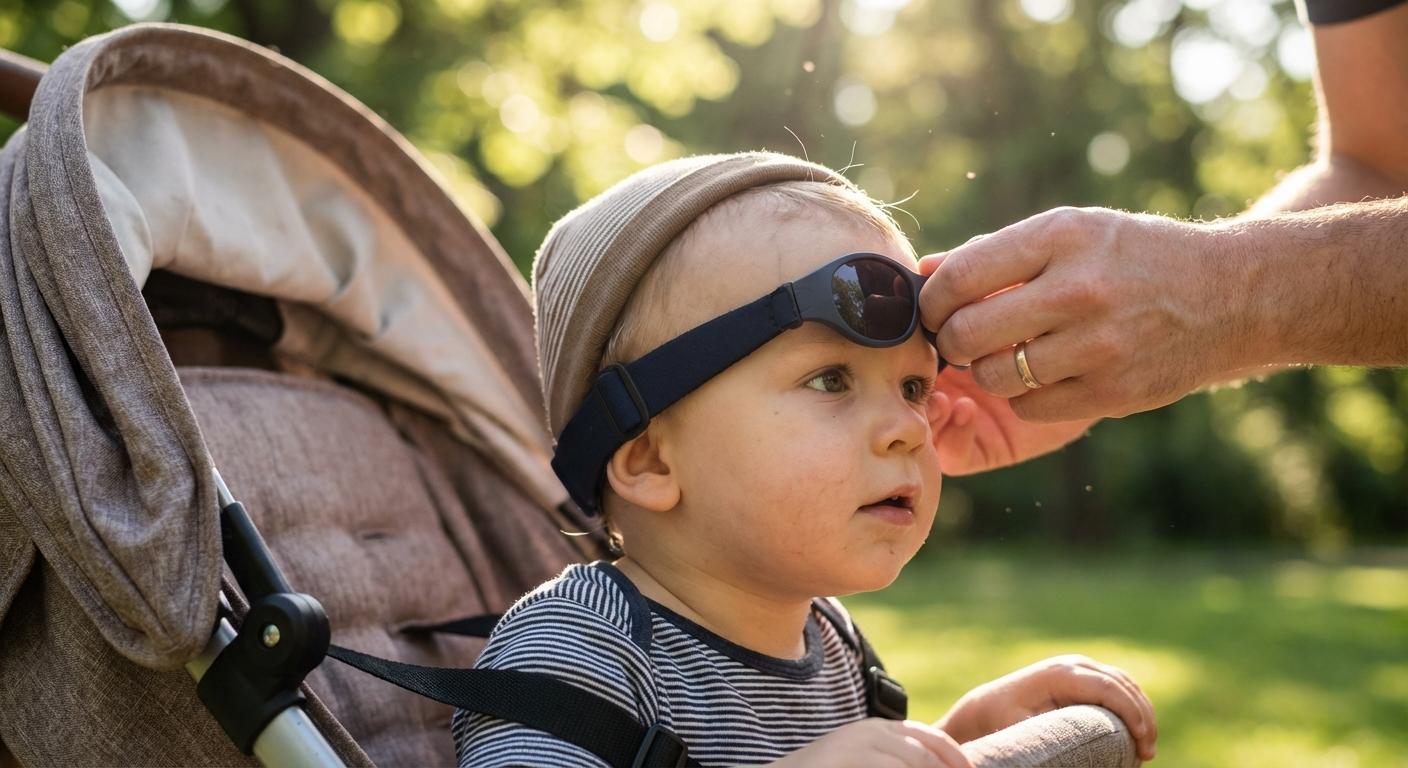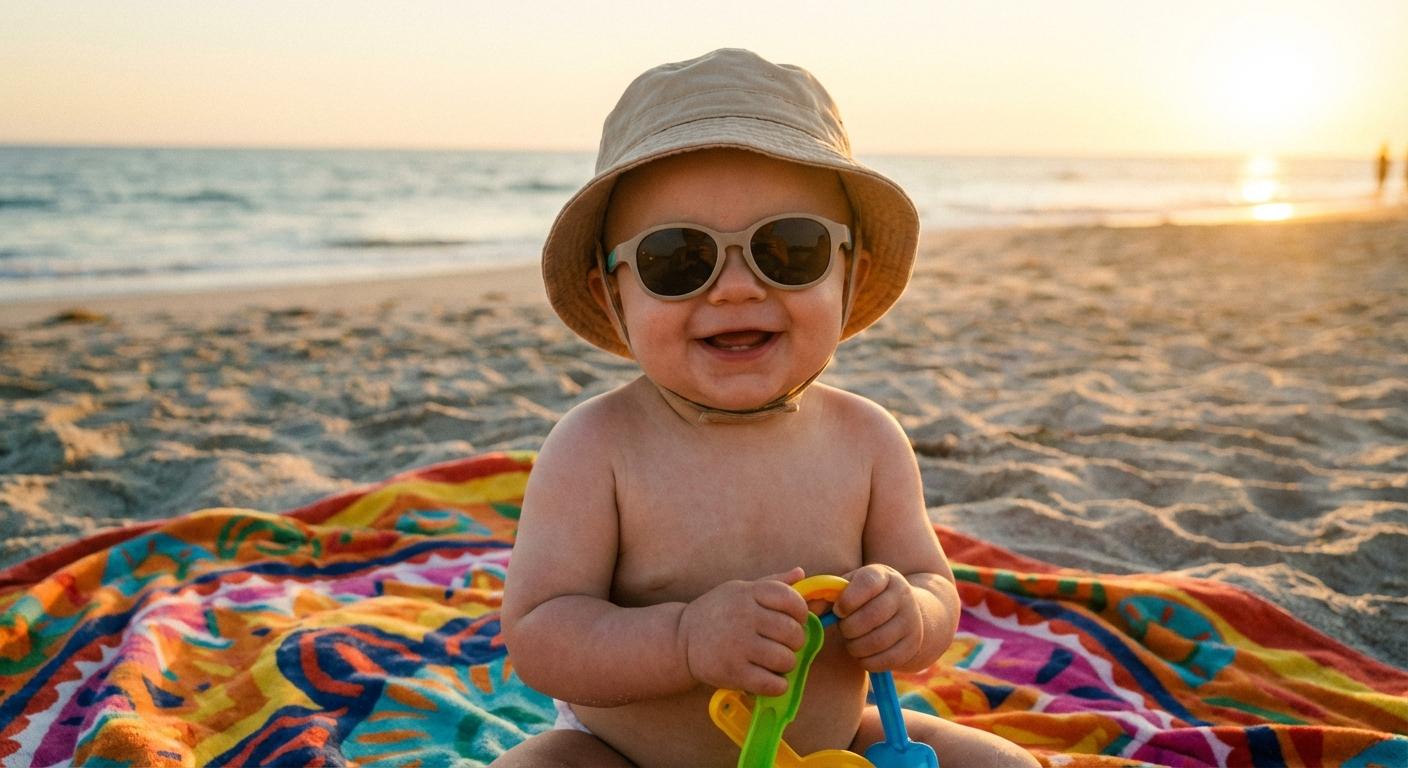
Your baby squints the second the stroller turns toward open sky. The seaside looks dreamy, and dazzling. Even a “not so sunny” day can feel surprisingly harsh. So a very normal question pops up: are baby sunglasses really useful, or is a hat enough?
For many families, baby sunglasses become a small, repeatable habit that improves comfort now and reduces cumulative UV exposure over time (the total dose of ultraviolet light the eyes receive across childhood). No pressure to do everything, every time. Think layers, not perfection.
Why baby sunglasses matter for developing eyes
Babies’ eyes vs adults’ eyes: lighter filters, brighter world
A baby’s eye is not a mini adult eye. It’s a developing organ with different “filters.”
- The crystalline lens (the clear lens inside the eye) is more transparent in infancy. That means it absorbs less UVA and UVB, so more ultraviolet can reach internal eye structures.
- The iris (the colored ring that controls pupil size) is often less pigmented early on, particularly in light-eyed babies. Less pigment can mean more light scatter and quicker discomfort.
What does that look like in daily life?


- squinting and rapid blinking
- turning the head away from bright sun
- watery eyes, fussiness in high glare
If that’s your child, baby sunglasses aren’t cosmetic. They’re relief.
UVA, UVB, and reflection: the part parents don’t see coming
Ultraviolet light is usually described in two bands:
- UVA (315–400 nm) penetrates deeper and contributes to oxidative stress (cellular “wear” linked to long-term tissue aging).
- UVB (280–315 nm) is more energetic and can irritate the ocular surface (cornea and conjunctiva).
And here’s the twist: UV doesn’t only come from above.
- Water, sand, snow, concrete, pale pavement, even light walls can reflect UV upward.
- Side glare matters. Babies in strollers can’t easily “angle away” from brightness.
So yes, a parasol helps. But it doesn’t block everything that bounces up from the ground.
Cloudy days, shade, and winter sun: a few myths worth retiring
“Clouds block UV.” Sometimes. Often not enough.
- Thin clouds can let a significant amount of UV through.
- A bright overcast day can deliver lots of UV while feeling cool.
- Winter sun can be intense, and snow reflection can multiply glare.
Shade is useful, but reflected rays still slip in from the sides and below. If your baby is squinting in the shade, baby sunglasses may still make a difference.
Situations where baby sunglasses help most
You don’t need them for every two-minute step outside. But some settings are classic glare traps:
- late morning to mid-afternoon outdoor time
- stroller walks (babies often look upward)
- beach and pool days (sand + water reflection)
- snowy weather and mountains (snow glare + altitude)
- long car rides (glare, plus UVA through side windows)
What sun exposure can do to a child’s eyes
Short-term: when the eye surface reacts like sunburn
High UV exposure, especially in reflective environments, can trigger:
- photokeratitis: UV-induced inflammation of the cornea (the transparent “window” at the front of the eye)
- photoconjunctivitis: UV irritation of the conjunctiva (the thin membrane covering the white of the eye)
Possible signs:
- red, watery eyes
- eyelids held tightly shut
- strong light sensitivity (photophobia)
- sometimes blurred vision
These symptoms warrant medical advice, particularly after snow or beach exposure, or if your child seems in pain.
Long-term: cumulative exposure, gradual effects
UV effects add up. That doesn’t mean you should fear outdoor life. It means simple habits are worthwhile.
Over many years, chronic UV exposure is associated with higher risks of:
- earlier lens changes (including cataract development later in life)
- ocular surface changes (irritation, long-term damage in high-exposure contexts)
This is where baby sunglasses, used sensibly, fit into a broader “sun routine.”
Sunglasses, hats, and shade: how the layers support each other
One layer rarely does it all.
- Baby sunglasses reduce direct and reflected UV reaching the eyes.
- A wide-brim hat blocks overhead rays that can sneak above frames.
- Shade reduces overall intensity but doesn’t erase reflections.
Put together, they reduce glare and make outdoor time more comfortable, so families tend to stick with the routine.
When babies can wear baby sunglasses
Age matters less than safe fit and supervision
There’s no universal starting age. The practical question is: will they sit comfortably, stay in place, and be used under supervision?
- 0–6 months: many parents start with canopy + shade + hat. If you try baby sunglasses here, choose very soft, very light frames, and keep wear brief.
- 6–36 months: many children accept baby sunglasses more reliably when the fit is stable and pressure points are minimal.
Readiness cues:
- tolerates them for short periods
- no pinching or deep marks after a trial
- minimal slipping into cheeks
UV Index: a simple “switch” for parents
If you check the UV Index on your weather app, you can make decisions quickly:
- UV Index 0–2: optional (mainly for glare or very light-sensitive eyes)
- UV Index 3–5: baby sunglasses are a good idea for outdoor play
- UV Index 6+: use baby sunglasses consistently, plus a hat and shade breaks
Also upgrade protection when reflection is strong: water, sand, snow, bright pavement, and higher altitude.
Outdoors, indoors, and the car
Outdoors is the main arena for baby sunglasses.
Indoors, they’re rarely needed, except for strong window glare.
In the car, many windshields block much UVB, but UVA can pass through side windows. If sunglasses won’t stay on in the car seat, think “environment control” instead:
- window shades
- repositioning to reduce direct side glare
- planning breaks at shaded stops
Choosing baby sunglasses: what matters on the label
UV400 / 100% UVA-UVB: the non-negotiable
Tint changes how bright things look. UV filtering changes what reaches the eye.
Choose baby sunglasses with clear labeling such as:
- UV400
- “100% UVA/UVB protection”
Be cautious with vague phrases like “UV protected” without details.
Standards and markings (including CE)
Depending on your region, you may see:
- CE marking
- EN ISO 12312-1 or EN 1836
These signals can be reassuring, but they don’t guarantee comfort, side coverage, or that the frame will sit well on a small, flat nasal bridge.
Dark lenses without UV filtering: why they can backfire
A dark lens can make a baby look calm while quietly increasing risk if UV isn’t blocked. Pupils may dilate behind the tint, allowing more UV in. So the order is simple:
1) verify UV400 / 100% UVA-UVB
2) then pick the tint category for comfort
Scratched lenses and warped frames: when to replace
Scratches scatter light (more haze, more glare). A deeply scratched lens can also make vision feel odd, and many children respond by refusing the glasses.
Replace baby sunglasses if lenses look cloudy, frames are warped, or the fit no longer covers the eyes well.
Lenses: materials, polarization, and tint categories
Polycarbonate vs Trivex: impact resistance and clarity
For little ones, impact resistance is a big deal.
- Polycarbonate lenses: lightweight, very impact-resistant, commonly used for toddlers.
- Trivex lenses: similarly impact resistant, often with higher optical clarity (less distortion).
If your child blinks a lot or pulls them off instantly, don’t assume “they hate sunglasses.” Sometimes the lens optics or fit feels strange.
Polarized baby sunglasses: great for glare, with one practical note
Polarized lenses reduce glare from water, snow, and shiny surfaces. Many parents notice the difference immediately at the beach or on snowy days.
Practical note: some screens can look darker or “striped” at certain angles. If your child watches a screen during travel, it may be worth testing.
Lens categories (0–4) and VLT
Lens categories describe how much visible light is reduced (VLT = visible light transmission). They do not define UV protection.
- Category 2: moderate tint for mixed days
- Category 3: the most versatile everyday option for many families
- Category 4: very dark, reserved for extreme glare (snowfields, high mountains)
If you want one pair that handles most holidays and park days, Category 3 baby sunglasses are often the easiest choice.
Photochromic lenses: convenient, but not always predictable
Photochromic lenses darken in sunlight and lighten indoors.
Pros: handy for in-and-out routines.
Cons: they may not darken much behind some windshields and can react more slowly in cold weather.
Frames and fit: comfort is the real “stay on” feature
Baby-friendly materials
Babies explore with their hands and sometimes their mouths. Flexible frames (silicone, rubber, soft-touch plastics) tend to be more comfortable and more forgiving.
If available, look for:
- BPA-free and phthalate-free materials
- smooth finishes (helpful for babies with eczema on cheeks or behind ears)
Wraparound coverage: less side glare, better stability
Wraparound baby sunglasses reduce peripheral UV and side glare. They also tend to grip better during crawling, cruising, and playground motion.
Where fit fails most often: the nose bridge and temples
A flat infant nose bridge can make glasses slide. Temples that squeeze can leave marks behind ears.
Aim for:
- a soft, non-pinching bridge
- no pressure into cheeks
- no lashes brushing the lens
Measuring and testing at home
If brands provide measurements, compare:
- frame width
- bridge width
- temple length
Quick test:
- put them on for 1–2 minutes
- take a photo: are there big gaps at the sides?
- gently move your child’s head: do they slip?
If you use a strap, it should be snug but not tight (you should slide a finger underneath).
Safety and durability in everyday baby life
Small parts and choking risk
Check baby sunglasses like you would a toy:
- lenses firmly seated
- no loose screws, no detachable decorations
- smooth edges
Strap safety: helpful, but manage it carefully
Straps can improve stability, especially under age two. Use adjustable straps, remove them during sleep, and avoid long loops that could snag on stroller parts.
Heat and deformation
Car interiors can reach temperatures that warp frames and damage coatings. Avoid leaving glasses on dashboards or in direct sun.
Baby sunglasses by age and stage
0–9 months: soft fit, short sessions, lots of shade
Prioritize shade and hat. If using baby sunglasses, choose:
- ultra-light wraparound frames
- polycarbonate lenses
- an adjustable elastic headband (often helps stability on a very small nose bridge)
9–24 months: the “grab-and-toss” phase
Choose durable, flexible frames and inspect regularly for bite marks or loosening. A strap can help outdoors, but comfort stays the priority.
2–4 years: active play and growing independence
Look for sturdier hinges and reliable coverage for running and climbing. Letting your child choose a color can improve cooperation without changing safety specs.
When to move up to kids’ sunglasses
Change size when the frame pinches, leaves persistent marks, sits too high/low, or no longer covers the eye area.
Helping your child accept baby sunglasses (without turning it into a battle)
Start small, repeat often
Try when your baby is calm and fed. Start with 30–60 seconds. Stop early. Try again tomorrow.
Build a routine through modeling
Kids copy what they see. If parents put on sunglasses before going out, baby sunglasses can feel like “the normal outside step.”
Troubleshoot discomfort first
If they always pull them off, check:
- red marks
- slipping
- lashes touching lenses
- strap too tight
Often, a different bridge shape or lighter frame changes everything.
Cleaning, storage, and when to replace
Cleaning that protects the coating
- rinse with cool to lukewarm water
- add a drop of mild soap if sunscreen is stuck
- dry with microfiber
Avoid paper towels, tissues, and harsh sprays.
Storage that fits parent life
A soft pouch in the diaper bag prevents scratches. A hard case helps if your bag is frequently tossed.
Replacement and second-hand considerations
Replace baby sunglasses if lenses are deeply scratched/cloudy, frames are warped, or the fit is unstable.
Second-hand pairs are difficult to assess for UV filtering and coating integrity. For infants, buying new from a reputable seller is often safer.
Key takeaways
- Baby sunglasses can improve comfort and reduce cumulative UV exposure because infants’ eyes filter less UV than adults.
- UV is present on cloudy days, in winter, and in shade due to reflection from water, sand, snow, and pavement.
- Prioritize UV400 / 100% UVA-UVB protection, a dark tint alone is not protection.
- Category 3 suits most outings, Category 4 is reserved for extreme snow or high-mountain glare.
- Choose impact-resistant lenses (polycarbonate or Trivex), flexible frames, wraparound coverage, and a non-pinching fit.
- For concerning eye symptoms, your pediatrician or an eye-care professional can help. You can also download the Heloa app for personalized tips and free child health questionnaires.
Questions Parents Ask
Are cheap baby sunglasses safe, or is price a good indicator?
It’s completely normal to wonder this. Price alone doesn’t guarantee safer lenses. What matters most is clear UV labeling (look for UV400 or 100% UVA/UVB), a reputable seller, and a solid build (no loose parts, no sharp edges). If the labeling is vague (“UV protected”) or the product feels flimsy, it may be better to choose another pair—even if it’s more affordable.
Do babies need polarized sunglasses?
Polarization isn’t essential for UV safety, but it can be a real comfort boost. Polarized lenses reduce glare bouncing off water, sand, snow, and shiny sidewalks—situations where babies often squint or get watery eyes. If your outings include the beach, pool, mountains, or bright stroller walks, polarized baby sunglasses can make outdoor time feel calmer and easier.
How do I know what size baby sunglasses to buy online?
Sizing can feel tricky, so you’re not alone. If measurements are available, compare frame width and temple length to a pair that fits well (even regular glasses). Once you try them on, a good fit usually means: they sit centered, don’t press into cheeks, don’t leave deep marks, and don’t slide down with gentle head movement. A soft adjustable strap can help stability, especially for little noses.