Seeing a pink, sticky eye on your baby can be unsettling. Is it baby conjunctivitis, a blocked tear duct, a reaction to smoke or shampoo, or an infection picked up at daycare? Because babies can’t describe itching or a gritty feeling, parents end up decoding what they see: redness, tearing, crusts, and a child who dislikes anyone coming near the eyelids.
The goal is simple: recognize the common patterns, understand what changes in the first month of life, use safe home care, and know when a clinician should check the eye quickly.
Signs of baby conjunctivitis parents can spot
The symptoms you’re most likely to notice
With baby conjunctivitis, symptoms are mainly visual:
- pink-red eye (conjunctival injection)
- watery eyes (epiphora)
- discharge on lashes and crusting
- puffy eyelids
- rubbing, frequent blinking, or fussiness during cleaning
Sometimes the redness is mild, but the discharge keeps returning minutes after you wipe.


What eye discharge can (and can’t) tell you
Color helps a little, but it overlaps.
- Watery/clear: often viral, allergic, or irritant (including short-lived chemical conjunctivitis after newborn eye prophylaxis).
- Mucus-like/stringy: common with viral illness or allergy.
- Mucopurulent discharge (milky, sticky, thicker than tears): more suggestive of bacterial infection.
- Thick yellow-green pus that rapidly re-forms: often bacterial.
In newborns, heavy pus-like discharge should be assessed promptly, because some early infections can harm the cornea.
One eye or both?
- One eye: blocked tear duct (nasolacrimal duct obstruction), foreign body, local irritant, early viral infection, or bacterial conjunctivitis.
- Both eyes: viral illness, allergy, or irritants affecting both eyes, newborn prophylaxis irritation is often bilateral.
Light sensitivity and pain: when it’s more than irritation
Mild squinting happens. But marked photophobia, an eye held shut, or obvious pain suggests possible corneal involvement (for example keratitis) and needs urgent evaluation.
How long baby conjunctivitis usually lasts
- Viral: often improves in ~1 week, sometimes up to 2.
- Bacterial: often improves within 2–3 days after starting the right treatment, total course ~5–7 days.
- Irritant/chemical: often settles within 24–72 hours after removing the trigger.
- Allergic: varies with exposure.
What baby conjunctivitis is
Baby conjunctivitis means inflammation of the conjunctiva, the thin membrane covering the white of the eye and lining the inside of the eyelids. Inflammation can be caused by viruses, bacteria, allergy, or irritants.
Why is it so common in babies?
- immune defenses at mucosal surfaces are still maturing
- babies rub their eyes frequently
- close contact with caregivers, siblings, and childcare increases exposure
Causes and risk factors
Infectious causes
- Viral conjunctivitis (often adenovirus), commonly with a cold.
- Bacterial conjunctivitis (often Staphylococcus aureus, Streptococcus pneumoniae, Haemophilus influenzae).
- In newborns: birth-acquired infections such as Neisseria gonorrhoeae or Chlamydia trachomatis.
Non-infectious causes
- allergy (more typical later in infancy, especially with eczema or allergic family history)
- irritants: smoke, pollution, dust, fragrance, aerosols, shampoo, cleaning sprays
- newborn reaction to prophylaxis (chemical irritation)
- irritation from preservatives in some eye drops
How baby conjunctivitis spreads
Infectious baby conjunctivitis spreads when secretions reach hands, towels, washcloths, pillowcases, toys, then return to the eyes. Babies also transfer discharge from one eye to the other by rubbing.
Risk is higher after a recent cold, in daycare, or when irritants (especially tobacco smoke) are present.
Types of baby conjunctivitis: typical patterns
Bacterial baby conjunctivitis
Often:
- thicker sticky discharge
- lids crusted or stuck shut in the morning
- puffy eyelids
Clinicians may prescribe antibiotic drops or ointment. Many parents notice improvement within 48–72 hours.
Viral baby conjunctivitis
Often:
- watery to mucoid discharge
- starts in one eye then becomes both
- associated with runny nose/cough
Supportive care is usually enough. Antibiotics don’t treat viruses.
Allergic conjunctivitis
Often:
- both eyes
- watery discharge with itching (rubbing)
- sneezing or nasal congestion
Not contagious.
Irritant or chemical conjunctivitis
Often:
- redness and watering soon after exposure
- minimal discharge
Removing the trigger and gentle cleaning usually leads to quick improvement.
Newborn baby conjunctivitis (first 28 days): extra caution
When baby conjunctivitis appears in the first month, the possible causes include infections that can progress quickly. Same-day assessment is a sensible choice.
Timing clues after birth
- Chemical irritation: within hours to 1–2 days, often resolves in 24–72 hours.
- Gonococcal infection: commonly day 2–5.
- Chlamydial infection: commonly day 5–14.
Chlamydia, gonorrhea, HSV: why clinicians move fast
- Chlamydia trachomatis: watery to mucopurulent discharge and swollen lids, treatment is typically oral antibiotics for the baby (not only drops), plus parental evaluation.
- Neisseria gonorrhoeae: copious pus, fast swelling, an emergency due to corneal risk, often managed in hospital with systemic antibiotics.
- Herpes simplex virus (HSV): rare but serious, needs urgent specialist assessment and antiviral treatment.
Conditions that can mimic baby conjunctivitis
Blocked tear duct (nasolacrimal duct obstruction)
This is a common look-alike:
- persistent tearing
- sticky mucus, often with little redness
- often one eye
If the inner corner becomes very red, hot, swollen, painful, or fever appears, clinicians consider dacryocystitis (tear sac infection).
Blepharitis, foreign body, and deeper infections
- Blepharitis: crusting at the lash line and red lid margins more than a red eyeball.
- Foreign body/irritation: sudden one-sided tearing, blinking, eye kept closed.
- Preseptal cellulitis: fever with significant swelling and tenderness around the eye.
- Keratitis: pain and marked photophobia.
How baby conjunctivitis is diagnosed
A clinician looks at the eyelids, lashes, conjunctiva, and cornea, and asks about daycare exposure, cold symptoms, and, when relevant, timing after birth.
Testing (swab/culture or targeted tests) is more likely for newborns, severe discharge, very swollen lids, recurrent episodes, or concern for chlamydia, gonorrhea, or HSV.
If corneal involvement is suspected, fluorescein dye may be used to check for scratches or ulcers.
Treatment for baby conjunctivitis (and what you can do at home)
Not every red eye needs antibiotics
Antibiotics help bacterial baby conjunctivitis. They do not treat viral, allergic, or irritant causes, and unnecessary drops can sting or contaminate the eye if the tip touches lashes.
Medical treatments by cause
- Bacterial: prescribed antibiotic drops or ointment, reassess if no improvement after 48–72 hours.
- Viral: comfort care and hygiene.
- Allergic: trigger reduction, clinician-advised lubricants or antihistamine options in older babies.
- Neonatal chlamydia/gonorrhea/HSV: systemic treatment pathways and urgent care when suspected.
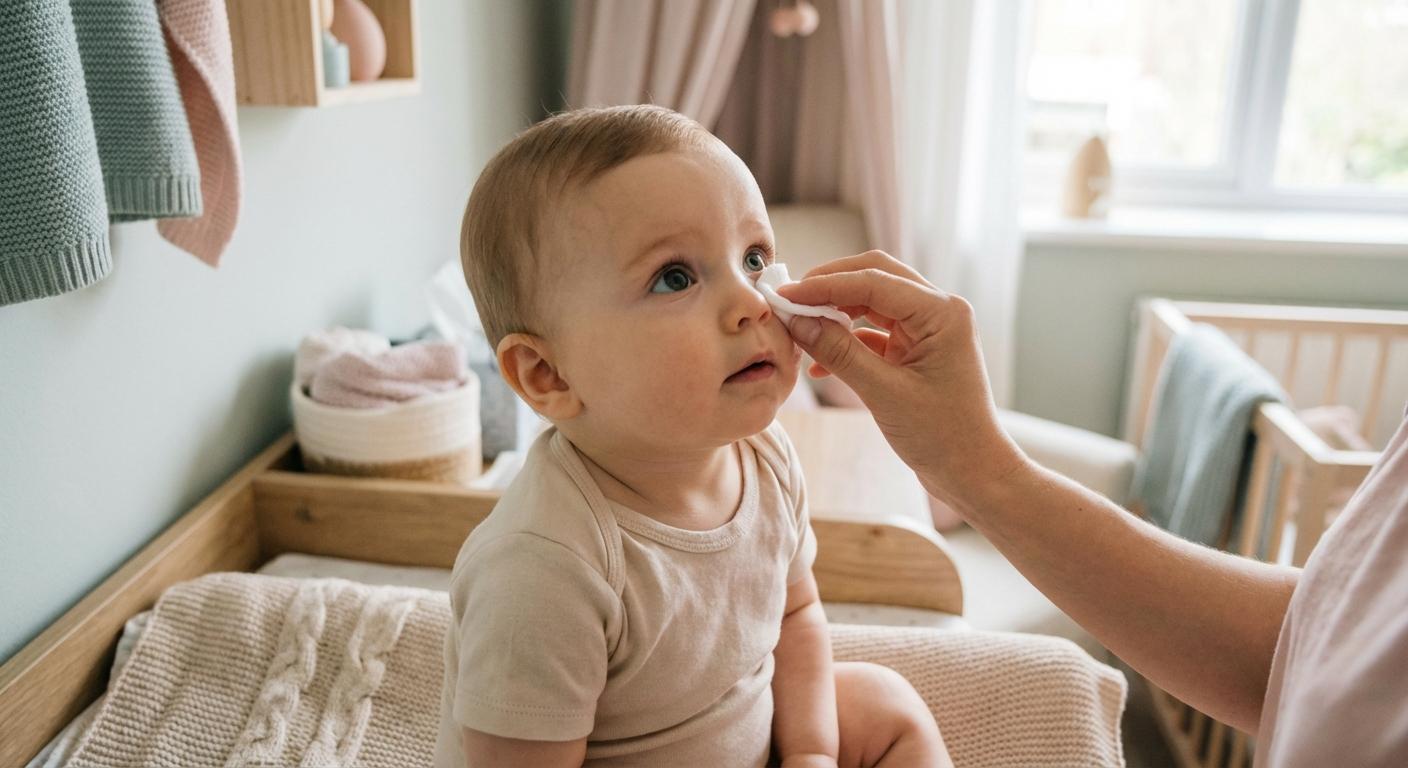
Safe cleaning step by step
1) Wash hands.
2) Soften crusts with a warm damp compress.
3) Use sterile saline with clean cotton/gauze.
4) Wipe inner corner to outer corner.
5) New pad each wipe, separate pads for each eye.
6) Wash hands again.
Compresses and drop technique
Warm compresses loosen crusts, cool compresses can ease swelling/itch.
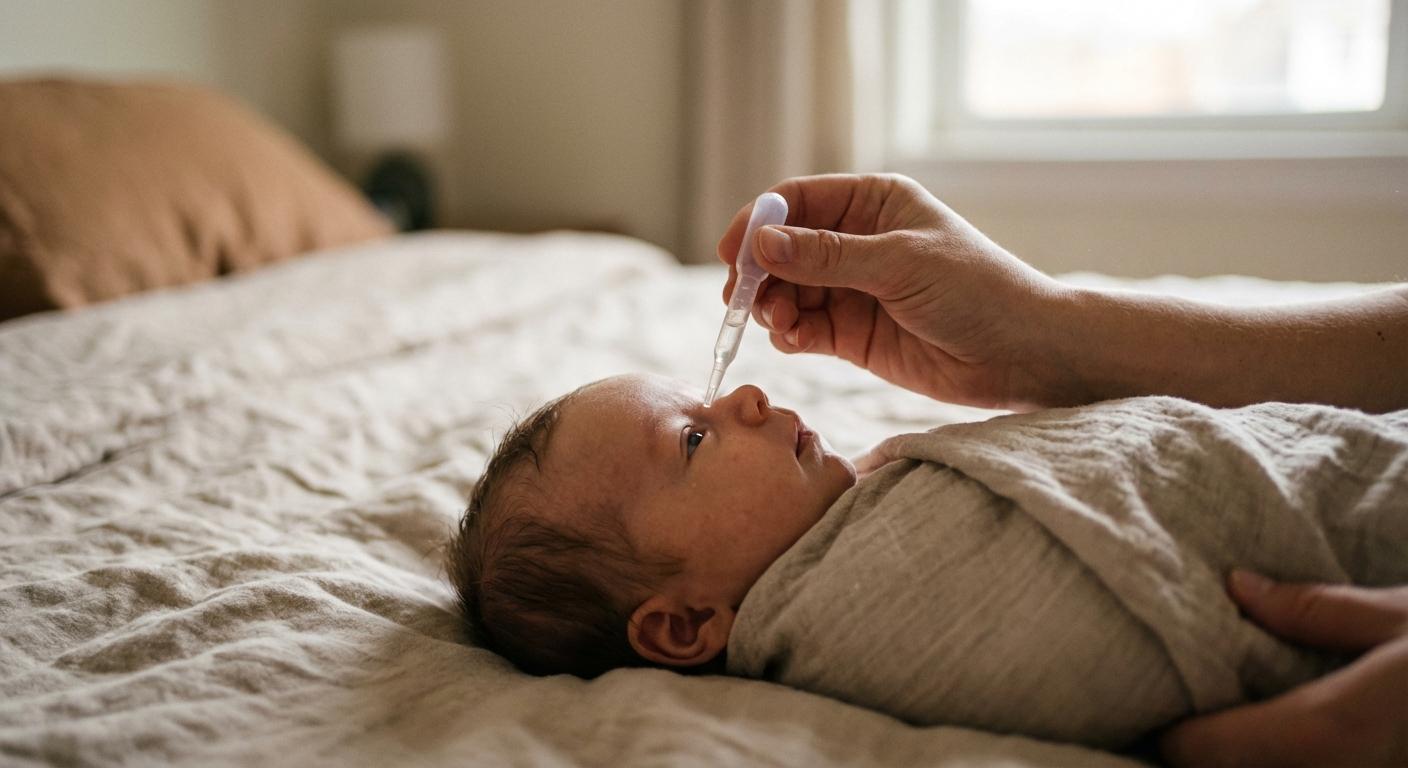
For drops/ointment: lay baby down, support the head, and avoid touching the bottle tip to the eye. If eyes are squeezed shut, a drop at the inner corner can run in when the eye opens.
Hygiene to reduce spread
For infectious baby conjunctivitis:
- strict handwashing before/after eye care
- no shared towels or pillowcases
- wash linens and clean frequently touched toys/surfaces
- trim nails to reduce skin damage from rubbing
When to contact a clinician or seek urgent care
Arrange prompt medical review if:
- your baby is under 28 days and has any redness, swelling, or discharge
- the eye will not open, or there is clear pain
- marked photophobia
- fever, lethargy, poor feeding
- severe swelling around the eye
- blisters around the eye
- very heavy pus-like discharge
- symptoms worsen, or there is no improvement after 24–48 hours of care (or after 48–72 hours of prescribed antibiotics)
Repeated episodes may point to blocked tear duct, blepharitis, allergy, or ongoing exposure in childcare, and deserve a fresh assessment.
Key takeaways
- Baby conjunctivitis commonly causes redness, tearing, discharge, crusting, and puffy lids, the pattern helps hint at viral, bacterial, allergic, or irritant causes.
- Thick sticky yellow-green discharge with lids stuck shut tends to fit bacterial infection, watery discharge with a cold often fits viral illness.
- In the first 28 days, baby conjunctivitis should be checked the same day because some infections can progress quickly.
- Gentle saline cleaning, compresses, and careful hygiene improve comfort and reduce spread.
- Health professionals can guide diagnosis and treatment, you can also download the Heloa app for personalized tips and free child health questionnaires.
Questions Parents Ask
Can my baby go to daycare with conjunctivitis — and when is it safe to return?
It’s completely normal to worry about passing it on. Policies vary, but many daycares focus on how your baby feels and whether there’s a lot of discharge that’s hard to manage. If antibiotic drops are prescribed for suspected bacterial conjunctivitis, some settings allow return after 24 hours of treatment. With viral conjunctivitis, it may stay contagious for several days, so careful hygiene (handwashing, separate towels, cleaning toys) makes a real difference. When in doubt, a quick call to your childcare provider and clinician can help you choose the calmest option.
How contagious is baby conjunctivitis at home — how do we protect siblings?
Infectious conjunctivitis spreads mainly through hands and shared fabrics. You can reduce risk by using single-use cotton pads for cleaning (one per wipe, one eye at a time), washing hands before and after eye care, and avoiding shared towels, washcloths, pacifiers, and pillowcases. Reassuringly, these small habits often lower spread a lot, even when siblings are close.
My baby keeps getting conjunctivitis — is that normal?
Repeated “pink eye” can happen, and it doesn’t mean you’ve done anything wrong. It may be frequent viral exposure (especially with daycare), but it can also be a blocked tear duct, eyelid irritation (blepharitis), or allergies as babies get older. If episodes keep returning, a clinician can look for the underlying trigger and suggest a plan tailored to your child.
Further reading:
- Pink Eye in Newborns | Conjunctivitis (Pink Eye) — https://www.cdc.gov/conjunctivitis/newborns/index.html
- Pink Eye in Newborns — https://www.nei.nih.gov/eye-health-information/eye-conditions-and-diseases/pink-eye/pink-eye-newborns
- Conjunctivitis — https://www.nhs.uk/conditions/conjunctivitis/