Seeing a pink, sticky eye in your little one can make any parent pause. Is it baby conjunctivitis, a blocked tear duct, a reaction to dust or smoke, or an infection your baby picked up from a sibling or crèche? Babies can’t explain burning, itching, or that “sand in the eye” feeling. So you’re left reading signs: tearing, crusts, redness, swelling, and a baby who turns away when you try to clean the lids.
You want clarity, not panic: what baby conjunctivitis looks like, what usually causes it, what treatment may be offered, what home care is safe, and when to seek urgent help (especially for newborns).
Baby conjunctivitis signs parents can spot
Common symptoms in newborns and older babies
With baby conjunctivitis, clues are mainly visible:
- pink/red eye (doctors may say conjunctival injection)
- extra watering (epiphora)
- sticky lashes, crusting
- puffy eyelids
- eye rubbing, frequent blinking, irritability during cleaning
In very young babies, redness may look subtle. Often the giveaway is discharge that returns quickly or an eye that looks “stuck” after sleep.

Redness, irritation, tearing and puffy eyelids
The conjunctiva is a thin membrane over the white of the eye and inside the eyelids. When inflamed, the eye looks pink-red. Irritation increases tearing, and secretions collect easily on tiny lashes.
Eye discharge explained (watery, clear, yellow/green, mucopurulent)
Discharge can hint at the cause, but it overlaps.
- Watery/clear: often viral, allergic, or irritant (including mild chemical conjunctivitis after newborn eye prophylaxis).
- Stringy mucus: viral illness or allergy.
- Mucopurulent discharge (milky, sticky): often bacterial.
- Thick yellow-green pus that reappears soon after cleaning: more suggestive of bacterial conjunctivitis.
A useful nuance: viral baby conjunctivitis can look “thicker” later if a secondary bacterial infection occurs. Clinicians look at the full picture: swelling, discomfort, speed of change, and your baby’s overall wellbeing.
In newborns, heavy pus-like discharge needs quick assessment because some early infections can affect the cornea.
Crusting and eyes stuck shut after sleep
Crusts form when discharge dries on lashes and lid edges. Many parents notice baby conjunctivitis when the baby wakes up and one eye won’t open easily. Warm water and gentle wiping usually loosens it. Avoid pulling lids apart.
One eye vs both eyes
- One eye: early viral infection, foreign body, irritant, blocked tear duct, or bacterial infection.
- Both eyes: viral illness, allergy, or irritants affecting both eyes, newborn prophylaxis irritation is often in both eyes.
Light sensitivity and unusual fussiness
Mild light sensitivity can occur. But marked photophobia, clear pain, an eye held shut, or intense crying in normal light suggests possible corneal involvement (for example keratitis) and needs prompt review.
How long it usually lasts
- Viral: often improves in 5-8 days, sometimes up to 2 weeks.
- Bacterial: often improves within a few days once treated, total duration commonly 5-7 days.
- Irritant/chemical: often settles in 24-72 hours after removing the trigger.
- Allergic: varies with exposure.
What baby conjunctivitis is and how it starts
Baby conjunctivitis means inflammation (sometimes infection) of the conjunctiva. Triggers include viruses, bacteria, allergies, and irritants. In newborns, exposure during delivery adds extra causes.
Why so common in babies?
- mucosal immunity is still maturing
- babies rub eyes and touch faces often
- toys move from mouth to hand to eye
- siblings and childcare increase exposure
Causes and risk factors for baby conjunctivitis
Infectious causes
- Bacteria: Staphylococcus aureus, Streptococcus pneumoniae, Haemophilus influenzae
- Viruses: commonly adenovirus and other respiratory viruses
- Newborn-specific: Neisseria gonorrhoeae, Chlamydia trachomatis
Non-infectious causes
- Allergy (more common later, more likely with eczema or family history of allergic rhinitis)
- Irritants: tobacco smoke, mosquito coils, air pollution, dust, perfumes, strong cleaning sprays, shampoo
- Newborn prophylaxis irritation (chemical)
- Medication intolerance (sometimes preservatives)
How it spreads at home and in daycare
Infectious baby conjunctivitis spreads via secretions on hands, towels, pillows, toys, and then back to the eyes. Crèche/daycare outbreaks happen easily with shared toys and close contact.
Risk is higher after a cold, with seasonal allergens, and with irritants (especially smoke and aerosols).
Types of baby conjunctivitis and what’s typical
Bacterial conjunctivitis
Often thicker discharge, crusting, lids stuck shut in the morning, and puffy eyelids. Many babies improve within 48-72 hours after starting prescribed antibiotic drops or ointment.
Viral conjunctivitis
Often comes with a cold. Discharge is watery to mucoid, may start in one eye and move to the other. Supportive care is the mainstay.
Allergic conjunctivitis
Usually both eyes, watery discharge, itch and rubbing, often with sneezing or a blocked/runny nose. Not contagious.
Irritant and chemical conjunctivitis
Redness and tearing soon after exposure (smoke, dust, shampoo, sprays). Usually watery discharge and settles after the trigger is removed.
Newborn baby conjunctivitis in the first month
Any baby conjunctivitis in the first 28 days deserves same-day medical assessment.
Timing after birth can give clues
- Chemical irritation: within hours, improves in 24-72 hours
- Gonococcal infection: often day 2-5
- Chlamydial infection: often day 5-14
Chlamydia, gonorrhoea, HSV
- Chlamydia trachomatis: watery to mucopurulent discharge and swollen lids, typically needs oral antibiotics for the baby, not only drops, and parental evaluation.
- Neisseria gonorrhoeae: rapidly worsening swelling and copious pus, emergency care due to corneal risk, systemic antibiotics, often hospital management.
- HSV: uncommon, but serious, urgent specialist review and antivirals.
Conditions that can look like baby conjunctivitis
Blocked tear duct (nasolacrimal duct obstruction)
Persistent watering and sticky mucus, often with less redness, usually one eye. If the inner corner becomes red, hot, swollen, painful, or fever appears, urgent review is needed because dacryocystitis can occur.
Foreign body, blepharitis, and deeper infections
- A speck of dust: sudden one-sided tearing/redness, baby may keep the eye closed.
- Blepharitis: crusting at the lash line and irritated lid margins.
- Preseptal cellulitis: fever with swelling and tenderness around the eye.
- Keratitis: pain and marked photophobia.
How baby conjunctivitis is diagnosed
Doctors assess onset, one or both eyes, discharge type, cold symptoms, and exposure. They examine lids, lashes, conjunctiva, and the cornea.
Swabs/tests may be done for newborns, severe swelling/discharge, unusual or recurrent cases, or concern for chlamydia, gonorrhoea, or HSV. Fluorescein dye may be used if corneal injury is suspected.
Baby conjunctivitis treatment by type and age
Not every red eye needs antibiotics
Antibiotics help bacterial baby conjunctivitis. They don’t treat viral, allergic, or irritant causes, and unnecessary drops can sting or get contaminated.
Bacterial conjunctivitis
Doctors may prescribe antibiotic drops or ointment (ointment often stays longer, though it can blur vision briefly). Improvement is often seen in 2-3 days. Recheck if there’s no clear improvement after 48-72 hours, or if swelling/pain increases.
Viral conjunctivitis
Supportive care: clean discharge, use compresses, and protect the skin around the eye. Symptoms can take 1-2 weeks to settle.
Allergic conjunctivitis
Reduce triggers like dust and pollen. A clinician may suggest lubricating drops, antihistamine options may be considered for older babies when appropriate.
Irritant/chemical conjunctivitis
Remove the trigger and monitor. If a product repeatedly worsens redness or discomfort, stop and seek advice.
Safe home care for baby conjunctivitis
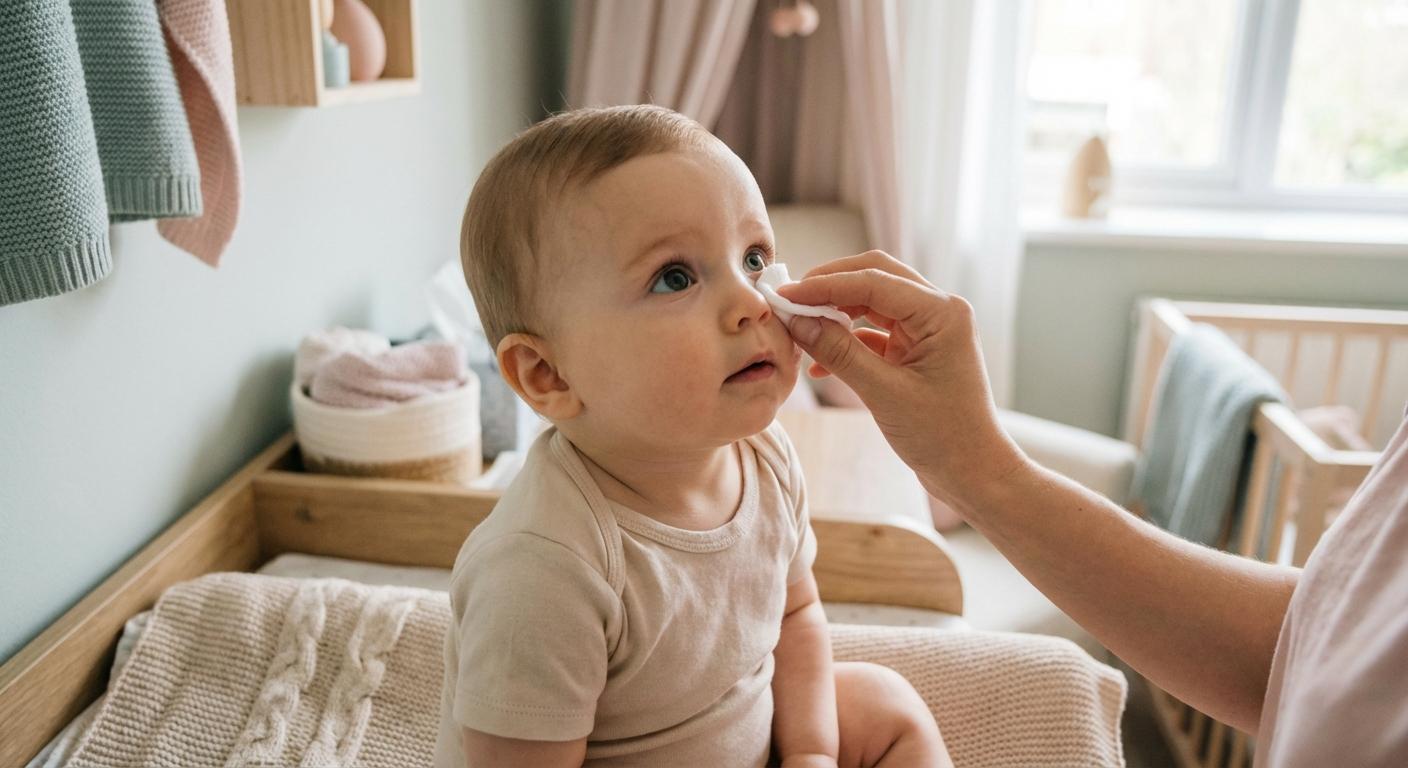
Cleaning discharge step by step
1) Wash hands.
2) Soften crusts with a warm, damp compress.
3) Use sterile saline with clean cotton/gauze.
4) Wipe inner corner to outer corner.
5) New pad each wipe, separate pads for each eye.
6) Wash hands again.
Compresses and drop technique
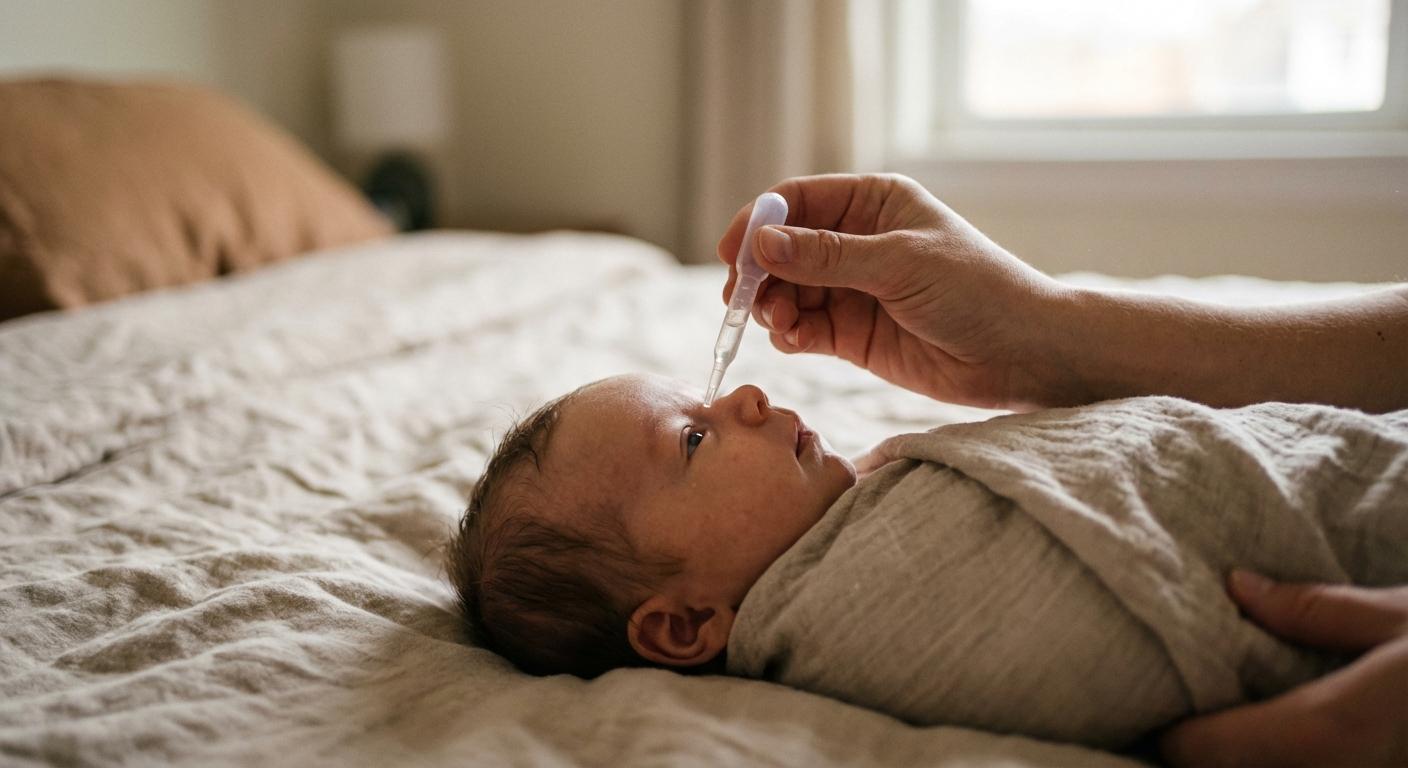
Warm compress loosens crusts, cool compress reduces swelling/itch. For drops/ointment, support the head and avoid touching the bottle tip to lashes or eye.
Hygiene to reduce spread
For infectious baby conjunctivitis: strict handwashing, no shared towels/pillowcases, wash linens, clean toys/surfaces, keep nails short.
When to contact a clinician or seek urgent care
Seek prompt review if:
- baby is under 28 days with any redness, swelling, or discharge
- severe swelling around the eye
- the eye won’t open or there is clear pain
- marked photophobia
- fever, lethargy, poor feeding
- blisters around the eye
- very heavy pus-like discharge
- symptoms worsen or don’t improve within 24-48 hours (or no improvement after 48-72 hours of prescribed antibiotics)
Baby conjunctivitis and daycare in India
Policies vary. Many crèches ask children to stay home if there is heavy discharge, lids crusted shut, fever, or discomfort. If antibiotics were started for suspected bacterial infection, some centres allow return after 24 hours if discharge is improving and the baby feels well.
Preventing baby conjunctivitis
Simple habits:
- wash hands after diaper changes, after wiping noses, before feeds, and after eye care
- avoid shared towels and pillows during infection
- reduce smoke exposure (including mosquito coils), strong room fresheners, and harsh cleaning sprays
Many hospitals apply erythromycin ointment (or another prophylaxis) soon after delivery to reduce serious birth-acquired eye infections. Mild redness/watering may occur and usually settles in 24-72 hours.
Eye drop safety in babies
Avoid leftover/shared drops and avoid steroid drops unless specifically prescribed. If drops make symptoms clearly worse, stop and seek medical advice.
À retenir
- Baby conjunctivitis often causes redness, discharge, crusting, and puffy lids.
- Watery discharge with cold symptoms often suggests viral baby conjunctivitis, thick yellow-green discharge with lids stuck shut suggests bacterial causes.
- A blocked tear duct can mimic baby conjunctivitis, especially with long-lasting tearing and minimal redness.
- Newborns (0-28 days) with any eye redness or discharge should be checked the same day.
Parents can always reach out to their paediatrician or eye specialist for tailored advice. You can also download the Heloa app for personalised guidance and free child health questionnaires.
Further reading:
- Pink Eye in Newborns | Conjunctivitis (Pink Eye) — https://www.cdc.gov/conjunctivitis/newborns/index.html
- Pink Eye in Newborns — https://www.nei.nih.gov/eye-health-information/eye-conditions-and-diseases/pink-eye/pink-eye-newborns
- Conjunctivitis — https://www.nhs.uk/conditions/conjunctivitis/