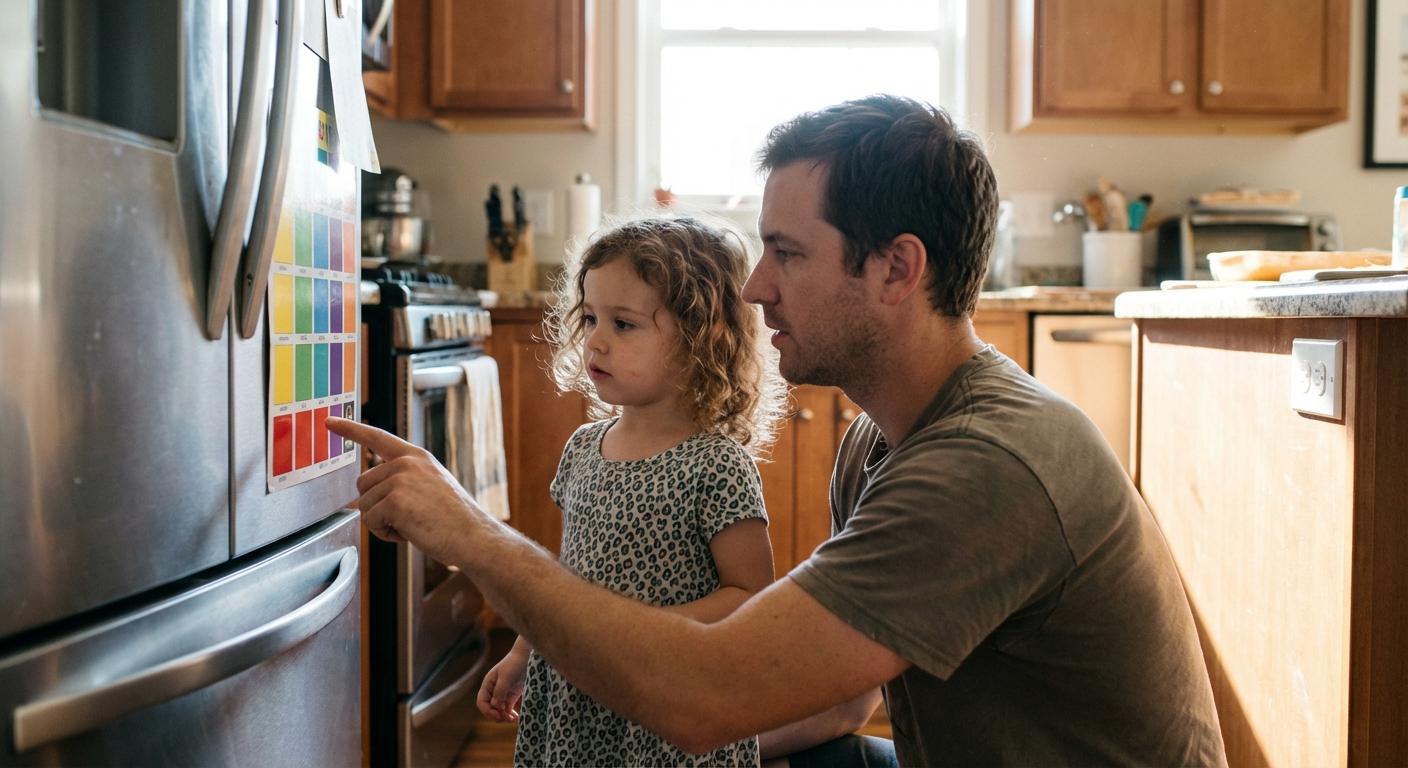

Some days feel like a loop. Shoes, teeth, backpack, “please use your inside voice,” repeat. When the reminders stack up, parents often look for something that brings clarity without turning every transition into a showdown. A reward chart can do exactly that: make expectations visible, give quick feedback, and help skills become more automatic.
Not a grade. Not a label. More like a learning scaffold (a temporary support) that you can adjust as your child grows.
Why a reward chart can feel like a relief at home
A reward chart works best when family life is busy and your child is still building executive functions (the brain skills for planning, inhibiting impulses, shifting attention). Young children do not “choose” to forget, their brain simply drops the thread.
So the chart becomes a calm third party:


- “Let’s check your chart” instead of “I asked you three times.”
- Less negotiating in the moment.
- More neutral tone, more cooperation.
You may be wondering: will this create pressure? It can, if it turns into a daily scoreboard. Used lightly, it usually does the opposite.
Reward chart meaning: what it is (and what it is not)
A reward chart is a visual behavior-learning system: your child completes a specific, observable action, earns a marker (sticker, checkmark, token), and those markers lead to a planned reward.
In learning theory, this is positive reinforcement: a behavior followed by something pleasant becomes more likely to happen again.
A reward chart is not:
- a punishment tool
- a threat (“no sticker, no love”) or a humiliation device
- a way to bargain during a meltdown
If the chart starts to trigger shame, it is sending a message: the target is too hard, the timing is off, or the system needs simplifying.
How a reward chart works: fast feedback, clear criteria
Positive reinforcement is strongest when feedback is close in time to the behavior and when the child knows exactly what “counts.” Keep it concrete.
A simple loop:
- Choose 1–3 goals.
- Define what success looks like (in words a child can picture).
- Give the token immediately.
- Trade tokens for a reward your child actually values.
Why this helps developmentally: external cues (a chart at eye level, a sticker placed right away) support attention and self-control until those skills strengthen.
The essential parts of a reward chart
- Goals: 1–3 behaviors, written positively (“Brush teeth before pajamas”).
- Tokens: stickers, stars, points, a moveable marker.
- Milestones: a small target (today) and sometimes a weekly one.
- Rewards: ideally experiences or privileges (extra story, choosing dinner, special playtime).
A practical rule parents love: the younger the child, the shorter the wait should be.
Reward chart, sticker chart, behavior chart… what is the difference?
The names overlap, but the focus shifts:
- Reward chart: any system linking a target behavior to a reward.
- Sticker/star chart: a reward chart using stickers (great for preschoolers).
- Behavior chart: tracks 1–3 skill targets (calm voice, gentle hands).
- Responsibility chart: tracks family participation (feed the pet, set napkins).
And then there is the routine chart.
Reward chart vs routine chart: structure plus motivation
A routine chart shows sequence: morning steps, bedtime steps, after-school steps. It is pure structure.
A reward chart adds motivation by highlighting one or two actions you are actively teaching.
Pairing them can be powerful:
- The routine chart reduces uncertainty.
- The reward chart boosts practice and repetition.
If you feel tempted to track everything, pause. Fewer goals tend to work better and feel kinder.
When a reward chart helps… and when to choose another tool
A reward chart can help when:
- you are teaching a new routine (morning, bedtime, homework start)
- transitions are hard (play → tidy → get dressed)
- you want fewer reminders and less arguing
- your child benefits from visual supports
It may not be the best fit when:
- the goal is vague (“be good”) or emotionally loaded
- adults cannot apply it consistently right now (new baby, major stress)
- the chart has become a daily conflict
In those seasons, simpler often wins: one small routine tweak, more modelling, fewer demands.
Keeping it respectful: motivation without pressure
Specific encouragement beats generic praise
A sticker alone is fine. A sticker plus precise feedback is better.
- “Good job” (pleasant, but fuzzy)
- “You put the blocks in the box when the timer beeped” (clear, repeatable)
That detail builds self-efficacy (the child’s sense: “I can do this”).
Extrinsic vs intrinsic motivation: will my child only act for rewards?
At first, many children need external motivation. Normal. Especially for tasks that are boring, difficult, or new.
To keep the balance:
- keep goals small and doable
- praise effort, strategies, and persistence
- gradually fade rewards (less frequent, more symbolic)
You are teaching a skill, not creating a permanent payment system.
During meltdowns: avoid “deal-making”
A meltdown is a stress response. The thinking brain is offline. In that moment, offering rewards to stop screaming can accidentally teach escalation.
Calm first. Then, later, give a clean opportunity to succeed and earn a token.
Choosing a reward chart format (and keeping it safe)
Printable reward chart: flexible and fast to adjust
Print, try, tweak. Shorten goals during holidays. Restart without drama. Place the reward chart at eye level where the action happens (kitchen, hallway, bathroom).
Magnetic reward chart: satisfying, but watch small parts
Magnetic boards are durable. The safety issue is real: small magnets are dangerous if swallowed (multiple magnets can trap bowel tissue). For young children, avoid small pieces and supervise.
Velcro reward chart: interactive and reusable
Velcro icons can be wonderfully engaging. Choose large, sturdy pieces. If your child still mouths objects, store tokens out of reach.
Digital reward chart: shared tracking for older kids
A digital reward chart can help when caregivers share responsibility, reminders improve consistency, or an older child prefers privacy. Many families like a hybrid: child-facing printable chart plus a private adult note.
Reward chart by age: development-matched setups
Toddlers (2–3): micro-goals, same-day rewards
Keep the loop short:
- 1–2 picture-based goals
- token immediately
- reward the same day (extra story, short game, special time)
Safety first: no small tokens, no loose magnets.
Preschoolers (3–5): quick wins and concrete wording
Often effective:
- 2–3 goals
- pictures + simple words
- daily sticker plus a weekly privilege
Say “Toys in the box when the timer beeps,” not “clean your room.”
Early school age (5–7): collaboration and brief check-ins
Good targets:
- pack the bag using a short list
- set the table
- start homework at a set time
- ask for a calm break instead of yelling
A short evening review (2–5 minutes) keeps the reward chart grounded in real life.
Older kids (7–12): responsibilities and self-monitoring
Older children can track more independently:
- bedtime checklist with fewer reminders
- homework planning
- one steady household task
- a coping skill when frustrated (breathing, break card)
They can place the token, you verify calmly.
Teens: autonomy, privacy, meaningful privileges
Teens usually respond better to collaboration than to stickers. Keep goals few, let them track privately, and choose privileges that matter (agreed device windows, social plans, later weekend curfew within limits). If anxiety is present, keep the system gentle and flexible.
Reward chart goals that work at home
Pick 1–3 observable, measurable behaviors
If two adults cannot agree whether it happened, rewrite it.
- “In bed by 8:15, lights off” beats “go to bed nicely.”
Examples:
- “After dinner, put your plate in the sink.”
- “Pajamas on, then choose a story.”
- “Lego in the bin before dinner.”
- “Ask for help when stuck.”
Routines: morning and bedtime are the easiest wins
Because they repeat daily, routines build automaticity.
- Morning: dressed, teeth, breakfast, bag by the door
- Bedtime: pajamas, teeth, story, lights out
If organisation is the main challenge, a picture routine chart may reduce uncertainty and arguing, then your reward chart can target just one sticky step.
Behavior targets: keep it narrow
For yelling, hitting, interrupting:
- write one short sentence
- keep it observable
- stay non-judgmental
- frame it positively when possible (“Use a calm voice”)
Rewards and tracking: motivating, not escalating
Tokens: stickers, stars, points
- Stickers/stars: great for young kids
- Tokens/points: helpful when you want a slightly delayed reward
- Smiley faces can add nuance (“done / almost / try again”) without shaming
Non-material rewards: often the strongest
Connection and choice tend to last longer than toys:
- choosing the bedtime story
- 10 minutes of play with you
- a park trip
- picking dinner music
Material rewards: small, occasional, not automatic
A book or craft item can work sometimes. If objects become expected every time, the skill can fade when the object disappears.
Frequency: match development
- ages 2–5: same-day milestones
- ages 6–8: daily tokens + weekly privilege
- ages 9–12: more spaced milestones
Setting up a reward chart that actually lasts
Start easier than you think
If success happens less than half the time, the goal is likely too hard. Lower the bar, build momentum, then raise it gradually.
Make it sturdy and simple
One clean layout is enough:
- “To do”
- “Done”
- the reward/milestone box
Avoid small detachable pieces for young children. Secure the chart so it will not fall.
Launch calmly, co-design one small detail
A few sentences: what it is for, how to earn a token, when you will review. Let your child choose one detail (color, icon, one goal). Buy-in rises.
Roles: child does, adult validates
- Child places the sticker/token.
- Adult validates and coaches.
- Quick review: what helped? what got in the way?
Troubleshooting common reward chart problems
- Motivation drops? Bring the reward closer and offer a small menu of choices.
- Goals too hard? Break the task into steps (shirt first, then pants, then hamper).
- Adults inconsistent? Reduce goals and use short scripts: “Check your chart.” “You earned it.” “Not yet, next chance soon.”
- Sibling competition? Avoid comparisons, fair is not identical.
- Pressure rising? Pause, simplify, or switch to a routine chart for a while.
Key takeaways
- A reward chart makes expectations visible and can reduce conflict during daily transitions.
- The best systems target 1–3 concrete, positively worded, observable goals.
- Positive reinforcement works best with immediate tokens and specific encouragement.
- Safety matters: avoid small tokens and magnets for young children, supervise interactive pieces.
- If stress grows, adjust the reward chart (shorter loops, easier goals) or pause and ask a professional for support. For personalised tips and free child health questionnaires, you can also download the Heloa app.
Questions Parents Ask
What are good rewards for a reward chart (without buying toys)?
Many parents worry they’ll need to “pay” for every step—no need. Often, the most motivating rewards are simple privileges and connection: choosing the bedtime story, picking the family music, 10 minutes of one-to-one play, staying up 10 minutes later on the weekend, selecting a snack, or being the “helper” for a fun task. If you use objects, keeping them small and occasional can help the chart stay focused on learning, not collecting.
How long should you keep a reward chart before changing it?
There isn’t one perfect timeline, and that’s normal. A helpful rhythm is 2–4 weeks, then a quick reset: keep what works, simplify what doesn’t. If your child succeeds easily most days, you can fade the chart (fewer stickers, bigger milestones) or switch the target to a new skill. If success is rare, it may be a sign the goal is too big right now—making it easier can bring fast relief.
Are reward charts helpful for kids with ADHD or autism?
They can be, especially when the steps are very clear and the reward comes quickly. Many children do best with one small goal at a time, visual cues (pictures), and immediate feedback. It can also help to keep the chart predictable and calm, and to choose rewards tied to your child’s interests. If the chart increases stress, pausing and asking a professional for tailored strategies can be a supportive next step.