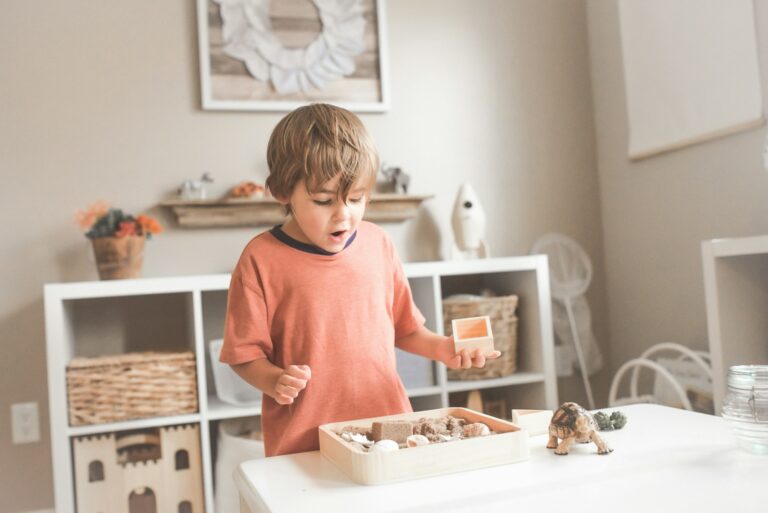
When a baby startles at the vacuum, when a toddler refuses socks “because they hurt,” when a school-age child melts down after a noisy day—parents often wonder what’s going on inside that little nervous system. Child sensory development is the gradual wiring-up of how the brain detects sensations, sorts them, and uses them to move, eat, play, learn, and calm down again. Reactions can look “too big” for the moment, often, it’s a body that has run out of capacity.
Sensory skills grow through maturation plus everyday experiences—mealtimes, bath time, playground climbs, bedtime rituals. And when things get stuck (sleep, feeding, safety, school participation), there are practical ways to support and, when needed, to ask for an evaluation.
Child sensory development: what it is and why it matters
What “sensory development” means in real life
Child sensory development describes how the central nervous system learns to register information from the environment and from the body, then translate it into action. Not just vision, hearing, touch, smell, taste, but also:
- Proprioception (signals from muscles/joints about position and force)
- Vestibular system (inner ear information about movement, gravity, balance)
- Interoception (internal cues: hunger, thirst, bladder fullness, pain, nausea)
With myelination (the “insulation” that speeds nerve signals) and repetition, the brain gets faster at organizing sensations. Rocking, mouthing toys, crawling under a chair, chewing textures, climbing steps: tiny moments, big neurological practice.


Sensory input also connects to felt safety. A familiar voice, a known smell, a steady rhythm can keep the autonomic nervous system calmer. Too many demands—bright lights, constant noise, rushed transitions—can tip a child into overload.
Sensory development vs. sensory processing vs. sensory integration
- Sensory development: maturation of the sensory systems.
- Sensory processing: how the brain detects, filters, prioritizes, and interprets input.
- Sensory integration: combining senses to act smoothly (seeing a step, shifting weight, balancing, stepping up).
Neuroplasticity matters here: early childhood brains change quickly with repeated experiences—especially when they feel predictable and safe.
Learning, behavior, and self-regulation
Child sensory development shapes attention. When the body feels stable, it’s easier to sit, listen, coordinate hands, and tolerate frustration. When input is overwhelming, energy goes into protection.
Think “nervous-system state”:
- Too much input → avoidance, irritability, tears, shutdown
- Too little input → constant movement, crashing, chewing, loudness
Over time, co-regulation (an adult’s steady presence) becomes self-regulation.
Sensory systems your child uses every day
Touch (tactile)
Touch includes light touch, deep pressure, texture, temperature, and pain. It influences clothing, grooming, messy play, and affection. Some children react strongly to seams or quick light touch, others seek firm pressure and “rough” play.
Balance and movement (vestibular)
The vestibular system (inner ear) supports balance, posture, eye coordination, and confidence on swings, stairs, bikes. Some children avoid movement because it feels unsafe or dizzy, others seek jumping or spinning to feel regulated.
Body awareness (proprioception)
Proprioception comes from muscles and joints. When it’s less efficient, children may look clumsy, crash into furniture, break toys, press too hard with pencils, or struggle with zippers. Heavy work (push, pull, carry, squeeze) often helps the body feel “mapped.”
Sight and hearing
Vision includes tracking and visual attention, hearing includes detecting sounds and filtering background noise. If a child often doesn’t respond, don’t assume it’s sensory only—consider a hearing check, especially with ear infections or speech delay.
Smell, taste, and interoception
Smell and taste influence food acceptance, interoception supports noticing hunger, thirst, toileting needs, pain, and early emotion signals. When interoception is fuzzy, emotions can escalate seemingly “out of nowhere.”
Child sensory development milestones by age
Before birth and the early days
Child sensory development begins prenatally (pressure, movement, muffled sounds). After birth, regulation comes first: warmth, closeness, moderate light, limited noise, repeated routines.
0–6 months
Babies link voice, touch, and rhythm. They track faces, startle to loud sounds, explore with hands and mouth.
Try: soft songs, brief texture play, supervised tummy time, slow position changes.
6–12 months
Exploration becomes purposeful (banging, dropping, mouthing). Mobility boosts vestibular and proprioceptive learning. Foods add textures and temperatures—often best one new thing at a time.
1–3 years
Toddlers seek input through climbing, pushing, carrying, crashing. Preferences around clothing, grooming, and food textures often appear. Sensory thresholds shift with fatigue, teething, constipation, illness, and sleep debt.
3–6 years
Coordination and endurance improve (jumping, throwing, catching). Fine-motor tasks expand (scissors, drawing). Listening discrimination sharpens for language and early learning.
5–12 years
School adds sitting, handwriting stamina, crowded spaces, and noise. Many children do better with planned movement breaks, clear visual structure, and predictable transitions. Older children can begin self-advocating (“I need a quiet break”).
What influences child sensory development day to day
Maturation, temperament, and physical comfort
Each child has a sensory profile. Also watch for “invisible” factors that reduce tolerance:
- Poor sleep
- Pain, fever
- Reflux
- Constipation
- Skin inflammation (eczema, dermatitis)
A sudden behavior shift deserves a quick check for discomfort.
Environment: quality over quantity
More toys and more stimulation don’t automatically help. Overload often accumulates: background noise, screens always on, fast transitions, visual clutter. Possible signs: gaze avoidance, stiffening, agitation, crying.
Adults as translators
Naming sensations (“That was loud,” “Sticky feels hard today”) links body cues to emotions and coping skills—key for regulation.
Common sensory profiles you may notice
Over-responsivity and under-responsivity
- Over-responsivity: ordinary input feels intense (covering ears, distress with seams, avoiding haircuts).
- Under-responsivity: signals are missed (not noticing mess, bumping, needing strong movement).
A child can be sensitive in one system and seeking in another.
Discrimination and motor planning
When sensory discrimination is hard, children may struggle to grade force (too hard/too light), manage fasteners, or produce neat handwriting. Motor planning (praxis) difficulties can show up with bike learning, multi-step dressing, or sports drills.
Why settings change everything
Home may feel manageable, a supermarket or cafeteria piles sound, smell, visual clutter, and social demands at once. Add hunger and fatigue and reactions intensify.
Easy sensory activities (home and outside)
Principles
- Change one factor at a time (sound or texture or movement)
- Repeat: familiarity lowers stress
- Respect signals (turning away, stiffening, crying = pause)
- Safety first (water supervision, choking hazards under 3, mild/fragrance-free when needed)
Quick ideas by age
- 0–6 months: skin-to-skin, gentle rocking, high-contrast tracking, soft singing
- 6–12 months: floor play over cushions, simple sound games (pause/again), textured fabrics
- 1–3 years: scooping/pouring, playdough, mini obstacle courses, outdoor texture walks
- 3–6 years: throw/catch, rhythm games, lacing, simple cooking and gardening
Everyday routines are hidden sensory practice: bath warmth, clothing textures, toothbrushing, wind and cold outdoors, mealtime smells.
Supporting sensory regulation at home
Routines that reduce stress
Predictability helps. Morning heavy work (wall pushes, carrying a small bag) can organize the body. After school, a decompression window often prevents later conflict. Bedtime often improves with dim light, a consistent order (wash, pajamas, story, breathing), and fewer screens before sleep.
Calm corner and short sensory breaks
A calm corner can be simple: cushion, softer light, a small box of quiet tools, a breathing visual. Short breaks (1–3 minutes) work well: animal walks, chair push-ups, squeezing putty. If motion causes nausea, prefer slow rocking or deep pressure over spinning.
Sensory diet, with guidance for special items
A sensory diet is a planned menu of input through the day. Start small and adjust with sleep and stress. Weighted or compression items require professional guidance, correct sizing, and time limits.
Practical strategies for common challenges
Clothing and grooming
Comfort first: soft fabrics, seamless socks, tag removal, predictable choices. Use step-by-step routines. If scalp rash or itching exists, consider eczema/dermatitis—treating skin often reduces distress.
Noise sensitivity
Plan ahead for loud places. Headphones can help, plus a clear exit plan (quiet spot, short break, predictable return). If ear infections are frequent or responses to sound are inconsistent, request a hearing assessment.
Transitions
Use “first/then,” visual schedules, and timers. Break big transitions into micro-steps and offer one small choice.
Feeding and oral sensory needs
Avoid pressure. Encourage exploration (smell → touch → lick → taste) and pair new textures with familiar foods. Seek help if growth/hydration are affected, gagging is frequent, or meals create daily distress.
When to seek extra support
Consider help when sensory patterns repeatedly interfere with sleep, feeding, safety, or participation at childcare/school, or when meltdowns are frequent and recovery is long. Also, rule out hearing/vision issues and medical contributors (constipation, reflux, iron deficiency, pain).
Start with your pediatrician, bringing real examples. An occupational therapist can assess sensory processing through questionnaires and observation during play and daily tasks, support may also involve SLP, PT, and the school team.
Key takeaways
- Child sensory development is how the nervous system learns to detect, filter, and organize sensations for daily life.
- Beyond the five senses, proprioception, vestibular input, and interoception strongly influence balance, body awareness, feeding, toileting, and emotions.
- Sensory tolerance changes with sleep, pain, illness, constipation, and stress, check comfort when behaviors shift.
- Simple routines and short, planned sensory breaks often prevent overload.
- Seek professional input when sleep, feeding, safety, or school participation are persistently affected, pediatricians and OTs can guide next steps.
- Parents can also download the Heloa app for personalized tips and free child health questionnaires.
Questions Parents Ask
Can sensory issues appear later, even if my child seemed “fine” as a baby?
Yes—this can be completely normal. Sensory demands change a lot with age: daycare and school add noise, crowds, sitting still, handwriting, sports, and faster transitions. Some children cope well early on, then show signs when life gets busier or more tiring. Growth spurts, stress, poor sleep, constipation, and frequent illnesses can also lower tolerance. If changes feel sudden, it can be reassuring to also rule out hearing/vision concerns or pain with your pediatrician.
Is “sensory processing disorder” an official diagnosis?
Not always. Many families hear the term “sensory processing challenges” instead, because sensory differences can exist on their own or alongside other developmental profiles. What matters most is impact: does it interfere with sleep, eating, toileting, safety, learning, or daily family life? An occupational therapist can assess patterns (seeking, avoiding, sensitivity, motor planning) and suggest practical supports, even when there isn’t a single formal label.
Do sensory sensitivities mean my child is autistic?
Not necessarily. Sensory differences are common in autism, but they also occur in many children who are not autistic—especially during certain stages, or when a child is overloaded or anxious. If you notice broader signs (communication, social interaction, play skills, repetitive behaviors) alongside sensory struggles, it may be helpful to discuss a developmental screening. Early support can be beneficial, whatever the outcome.
Further reading:
- Sensory Development Infants and Toddlers: https://www.nhsborders.scot.nhs.uk/media/1011118/Sensory-development-in-infants-and-toddlers.pdf
- Sensory processing in early years: https://connect.humber.nhs.uk/service/humber-sensory-processing-hub/sensory-processing-in-early-years/