Baby food can look straightforward—until your baby turns away after two spoons, gags on a new texture, or you suddenly wonder whether a grape quarter is safe. Texture, timing, nutrients, allergens, storage… it adds up fast.
A calmer path exists: keep milk feeds central, build skills gradually, and focus on high-impact nutrition (especially iron and healthy fats) while keeping choking risk low.
Baby food basics: when and how to start
Baby food is any food prepared so a baby can swallow safely: smooth purées, mashed foods, thicker blends with soft lumps, and soft finger foods. Homemade and store-bought both fit, what matters is safe texture and nutrient-dense ingredients.
Readiness signs for solids (not just age)
Many babies begin baby food between 4 and 6 months when several signs appear together:


- Holds head and neck steady
- Sits with minimal support and stays stable
- Shows interest in food (reaches, opens mouth)
- Tongue-thrust reflex is fading (food isn’t pushed straight out)
Premature babies are often assessed by corrected age. If your baby has medical concerns, ask your pediatrician for a tailored plan.
Breast milk or formula: still the main nutrition
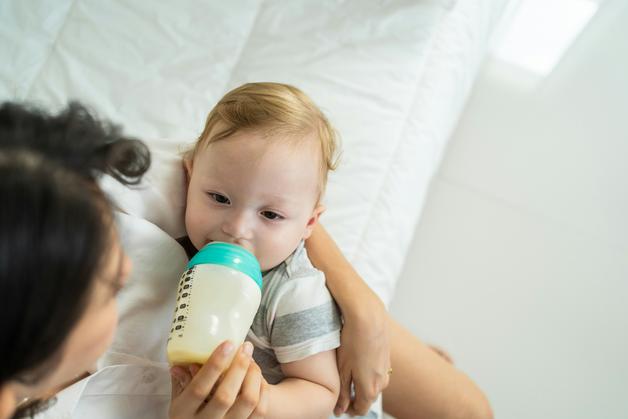
Breast milk or infant formula remains the primary source of energy and hydration through the first year. Early baby food is complementary: it trains chewing and swallowing, widens taste acceptance, and helps meet rising needs—iron in particular.
Nutrition that matters most early on
The “big three” priorities
When choices feel endless, anchor on:
- Iron (neurodevelopment, preventing iron deficiency)
- Fats (energy density, growth, brain development)
- Food safety (texture, choking prevention, hygiene)
Iron, vitamin D, iodine: what parents often ask about
Iron. Iron stores from pregnancy decline around mid–first year. Low iron can be subtle (pallor, fatigue, irritability). Practical iron-rich baby food options:
- Well-cooked meat/poultry, puréed or finely minced
- Boneless fish, well cooked and flaked
- Egg, fully cooked and mashed
- Lentils/beans/chickpeas, very well cooked and mashed smooth
- Iron-fortified infant cereal (optional)
Tip: plant-based iron is absorbed better with vitamin C (lentils + tomato, chickpeas + pepper).
Vitamin D. Supplementation is commonly prescribed depending on local guidance, sunlight exposure, and milk feeding method. Confirm the dose with your clinician.
Iodine. Supports thyroid hormones and brain development, fish and other animal foods contribute.
Baby food stages: texture over “rules”
Stage 1 (often 4–6 months when ready): smooth purées
Skills: learning to move purée to the back of the mouth and swallow.
Ideas:
- Sweet potato, carrot, squash, peas
- Pear or apple (cooked if needed)
Stage 2 (around 6–8/9 months): thicker purées, soft lumps, first finger foods
Skills: more tongue control, beginning to mash with gums, grabbing food.
Ideas:
- Mashed avocado
- Full-fat plain yogurt
- Lentils mashed very smooth at first
- Fully cooked scrambled egg
- Very soft pasta or rice
Stage 3 (around 8–10 months+): mashed textures and soft pieces
Skills: stronger chewing motions, pincer grasp, more self-feeding.
Ideas:
- Tender meat or fish, well cooked and chopped very small
- Soft cooked vegetables, chopped
- Soft fruit pieces
- Thin hummus on toast strips
Avoid high-risk choking foods (whole grapes, popcorn, whole nuts, hard candy, hard raw rounds). Supervision stays essential.
Texture progression without stress
You may see gagging when textures change. Gagging is often noisy, breathing continues. Choking is silent or ineffective—an emergency.
A practical progression:
- Start smooth
- Thicken gradually (fork-mash more, blend less)
- Add tiny soft lumps
- Move to “melting” soft pieces
If your baby seems “stuck” on smooth baby food, try one small change at a time: tiny soft lumps mixed into a familiar purée, plus one easy finger food. Frequent struggling, coughing, or persistent distress deserves a clinical check (pediatrician or feeding therapist).
Spoon-feeding, baby-led weaning, or a mix
Baby-led weaning (BLW) uses safe finger foods so the baby self-feeds. Spoon-feeding helps with targeted nutrients. Mixed feeding is common and can work very well.
Non-negotiables, whichever style you choose:
- Upright, stable sitting posture
- Calm, attentive supervision
- Soft foods that mash easily
- Regular exposure to iron-rich choices
Allergens: introducing safely
Common allergens: cow’s milk protein (as yogurt/cheese), egg, peanut, tree nuts, soy, wheat, sesame, fish, shellfish.
Practical plan for baby food allergen exposure:
- Start once your baby is ready for solids
- Offer a small amount early in the day
- One new allergen at a time, then observe for 2–3 days
Use safe forms: well-cooked egg, smooth nut butter thinned with water, breast milk, formula, or yogurt (never whole nuts).
Watch for hives, facial swelling, repeated vomiting, wheeze, or breathing difficulty. Breathing difficulty or collapse is an emergency.
If your baby has severe eczema or a known food allergy, ask your clinician about the safest plan.
Baby food safety and hygiene at home
Choking prevention: posture, shape, supervision
Most safety comes down to three habits:
- Baby sits upright in a stable high chair
- Food is soft and prepared in safe shapes
- No eating while lying down, playing, or in the car
High-risk items include whole grapes/cherry tomatoes (cut lengthwise), sausage rounds, whole nuts, hard raw vegetables.
Hygiene and storage basics
Wash hands, use clean utensils, separate raw and ready-to-eat foods, cook animal foods thoroughly.
Cool, cover, refrigerate promptly. Reheat leftovers until steaming hot, then cool and stir well. Discard leftovers after a feeding.
Foods to avoid or limit
- No honey before 12 months (infant botulism risk)
- Avoid added salt and salty processed foods
- Avoid added sugar as a routine
- Cow’s milk shouldn’t be the main drink before 12 months (small amounts in cooking are usually fine after about 6 months)
Homemade vs store-bought baby food
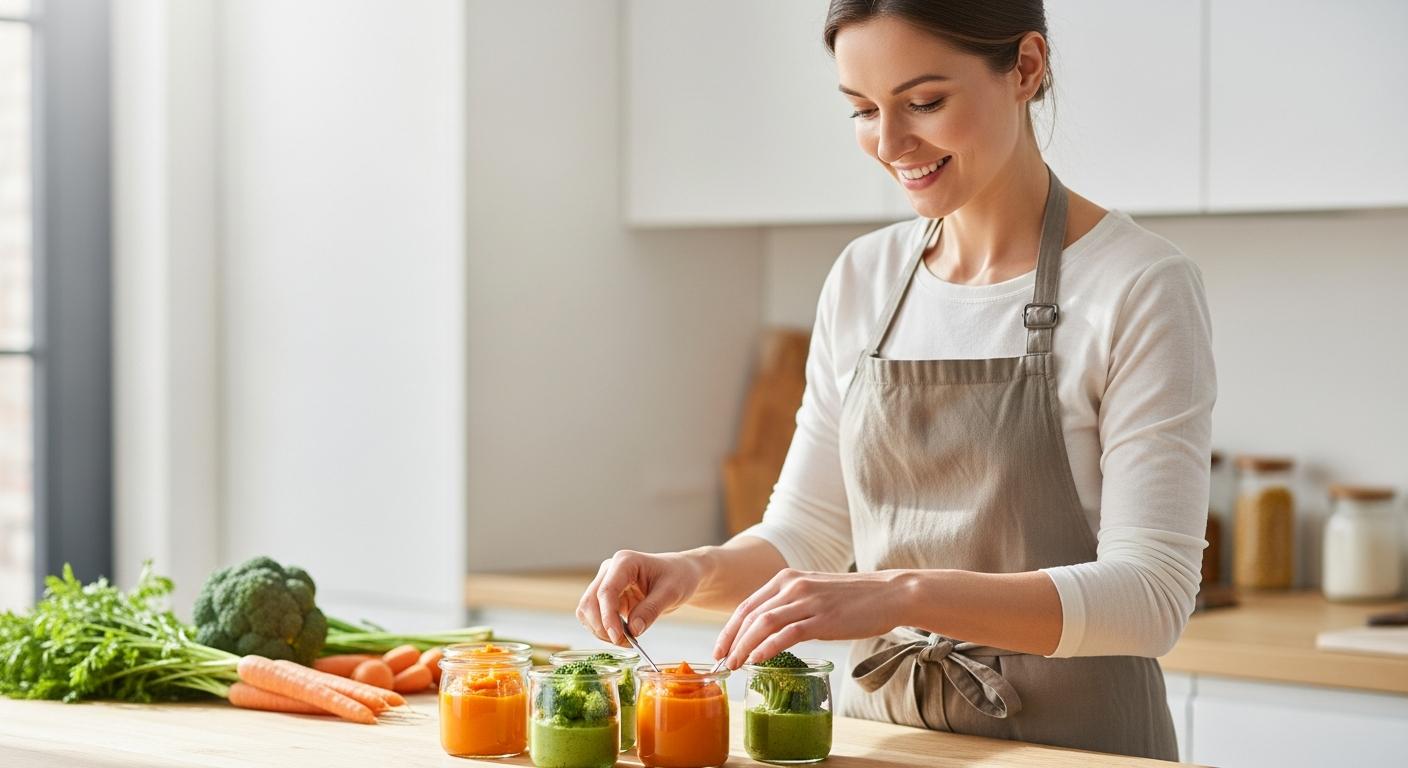
Homemade baby food offers ingredient control and easy texture changes, it also requires time and careful storage. Store-bought options bring convenience and consistent texture, avoid relying on pouches alone so chewing skills keep progressing.
Label quick-check: short ingredient list, no honey (under 12 months), no added sugars (including fruit juice concentrate), low sodium.
Simple baby food ideas (by texture)
Smooth:
- Sweet potato + olive oil
- Pea purée + yogurt
Thicker/iron-focused:
- Lentils + tomato
- Chicken + carrot
Soft pieces:
- Ripe avocado strips
- Soft-cooked zucchini sticks
- Flaked salmon (boneless)
Key takeaways
- Baby food is about safe textures and nutrient-dense choices, not just jars or pouches.
- Many babies start baby food between 4 and 6 months once readiness signs cluster, preterm babies may use corrected age.
- Milk stays the foundation through the first year, baby food complements it and builds skills.
- Prioritize iron-rich baby food and include healthy fats for growth and brain development.
- Move textures forward gradually: smooth → thicker with soft lumps → mashed and soft pieces.
- Introduce allergens in safe forms, one at a time, with close observation.
- For support, pediatricians, dietitians, and feeding therapists can help—and you can download the Heloa app for personalized tips and free child health questionnaires.
Questions Parents Ask
How much baby food should my baby eat at each meal?
Portions can feel confusing, so reassure yourself: appetite varies a lot day to day. In the beginning, a few spoonfuls may be plenty, with milk feeds still doing most of the work. As interest grows (often from around 6–9 months), many babies naturally move toward a few tablespoons per meal, then gradually more. A helpful sign you’re on track: your baby leans in, opens their mouth, and stays relaxed. Turning away, closing the lips, or getting fussy usually means they’ve had enough.
Can I make a week of homemade baby food and freeze it?
Yes—batch cooking can make life easier. You can cool purées quickly, portion them into small containers or ice-cube trays, then freeze. For best quality, many families use frozen purées within 1–3 months. Thaw in the fridge overnight or warm gently, stirring well and checking temperature. If food has been warmed and touched by the spoon, it’s usually best to discard leftovers after that feed (it’s about bacteria, not “wasting food”—you’re doing your best).
How long is opened baby food good for in the fridge?
It depends on the product, so the label is your friend. As a general rule, many opened purées keep about 24–48 hours in the fridge if stored promptly and kept clean. If there’s any odd smell, separation that doesn’t mix back in, or you’re unsure, it’s okay to choose the safer option and toss it.
Further reading :