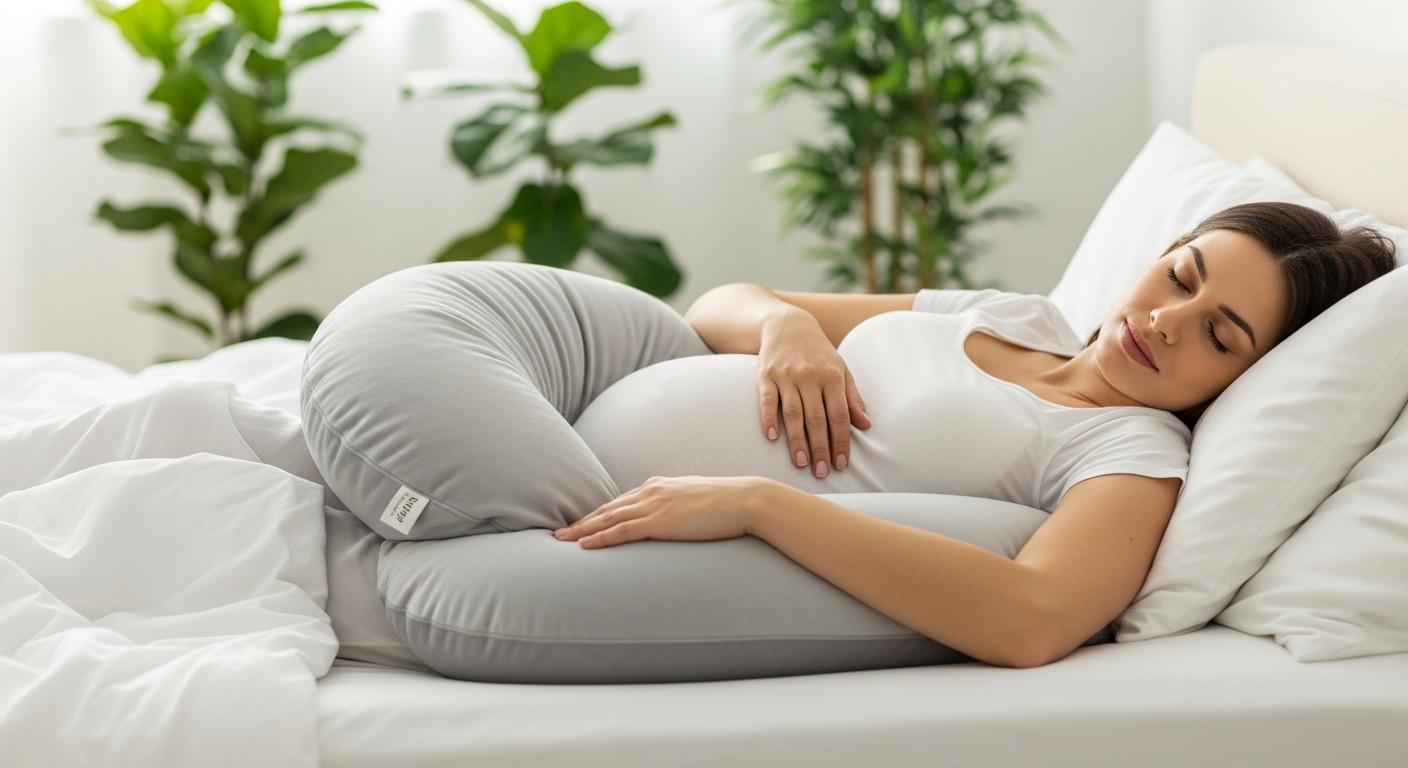
A pregnancy pillow can feel like the difference between “I’ll manage” and “I can finally settle.” As the bump grows, sleep often turns lighter, hips complain, reflux flares, and finding a position that stays comfortable becomes a nightly puzzle. Which shape makes sense? What does it actually support? And how do you use it safely—without overheating or feeling trapped?
Pregnancy pillow basics: what it supports
A pregnancy pillow is a supportive cushion that helps maintain a comfortable side-lying posture as pregnancy progresses. The aim is simple: reduce twisting, cushion pressure points, and keep the spine–pelvis line steadier.
Depending on the design, a pregnancy pillow may support:
- Belly (reducing the pull on the lumbar spine)
- Back (a gentle “stop” to feel stable)
- Hips and pelvis (limiting pelvic rotation)
- Knees and ankles (reducing friction and pressure)
- Neck/shoulders (helping neutral alignment)
Pregnancy pillow, maternity pillow, body pillow: is there a difference?
“Pregnancy pillow” and “maternity pillow” are usually the same label. A body pillow is more general, it can work well, but pregnancy-specific shapes often focus more on belly + back support to make side sleep easier.


Pregnancy pillow vs nursing pillow
A nursing pillow is mainly for feeding after birth: it supports the baby’s weight and reduces strain on your arms, shoulders, and neck. Some products are marketed as multi-use, but a pregnancy pillow is not a baby sleep surface.
Why pregnancy can make nights harder (and why it’s not “in your head”)
Pregnancy changes posture, ligaments, circulation, and digestion—exactly the ingredients that influence nighttime comfort.
Low back and pelvic discomfort: ligament laxity + pelvic twist
Relaxin and progesterone increase ligament laxity. Add a shifting center of gravity and the lumbar curve often increases. The sacroiliac joints and the pubic symphysis may become sensitive, especially if the top leg drops forward in side sleeping and the pelvis rotates.
A pregnancy pillow can’t change hormones, but it can reduce pelvic torsion by supporting knees (and sometimes ankles).
Lying flat on the back: vena cava compression symptoms
In later pregnancy, lying supine can feel unpleasant for some people. The uterus may compress the inferior vena cava (a large vein returning blood to the heart), leading to dizziness, nausea, palpitations, or feeling faint.
Side-lying—often easier with a pregnancy pillow—can help many feel steadier.
Heavy legs, swelling, varicose vein discomfort
Blood volume rises in pregnancy, and venous return from the legs may slow due to uterine pressure. Edema and varicose vein discomfort can worsen by evening.
Gentle leg support can help, as long as hips and knees stay comfortable.
Reflux/heartburn at night
Progesterone relaxes the lower esophageal sphincter, and abdominal pressure increases. Lying down makes acid rise more easily.
Mild, stable upper-body elevation plus side support can reduce symptoms for some.
What a pregnancy pillow can change (practically)
No miracle promises—just better positioning.
- Fewer pressure points at hips, knees, ribs
- Less spinal rotation in side-lying
- More pelvic stability (often helpful in pelvic girdle pain sensations)
- Easier side-sleeping when supine feels uncomfortable
- Reflux comfort with gentle torso elevation
Pregnancy pillow shapes: choosing by “fit,” not hype
The “best” pregnancy pillow is the one that matches your bed, your symptoms, and your tolerance for bulk.
Wedge pregnancy pillow
Small, targeted, easy to move:
- Under belly for a light lift
- Behind back as a small barrier
- Under upper torso for mild reflux support
Straight full-length body pillow
Simple and flexible. Hug it, place it behind you, or put it between knees. Ideal if you dislike a wraparound feel.
Banana-shaped pregnancy pillow
Curved and easy to reposition, often a strong middle ground for belly + knee support without taking over the mattress.
U-shaped pregnancy pillow
Supports both sides at once (head/neck, belly, back, legs). Helpful if you switch sides often. Downside: footprint.
C-shaped pregnancy pillow
Wraparound support with one more open side, many find it supportive while feeling less bulky than a U.
J- or L-shaped pregnancy pillow
Long section to hug plus a shorter “hook” for back or belly support. Useful when space is limited.
Smaller targeted options
Sometimes two small supports beat one giant pillow:
- Firm knee pillow
- Small under-belly cushion
- Lumbar support for sitting
How to choose a pregnancy pillow: quick logic that works
Start with your sleep habits, then match support to symptoms.
Choose by how you sleep
- Mostly side sleeper: straight, C, banana-shaped
- You flip sides often: U-shaped
- You hate feeling boxed in: straight, J/L, or wedge + knee pillow
Choose by symptoms
- Low back/SI discomfort: back “stop” + between-knees support
- Sciatica: support knee-to-ankle, often medium-firm
- Pelvic discomfort: firmer between knees, consider adding ankles
- Reflux: mild upper-body incline + side stability
- Heavy legs: gentle calf/ankle support, no hip strain
Choose by bed size and partner space
In a smaller bed, a wedge + knee pillow (or a straight pillow) usually offers the best comfort-per-inch. U-shaped options can crowd a partner on a full/queen.
Choose by loft, firmness, heat, and sensitivities
Loft = height. Too low twists hips, too high forces them apart. Many do best with medium loft and medium-firm support.
If you run hot, prioritize breathable covers. If you’re odor-sensitive, air out new foam 24–72 hours.
Pregnancy pillow materials and covers: what matters most
Fill affects support over time.
- Memory foam: supportive, can sleep warmer
- Shredded foam: adjustable, may need fluffing
- Polyfill: soft and washable, may flatten sooner
- Microbeads: lightweight and moldable, can shift
Cover choices influence sweat and skin comfort. Cotton, bamboo-derived viscose, and Tencel/lyocell often feel breathable. A removable washable cover is genuinely useful.
How to use a pregnancy pillow: the setups parents actually keep
You may have heard “sleep on your left.” Left-side sleep can reduce pressure on major vessels and support circulation, but right-side sleeping is also generally fine. What matters is comfortable side-lying and responding to symptoms.
Try this sequence:
- Side-lying base: settle on your side.
- Between knees: keep the top leg from pulling the pelvis forward.
- Add ankles if needed: helpful if hips still ache or ankles rub.
- Under-belly support: a light lift, not a push.
- Behind-back stop: reduces rolling onto the back.
For reflux: add mild, stable elevation under shoulders/upper back (avoid a sharp bend at the waist). For heavy legs: a small lift under calves/ankles, only as high as your hips tolerate.
When to start using a pregnancy pillow
There’s no perfect week. Some start early for nausea, breast tenderness, or back ache, many switch in the second trimester as the bump feels heavier, the third trimester often brings a bigger need for stability and roll prevention.
Seek medical advice if you have severe pain, persistent tingling/numbness, dizziness, shortness of breath lying down, or sudden one-sided swelling.
Pregnancy pillow safety and after-birth use
Overheating and unstable elevation are the main practical risks. Keep the room cool, choose breathable fabrics, and aim for gentle, steady incline if you elevate.
After birth, a pregnancy pillow can support sitting, side-lying rest, and feeding posture (bringing baby to you so you don’t hunch).
Baby safety remains firm: never leave a baby unattended positioned in a pillow curve, and keep pillow material away from the baby’s face and airway.
Key takeaways
- A pregnancy pillow supports belly, back, hips, and knees to reduce twisting and pressure points.
- Pregnancy can increase ligament laxity, affect circulation, and worsen reflux, positioning support often makes nights more manageable.
- Shape drives comfort: wedge for targeted relief, banana/C/J/L for flexibility, U for all-around support when you switch sides.
- Materials and covers change heat, washability, and long-term support—breathability and a washable cover simplify real life.
- Consult a clinician for severe pain, persistent neurologic symptoms, breathing discomfort, dizziness, or sudden swelling.
- For personalized guidance and free child health questionnaires, you can download the Heloa app for tailored advice.
Questions Parents Ask
Are pregnancy pillows safe to sleep with every night?
Yes—when used as a positioning aid for an adult, a pregnancy pillow is generally safe. Many parents find it reassuring because it helps them stay comfortably on their side. If you’re elevating for reflux, a gentle, stable incline tends to feel best (avoid stacking pillows so high that your body “folds” at the waist). If you ever feel dizzy, short of breath, or unwell when lying down, it’s a good idea to change position and check in with a clinician.
How do I wash a pregnancy pillow (and how often)?
Most models are easiest to maintain with a removable, machine-washable cover—especially if you run warm or sweat more at night. The inner pillow is sometimes spot-clean only, depending on the filling (memory foam often can’t be fully washed). Many parents aim to wash the cover every 1–2 weeks, or sooner if there’s reflux, night sweats, or skin irritation. A spare cover can make laundry days much simpler.
Are pregnancy pillows worth it if I already have a body pillow?
They can be. A standard body pillow may feel great for hugging, but some pregnancy-specific shapes add a “back support” element that helps you feel steadier and reduces rolling. If you’re comfortable already, no pressure to change—sometimes adding a small knee pillow (or a belly wedge) is enough to upgrade your sleep without a bulky setup.