Parents type baby chocolate into a search bar for all sorts of reasons: curiosity, a family celebration, a toddler who grabbed a bite, or a gift to bring to a baby shower. And right away, two questions collide: “Is it safe to taste?” and “Is this even meant for the baby?” Add sleep worries, teeth, allergies, and choking fears… and chocolate suddenly feels less simple than it looks.
Let’s sort it out with clear age markers, practical portion ideas, ingredient decoding, and safer ways to offer a cocoa taste when you really want to.
Baby chocolate: what people usually mean
The phrase baby chocolate often points to two different worlds:
- Food for a young child (a taste of chocolate, cocoa in yogurt, a toddler biscuit)
- A gift category (baby shower favors, birth announcement chocolates, meant for adults)
That confusion matters. From a child health point of view, chocolate is a pleasure food: it doesn’t bring a unique nutrient a baby cannot get elsewhere.


What tends to matter most?
- Age and oral skills (chewing vs mashing with gums)
- Added sugars (taste preferences, dental caries)
- Texture and ingredients (choking hazards, allergens)
“Baby chocolate” as a gift: baby shower and birth chocolates
If you’re buying baby chocolate for a newborn visit, a baby shower, or a birth announcement, it’s usually for the adults around the baby.
- Baby shower chocolates: small themed favors for guests.
- Birth announcement chocolates: presentation boxes, sometimes personalized with a name or date.
Practical thought: in warm weather, chocolate melts fast. Choose protected shipping and avoid leaving parcels in a mailbox or car.
Can babies eat chocolate? Safety by age
0–6 months: no baby chocolate as food
Before 6 months, feeding is breast milk and/or infant formula. The gut is still maturing, and chocolate brings mostly:
- sugar (in most products)
- cocoa stimulants like theobromine (and a little caffeine)
No benefit here. If you see baby chocolate at this age, think “adult gift,” not “baby snack.”
6–12 months: if you want the flavor, think cocoa taste, very tiny
During complementary feeding, some parents want a “cocoa note.” The most controllable option is not a chocolate square, it’s:
- a tiny pinch of unsweetened cocoa powder mixed until perfectly smooth into a food your baby already tolerates (pear purée, banana mash, yogurt if dairy is already introduced)
Cocoa powder clumps easily. Sift it, stir hard, check the texture. Lumps are not dramatic, but they’re unpleasant to swallow.
Why avoid classic baby chocolate bars at this stage? Sugar is concentrated, fat is high, and portion control becomes tricky.
Under 12 months: why many families wait
Waiting until after the first birthday is common. Reasons are usually practical, not moral:
- Added sugar is best kept close to zero in infancy.
- Theobromine/caffeine can, in some babies, nudge irritability or sleep.
- Chocolate often contains milk, soy lecithin, and sometimes nuts or “may contain” warnings.
- Small firm pieces, chips, or crunchy add-ins raise choking risk.
From 12 months: baby chocolate can be introduced, slowly and occasionally
From 12 months, many children can handle a careful, occasional taste of baby chocolate.
Two low-drama options:
- homemade foods using unsweetened cocoa
- a micro-portion of plain chocolate
A realistic first amount is 1–2 g (a tiny fragment). Then watch over the day: stools, tummy comfort, and sleep.
18–24 months: why some parents still hold off
Chewing improves, yes, but “cocoa stacking” becomes easy: biscuit + sweet dairy + cocoa pouch + chocolate bite. That adds sugar quickly.
Another point, less discussed: cocoa can contain trace metals (cadmium, lead, nickel) in low amounts. The practical approach is moderation:
- occasional is different from daily
- avoid stacking several cocoa products on the same day
2–6 years: easier… but keep it a treat
For toddlers and preschoolers, baby chocolate works best when it stays predictable and small.
- Offer it after a meal or with a balanced snack.
- Avoid constant “tiny bites” through the day (that pattern is tough on teeth).
- Keep portions modest, the goal is taste, not routine.
Portion and frequency: the two levers parents control
The body doesn’t respond the same way to a planned, small taste as it does to repeated sweet sips or bites all day.
A simple guide:
- 12 months: 1–2 g, very occasional
- 2 years: 3–5 g
- 3 years: about one small square (around 5–6 g), still not daily
You may wonder: “What about celebrations?” A party day is fine, then you simply return to your usual rhythm.
Best time of day
Cocoa stimulants (mainly theobromine) can delay sleep in some children. If naps get messy after baby chocolate, shift it earlier: morning or lunchtime.
What’s inside baby chocolate: decoding without overthinking
Cacao vs cocoa, dark vs milk vs white
All come from cacao beans, what changes is the recipe.
- Dark chocolate: more cocoa solids, often less sugar, but more stimulants.
- Milk chocolate: sweeter, contains milk proteins (important for allergy).
- White chocolate: cocoa butter, no cocoa solids, usually high in sugar and fat.
Ingredients that change safety
A short ingredient list is often easier to manage.
Be cautious with:
- nuts and crunchy bits (choking + allergens)
- hard caramel, brittle pieces
- wafers/cookie inclusions (texture + possible gluten)
Sugar and teeth: why “sipping” is worse than “tasting”
Dental caries are strongly linked to frequency. One small piece after a meal is not the same as chocolate milk sipped repeatedly.
Helpful habits:
- keep sweets at a planned moment
- offer water afterward
- brush teeth morning and night (and after chocolate when possible)
Allergens and reactions: what to watch
True cocoa allergy is rare. Reactions are more often due to:
- cow’s milk proteins
- tree nuts
- soy (including soy lecithin)
- cross-contact (“may contain”)
After a first taste of baby chocolate, watch for:
- hives, swelling (lips/face)
- vomiting, diarrhea, abdominal pain
- cough, wheeze, breathing discomfort
Breathing trouble or significant swelling needs urgent medical help.
If your child has significant eczema or known food allergies, choose the simplest option (often a tiny cocoa pinch in a familiar smooth food), offer it early in the day, and avoid introducing other new foods that same day.
Choking hazards and safer formats
Ask yourself a blunt question: does your child chew or mostly mash?
Higher-risk formats:
- chocolate chips swallowed whole
- nut-studded bars, crisped bits, hard fillings
Safer approaches for young toddlers:
- cocoa stirred into smooth foods
- a thin smear that melts quickly
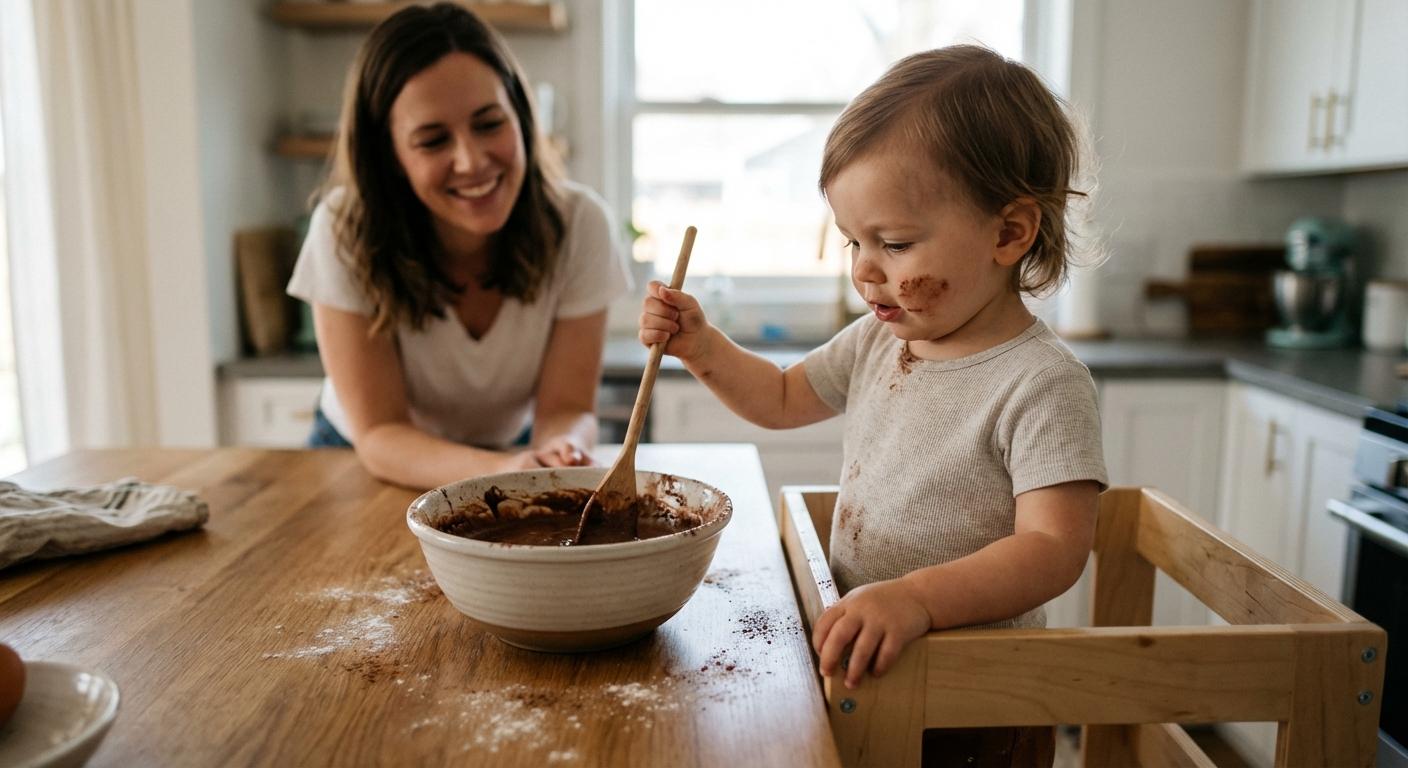
- melted drizzle on fruit, served seated and supervised
Choosing baby chocolate in stores: a quick label check
Four lines deserve your attention:
- Sugars per 100 g
- cocoa percentage (useful, not sufficient)
- ingredient order (first = most present)
- allergens and “may contain” statements
“Baby” marketing can mean a softer texture or smaller portion… or just a sweeter product. Labels stay the best reality check.
Key takeaways
- Baby chocolate before 6 months: not as food.
- 6–12 months: if you want a cocoa taste, use a tiny pinch of unsweetened cocoa, fully mixed into a smooth texture, very occasionally.
- From 12 months: baby chocolate can be offered occasionally, starting with a micro-portion (1–2 g).
- Sugar and dental risk depend heavily on frequency, planned treats beat all-day grazing.
- Theobromine may affect sleep in some children, try earlier timing.
- To limit trace metals exposure from cocoa, avoid stacking several cocoa products in the same day.
- Allergic reactions are more often linked to milk, soy, nuts, or cross-contact than cocoa.
- For tailored advice and free child health questionnaires, parents can download the Heloa app and connect with appropriate professionals when needed.
Questions Parents Ask
What if my baby accidentally ate chocolate—should I worry?
No panic: a tiny accidental bite is very common. If your child seems fine, it’s usually just a “watch and wait” situation. You can offer water and keep the next foods simple. It’s worth keeping an eye out for tummy upset (vomiting, diarrhea), unusual fussiness, or a later bedtime—some children react to sugar or cocoa stimulants. If a large amount was eaten, or if there are worrying symptoms (repeated vomiting, marked sleepiness, breathing trouble, facial swelling), contacting a healthcare professional promptly is the safest option.
Can chocolate cause constipation (or diarrhea) in babies and toddlers?
It can, depending on the child and the portion. Chocolate is fatty and often sweet, which may slow digestion for some children (constipation), while others may get looser stools from sugar or from milk ingredients in milk chocolate. If you notice a pattern, you can try smaller portions, offer it after a meal, and balance the day with water, fruit, vegetables, and fiber-rich foods.
Is “baby chocolate” (toddler chocolate) actually healthier than regular chocolate?
The label can be reassuring, but it doesn’t guarantee a better recipe. Some “baby/toddler” chocolates are simply smaller, sweeter, or marketed differently. Checking the label helps: look at sugars per 100 g, the ingredient list (shorter is often simpler), and allergens. When in doubt, a controlled cocoa taste at home (unsweetened cocoa mixed smoothly into a familiar food) can feel more predictable.