Potty training can stir up a surprising mix of hope and tension. One day you’re tired of diapers, the next you’re worried about accidents at daycare, constipation, or a child who flat-out refuses to sit. Is it too soon? Too late? The reassuring truth is that potty training is less about willpower and more about biology, routine, and a steady adult presence. You’ll see how readiness works, why daytime and nighttime follow different clocks, how to set up the bathroom for success, what to do with accidents (and poop panic), and when a clinician’s input is worth seeking.
What potty trained actually means
Potty training is a developmental skill, not a shortcut. Your child learns to connect three steps that take time to coordinate:
- Interoception (noticing internal signals): “My bladder is full” or “My rectum is pushing.”
- Sphincter control (holding briefly): the pelvic floor and anal/urinary sphincters tighten, then relax.
- Timing + posture: getting to the potty, sitting in a stable position, and releasing.
This coordination depends on maturation of the nervous system (brain–spinal cord–pelvic floor pathways). Pressure may change behavior for a moment, but it doesn’t speed up nerve maturation.
Daytime vs nighttime potty training: two timelines, two physiologies
Daytime continence
Daytime potty training is mostly a learning loop: feel the urge → pause play → walk to the toilet → release.


Nighttime continence
Night dryness is more biologic. During sleep, the brain “turns down” sensation, the bladder has to store urine longer, and many children need enough nighttime antidiuretic hormone (ADH) to reduce urine production. A long gap between daytime success and nighttime dryness is common.
Ages for potty training: ranges, not rules
Many children become reliably dry in the day between 2 and 4 years, with plenty of normal variation. Potty training can move quickly… or unfold in waves across months. Travel, a new sibling, illness, starting childcare, fatigue—each can temporarily increase accidents without meaning anything is “broken.”
Potty training readiness: green lights that matter
You may be wondering: “What should I look for, concretely?” Think body first, then behavior.
Physical readiness
Common signs include:
- staying dry about 2 hours at a time,
- sometimes waking from nap with a dry diaper,
- walking steadily and sitting without stiffening,
- stools that are regular and not painful (constipation can derail potty training),
- beginning ability to pull pants down/up (messy is fine).
Emotional and communication readiness
Look for:
- curiosity (watching you, flushing, asking questions),
- dislike of a wet diaper,
- following simple steps (“pants down,” “sit”),
- a way to signal (words, gestures, leading you),
- a spark of autonomy: pausing play, wanting to “do it.”
Hiding to poop is a classic sign of body awareness. It doesn’t always mean “ready,” but it’s information.
When starting too early backfires
If your child cries, arches, runs away, or starts holding stool until it hurts, a pause can be protective. The same goes for high-stress periods (moves, separation anxiety, major sleep disruption). Pausing doesn’t erase learning, it often prevents power struggles.
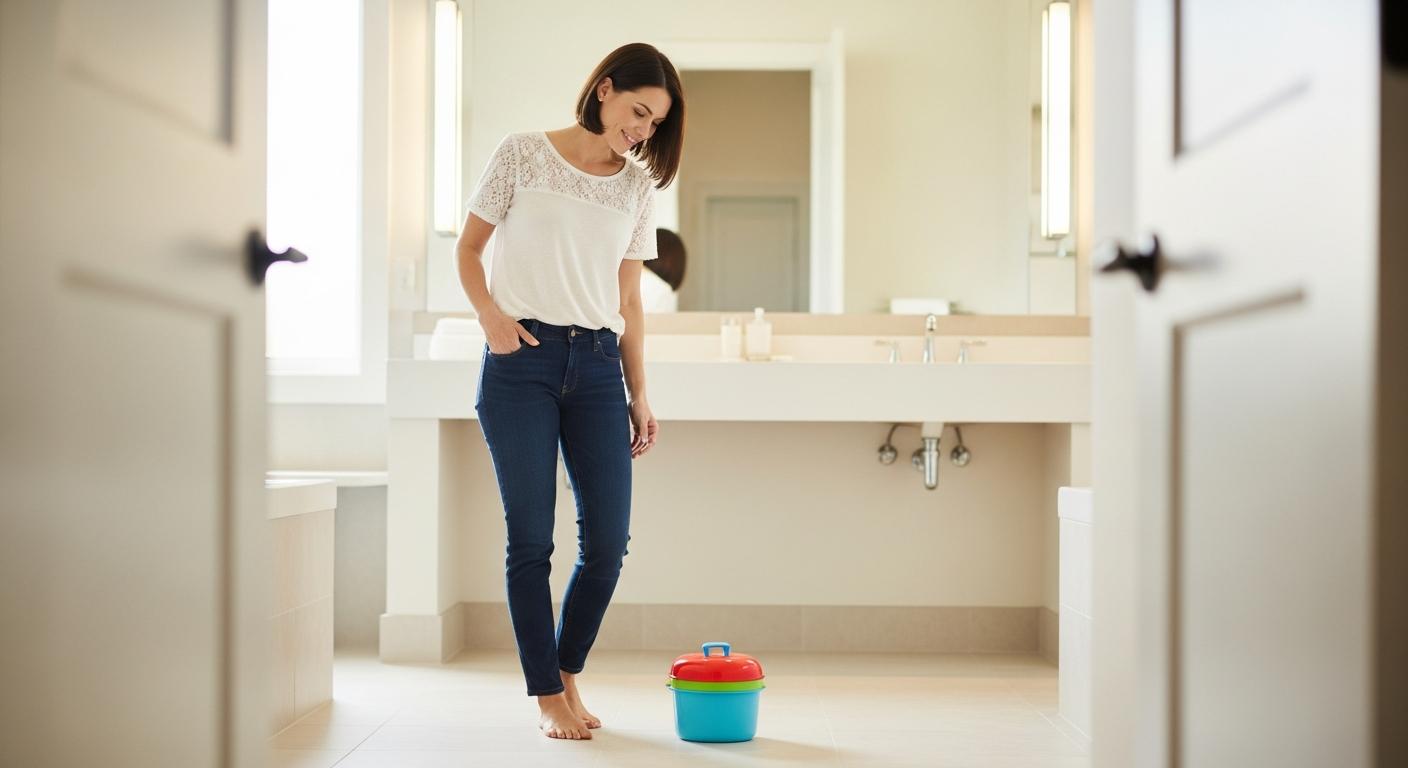
Bathroom setup for smoother potty training
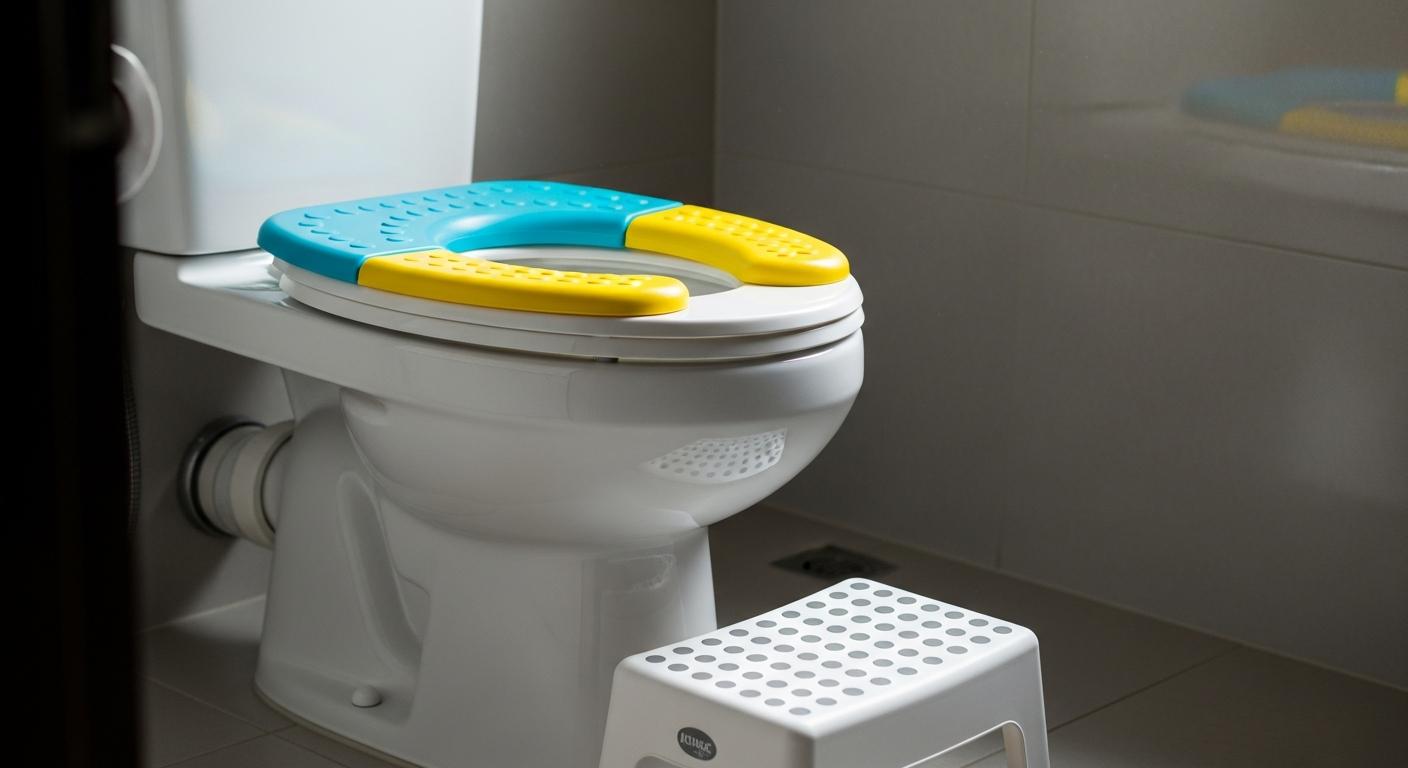
Potty chair or toilet insert?
- A potty chair feels stable and low—often ideal at the start.
- A toilet seat insert suits children motivated by “big-kid” imitation, but only if it’s secure.
If legs dangle, the pelvis is unstable, pushing increases, pooping becomes harder.
Foot support and posture: especially for poop
Feet supported is a comfort issue and a mechanics issue. Aim for:
- feet planted (stool or built-in footrest),
- knees slightly higher than hips for easier stool passage,
- short sits: 2–3 minutes is usually enough when offering a try.
Underwear, diapers, pull-ups: keeping the message clear
Underwear gives feedback, absorbent pull-ups can blur signals.
A workable compromise for potty training:
- underwear during the day at home when you’re actively practicing,
- pull-ups for naps, long drives, and nights until dryness is consistent.
If you use pull-ups, label them as “sleeping” or “travel” gear.
Clothing that supports independence
Elastic waist pants, simple shorts, leggings. Skip belts and tricky buttons at the beginning—those seconds matter.
Hygiene and a small outing kit
Keep nearby: wipes or toilet paper, spare underwear, a full outfit change, and a bag for soiled clothes. For a potty chair: empty into the toilet, wash with soap and water, rinse well.
Potty training approaches: choosing what fits your child
There isn’t one “best” method. There is the best match.
Child-led (readiness-first)
You offer opportunities and language, your child sets the pace. Often calmer for cautious temperaments.
Routine-based (scheduled sits)
Short sits when the body is naturally primed:
- after waking,
- after meals (the gastrocolic reflex can trigger bowel activity),
- before outings, naps, and bedtime.
Intensive 3-day methods
They can work for children with strong readiness and for families who can truly supervise closely. If stress skyrockets, stepping back usually helps more than “sticking it out.”
Elimination communication
Some families observe timing and cues early and offer the potty proactively. A lighter version can also help later: noticing patterns (after waking, after meals) without expecting perfection.
Potty training: a calm plan you can actually follow
Step 1: Introduce the potty with zero pressure
Let it be familiar before it is functional. Sit fully clothed, read one short book, stand up—neutral ending.
Step 2: Build a predictable rhythm
Offer potty tries:
- after waking,
- after meals,
- before leaving the house,
- before nap/bed.
If accidents cluster, adjust timing rather than adding more reminders.
Step 3: Teach body cues
Watch for squirming, pausing, holding the diaper area, hiding. Then name it:
- “Your body is telling you it’s time to try.”
Over time, shift from prompting to letting your child initiate.
Step 4: Switch to underwear during awake time
When dry stretches and successes are repeating, underwear during the day helps learning click. Keep protection for sleep and travel as needed.
Step 5: Reinforce effort, stay neutral about accidents
Praise what your child controls:
- “You told me.”
- “You sat and tried.”
- “You pulled your pants down.”
Accident script, short and calm:
- “Pee goes in the potty. Let’s clean up.”
Step 6: Independence in small pieces
The sequence is long: pants down → sit → wipe → flush → wash hands → pants up. Teach one piece at a time. For girls, repeat “front to back” during wiping.
A simple potty training schedule at home
- Wake-up: try (2–3 minutes)
- After breakfast: try
- Mid-morning: try at transitions or every 1–2 hours
- After lunch: try (often a poop window)
- Before nap: try
- After nap: try
- Before dinner and bedtime: quick try
Accidents, resistance, and regression during potty training
Accidents: normal data, not defiance
Distraction, transitions, and constipation increase accidents. Treat them as timing feedback.
Resistance: what it often means
Common reasons:
- fear (noise, flushing, public toilets),
- discomfort (seat wobbles, feet dangling),
- constipation pain,
- a need for control,
- recent changes (daycare, travel, illness).
Offer choices that don’t invite a battle:
- “Potty now or after this page?”
- “Potty chair or big toilet?”
If refusal persists, pause the attempt and return later.
Regression after progress
A brief backslide is common. Go back to basics: routine sits, easy clothing, more support, less expectation about wiping.
Poop problems: constipation, withholding, and the pain–fear cycle
Poop is often the harder part of potty training. One painful stool can lead to withholding, withholding makes stool larger and harder, fear grows.
Signs constipation is interfering
- hard or pebble-like stools,
- straining, crying, or pain,
- going less often,
- belly pain,
- “smears” in underwear (overflow soiling),
- classic withholding postures.
A rectum stretched with retained stool can also press on the bladder and worsen urinary accidents.
Making pooping easier
- prioritize foot support and stable posture,
- offer relaxed sits after meals,
- support hydration + fiber (fruit, vegetables, whole grains),
- avoid long “stay until you go” sessions.
If constipation persists, speak with a clinician, treatment may be needed to safely break the cycle.
Nighttime potty training and bedwetting
Night dryness often arrives later than daytime potty training. Helpful steps:
- toilet right before sleep,
- waterproof mattress cover + easy bedding changes,
- night light and a clear path to the bathroom.
If bedwetting continues well beyond the preschool years, or returns after dryness, a clinician can assess sleep depth, constipation, and urinary patterns.
Potty training with daycare or preschool
Ask what their routine looks like (often after meals and after naps), what they expect about pull-ups, and how they handle accidents. Share your child’s cue words and any constipation history. Some children hold urine in group settings because of noise, lack of privacy, or difficulty asking.
Boys vs girls: what changes, what doesn’t
- Boys often do best starting seated (less splash, better relaxation for poop), then learning standing later if interested.
- Girls benefit from consistent front-to-back wiping to reduce irritation and urinary tract infection risk.
What matters more than gender: readiness, comfort, routine, and adult calm.
When to seek medical advice
Consider medical input if:
- daytime continence isn’t established around age 4, or potty training is causing intense distress,
- painful urination, fever with urinary symptoms, blood in urine,
- very frequent urination with burning,
- persistent constipation,
- repeated stool leakage/soiling (possible encopresis),
- wetting returns after a dry phase.
Before an appointment, a short 2–4 week log can help: pee timing, accidents, stool frequency/consistency, pain, and context (daycare, travel, stress, fatigue).
Key takeaways
- Potty training works best when readiness is present: nervous system maturation + coordinated bladder/sphincter control.
- Daytime and nighttime potty training follow different biology, nighttime dryness commonly comes later.
- Stable seating and foot support make potty training easier, especially for poop.
- Accidents and regressions during potty training are expected, calm cleanup protects motivation.
- Constipation can block potty training and increase urinary accidents, address stool pain early.
- If symptoms suggest infection, significant distress, ongoing stool soiling, or no daytime control around age 4, a clinician can help.
- Parents can also download the Heloa app for personalized guidance and free child health questionnaires.
Questions Parents Ask
Is it okay to pause potty training and try again later?
Yes—pause can be a smart reset, not a failure. If your child is upset, starts holding pee/poop, or accidents suddenly spike, a short break often protects confidence and helps everyone breathe. You can keep things “warm” without pressure: read a potty book, practice handwashing, and offer a low-key try once in a while. When you restart, aim for easy wins (stable seat, feet supported, simple clothing) and a predictable routine.
Do rewards or sticker charts help with potty training?
They can, especially for children who love clear goals. The key is keeping rewards small and focused on effort, not “perfect” results. You might praise steps like sitting calmly, telling you they need to go, or washing hands. If rewards create bargaining (“No sticker, no potty”) or stress, reassurance and connection often work better: “Your body is learning—accidents happen.”
How can I potty train when we’re often out or using public bathrooms?
You can absolutely make progress on the go. Try a “transition pee” (before leaving, on arrival), bring a travel potty seat if your child dislikes big toilets, and use a step stool when possible so feet don’t dangle. Some children feel safer with privacy and a calm script: “Loud flushes are surprising—you’re safe, we can flush together when you’re ready.”
Further reading :