Evenings can turn into a marathon: repeated wake-ups, the careful “arms to mattress” transfer, and that nagging thought: “Am I doing it wrong?” If you’re searching how to get baby to sleep in crib, you’re usually not looking for perfection. You’re looking for something calmer, safer, and repeatable. Baby sleep is biologically different from adult sleep (shorter cycles, more frequent arousals, feeding needs that can be normal), and many infants rely on closeness as a regulation tool.
The good news? Crib sleep is a skill that can be built. Safety first. Then timing. Then predictable cues. And finally, a settling plan you can sustain, without turning nights into a battle.
Set a realistic target (progress over perfect nights)
When parents ask how to get baby to sleep in crib, the first step is aligning expectations with developmental physiology, not with what other families report.
- 0–2 months: sleep is fragmented, feeds are frequent, think “practice” rather than long stretches.
- 2–4 months: sleep stretches may lengthen, routines start to “stick.”
- 4–6 months: many babies can link more cycles, self settling beginnings may appear.
- 6–12 months: more predictability, but teething, separation anxiety, and motor leaps can disrupt nights.
- Around 12 months: walking and language bursts can fragment sleep again, steady routines matter.
Sleep progress is rarely linear. A baby who still wakes at 8 months may be entirely within normal range.


Decide what “crib sleep” means in your home
There isn’t one correct philosophy. There is what is safe, workable, and emotionally sustainable.
For the next 1–2 weeks, choose one clear aim:
- Supported crib sleep: baby sleeps in the crib, and you assist each settle (hand on chest, patting, shushing, calm presence).
- Gradual independence: baby stays in the crib while you reduce rocking or feeding to sleep in small steps.
This clarity prevents “method hopping,” which can confuse babies and drain parental energy fast.
Get a baseline for 5–7 days (so progress doesn’t hide)
Exhaustion blurs memory. A short log can show patterns:
- Bedtime and time baby is placed in the crib
- Time to fall asleep
- Number and length of night wakes
- Total nap minutes and where naps happen
- Soothing used (rocking, feeding, pacifier, pat and shush)
- Notes on discomfort (illness, reflux signs, teething, overstimulation)
If you’re trying to solve how to get baby to sleep in crib, one measurable change at a time is more effective than ten guesses at once.
Why babies resist the crib (common, fixable reasons)
Sleep associations that don’t include the crib
Many babies fall asleep with a specific “recipe”: movement, sucking, warmth, a particular position. Between cycles, they briefly rouse (a normal micro wake) and look for the same recipe again.
Helpful shifts:
- Keep a short routine, then place baby down drowsy but awake at least once daily.
- Replace “rocking to asleep” with “rocking to calm,” then finish soothing in the crib.
- Choose one consistent in crib cue (steady pat + low hum) and repeat it.
You may notice a small protest at first. That does not automatically mean harm. It can simply mean: “This is different.”
Separation anxiety (needing you nearby)
Often more obvious late in the first year (sometimes earlier), separation anxiety can make the crib feel “too far,” even if it worked last month.
What often helps:
- Daytime micro separations (step away briefly, then return calmly).
- A predictable bedtime phrase and a clear goodbye (not a long, uncertain fade out).
- At night: low light, minimal talking, no play, boring is calming.
- Gradual withdrawal: sit close at first, then shift farther away over days.
A useful question: are night responses getting longer and more stimulating over time? If yes, nights can become “interesting,” and interesting is the enemy of sleep.
Overtired vs undertired timing
Timing is a frequent culprit when families ask how to get baby to sleep in crib.
Possible signs of overtiredness: frantic crying at bedtime, short naps, “wired” late afternoon energy.
Possible signs of undertiredness: long happy periods in the crib, rolling or playing, long time to fall asleep.
Try small edits:
- Shift bedtime by 15–30 minutes and hold for 3 nights before changing again.
- Use sleepy cues (staring off, losing interest, yawning) rather than the clock alone.
Physiology matters here. When babies become overtired, stress hormones (like cortisol) can rise, and the body can fight sleep even when it needs it.
Discomfort in the crib (temperature, light, textures)
Sometimes it’s not behavioral at all. It’s sensory.
Back to basics:
- Aim for 20–22°C / 68–72°F (many babies sleep well at 18–20°C / 64–68°F too).
- Dress in breathable layers, overheating fragments sleep (a sweaty hairline or damp neck often means “too warm”).
- Darken the room (especially early morning) and keep noise consistent (steady white noise can help).
Also consider the tiny irritants: a scratchy seam, a too tight waistband, a tag, a fabric that feels “sticky” on warm skin.
Feeding needs, reflux, teething, illness, developmental bursts
Sometimes the crib is the stage, not the cause.
- Hunger: common in young infants, frequent daytime “snacking” can increase night waking.
- Gastroesophageal reflux: discomfort after feeds and trouble lying flat can disrupt sleep. Holding upright after feeds may help, keep sleep flat and on the back (no wedges).
- Colic like evenings: intense end of day crying may call for lower stimulation and soothing, not stricter rules.
- Teething and illness: expect more waking, focus on comfort, then return to your plan.
- Motor development: rolling, sitting, crawling, standing practice can appear at night, keep routines stable and expectations gentler for a few days.
If crying seems pain driven or suddenly “different,” trust that impression and check with a clinician.
Safe crib setup that supports sleep
If you’re working on how to get baby to sleep in crib, safety is the foundation.
Keep the crib bare
Use a bare crib:
- No pillows, loose blankets, stuffed animals, bumpers, braided liners, nests, wedges, or positioners.
Simple, empty, firm. That is the safest sleep environment.
Firm, flat mattress + snug fitted sheet
- Mattress should be firm and flat.
- Sheet should fit tightly.
- No gaps between mattress and crib sides.
If you can fit more than two fingers between mattress and the crib side, the fit may be too loose.
Back to sleep, every sleep (no incline)
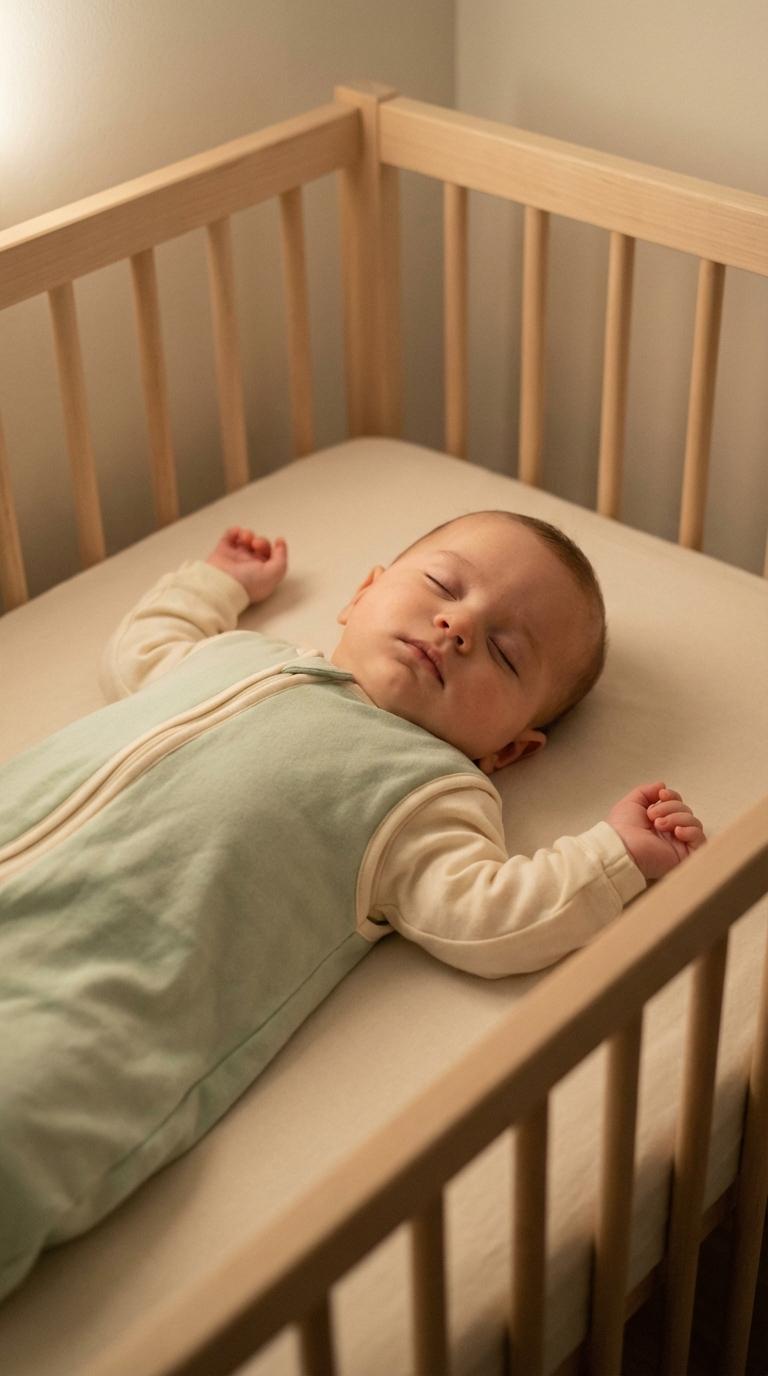
- Place baby on their back for naps and nights.
- Avoid inclined products and any setup that props baby at an angle.
Back sleeping reduces the risk of SIDS. Side positioning is unstable and can lead to rolling onto the stomach, especially as skills emerge.
Temperature + layers (avoid overheating)
Check warmth on the chest or back of the neck (hands can be cool even when baby is comfortable).
Overheating can fragment sleep and is also associated with increased SIDS risk. A comfortable baby is often a better sleeper, too.
Swaddle vs sleep sack
- Swaddling can reduce the Moro reflex early on.
- Stop swaddling as soon as there are signs of rolling.
- After that, use a sleep sack (wearable blanket).
A practical tip: with a sleep sack, placing baby feet near the foot of the crib can reduce slipping downward.
Pacifier: helpful in some cases
A pacifier at sleep time can support soothing and is associated with lower SIDS risk. If breastfeeding, some clinicians suggest waiting until feeding is well established (to avoid confusing latch in the early weeks).
If the pacifier becomes a constant “replacement job” overnight, you can either re offer it consistently for a period, or wait and focus on other cues first. Either approach can be valid.
Room sharing and gentle transitions
Many pediatric recommendations support room sharing (baby in a separate crib or bassinet in the parents’ room) for at least the first 6 months. Moving baby later can be smoother if you start with naps in the new space.
If you decide to transition rooms, keep everything else steady: same routine, same sleep sack, same sound environment.
Prepare evenings: simple signals
Parents searching how to get baby to sleep in crib often imagine they need a complicated setup. Most babies need predictable cues.
- Darkness supports melatonin.
- White noise can mask household sounds, keep it steady, low, and away from baby’s head.
- About 30 minutes before bed, lower stimulation: dim lights, quieter voices, calmer play.
Think “decompression.” Not entertainment.
Bedtime routine that points to the crib
A routine works because it is repeated, not because it is fancy.
Try:
- Diaper → pajamas/sleep sack → feed if hungry → short book/song → cuddle → into the crib
Typical routine lengths:
- 0–2 months: 10–15 minutes
- 3–6 months: 15–25 minutes
- 6–12 months: 20–30 minutes
Watch for cues (yawning, staring off, losing interest). Extreme tiredness can look like agitation.
If feeding to sleep is constant and causing frequent wakes, create a small buffer after the feed (burp + calm cuddle + short song) or move the feed slightly earlier. Not because feeding is “bad,” but because you are building more than one pathway into sleep.
Make the crib familiar before expecting long stretches
A baby who dislikes the crib often needs low pressure exposure. This step is underrated when families search how to get baby to sleep in crib.
- Offer 5–10 minutes of calm crib time once or twice daily when baby is awake (you close by, voice gentle, no toys left in the crib afterward).
- Start with one crib nap a day, then expand as it becomes easier.
Why does this help? It reshapes the association: crib equals safe and predictable, not sudden separation.
Put baby down without waking (transfer skills)
If you transfer a fully asleep baby, waiting 15–20 minutes after sleep onset can help (deeper sleep tends to reduce the startle response).
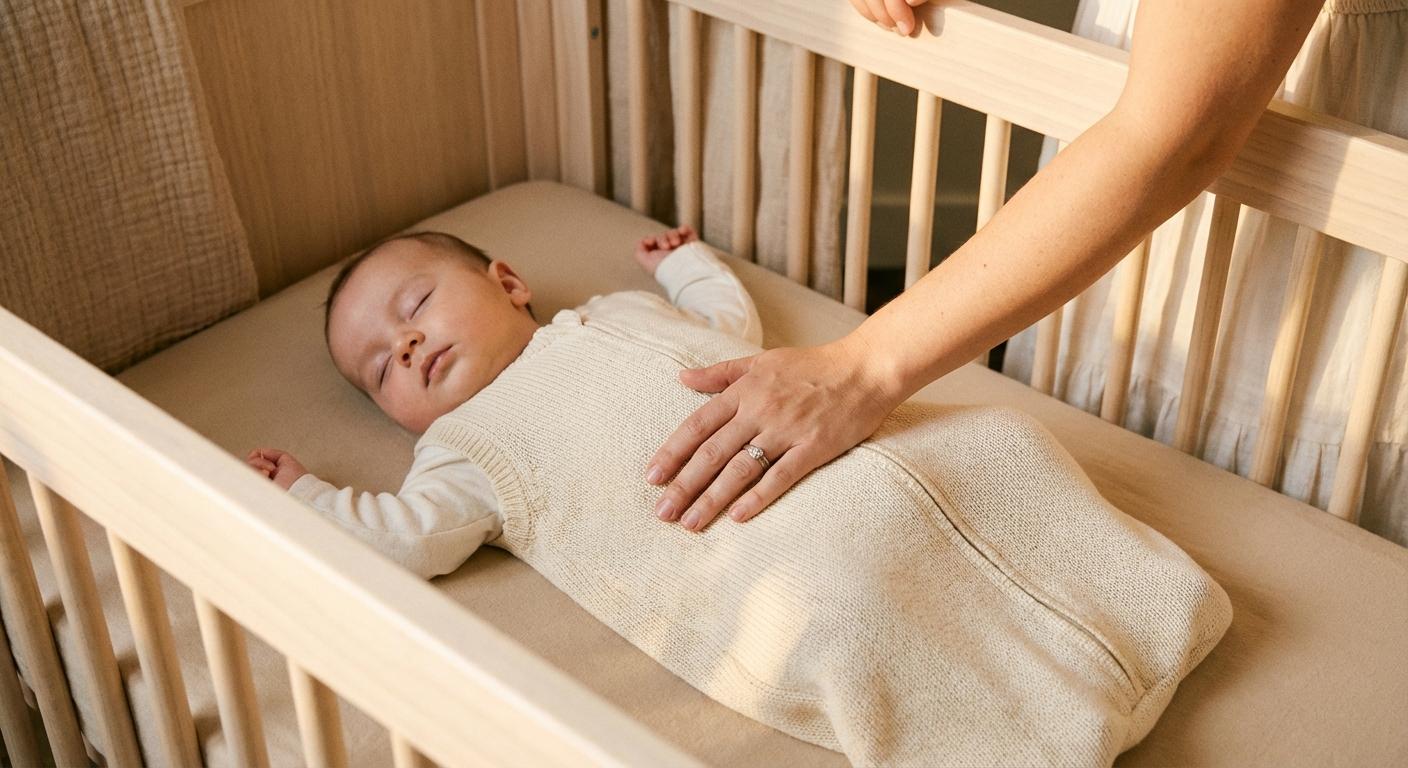
Lower slowly: feet, then bottom, then head. Keep a hand on the chest for 60–90 seconds before stepping away.
Move slowly to reduce startles. Some parents briefly warm the sheet, then remove the heat source before placing baby down (no hot water bottle left in the crib).
Settling in the crib without being held
Is “drowsy but awake” mandatory? No. It’s a tool. For some babies, it works quickly. For others, it needs a slower runway.
- Asleep transfers can be practical during illness or transitions.
- Drowsy but awake practice builds long term settling skills.
A gradual step down plan:
- Nights 1–3: in crib pat and shush until calm.
- Next: shorter patting with pauses.
- Later: hand on chest, then step back.
If baby escalates, pick up just long enough to calm (often 1–2 minutes), then place back down and repeat the same cue. The aim is not “never pick up.” The aim is: reduce stimulation, keep the pattern predictable.
Sleep training options (always optional)
Families choose different paths. If you’re weighing how to get baby to sleep in crib, choose the approach you can repeat.
- Gentle methods: shush pat or in crib soothing, reducing help over 2–3 weeks.
- Pick up/put down: calm, repeatable, but can take many cycles.
- Chair method: you stay in the room, then move farther away.
- Graduated extinction (Ferber) or extinction: structured check ins (or none), usually considered from about 4–6 months or later depending on development and medical context.
Give a method 2–3 weeks unless distress escalates or the plan is not sustainable. Pause during fever, significant illness, major travel, or severe teething pain.
You might ask: “Will I harm attachment if my baby cries?” Attachment is built across the day, over thousands of interactions, not reduced to one sleep strategy. Still, your comfort matters. If a method feels wrong for your family, that is meaningful data.
Naps and night waking: the link
Short naps are common. They often improve with better timing, a dark room, steady white noise, and a brief pause (10–20 minutes) before rescuing.
Night waking is also normal. The key is the resettling pattern.
Try a stepwise response:
- Pause briefly for mild fussing
- Reassure with voice, then brief presence
- Pick up for clear distress, pain, or discomfort
If growth is good and daytime intake is strong, some families gradually reduce night feeds (reduce minutes or ounces slowly, or delay slightly while soothing first). For preterm infants, reflux, or weight gain concerns, stay conservative and discuss changes with a clinician.
Safety recap and when to seek medical advice
Crib safety essentials:
- Back to sleep, every time
- Firm, flat mattress with snug sheet
- Bare crib (no soft objects or positioners)
- Avoid overheating, use a sleep sack instead of loose blankets
Seek medical advice promptly for fever in a very young baby, breathing difficulty, refusing to drink, repeated vomiting, unusual sleepiness, or crying that seems pain related and different.
Key takeaways
- how to get baby to sleep in crib is usually gradual skill building, not a one night switch.
- Safety comes first: back sleeping, firm flat surface, bare crib, comfortable temperature.
- Timing plus predictable cues (routine, darkness, steady sound) can reduce bedtime battles.
- If the crib is refused, look for drivers: hunger, reflux discomfort, illness, teething, overstimulation, separation anxiety.
- Gentle step down soothing or structured sleep training can both work, consistency matters.
- Support exists: your pediatric clinician can assess feeding, reflux, growth, and sleep patterns, and you can download the Heloa app for personalized tips and free child health questionnaires.
Questions Parents Ask
How long does it take for a baby to adjust to sleeping in a crib?
It’s very common for this to take time. Many babies need 1–2 weeks of consistent practice to feel comfortable, and some need a little longer—especially after illness, travel, or a big change like starting childcare. Progress often looks like: less crying, faster settling, or one longer stretch of sleep. If things feel “worse” for a couple of nights, it can simply mean your baby is noticing the new pattern. Keeping the same bedtime cues and the same response plan usually helps more than changing strategies every few days.
How can I transition my baby from co-sleeping to the crib?
Rassurez-vous, you don’t have to do it all at once. Many families find a step-by-step shift gentler:
- Start with the first stretch of the night in the crib (sleep pressure is highest).
- Keep closeness in a new form: your voice, a hand on the chest, or sitting nearby.
- If baby wakes, you can soothe in the crib first, then pick up briefly if needed, and try again.
Some parents also do a few crib naps to build familiarity. The key is making the crib feel predictable, not like sudden separation.
Newborn won’t sleep in the crib, only in arms—what can I do?
This is incredibly common in the early weeks, and it doesn’t mean you’re doing anything wrong. Newborns often sleep best with warmth, movement, and contact. You can try: a short “arms first, crib second” routine, one daily crib attempt when baby is calm, and a slow transfer after a deeper sleep phase. If you’re too exhausted, it’s important to plan for safe adult support—so you can rest without taking risks.

Further reading :
- Silent Nights: Helping Your Baby Fall Asleep Independently (https://www.chop.edu/news/silent-nights-helping-your-baby-fall-asleep-independently)