Nights with a baby can feel like a long relay race: one wake-up, then another, then that careful arms-to-mattress move that somehow wakes them at the last second. If you are searching how to get baby to sleep in crib, you are usually asking for two things at once: more rest, and reassurance that your baby’s sleep is safe.
Infant sleep is not a smaller version of adult sleep. Sleep cycles are shorter, micro-wakes are normal, feeding at night can be developmentally appropriate, and many babies need closeness to regulate their breathing, temperature, and emotions. So the goal is rarely perfect nights. The goal is safer sleep, clearer cues, and step-by-step progress towards longer stretches.
Start with realistic goals by age (progress over perfection)
A practical way to frame how to get baby to sleep in crib is to match expectations with biology:
- 0–2 months: broken sleep and frequent feeds are common, think practice, not sleeping through.
- 2–4 months: longer stretches may start, routines begin to matter more.
- 4–6 months: many babies manage longer blocks, settling skills may appear gradually.
- 6–12 months: sleep can feel more predictable, with bumps from teething, separation anxiety, and motor milestones.
- Around 12 months: walking and language spurts can fragment sleep again, consistency usually helps.
Sleep progress is rarely straight-line. A baby waking at 8 months can still be within normal.


Decide what “crib sleep” means for your family
Different homes need different plans. What matters is that it is safe and doable.
For 1–2 weeks, choose one clear target:
- Supported crib sleep: baby sleeps in the crib, and you help them settle each time (patting, shushing, calm presence).
- Gradual independence: you reduce rocking or feeding-to-sleep step by step while keeping baby in the crib.
If you are getting pressure from relatives to do it their way, bring it back to one question: what is safe, and what can you repeat daily without burning out?
Track a baseline for 5–7 days
When you are exhausted, progress is easy to miss. For a few days, note:
- Bedtime and time baby goes into the crib
- Time taken to fall asleep
- Number and length of night wakes
- Total nap minutes and where naps happen
- Soothing used (pat/shush, rocking, feeding, pacifier)
- Discomfort clues (illness, reflux symptoms, teething, overstimulation)
Why baby resists the crib (common, fixable reasons)
Sleep associations that don’t include the crib
Many babies fall asleep with a particular set-up: rocking, feeding, being held, sucking, or a warm body. Between sleep cycles, they briefly wake and look for the same cues.
Adjustments that often help with how to get baby to sleep in crib:
- Keep a short routine, then place baby down sleepy but still awake at least once daily.
- Swap rocking to asleep for rocking to calm, then finish soothing in the crib.
- Choose one steady in-crib cue (gentle pat + soft hum) and repeat it.
Separation anxiety (needing a parent nearby)
Separation anxiety often peaks towards the end of the first year, but it can show earlier too. The crib may suddenly feel unacceptable.
What tends to help:
- Practise tiny separations during daytime play.
- Use a predictable bedtime phrase and a clear goodbye.
- At night, keep responses boring: low light, minimal talking, no play.
- Try gradual withdrawal: sit close at first, then move further away over days.
Overtired vs undertired timing
Timing is a frequent reason crib sleep falls apart.
- Overtired clues: frantic crying at bedtime, short naps, late-afternoon wired energy.
- Undertired clues: lots of rolling/playing, long time to fall asleep, happy chatting in the crib.
Try small changes:
- Shift bedtime by 15–30 minutes for three nights before changing again.
- Follow sleepy cues rather than the clock alone.
Discomfort in the crib (temperature, light, noise, fabrics)
Sometimes it is one simple detail: a scratchy seam, light leaking in, fan noise changing on and off, or a sleep sack that is too warm.
Back to basics:
- Keep the room around 20–22°C (many babies also sleep well at 18–20°C, depending on clothing and humidity).
- Dress in breathable layers, avoid overheating (a sweaty hairline or damp neck can mean too warm).
- Make the room darker (especially early morning) and keep noise consistent (white noise can help in busy homes).
In many Indian cities, traffic noise or sudden sounds from the street can trigger partial waking, a steady sound can mask that.
Feeding needs, reflux, teething, illness, developmental bursts
Sometimes the crib is not the core issue.
- Hunger: common in young babies, frequent daytime snacking can increase night waking.
- Reflux (gastro-oesophageal reflux): discomfort after feeds and difficulty lying flat may disrupt sleep. Keeping baby upright briefly after feeds may help, safe sleep stays flat and on the back.
- Teething/illness: more waking is expected, focus on comfort, then return to your plan when baby is better.
- Motor development: rolling, sitting, crawling, standing, babies can practise at night. Keep routines stable.
Safe crib set-up that supports better sleep
If you are working on how to get baby to sleep in crib, safety is your non-negotiable starting point.
A safe, bare crib
Keep the sleep space empty:
- No pillows, loose blankets, soft toys, bumpers, nests, wedges, or positioners.
Firm, flat mattress + snug fitted sheet
Use a firm, flat mattress and a tight fitted sheet.
- No gaps between mattress and crib sides
- No bunching of the sheet
Back-to-sleep every time (no incline)
Place baby on the back for every sleep, including naps.
Avoid inclined sleepers and propping arrangements. Incline can increase the risk of airway obstruction in infants.
Temperature and clothing layers (avoid overheating)
Overheating can fragment sleep and increases risk.
Check warmth on the chest or back of the neck (hands may feel cool even when baby is fine). In humid months, fewer layers may be needed.
Swaddle vs sleep sack
Swaddling may reduce startle reflex early on, but stop as soon as baby shows signs of rolling.
After that, use a sleep sack.
Pacifier and crib sleep
A pacifier at sleep time can support soothing and is associated with reduced SIDS risk. If breastfeeding, some clinicians suggest waiting until feeding is well established.
Prepare the room and evenings: simple signals
If you want how to get baby to sleep in crib to feel realistic, keep the environment predictable, not elaborate.
- Darkness: supports melatonin.
- White noise: can help in noisy flats or joint-family homes, keep it steady and not too loud.
- Scent: avoid room sprays and strong fragrances.
About 30 minutes before bed, lower stimulation: dim lights, quieter voices, calmer play.
Bedtime routine that signals sleep in the crib
A routine works because it is repeated.
Try:
- Diaper → pyjamas/sleep sack → feed if hungry → short book/song → cuddle → into the crib
Typical routine lengths:
- 0–2 months: 10–15 minutes
- 3–6 months: 15–25 minutes
- 6–12 months: 20–30 minutes
If feeding-to-sleep is the only way baby settles, try a small buffer after feeds (burp + cuddle + short song) or move the feed slightly earlier.
Make the crib feel familiar before expecting long stretches
This is a gentle, high-impact step for how to get baby to sleep in crib.
- Offer 5–10 minutes of calm crib time when baby is awake (you nearby, voice soft).
- Start with one nap a day in the crib, keep other naps easy during the transition.
Put baby down in the crib without waking
If transferring a fully asleep baby, waiting 15–20 minutes after sleep onset can help.
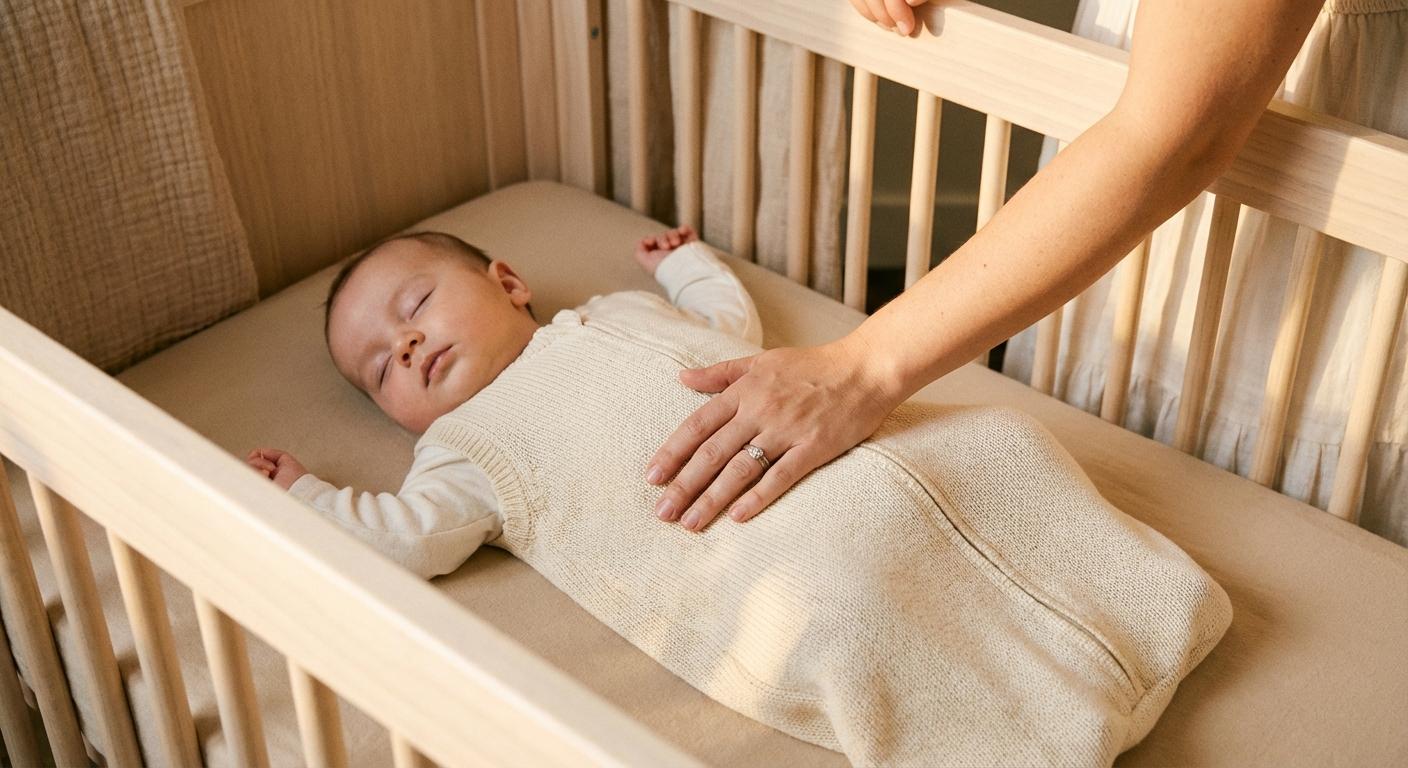
Transfer technique: feet first, then bottom, then head. Keep a hand on the chest for 60–90 seconds, then release gradually.
Help baby settle in the crib without being held
Two workable entry points:
- Asleep transfer: sometimes needed during illness or intense fatigue.
- Drowsy but awake: supports independent settling over time.
A step-down plan:
- Nights 1–3: pat/shush in the crib until calm.
- Next: shorter patting with pauses.
- Later: hand on chest, then step back.
If baby escalates, pick up just long enough to calm (often 1–2 minutes), then put back down and repeat the same cue.
Sleep training options (always optional)
Some families prefer very gradual change, others prefer clearer structure. Both can be responsive.
- Gentle/no-cry approaches: in-crib soothing while reducing help over 2–3 weeks.
- Pick up/put down: repeatable, but can take many cycles.
- Chair method: you stay in the room and move further away every few nights.
- Graduated extinction (Ferber) or extinction: structured check-ins (or none), usually from around 4–6 months or later depending on development and health.
Give a method 2–3 weeks unless something feels clearly off. Pause during fever, significant illness, or severe teething discomfort.
Naps and night waking: what to do in real life
Infant sleep cycles are short. Micro-wakes are normal. The key question is: how does baby return to sleep?
Try a stepwise response at night:
- Pause briefly if fussing is mild
- Reassure with your voice, then brief presence
- Pick up for clear distress, pain, or discomfort
If growth is good and daytime milk intake is strong, some families reduce night feeds gradually (reduce minutes/ounces slowly, or delay slightly while soothing first). If your baby was premature, has reflux, or weight gain concerns, check with your paediatrician before changing feeds.
Transitions and setbacks (without drama)
- Bassinet to crib: many babies do better moving to the crib in the same room first.
- Co-sleeping to crib: start the night in the crib, then adjust later stretches gradually.
- Travel/illness/teething: more contact for a few days does not erase progress, return to the last step that worked.
Safety recap and when to seek medical advice
Crib safety essentials:
- Back to sleep, every time
- Firm, flat mattress with snug sheet
- Bare crib
- Avoid overheating, prefer a sleep sack
Seek medical advice promptly for fever in a very young baby, breathing difficulty, refusing feeds, repeated vomiting, unusual sleepiness, or crying that feels pain-driven.
Quick-start: 7 steps
- Make the crib safe: bare crib, firm flat mattress, snug sheet, back sleeping.
- Choose bedtime and wake windows, adjust by 15–30 minutes, then hold steady for three nights.
- Add daily crib playtime: 5–10 minutes of calm exposure.
- Begin with one nap in the crib, keep other naps easy.
- Keep a consistent bedtime routine: same steps, same order.
- Pick a settling approach you can sustain, give it 2–3 weeks.
- Change one variable at a time: timing, environment, or soothing.
To remember
- how to get baby to sleep in crib usually means gradual skill-building, not a one-night switch.
- Safety is the base: back sleeping, firm flat surface, bare crib, comfortable temperature.
- Predictable cues help the brain shift into sleep.
- If baby refuses the crib, check likely drivers first: hunger, reflux discomfort, illness, teething, overstimulation, separation anxiety.
- Professionals can support you, especially if feeding, reflux, weight gain, or breathing worries are present, and you can download the Heloa app for personalised guidance and free child health questionnaires.

Further reading :
- Silent Nights: Helping Your Baby Fall Asleep Independently (https://www.chop.edu/news/silent-nights-helping-your-baby-fall-asleep-independently)