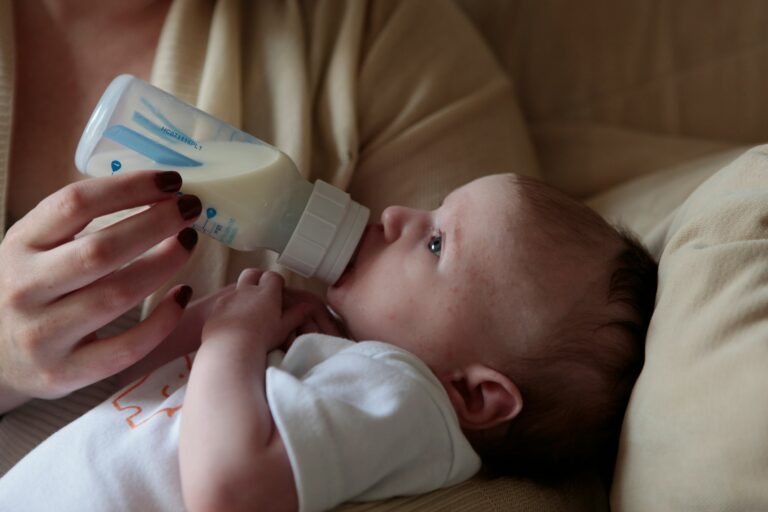
Baby feeding 5 months can feel like standing at a crossroads. One day your baby seems fascinated by your plate, the next they clamp their lips shut. You may be wondering: “Are we supposed to start purees now?” “Is my baby drinking enough?” “If they gag, is that dangerous?”
Here is the calming baseline: milk still does the heavy lifting for calories, hydration, and most nutrients. If solids begin, they are small, smooth, and mostly about skill-building: oral motor control (lips, tongue, jaw), swallowing coordination, and sensory acceptance. That middle zone is normal. It is also messy, variable, and rarely predictable.
Baby feeding 5 months: what matters most at this age
Between 4 and 6 months, your baby’s body is changing fast, even when it does not look like it from the outside. Several systems mature in parallel:
- Oral motor skills: better lip closure around a spoon, more organized tongue movements, less “pushing out” reflex over time
- Suck-swallow-breathe coordination: still optimized for milk, with gradual adaptation for thicker textures
- Digestive function: gastric emptying (how quickly the stomach empties) evolves, enzymes increase, and the gut microbiome shifts with new exposures
So what is the “goal” for baby feeding 5 months? Not performance. Not a certain number of spoonfuls. Exploration.


Two teaspoons can be enough. A refusal can be enough. A funny face can be enough.
Milk remains the nutritional foundation (breast milk or iron-fortified formula)
For baby feeding 5 months, breast milk or iron-fortified infant formula stays the primary food. If solids are offered, they complement milk, they do not replace it.
A commonly observed range is about 650 to 950 mL (24 to 32 oz) per 24 hours for many formula-fed babies, with real-life variation (size, growth phase, appetite, temperature, illness). Breastfed intake is harder to measure, so practical markers become more useful:
- steady growth on your child’s curve
- regular wet diapers (often 5 to 6+ per day)
- periods of calm alertness and good energy
If those markers look reassuring, baby feeding 5 months is usually on track, even if daily volumes fluctuate.
Baby feeding 5 months: hunger cues, fullness cues, and responsive feeding
Numbers are tempting. Cues are more informative.
Common hunger cues
- rooting or turning toward the breast/bottle
- hands to mouth, rhythmic fussiness
- lip smacking, increased sucking behaviors
Common fullness cues
- slowing down, longer pauses
- turning away, pushing the bottle away
- relaxed hands and body, losing interest
You may wonder: should I encourage “just a little more”? If your baby is clearly done, gentle stopping protects appetite regulation and reduces feeding stress over time.
How often do babies eat at 5 months?
Many babies feed about every 3 to 4 hours during the day, often 5 to 6 milk feeds in 24 hours. Night feeding is still common, sometimes once, sometimes more.
Wake windows often hover around 1.5 to 2 hours. Baby feeding 5 months can go more smoothly when your baby is calm and not overtired, often early or mid wake window. Distraction also increases at this age, some babies “snack” in the daytime and then want more overnight.
Breastfeeding, formula, or combination feeding at 5 months
Breastfeeding patterns at 5 months
Many babies nurse around 5 to 6 times in 24 hours, sometimes more. Feeds can be shorter because milk transfer becomes more efficient. Daytime distraction can also shift calories to evenings or nights.
If you are worried about supply, start with simple checks: diapers, growth, and how your baby behaves between feeds.
Formula feeding patterns at 5 months
A frequent pattern is 5 to 6 bottles per day, often 120 to 180 mL (4 to 6 oz) each, sometimes more.
Keep feeding safe and baby-led:
- hold your baby semi-upright
- consider paced bottle feeding (pauses, slower flow, baby stays in charge)
- avoid propped bottles
Combination feeding
Combination feeding can be structured or flexible. If bottles are added, a gentle flow and paced rhythm often helps babies switch comfortably between breast and bottle.
Pumped milk storage (common guidance)
- room temperature: up to 4 hours
- refrigerator: up to 4 days
- freezer: up to 6 months for best quality
Thaw in the fridge or warm water. Avoid microwaves. Swirl gently to remix separated fat.
Development at 5 months that changes feeding
Baby feeding 5 months is shaped by development, not just appetite.
You may notice:
- more hand-to-mouth exploration (normal sensory learning)
- strong attention to adults eating
- steadier sitting with support
These can look like “solid readiness,” but curiosity alone is not enough. Posture and swallowing control matter more.
Solids at 5 months: is your baby ready?
Some health authorities prefer starting around 6 months, but some babies show readiness a bit earlier. The safest decisions combine maturity signs with your clinician’s advice.
Readiness signs
- stable head control
- sitting with support with a reasonably steady trunk (not collapsing forward)
- reduced tongue-thrust reflex (less automatic pushing food out)
- interest in the spoon (opening mouth, leaning in)
- ability to swallow a smooth puree without distress
If your baby is sick, very tired, or congested, waiting a few days can make first attempts calmer.
When waiting often makes sense
- slumping in the high chair
- head control not stable
- prematurity (corrected age may be more meaningful than calendar age)
- a medical history that affects feeding skills (your pediatrician can guide the timing)
Baby feeding 5 months: how solids fit into the day
For baby feeding 5 months, think “practice bites.”
Two workable rhythms:
- milk first if your baby is very hungry, then a few spoonfuls to explore
- a few spoonfuls first if your baby is calm and curious, then milk to finish
If solids start, milk intake should not drop in a meaningful way at this stage.
Starting solids at 5 months: a simple step-by-step
Best time of day
Midday often works well: your baby may be more available, and you have time to observe tolerance.
One new food at a time
To keep things clear and calm:
- single-ingredient smooth purees
- start with 1 to 2 teaspoons
- increase slowly if interest stays high
- if refused, pause and retry later without pressure
Some families wait 3 to 5 days between new foods to make reactions easier to spot. Not a strict rule, but often reassuring.
Purees vs baby-led weaning (BLW)
At 5 months, smooth spoon-fed purees are usually the safest start because sitting skills and oral motor control are still developing.
Finger foods in a BLW style are more often appropriate closer to 6 months. If you want to try earlier, discuss with your pediatrician and keep textures extremely soft and sizes carefully adapted.
Texture progression
For baby feeding 5 months, keep textures very smooth, without lumps. If swallowing looks uncomfortable (coughing during swallowing, crying, repeated distress), return to thinner smooth textures and try again later. If choking or swallowing difficulty repeats, seek medical guidance.
Early portion sizes
Early portions are tiny:
- begin with 1 teaspoon once daily
- build gradually toward 1 to 2 tablespoons if your baby remains interested
Best first foods at 5 months: focus on iron, safety, and realism
Iron needs rise in the second half of infancy. Some babies have lower iron stores from birth (prematurity, low birth weight), which makes iron-rich foods especially relevant as solids begin.
Good first options for baby feeding 5 months:
- iron-fortified infant cereal (unsweetened, simple ingredient list)
- very smooth pureed meats (chicken, turkey, beef), fully cooked
- well-cooked lentils or beans, blended until perfectly smooth
Vegetables (no salt)
Cook until soft, then blend finely:
- carrot, zucchini, pumpkin, butternut squash
- sweet potato, green beans, parsnip
- leek (white part), well-cooked spinach
Stringy fibers? Blend longer, and thin with cooking water if needed.
Fruits (no added sugar)
Cook and blend, or use very ripe fruit when appropriate:
- apple, pear, ripe banana
- peach, apricot
Do you “have” to start with vegetables? Not necessarily. If vegetables trigger repeated refusal, starting with fruit and then circling back to vegetables can still support long-term acceptance.
Starches and infant cereals
Starches can increase energy density and soften flavors:
- a small amount of potato or sweet potato mixed into a vegetable puree
- infant cereals (iron-fortified when possible)
Fats and calories: why adding fat can help
Vegetable purees can be low in calories. Dietary fats support brain development and energy needs, which matters for baby feeding 5 months as solids gradually expand.
Common options:
- canola oil, olive oil, sunflower oil, walnut oil
A practical approach is about 1 teaspoon of oil added after cooking, just before serving, or a small amount of pasteurized butter.
Example baby feeding 5 months schedule (milk + optional solids)
A sample day (adjust to naps and your rhythm):
- morning: milk feed
- mid-morning: milk feed
- midday: milk feed, then a few spoonfuls of smooth puree (optional)
- mid-afternoon: milk feed
- evening: milk feed
- night: feed if your baby wakes and shows hunger cues
Some babies will stay at one solids moment for a while. Others add a second brief solids time closer to 6 months, if textures are comfortable and milk intake and growth remain steady.
Allergen introduction at 5 months (when solids are underway and your clinician agrees)
Early, careful exposure to allergens can support immune tolerance.
Common allergens:
- peanut, egg, dairy (in foods), soy, wheat, fish, sesame, tree nuts (safe forms only)
Peanut (safe form)
- use smooth peanut butter thinned with breast milk/formula or mixed into cereal/puree
- start with a tiny amount (for example, about 1/8 teaspoon thinned)
- offer by spoon, not in a bottle
Egg (safe form)
- well-cooked egg, mashed very finely into a smooth texture
- start with about a teaspoon, increase gradually if tolerated
Practical pacing
- introduce at home, earlier in the day
- one new allergen at a time, tiny amounts
Possible allergy signs
- hives, facial redness, swelling of lips or eyelids
- vomiting or diarrhea soon after eating
- coughing, wheezing, hoarse voice
- breathing difficulty
Seek urgent help for breathing problems or swelling of tongue/throat.
Hydration and cups at 5 months
For baby feeding 5 months, hydration comes from breast milk or formula.
If solids have started and your clinician agrees, tiny sips of water with meals can be offered (often 30 to 60 mL per day, not replacing milk). Cup practice is about skill, not volume. Keep your baby upright and supervised.
Safety and hygiene: the non-negotiables
Safe setup
- upright or semi-upright posture
- stable high chair with harness if using one
- constant supervision, within arm’s reach
Choking prevention
- start smooth, avoid lumps and sticky clumps
- learn the difference: gagging is often noisy and protective, choking can be silent with breathing difficulty
Bottle and formula safety
- wash hands, clean bottles and nipples thoroughly
- follow mixing ratios exactly
- discard leftover formula after a feed
- avoid bottle propping
Homemade puree safety
- cook until soft, blend very smooth
- refrigerate ideally up to 24 hours in an airtight container
- freeze in small portions, a common guide is 1 to 2 months
- do not refreeze thawed foods
Foods and habits to avoid at 5 months
- no honey before 12 months (risk of infant botulism)
- no cow’s milk as the main drink before 12 months (dairy foods are different)
- avoid added salt, added sugar, juice
- avoid choking hazards (whole nuts, hard chunks), unpasteurized dairy, herbal teas
When feeding seems hard: quick troubleshooting
Baby feeding 5 months often includes bumps.
- spit-up: try smaller, more frequent feeds, upright positioning, paced bottles
- refusal: keep it calm, stop, and retry later, pressure tends to backfire
- gagging with new textures: slow down, return to smoother textures, progress gradually
If you notice repeated choking, persistent distress with swallowing, dehydration signs, or growth slowing, contact a health professional.
Key takeaways
- Baby feeding 5 months is mainly about milk: breast milk or iron-fortified formula remains the foundation, while solids (if started) are complementary and skill-based.
- For baby feeding 5 months, readiness is about posture and swallowing (head control, supported sitting, reduced tongue-thrust), not just curiosity.
- Baby feeding 5 months solids should be smooth and simple: one food at a time, tiny portions, gradual texture progression, no lumps.
- Baby feeding 5 months benefits from iron-rich starters (fortified cereal, meat purees, legumes) and vitamin C pairings to support iron absorption.
- In baby feeding 5 months, safety comes first: upright positioning, close supervision, age-appropriate textures, careful allergen introduction.
- If baby feeding 5 months raises concerns (swallowing difficulty, repeated choking, poor growth), clinicians can help, and you can download the Heloa app for personalized guidance and free child health questionnaires.
Questions Parents Ask
Do solids help a 5‑month‑old sleep through the night?
It’s a very common hope—especially when nights feel long. Rassurez-vous: starting solids rarely “fixes” sleep on its own at 5 months. Many night wakings are linked to normal development (sleep cycles, growth spurts, learning new skills), not hunger. If you offer a few spoonfuls, think of it as practice, not a sleep strategy. If sleep suddenly worsens, you can also check timing (overtiredness), illness, or discomfort such as reflux with your pediatrician.
My 5‑month‑old seems constipated after starting solids—what can I do?
A change in stools can be totally normal when new foods arrive. You can try offering a bit less solids for a few days, keeping textures very smooth, and prioritizing “helpful” foods like pear, prune, peach, or well-cooked vegetables. If your clinician agrees and solids are underway, small sips of water with the meal can sometimes help. Seek medical advice if stools are hard and painful, there’s blood, vomiting, a swollen belly, or fewer wet diapers.
Should I wake my 5‑month‑old to feed?
Often, healthy babies who are growing well can lead the rhythm themselves. If weight gain is steady and diapers are reassuring, you may be able to let sleep happen—especially at night. Waking feeds can be useful in specific situations (prematurity, slow growth, illness, low intake). When in doubt, your pediatrician can personalize the plan.
Further reading :