Blurry vision in infants can be unsettling: one day your baby locks onto your face, the next day the gaze seems to slide past you. Is it normal visual immaturity, simple fatigue, or a sign that the eyes (or the brain) are not getting a clear image? The good news: early vision follows a predictable timeline, and many causes of blurry vision in infants are treatable when spotted early.
How vision normally develops (newborn to 12 months)
A baby is not born with “adult” eyesight. The retina (light-sensing tissue), the lens (focusing structure), and the visual cortex (the brain’s processing center) are still wiring together.
What you may see early on
- Brief eye contact, then drifting away (common when drowsy)
- Jerky tracking (saccades) rather than smooth following
- Occasional brief crossing in the first weeks
Typical milestones (approximate)


- 0–6 weeks: best focus is close-up (often the feeding distance). High contrast wins.
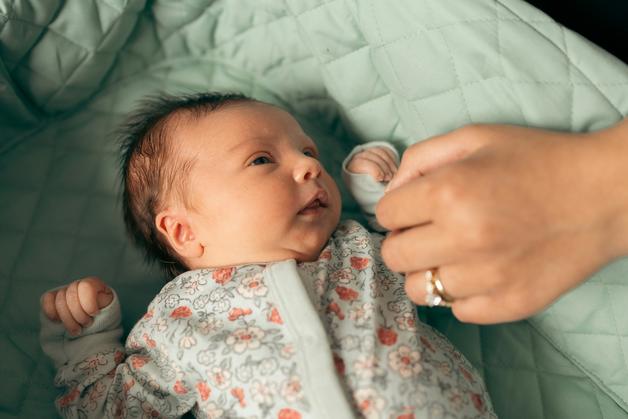
- 6–12 weeks: longer fixation, following a face or a bold toy over a short arc.
- 3–6 months: more reliable tracking, stronger convergence (both eyes turning toward near targets), early depth cues.
- 6–12 months: steady visual attention, better reach accuracy, more consistent hand–eye coordination.
You’re looking for a trend: week-by-week progress. A single “off” afternoon rarely means much, a repeated pattern does.
What does blurry vision in infants look like at home?
Babies don’t say “I can’t see.” They show it.
Possible signals of blurry vision in infants include:
- Toys or faces need to be very close to get attention
- Reaching that stays inaccurate after 4–6 months (always missing, only grabbing when touching)
- Bringing objects extremely close to the eyes
- Squinting, frequent blinking, eye rubbing (more obvious in older infants)
- Fussiness in bright light
- Head tilt or face turn to look at things
And yes: “staring into space” after feeding can be plain tiredness—especially if it disappears after sleep.
Signs that deserve a prompt check
Some observations are reassuringly common. Others should move you to book an exam soon.
Fixation and tracking: when to be concerned
Consider an eye assessment if you notice:
- No clear following of a face/toy by 2–3 months
- Tracking that stays very inconsistent side-to-side by 3–4 months
- Little visual exploration by 6–8 months
- Loss of a previously gained skill (used to track you, now doesn’t)
A regression matters. It’s a strong reason to consult.
Eye alignment: crossing and drifting after the early months
In the first weeks, brief misalignment can happen. By 3–4 months, the eyes should be aligned most of the time.
Seek care if:
- One eye turns in or out frequently after 4 months (strabismus)
- The eyes don’t move together while following a target
- A persistent head tilt appears
- The eyes “shake” rapidly back and forth (nystagmus)
A parent tip: if your baby protests strongly when one eye is covered but not the other, mention it. It can hint at unequal vision, though it is not a home test.
Visible changes that should not wait
Call the same day if possible if you see:
- White/gray glow in the pupil (leukocoria) or an abnormal red reflex in photos
- A cloudy cornea (the clear front window of the eye looks hazy)
- Droopy eyelid (ptosis) covering part of the pupil
- Strong light sensitivity (photophobia) with tearing
- Significant redness, swelling, or thick discharge
These signs point more to eye disease than to normal development.
Causes of blurry vision in infants (from common to rare)
Blurry vision is not one diagnosis. It is a symptom—and the list is broad.
Refractive errors: when focusing is the issue
A refractive error means the image is not sharply focused on the retina.
- Hyperopia (farsightedness): mild is common in babies, higher levels or big differences between eyes can blur near vision and may trigger a focusing-related eye turn.
- Astigmatism: irregular cornea/lens curvature, blur at multiple distances.
- Myopia (nearsightedness): distant faces look fuzzy, so the baby prefers close objects.
Uncorrected refractive errors can raise the risk of amblyopia (see below) and can interfere with binocular vision.
Strabismus: when the eyes don’t point together
With strabismus, each eye sends a different picture. The brain may suppress one image to avoid double vision. Over time, that can weaken visual development in the suppressed eye.
Amblyopia (“lazy eye”): the brain turns down the signal
Amblyopia is reduced vision due to abnormal visual input during early development (often from strabismus or unequal prescription, called anisometropia). Timing matters because the visual system is most adaptable in early childhood.
Visual maturation delay and optic nerve differences
Sometimes visual responses arrive late but then steadily improve: fixation and tracking “click” later. Follow-up is important to confirm progression.
More rarely, the optic nerve (the cable carrying signals to the brain) has structural differences that limit visual information.
Congenital cataract and corneal opacity
A congenital cataract is a cloudy lens present at birth, corneal opacities can do something similar. If the retina receives a blurred or blocked image, visual pathways may not develop properly. Leukocoria and a dull red reflex are classic warnings.
Retinal causes, including retinopathy of prematurity (ROP)
The retina converts light into nerve signals. In premature infants, ROP can develop because retinal vessels are still forming. Screening is typically organized in the neonatal setting, and longer follow-up is common (refractive errors and strabismus are more frequent after prematurity).
Congenital glaucoma
Rare, but urgent. Elevated intraocular pressure can damage the eye.
Typical clues:
- tearing
- photophobia
- cloudy cornea
- sometimes an eye that looks larger
Neuro-visual causes: nystagmus and cortical visual impairment (CVI)
In CVI, the eyes may appear healthy, yet the brain struggles to process visual input. Responses can be inconsistent—often better with movement, high contrast, and uncluttered backgrounds.
Infection, inflammation, or trauma
Conjunctivitis can cause discharge and discomfort, deeper infections (like orbital cellulitis) are uncommon but serious. Eye symptoms after trauma, or fever with a very red swollen eye, should be assessed promptly.
When blurry vision in infants is urgent
Seek urgent medical care (same day or emergency services, depending on severity) for:
- Leukocoria or abnormal red reflex
- Cloudy cornea, severe photophobia with tearing
- Sudden new eye turn, new droopy eyelid, or sudden change in visual behavior
- Eye injury or possible chemical exposure (rinse immediately with water or saline)
- Very red, swollen, painful-looking eye, especially with fever
If you’re hesitating, ask your pediatrician’s office how fast they want to see your baby. Describe what you see, not what you suspect.
How clinicians evaluate blurry vision in infants
You may wonder: “How can anyone test vision in a baby?” It’s more feasible than it sounds.
Who to see
- Pediatric optometrist: refractive assessment, glasses, many amblyopia and mild alignment cases.
- Pediatric ophthalmologist: medical/surgical specialist for red flags (cataract, glaucoma), retinal/optic nerve concerns, significant strabismus, prematurity history.
- Orthoptist: often involved in measuring fixation, tracking, and binocular function with play-based tests.
What happens during the exam
Expect:
- History (pregnancy, birth, NICU, family eye history)
- Fixation and tracking observation
- Pupil and red reflex check
- Alignment testing (light reflex, cover methods when possible)
- Dilating drops to examine lens, retina, and optic nerve
Why dilating drops matter (cycloplegic refraction)
Babies can “over-focus” through accommodation. Drops temporarily relax this, allowing accurate measurement of refractive error (often with retinoscopy).
Treatment: what can help, and what progress may look like
Treatment depends on the cause of blurry vision in infants—sometimes glasses, sometimes therapy, sometimes surgery.
Glasses (yes, even for babies)
If blur comes from refractive error, glasses can sharpen the retinal image and support development.
You may notice:
- steadier eye contact
- longer tracking
- more accurate reaching
Managing strabismus
Glasses may correct an accommodative inward turn. If misalignment remains significant, surgery may be proposed to align the eyes, often paired with follow-up to protect binocular vision.
Treating amblyopia
Care may combine:
- updated glasses
- occlusion therapy (patching) for prescribed periods
- sometimes atropine drops in selected cases
Consistency tends to beat intensity: short, regular patch sessions with engaging play often go further than occasional long attempts.
Cataract, glaucoma, retinal disease, CVI
These require specialist pathways. After cataract surgery, vision rehabilitation (optical correction and amblyopia prevention) is a major part of care. For CVI or low vision, early intervention and home adaptations can make visual tasks easier.
What you can do at home while waiting for answers
While professionals assess blurry vision in infants, your observations are powerful data.
Track milestones with notes (and short videos)
- Record when eye contact is easiest (morning? after naps?)
- Film brief clips (10–20 seconds) of eye turning or shaking
- Note lighting sensitivity or head tilt
Prepare for the appointment
Bring:
- key concerns and start dates
- prematurity/NICU details and ROP screening history
- family history of strabismus, amblyopia, early cataract
- photos showing unusual pupil reflexes
Questions you might ask:
- Is one eye working less well?
- Do we need glasses now? Full-time or part-time?
- How will you monitor amblyopia risk?
- What change would mean coming back sooner?
Create an easy visual environment
- Soft lighting, then gradually brighter as tolerated
- One clear target at a time (reduce background clutter)
- High-contrast toys early on, increase detail later
Key takeaways
- Blurry vision in infants is often part of early development, but progress in fixation and tracking should be visible over weeks.
- Repeated concerns—poor tracking, persistent head tilt, frequent eye turning after 4 months, or skill loss—deserve a professional assessment.
- Urgent signs include leukocoria, abnormal red reflex, cloudy cornea, strong photophobia with tearing, significant redness/swelling, sudden changes, or injury.
- Causes range from refractive errors and strabismus to amblyopia, cataract, glaucoma, retinal disease (including ROP), and neuro-visual conditions like CVI.
- Clinicians can test vision in babies using observation, alignment tests, and dilated exams, treatments can include glasses, patching, and specialist care.
Professionals can support you step by step, and you can also download the Heloa app for personalized guidance and free child health questionnaires.
Questions Parents Ask
Can teething or a growth spurt make my baby’s vision look blurry?
Yes—sometimes it can look that way, and it’s often not a true vision problem. When babies are teething, overtired, or going through a developmental leap, they may rub their eyes more, look away faster, or seem less interested in faces and toys. Mild nasal congestion can also make eyes water and appear “glassy.” If your baby’s visual attention returns after rest (or over a day or two), that’s reassuring. If the change persists, filming a short clip can help a clinician assess what’s going on.
Why does my baby sometimes stare “past” me or into space?
This can be completely normal. Young babies frequently “zone out” when they’re full, sleepy, overstimulated, or focusing on light and contrast rather than details. What tends to matter most is the overall pattern: are there regular moments of eye contact and tracking during calm, alert times? If you’re seeing very little engagement over weeks, or a skill your baby had seems to disappear, it’s reasonable to book a check.
Do vision problems run in families—should siblings be checked earlier?
They can. A family history of strong glasses, strabismus, amblyopia (“lazy eye”), or early cataract can increase a child’s risk. There’s no need to panic—this simply means earlier monitoring can be helpful. Mention any close relatives with childhood eye issues at routine visits, and you can ask whether a pediatric eye exam sooner than usual makes sense for your child.
Further reading:
- NIH-funded study proposes blurry vision in babies may … (https://www.nei.nih.gov/research-and-training/research-news/nih-funded-study-proposes-blurry-vision-babies-may-guide-brain-development)
- Newborn Warning Signs | Children’s Hospital of Philadelphia (https://www.chop.edu/pages/newborn-warning-signs)