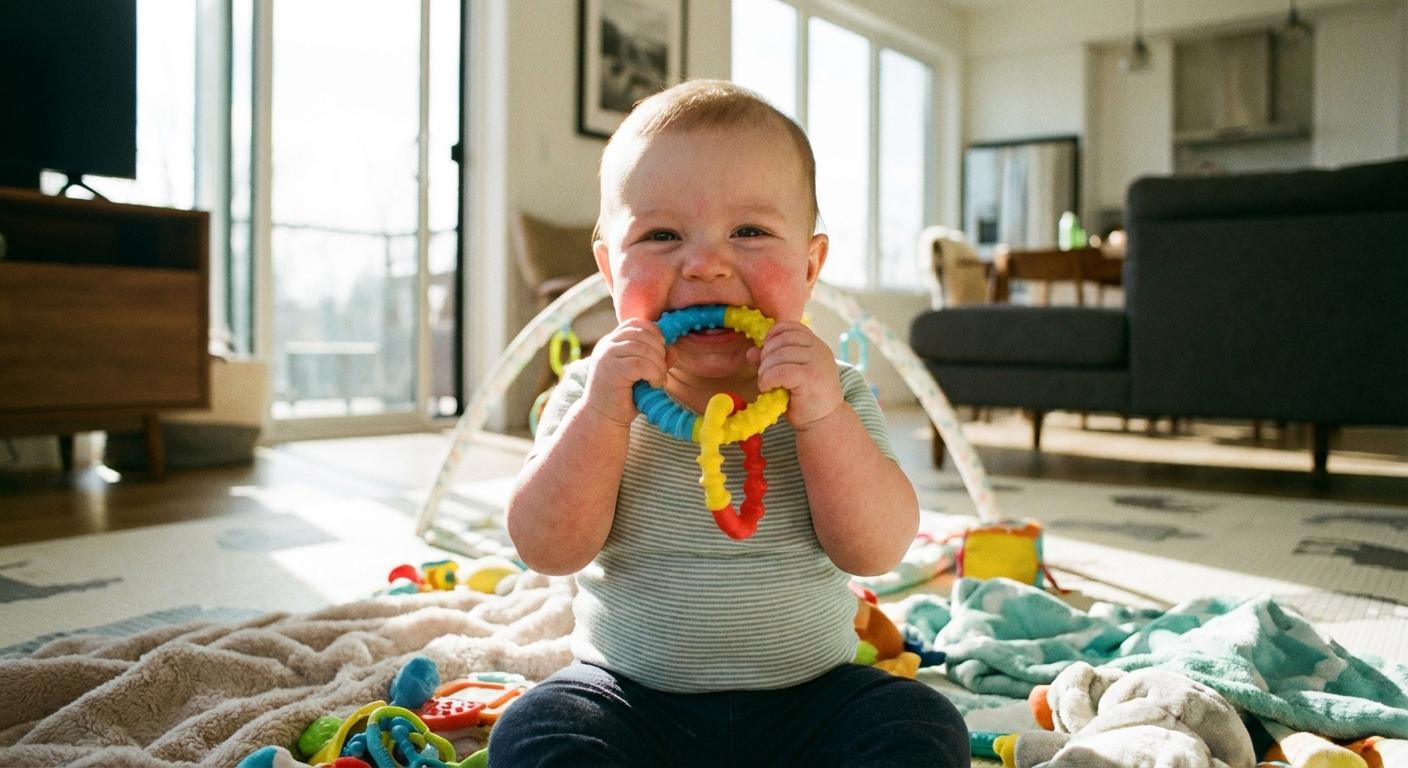
Drool-soaked bibs, sudden crankiness, a baby chewing everything in reach: parents quickly start searching for teething relief. In India, the questions often come with extra worry, “Is this fever? Is it loose motion? Is my baby in pain?” Some changes are common, some should never be brushed off. Safe, simple steps can ease sore gums while protecting sleep, feeding, and oral health.
Teething relief basics: what’s happening and when it starts
What teething is and why gums can feel sore
Teething is tooth eruption. A primary tooth moves up through bone and then through the gingiva (gum). That local pressure triggers mild inflammation (a normal tissue reaction), making the area tender.
Why does it feel “on and off”? Eruption happens in phases. As the gum thins, nerve endings become more reactive, so your baby may look fine at noon and very unsettled by evening.
Typical: mild swelling, slight redness, urge to bite. Not typical: pus, foul smell, heavy bleeding, or a big tense swelling.


When teething typically starts (and what “normal” variation looks like)
Many babies show teething behaviours around 4-7 months, but there is a wide range. Some get the first tooth earlier, others closer to 10-12 months.
The bigger picture matters: growth, hydration, feeding, alertness. If teeth seem very delayed and you see feeding trouble, poor weight gain, or unusual mouth changes, a paediatrician or paediatric dentist can advise.
Teething timeline: when the 20 baby teeth commonly come in
A typical range (weeks to months earlier/later can still be fine):
- Lower central incisors: ~6-10 months
- Upper central incisors: ~8-12 months
- Lateral incisors: ~9-16 months
- First molars: ~13-19 months
- Canines: ~16-23 months
- Second molars: ~23-33 months
Most children have all 20 primary teeth by about age 3.
How long teething discomfort lasts
Peak discomfort is often 3-5 days, yet symptoms can fluctuate across 1-2 weeks per tooth. You may notice a “good day” followed by a rough night, then a calmer stretch again.
Front teeth vs canines vs molars: why some teeth seem harder
Front teeth are smaller and often come through faster. Molars are broader and push through thicker back-gum tissue, so many babies need steadier teething relief during molar phases.
Teething relief symptoms: how to recognise teething (and what’s not typical)
Common signs
Teething usually shows up as a cluster:
- Extra drooling
- Chewing on hands/toys
- Mild gum tenderness or swelling
- Fussiness in waves
- More night waking
- Appetite changes (pulling off breast/bottle, or wanting to suck more)
Red, swollen, tender gums: what you may see
The gum can look red, puffy, or shiny over the erupting area. Some babies are touch-sensitive, especially in the evening. Occasionally you may see a small bruise-like patch: tiny superficial vessels can get irritated as the tooth pushes.
If you see a rapidly enlarging swelling, pus, or a bad smell, get it checked.
Drooling and chewing: why they happen and how to protect skin
Chewing gives counter-pressure on the gums, a natural self-soothing trick. Drool rises because babies keep the mouth busy.
If you see a drool rash, focus on the skin barrier:
- Change bibs often
- Pat dry (don’t rub)
- Use a simple barrier ointment (petrolatum or zinc oxide)
A small practical point: keep the neck folds dry, especially in humid weather, because constant dampness can worsen irritation.
Irritability: quick comfort that often works
When fussiness spikes, try short, repeatable steps:
- Hold close with slow rocking
- Offer a cool (not frozen) teether
- Do a brief gum massage with a clean finger
Sometimes the best teething relief is not one big intervention but three small ones, spaced across the evening.
Sleep and feeding: why evenings can feel worse
Night-time has fewer distractions, and fatigue lowers tolerance. A predictable routine often works better than trying something new each night.
Feeding may become choppy because sucking presses on sore gums. Helpful options:
- Calm environment, slower pace
- Smaller, more frequent feeds
- If solids are established: smoother textures, slightly cooler foods
Hydration check: steady wet nappies and a moist mouth are reassuring.
Teething vs illness: when to look beyond the gums
Teething overlaps with common viral infections. Signs pointing more towards illness:
- Fever (especially 38°C/100.4°F or more)
- Vomiting
- Very watery/frequent diarrhoea
- Cough, runny nose, breathing changes
- Widespread rash
- Marked lethargy
- Refusing fluids or very few wet nappies
Any fever in a baby under 3 months needs prompt medical assessment.
Teething relief without medication: gentle, evidence-based options
Why non-drug methods are a good first step
Most teething discomfort is temporary and often settles with low-risk measures. Non-drug teething relief also avoids side effects from topical numbing agents that are unsafe for infants.
Gum massage: simple technique
- Wash hands, keep nails short.
- Use a clean finger or silicone finger brush.
- Gentle circles or back-and-forth pressure for 10-30 seconds, up to 1-2 minutes if tolerated.
- Stop if your baby seems more upset.
If your baby bites, don’t worry, it’s a reflex. You can switch to a finger brush to protect your skin.
Cooling methods safer than freezing
- Refrigerate (do not freeze) a teether.
- Offer a clean chilled washcloth for supervised chewing.
- If gum touch is not tolerated, a cool compress on the cheek can help.
Frozen items can bruise gums and increase injury risk.
Safe chewing options: what to buy and how to supervise
For reliable teething relief, choose teethers that are:
- One solid piece (avoid liquid-filled)
- Large enough not to fit fully in the mouth
- Non-toxic and BPA-free
Check before each use. Replace if cracked, torn, sticky, rough, or shedding bits.
If you are using a teether during travel, keep a spare clean one in a pouch. Babies drop things often, and quick swaps reduce the temptation to rinse briefly and reuse.
Food-based soothing (only if solids are already established)
Slightly chilled purees can soothe. Avoid hard foods and choking hazards.
Be cautious with sweet biscuits and jaggery-based snacks: frequent sugar exposure increases cavity risk once teeth appear. If you offer a snack for comfort, follow with water sips (age-appropriate) and keep tooth brushing consistent.
Calming routine for evenings
A simple sequence can settle both baby and parent:
- Warm bath
- Dim lights, quiet cuddle
- Short massage or refrigerated teether
- Usual sleep routine
Keep the sleep space free of loose items and never leave a baby unattended with a teether.
Teething relief products: choosing and cleaning safely
Teething rings and chewers: materials and textures
- Silicone: soft, easy to clean
- Rubber: springy chew
- Wood: firm, must be smooth and splinter-free
- Fabric with a teething element: must be well-stitched and washable
Avoid overly hard ridges. Babies often do better with mixed textures: one smooth side for gentle pressure, one lightly textured side for “scratchy” relief.
Cooling and sizing safety
Refrigerator-chilled is enough. Choose age-appropriate products, prefer one-piece designs, and avoid strings/cords or anything worn around the neck.
If a product says “freezer safe”, it may still become too hard for gums. For teething relief, chilled is usually plenty.
Cleaning and replacement
- Silicone: warm soapy water, some are dishwasher-safe if the brand allows
- Rubber: mild soap, rinse well, dry thoroughly
- Wood: wipe with a damp cloth only, don’t soak
- Fabric: wash as directed, dry fully
Replace for cracks, tears, stickiness, splinters, mold, or persistent odour.
Teething gels and “quick fixes”: limits and what to avoid
What a gel may do (and what it won’t)
A gel may give brief soothing mainly by helping massage. It does not speed eruption, and it is not the base of teething relief.
Babies swallow what is applied to gums. If you ever notice redness patches, unusual swelling, or your baby seeming “different”, stop and speak to a clinician.
Ingredients to avoid in infants
Avoid products containing benzocaine or lidocaine. Benzocaine has been linked to methemoglobinemia (blood carries less oxygen). Also avoid alcohol on gums.
Avoid amber teething necklaces/bracelets (choking/strangulation risk) and frozen solid items (gum injury, choking).
Teething relief with medication: when it can be appropriate
If pain is clearly disrupting sleep or feeding and non-drug teething relief isn’t enough, medicine may be considered with age limits:
- Paracetamol: often used from 2 months and up depending on local labelling and clinician advice
- Ibuprofen: generally from 3 months and up, avoid if dehydrated or vomiting
- Never give aspirin
Dosing is by weight (mg/kg). Use the syringe/cup provided and avoid doubling up products with the same active ingredient. If you feel unsure, ask your paediatrician.
Teething relief by stage and age: tailoring comfort
Early months (0-6 months)
Comfort and routine help most:
- Gum wiping with a clean damp cloth
- Gentle massage if tolerated
- Calming sensory input and cuddles
6-12 months
Many babies benefit from:
- Soft silicone/rubber teethers
- A chilled washcloth
- Refrigerated teethers (not frozen)
If solids are established, chilled purees can be soothing.
12-24+ months: molar discomfort
Molars can be more uncomfortable because a larger tooth surface pushes through the gum:
- Offer sturdier, larger teethers that reach the back gums
- Keep brushing consistent with a small amount of fluoride toothpaste
Special situations: premature babies, reflux, sensitive gag reflex
- Premature babies may follow a different timetable, discuss concerns with your paediatrician
- Reflux flare-ups: prefer non-food soothing (massage, chilled teether)
- Sensitive gag reflex: choose smaller shapes and avoid pushing teethers too far back
Oral care during teething: comfort plus prevention
- Before teeth: wipe gums with a clean damp cloth.
- After the first tooth: soft infant toothbrush, gentle circles.
- Fluoride toothpaste:
- First tooth to age 3: smear (grain of rice)
- Age 3 to 6: pea-sized
If brushing triggers biting, try brushing earlier in the day when your child is less tired.
Teething relief safety: red flags and when to seek help
Seek prompt medical care if your baby has:
- Trouble breathing, swelling of lips/face, widespread hives
- Unusual lethargy or very hard to wake
- Persistent vomiting
- High fever, or any fever under 3 months
Also seek advice for dehydration signs (very dry mouth, no tears, fewer wet nappies), suspected ear infection (ear tugging with fever, night pain), or mouth lesions (ulcers, white patches, gum swelling with pus).
Common worries that deserve a clear answer
Many parents ask about swollen gums or an “eruption bump”. A small swelling or bluish bubble over a tooth (an eruption cyst) can be normal and often resolves as the tooth comes through. What deserves a prompt check: swelling that grows quickly, significant bleeding, pus, bad smell, or pain that looks intense and constant.
Night-time is another big concern. The safest bedtime teething relief is usually a short gum massage plus a refrigerator-chilled (not frozen) teether before sleep, followed by your usual routine. If sleep disruption is severe, discuss weight-based pain relief with your paediatric professional.
Key takeaways
- Teething relief often works best with gentle gum massage, safe chewing, and mild cooling.
- Teething timelines vary, many babies start around 4-7 months, and most have 20 primary teeth by about age 3.
- Drooling and fussiness can be normal, but fever, vomiting, very watery diarrhoea, lethargy, or dehydration signs need medical advice.
- Avoid benzocaine/lidocaine gels, alcohol on gums, amber jewellery, and frozen solid items.
For personalised tips and free child health questionnaires, you can also download the Heloa app.

Further reading: