At 2 months, feeding can feel like a moving target. One day your baby drinks peacefully, the next evening it’s feed-burp-feed on repeat. With baby feeding 2 months, the aim is not a perfect number on the bottle or a rigid timetable. The anchors are simple: milk intake, hydration, and growth trends, plus your baby’s cues.
Are you watching the clock more than your baby’s face? Many parents do. Between family advice, WhatsApp messages, and a crying baby at 9 pm, doubt can creep in.
Baby feeding 2 months: what changes at this age
In baby feeding 2 months, the stomach is still small, so daily intake gets spread across multiple feeds. Wake windows are short (often 45 to 90 minutes), and the rhythm commonly looks like wake, feed, burp, a little play, then nap.
Digestion is also maturing. The lower oesophageal sphincter (the valve between the food pipe and stomach) is still gaining tone, so milk can come back up. That is why spit-up and reflux-like behaviour are so common. The intestines also move in an irregular way at this age (gut motility), which can explain gassiness, straining, and evening fuss.

Sleep is fragmented for many babies, often around 14 to 16 hours in 24 hours, broken into blocks. Some babies begin stretching one night sleep period, but it varies.
Common patterns: cluster feeding and growth spurts
Evenings can feel intense. Cluster feeding (several feeds close together, usually late afternoon or evening) is common and usually temporary. For breastfed babies, it also supports supply by increasing milk removal.
You might notice a few days where hunger goes up, naps become shorter, and feeds come closer together. Often that aligns with a growth spurt. If wet diapers and weight gain are fine, it usually fits normal baby feeding 2 months.
A practical point: a baby can ask for milk more often not only for calories, but also for comfort and regulation. Sucking helps many babies settle their nervous system.
At 2 months, milk is still the only food
At baby feeding 2 months, your baby needs only breast milk or first infant formula. The gut and kidneys are still developing, and milk provides:
- Energy (including lactose)
- Age-appropriate protein
- Fats supporting brain and vision development
- Enough water for hydration in most situations
Water, honey, herbal teas, fruit juice, cereals in the bottle, and early purees can reduce essential milk intake and irritate an immature digestive system. Unless a clinician specifically advises otherwise, keep it milk-only.
Breast milk and formula: different composition, same aim
Breast milk is a living fluid with antibodies (including IgA), enzymes, immune cells, and factors that support a protective gut microbiome.
First infant formula is a regulated alternative with defined standards for protein, fats, vitamins, and minerals. Different route, same destination: effective intake, steady growth, good diaper output, and a baby who is generally settled after feeds.
If you are using formula, stick to Stage 1 or infant formula for this age, unless your paediatrician suggests a special formula (for example, extensively hydrolysed formula for suspected allergy).
What feeding on demand really means
On-demand feeding means responding to cues, not forcing feeds by the clock. Offer breast or bottle at early hunger signs, and allow your baby to stop when full. Pressure to finish the bottle often increases spit-up, discomfort, and fussiness, especially in baby feeding 2 months.
How much should a 2-month-old eat?
Many 2-month-olds take around 120 to 150 ml (4 to 5 oz) per feed. For formula-fed babies, a common 24-hour total is around 600 to 900 ml (20 to 30 oz), often over 5 to 6 feeds.
These are ranges, not rules. The best amount is the one that supports growth, hydration, and comfort.
Bottle-feeding amounts: simple benchmarks
For many families doing baby feeding 2 months with bottles:
- 120 to 150 ml per feed
- 5 to 6 feeds per 24 hours
- Often 600 to 750 ml per day (a typical range, not a target)
A clinical estimate sometimes used:
- Daily volume (ml) = (weight in kg × 100) + 200 to 250
If your baby finishes bottles and still shows clear hunger cues, increases are usually gradual (often plus 30 ml), while respecting fullness cues.
Tip for Indian households: if more than one caregiver prepares feeds, keep one measuring scoop with the tin, and agree on the exact mixing steps. Small adjustments done with good intentions can change concentration.
Breastfeeding: what enough looks like without measuring
With breastfeeding, you cannot count ounces, and that is fine. Many healthy babies feed 6 to 10 times in 24 hours, sometimes 8 to 12 times, especially with evening clustering.
Signs of adequate baby feeding 2 months at the breast:
- Regular swallowing during feeds
- Baby relaxes afterwards
- Breasts feel softer after feeds
- Good wet diaper output
- Steady growth over time
Feed duration varies widely. If feeds become very short, very long, painful, or exhausting, a lactation consultant or clinician can assess latch and milk transfer.
Responsive feeding to avoid underfeeding and overfeeding
Responsive feeding starts with hunger cues and ends with fullness cues.
Overfeeding is more likely when milk flows too fast, feeds are rushed, or a bottle is offered for every fuss. Underfeeding is more likely when feeds are repeatedly delayed despite cues, or milk transfer is poor (often latch issues).
If your baby frequently falls asleep within a few minutes of starting a feed, try gentle stimulation: tickle feet, change the diaper mid-feed, or do brief burps. Sometimes babies are sleepy, not full.
How often to feed a 2-month-old
Breastfed babies commonly feed 6 to 10 times per 24 hours (sometimes 8 to 12). Formula-fed babies often feed every 3 to 4 hours, roughly 5 to 6 feeds per day.
At night, many babies still wake for 1 to 2 feeds, and 1 to 3 can be normal.
Cue-based feeding: what to look for
Early cues:
- Rooting (turning head and searching)
- Lip smacking or mouthing
- Hands to mouth, sucking fingers
- Restless waking, increased alertness
Crying is a late cue. If your baby is very upset, calm first: upright hold, reduced noise and light, skin-to-skin, gentle rocking.
Fullness cues
Signs of fullness include slowing down, turning away, relaxed jaw, closing the mouth, or falling asleep and staying asleep when you pause. Respecting these cues reduces spit-up and negative associations with baby feeding 2 months.
Breastfeeding, formula feeding, and combination feeding
Breastfeeding at 2 months: latch and comfort
A deep latch usually looks like a wide mouth, lips flanged outward, chin close to the breast, and no pinching pain. If pain persists, or your baby clicks, clamps, or slips off repeatedly, get support. Sometimes it is positioning. Sometimes it is fast let-down or tongue restriction.
If your baby coughs or pulls off during let-down, you can try a more laid-back position, or hand express a little first. Small changes can make feeds calmer.
Formula feeding at 2 months: avoiding common pitfalls
A typical bottle is often 120 to 180 ml (4 to 6 oz). If bottles are finished very quickly and hunger cues continue, discuss small increases with your clinician, but first check pace and nipple flow.
Mixing matters: follow the label exactly. Over-concentrated formula increases kidney load and may worsen constipation. Under-mixing reduces nutrition. Room temperature or warmed is fine, avoid microwaving.
Combination feeding: practical ways to protect supply
If you are combining breast and formula:
- Offer breast first, then supplement if cues persist
- Use slow-flow nipples and paced bottle feeding
- If bottles replace full nursing sessions often, pumping around that time can help maintain supply
To reduce waste when mixing, many parents offer expressed breast milk first, then a smaller formula top-up.
Bottle feeding at 2 months: technique, flow, and timing
Paced bottle feeding: quick steps
1) Hold baby semi-upright (30 to 45 degrees)
2) Let baby draw the teat in
3) Keep bottle more horizontal
4) Pause the flow briefly after a few sucks
5) Burp mid-feed and at the end
6) Stop with fullness cues
Nipple flow and choking prevention
Too fast can cause gulping, coughing, choking, more spit-up, and distressed feeds. Too slow can frustrate your baby and prolong feeds.
A calm feed often lasts 10 to 30 minutes. If feeds regularly exceed 45 minutes, or baby gets upset right at the start, reassess nipple flow and pacing.
Always feed upright or semi-upright. Never prop a bottle.
Sample feeding schedules at 2 months (templates to adapt)
A schedule is a template, not a test. With baby feeding 2 months, flexibility matters.
Sample schedule for breastfed babies
- 7:00 am: Feed
- 9:30 to 10:00 am: Feed
- 12:00 pm: Feed
- 3:00 pm: Feed
- 5:30 to 6:00 pm: Feed
- 7:30 to 8:00 pm: Feed
- Overnight: 1 to 2 feeds as needed
Sample schedule for formula-fed babies
- Morning: 120 to 150 ml
- Mid-morning: 120 to 150 ml
- Early afternoon: 120 to 150 ml
- Late afternoon: 120 to 150 ml
- Evening: 120 to 150 ml
- Late evening: 120 to 150 ml (optional)
If your baby is a cat-napper, feeds may bunch up. If your baby sleeps a longer first stretch at night, daytime feeds may be a little closer together.
Night feeds and sleep at 2 months
Many babies wake 1 to 3 times overnight to feed. Small stomach capacity and immature sleep cycles make this biologically common.
A dream feed (often 10 to 11 pm) helps some babies extend the first stretch, for others, it adds disruption. If it makes nights worse, it is fine to skip.
For calmer nights: keep lights dim, keep baby upright during feeds, burp if needed, then place baby on the back on a firm, flat sleep surface.
Spit-up, reflux, gas, and evening fussiness
Spit-up is common in baby feeding 2 months. Small amounts within an hour of a feed can be normal if baby is comfortable and growing.
Seek medical advice for forceful or repeated vomiting, green or yellow bile, blood, fever, breathing difficulty, or signs of dehydration.
Supportive reflux strategies:
- Semi-upright feeds
- Paced feeding and correct nipple flow
- Burping with pauses
- Slightly smaller, more frequent feeds if large volumes seem uncomfortable
- Keep baby upright briefly after feeds (20 to 30 minutes) while awake and supervised
For gas or colic-like evenings: skin-to-skin, holding close, gentle rocking, warm bath, clockwise tummy massage, bicycle legs, supervised tummy time (awake only).
Hydration, vitamin D, and what to avoid at 2 months
Milk usually covers hydration. In Indian summers, it is tempting to offer water, but at this age it can reduce milk intake. In fever, diarrhoea, vomiting, or extreme heat, ask a clinician for guidance.
Vitamin D supplementation is common in infancy, dosing depends on the product. Confirm the dose with your clinician.
Avoid at 2 months: solids, juices, herbal teas, non-infant milks, cow’s milk as a main drink, cereal in the bottle unless medically directed, thickening feeds without advice, bottle propping.
Safe preparation, storage, and hygiene
Formula: wash hands, measure exactly, and store safely. Refrigerate prepared formula promptly and use within 24 hours. Discard leftovers from a used bottle.
If you are travelling, carry pre-measured powder and safe water, and prepare fresh feeds as needed rather than keeping bottles at room temperature.
Breast milk: common guidance is up to 4 hours at room temperature, up to 4 days in the fridge, about 6 months in the freezer (best quality). Warm with a bowl of warm water or a bottle warmer, no microwave.
Clean bottles and teats well after each use, sterilising may be advised for young or medically fragile babies.
Poops, pees, and growth: how to tell baby is getting enough
Many babies have 5 to 6 or more wet diapers per day. Stool patterns vary widely, especially for breastfed babies. What matters is overall hydration, feeding interest, and growth trends.
Call for advice if you see black tar-like stools, visible red blood, very pale stools, or diarrhoea with dehydration signs.
Allergies and intolerances
Cow’s milk protein allergy may include eczema, persistent GI symptoms, mucus or blood in stool, and sometimes poor weight gain. Avoid rapid formula switches without guidance.
When to call the paediatrician
Call promptly for dehydration signs, missing multiple feeds, unusual sleepiness, fever (rectal 38°C or more), blood in vomit or stool, bile, or breathing concerns.
Key takeaways
- Baby feeding 2 months is milk-only: breast milk or first infant formula.
- Typical bottle feeds are often 120 to 150 ml, around 5 to 6 feeds per day, with normal variation.
- Cues, wet diapers, and growth trends matter more than exact numbers.
- Spit-up and fussy evenings are common, pacing, burping, positioning, and nipple flow often help.
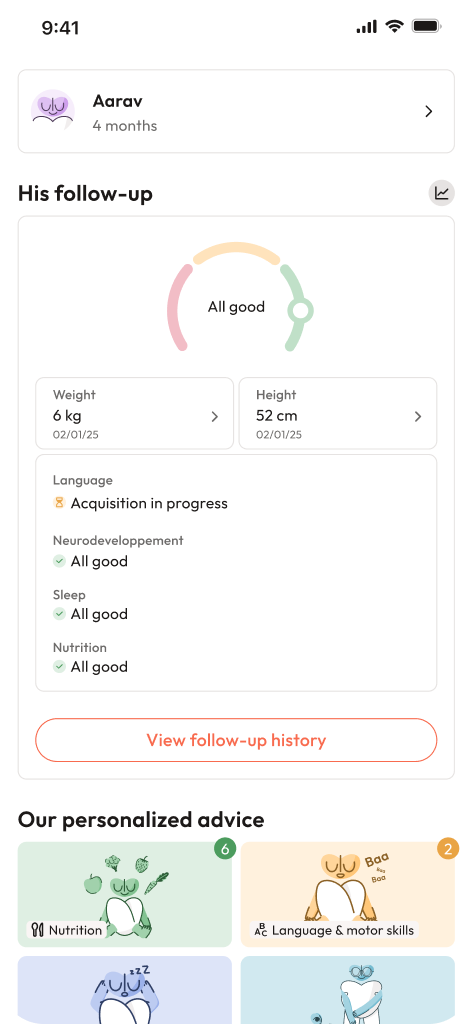
- If you want extra support, professionals can guide you. You can also download the Heloa app for personalised advice and free child health questionnaires.

Further reading:
- Feeding your newborn: Tips for new parents (https://www.mayoclinic.org/healthy-lifestyle/infant-and-toddler-health/in-depth/healthy-baby/art-20047741)
- Milestones by 2 Months | Learn the Signs. Act Early. (https://www.cdc.gov/act-early/milestones/2-months.html)