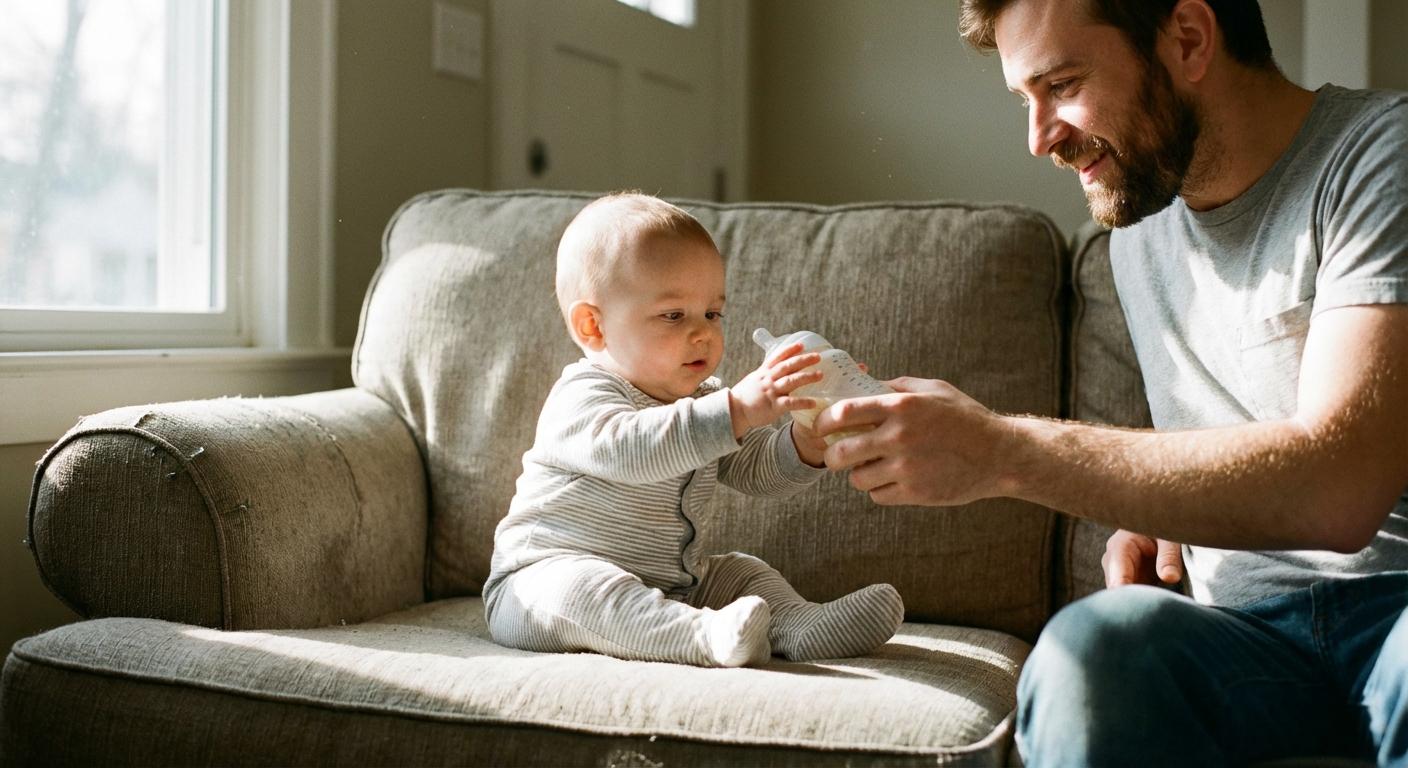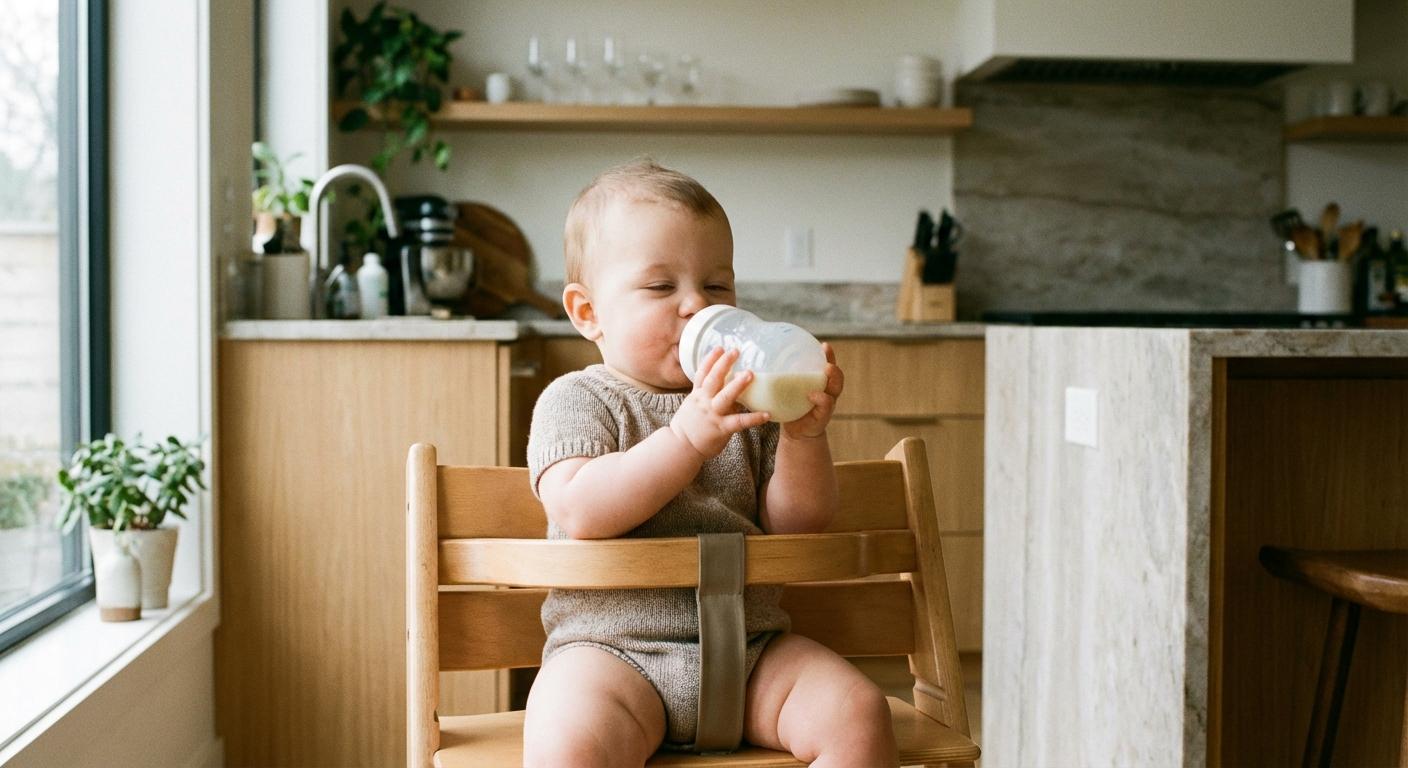
Many parents in India ask the same thing during those long feeds on the sofa or on the bed: when do babies hold their bottle without needing constant help? Some days your little one grabs it for two seconds, looks pleased, then drops it. Other days, they cling tightly but the bottle sits at such an odd angle that milk either does not come at all or comes too fast.
Most babies start showing real attempts between 6 and 12 months (sometimes earlier, around 4 to 5 months), but the path is gradual. Posture, muscle tone, prematurity, and nipple flow can speed things up or slow them down. And yes, safety rules stay the same, even when baby looks independent.
When do babies hold their bottle and why the timing looks different for every baby
The most common answer to when do babies hold their bottle is: sometime in the second half of the first year. Still, the range is wide and usually normal.
A baby may hold earlier if they get plenty of floor time and chances to grasp toys. Another baby may hold later because their body is busy mastering sitting, crawling, or because feeds are tiring.

If your baby was born early, it is often more meaningful to look at corrected (adjusted) age. In simple words, corrected age equals chronological age minus the number of weeks premature. Hand skills, head control, and feeding coordination often match corrected age more closely than the calendar.
What “holding the bottle” actually means (partial vs more complete independence)
When parents ask when do babies hold their bottle, they often imagine a neat milestone: baby holds, baby drinks, job done. But holding is not a switch, it is a skill built in layers.
You may see:
- a brief grip, then sudden dropping (fatigue or poor wrist control)
- a strong two-handed hold with a tricky angle (too flat means no milk, too steep means fast flow)
Two distinctions reduce worry fast:
- Holding the bottle vs finishing the feed: Holding is mainly grasping and guiding. Finishing a bottle “on their own” requires effective sucking plus smooth suck-swallow-breathe coordination (the rhythm that keeps swallowing safe while breathing), pausing, and adjusting the tilt till the last drops.
- Partial independence vs more complete independence:
- Partial: baby holds with two hands while you keep the body stable (arms or lap), correct the angle, and watch pacing.
- More complete: baby drinks when you hand them the bottle in a stable posture. Even then, supervision stays essential. Coughing, fatigue, or a sudden loss of coordination can happen quickly.
Helping without taking over fully is often the safest middle path.
Typical timeline: what you may notice by age
Every baby is unique, yet patterns are common. If you keep wondering when do babies hold their bottle, use these age bands as a gentle reference, not a strict rule.
Around 4 to 5 months: early attempts and “helping hands”
Some babies start reaching, touching the bottle, gripping briefly, and bringing things to the mouth. At this stage it is mostly exploration.
You might notice baby assisting while you still hold most of the weight.
Around 6 to 9 months: more purposeful holding
Grip becomes more intentional. Many babies can hold the bottle for short stretches, especially if you support posture and keep the bottle light.
Why this phase matters: trunk stability improves, and when the trunk is steadier, the hands can work with better control.
Around 8 to 9 months: holding for much of the feed (for many babies)
A lot of babies hold the bottle for most of the feed if:
- the bottle is not too heavy
- posture is supported
- nipple flow matches baby’s cues
Around 10 to 12 months: steadier coordination
Many babies can manage tilt and pacing better. You hand the bottle, they hold and drink, with fewer dramatic angle changes.
After 12 months: independence depends on context
Some toddlers are very self-driven. Others alternate, especially when tired, unwell, or seeking comfort (evenings can be like that). Context matters.
Why the age range is so wide
The answer to when do babies hold their bottle is rarely just hand strength. Timing can shift with:
- Daily opportunities: floor play, easy-to-grab toys, and safe practice time support coordination.
- Overall motor development: when the trunk and shoulders are stable, hands become freer and more precise.
- Prematurity: corrected age may be the better reference.
- Muscle tone and coordination:
- low tone can make the bottle feel heavy and tiring
- high tone can make movements stiff and less adjustable
Development skills that support bottle holding
Holding a bottle sits right at the meeting point of motor development and feeding comfort.
Posture: the often-missed foundation
Drinking is not only grabbing. Good support makes swallowing easier and reduces fatigue.
- Head and neck control: an aligned head with the chin free supports smoother suck-swallow-breathe coordination.
- Trunk and shoulder stability: a stable trunk supports finer wrist and finger movements. Without this base, babies may grip tightly but struggle to aim and adjust.
Hand and coordination skills that build over time
Several skills mature together:
- Hand-eye coordination: looking, aiming, grasping, and bringing the bottle to the mouth.
- Grip and micro-adjustments: baby learns to correct the angle, stabilise, relax, and re-grip.
- Hand-to-hand transfer: useful when one hand tires or baby needs a new position.
- More precise finger control (often 9 to 12 months): improved motor precision, even if bottle holding still uses a whole-hand grip.
Readiness signs: how to tell when your baby can practise
Instead of only asking when do babies hold their bottle, look for readiness cues. They usually show up clearly.
Easy motor signs
Baby may be ready to try if they:
- hold the head steadily and sit with support (or stay stable on your lap)
- grasp toys and bring them to the mouth intentionally
- manipulate objects, letting go and re-gripping
Reassuring behavioural signs
Readiness can also look like:
- reaching towards the bottle (anticipation)
- imitation (watching you and trying to copy)
- frustration when kept hands off (often a cue to offer a short, supported turn holding)
How to help your baby hold their bottle without pressure
The goal is not performance. It is safe progress and a calm feeding experience.
Simple ways to start
- Hands-on-hands support: baby holds while you guide, then you reduce your help slowly.
- Alternate turns: you help, then baby helps.
- Adjust the angle carefully: enough to fill the nipple, not so steep that flow becomes too fast.
- Shift positions gradually: arms to lap to high chair (only when posture is ready).
- Step back when needed: coughing, irritability, or fatigue means support more and try later.
A poor angle can increase swallowed air (leading to bloating) and can trigger coughing.
Mini-activities that strengthen grip outside meals
A few minutes at a time, repeated often:
- hand-to-hand transfers (rings, rattles)
- easy-to-grab objects (thicker shapes, textured surfaces, light weight)
- practise when baby is calm and not extremely hungry
Best positions when your baby holds their bottle
- In your arms: semi-upright works well because you control posture.
- On your lap: a good balance of support and hand freedom.
- In a high chair: when baby can sit well, support the back, stabilise the pelvis, and keep baby facing forward.
Posture and digestive comfort (spit-up and reflux)
Position affects swallowed air, spit-up, and reflux comfort:
- Many babies do better semi-upright rather than lying flat, often around a 30 to 45 degree incline.
- If reflux is frequent, try slower pacing, more pauses, and a more upright posture. Also reassess nipple flow if milk seems to overflow.
Safety first: essential rules when babies hold their bottle
Age matters less than safety habits. These rules stay the same, no matter when do babies hold their bottle.
Supervision and no propping
- Never prop the bottle (pillows, blankets, devices). Milk can keep flowing when coordination slips, increasing risk of aspiration (milk entering the airway), and it can hide fullness cues.
- Actively supervise: stay close and watch breathing, swallowing, comfort.
Flow, pacing, and sleep habits
- Match nipple flow to baby’s cues:
- too fast can cause coughing, discomfort, and extra swallowed air
- too slow can cause fatigue and frustration
- No bottle in bed: position changes and prolonged sucking without interaction create avoidable risks and unhelpful habits.
- There is no universal “right duration” for a bottle, rely on pauses, disengagement, comfort, and sucking quality rather than the clock.
Common risks and how to reduce them
- Coughing or choking signs: coughing, breathing difficulty, milk leaking at mouth corners, unusual pauses. Remove the bottle, bring baby more upright, restart more slowly, and rethink posture and nipple flow.
- Discomfort and reflux: lying too flat or fast flow can worsen spit-up. Pauses and burps can help.
- Ear concerns with lying-down feeds: feeding flat can encourage milk towards the Eustachian tube, a more upright posture may reduce this.
- Teeth: prolonged bottle use (especially in bed) increases risk of early cavities. Between meals, water is usually the best drink.
Choosing a bottle that is easier to hold
Small practical changes can make success more likely.
Grip, shape, and size
- Weight: a lighter bottle is easier. Plastic is often easier than glass during early learning.
- Shape: contoured or textured bottles can be easier to grip than smooth, wide bottles.
- Capacity: a smaller, less full bottle is often easier to hold than a large bottle filled to the top.
Accessories: helpful for some babies
- Handles: can help initially but are not required.
- Nipple age labels are only a guideline, baby’s cues (coughing, fatigue, frustration) matter more.
- Easy cleaning matters: fewer crevices means fewer residues and a simpler routine.
If your baby does not hold the bottle yet
Comparisons can make the question when do babies hold their bottle feel urgent, but many variations are normal.
Reassuring situations
It can be typical if:
- there is little interest before 6 months
- between 9 and 12 months baby prefers you to hold the bottle even while handling toys well
- the bottle is too heavy, posture is uncomfortable, baby is tired, or flow is not well matched
When to seek extra support
Consider asking for help if you notice:
- ineffective grasp (hands often tightly closed, little voluntary reaching, no hand-to-hand transfer)
- unusual muscle tone or clear asymmetry (one side used much less)
- repeated coughing or choking events, consistently stressful feeds, or broader developmental concerns
Moving beyond the bottle: early cup practise
You do not need to rush bottle weaning to build cup skills.
Introducing a cup during the first year
Often between 6 and 12 months, babies can practise small amounts, usually water, with your help. Keep practice brief and supervised. Spills and sputters are part of learning.
Keeping good habits and protecting the feeding relationship
Even when baby can hold the bottle, feeding remains a relationship: your calm presence, pacing, and attention to cues still matter. Avoid sugary drinks, do not let bottles linger, and start oral hygiene as soon as teeth appear.
À retenir
- A typical answer to when do babies hold their bottle is 6 to 12 months, with early tries around 4 to 5 months.
- Holding a bottle and finishing a feed are two different steps, independence builds gradually.
- Posture (head and trunk), hand-eye coordination, and muscle tone influence timing.
- Safety is non-negotiable: never prop a bottle, avoid bottles in bed, match nipple flow, and supervise.
- If feeds are stressful or development feels unusual, a paediatric clinician can guide you. You can also download the Heloa app for personalised guidance and free child health questionnaires.