Baby sleep can feel like a puzzle: night wakings, feeds that come one after another, a baby who dozes off in your arms and wakes the moment you place them down. In many Indian homes, advice also comes quickly: “keep the baby awake in the evening,” “add a top-up,” “don’t pick up too much.” You may be wondering what is normal, what is temporary, and what needs medical attention. The steady truth is that baby sleep is shaped by biology (sleep maturation, digestion, hormones), development (motor skills, separation anxiety), and regulation needs (closeness and safety). And it changes a lot with age.
Baby sleep biology in the first years
Baby sleep is built for rapid growth. Newborns spend a large share of sleep in REM sleep (active sleep), supporting brain development. Non-REM sleep (quiet sleep) matters too, with deeper phases linked to physical restoration and release of growth hormone.
In the first months, baby sleep is driven more by feeding needs than by the clock. A small stomach and fast digestion mean frequent feeds, including overnight. The circadian rhythm (body clock) develops gradually, morning daylight and a darker, calmer night environment both help.
Typical total sleep needs are broad ranges:


- 0-3 months: about 14-17 hours in 24 hours
- 4-11 months: about 12-16 hours in 24 hours (including naps)
- 1-2 years: about 11-14 hours in 24 hours
Sleep cycles: why baby sleep includes frequent waking
Adults cycle through sleep roughly every 90 minutes. Infants have shorter cycles, often around 50-60 minutes, so they reach light sleep more often. Brief waking, stirring, and resettling are common.
Micro-awakenings are normal sleep architecture. Many awakenings are simply transitions between cycles, plus a baby’s needs: feeding, closeness, or help regulating comfort (temperature, wet diaper, startle reflex early on). The goal is not “no waking,” but helping baby sleep return safely.
Why baby sleep supports growth and mood
Sleep supports multiple systems at once:
- Growth and repair: growth hormone release is linked to deeper non-REM sleep.
- Brain development: sleep consolidates new experiences and motor skills.
- Regulation: too little sleep can mean more fussiness and difficulty settling.
Variability is expected. Patterns often become clearer as circadian rhythm matures and feeding stretches lengthen.
Baby sleep and breastfeeding: why they are closely linked
Breast milk changes across the day. At night it contains more melatonin (a “night mode” signal). It also contains tryptophan, used to make serotonin and then melatonin. Practically, a calm feed in low light with minimal interaction supports the message that night is for sleep.
Breastfeeding also involves parental hormones: oxytocin supports relaxation and bonding, and prolactin supports milk production with natural night peaks. For many families, this means quicker returns to baby sleep after night feeds.
If you are using formula or mixed feeding, baby sleep can still be supported in similar ways: paced feeding (slow, with pauses), a gentle burp, and avoiding bright lights or playful talk at 2 a.m.
Baby sleep by age: what to expect in the first year
Newborn sleep (0-3 months)
Newborn baby sleep is fragmented. Many babies sleep 14-17 hours in 24 hours, in short stretches. Waking every 2-4 hours to feed is common. Evening cluster feeding may happen during growth spurts.
Day-night confusion is typical:
- Daytime: bright light, normal household sounds
- Night-time: dim lights, quiet voices, minimal interaction
Swaddling can soothe the Moro reflex (startle reflex), but stop at any sign of rolling.
Seek medical advice promptly if baby sleep changes come with poor feeding, fever, unusual sleepiness, difficulty waking, signs of dehydration (very few wet nappies), or breathing concerns.
4-6 months
Many babies start consolidating longer night stretches, though night feeds can still be normal. Total baby sleep often sits around 12-15 hours in 24 hours, with 2-3 naps.
This age can bring a disruption as sleep cycles mature. A predictable bedtime routine and putting baby down drowsy but awake (when possible) can help resettling.
Swaddle transition: stop swaddling when rolling signs appear (often around 3-4 months). Use a sleep sack.
7-12 months
Total baby sleep often remains around 12-16 hours in 24 hours. Many babies shift to two naps, with nights that may still include comfort waking.
Separation anxiety may peak between 6 and 12 months. Bedtime protests can be developmental. Calm consistency helps: brief check-ins, a steady bedtime sequence, and avoiding stimulating play at night.
If night waking worsens suddenly or is linked with poor growth, persistent distress, snoring, laboured breathing, or repeated vomiting, a clinical check is sensible.
Safe baby sleep: setting up a safer sleep space
The simplest baseline for baby sleep safety is:
- Back to sleep for every nap and night
- A firm, flat sleep surface (crib, bassinet, play yard)
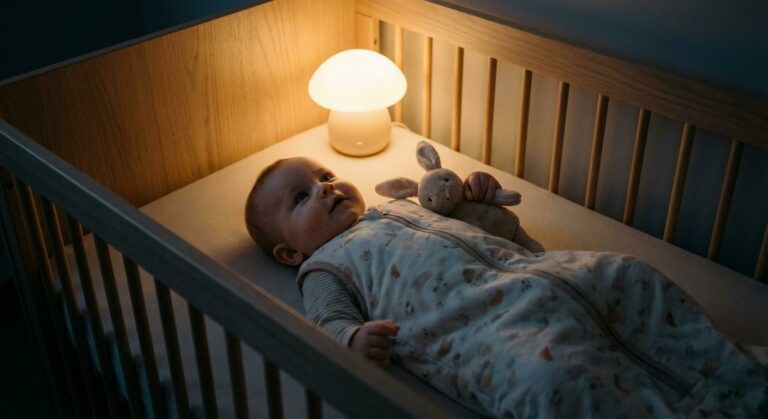
- An empty sleep space (no pillows, quilts, bumpers, loose blankets, soft toys)
Room-sharing (same room, separate surface) is advised for at least 6 months, ideally up to 12 months, to lower the risk of sleep-related infant death.
Once baby can roll
Always start on the back. If baby rolls independently, you can usually leave them, provided the surface is firm, flat, and clear. Avoid wedges and positioners.
Temperature and TOG
Aim for a comfortable room temperature, often around 20-22°C. Overheating raises risk, watch for sweating, a hot neck or chest, flushed skin, and fast breathing.
TOG is a warmth rating for sleep sacks. Warmer rooms need a lower TOG, cooler rooms may need a higher TOG plus a simple clothing layer. Check warmth at the back of the neck or chest.
In hot and humid weather, many parents worry the baby will “catch cold” if lightly dressed. Often the bigger risk is overheating. A breathable cotton layer and a light sleep sack (or just a onesie, depending on room temperature) is usually more comfortable than multiple thick layers.
Baby sleep location: room-sharing and bed-sharing
Room-sharing supports feeding and monitoring without sharing the same surface.
Bed-sharing carries higher risk than room-sharing, and the risk rises sharply with smoking exposure, alcohol, sedatives or drugs, extreme fatigue, soft bedding, and sofas.
Avoid bed-sharing if anyone smokes, if alcohol or sedatives were used, if you might fall asleep on a sofa, or if baby was premature or low birth weight. If bed-sharing happens, discuss risk reduction with a clinician.
Baby sleep routines: gentle structure without pressure
A bedtime routine works best when it is short and repeatable (15-30 minutes): diaper, dim lights, feed if hungry, brief calming cue, into the sleep space.
Watch for early sleep cues (looking away, staring, yawning). If a baby becomes overtired, baby sleep can fragment.
Support circadian rhythm with morning light and calm evenings. At night, keep feeds and changes boring: low light, minimal talking, no play.
What about screen time? Bright phone light close to baby’s face can be stimulating. If you need your phone for feeds, lower brightness, use night mode, and keep it angled away.
Baby naps: day sleep that supports nights
Common nap patterns:
- 0-2 months: many short naps
- 3-6 months: often 3 naps
- 6-12 months: usually 2 naps
Typical wake windows:
- 0-2 months: about 45-75 minutes
- 3-4 months: about 1-1.5 hours
- 4-6 months: about 1.25-2 hours
- 6-9 months: about 2-3 hours
- 9-12 months: about 3-4 hours
Naps need the same safe baby sleep set-up as nights.
Nap transitions can feel messy. If the last nap starts disappearing (often 4 to 3, then 3 to 2), bedtime may need to move earlier for a few days to protect baby sleep.
Common baby sleep challenges: gentle troubleshooting
Frequent night waking
Common contributors include hunger, discomfort, illness, separation anxiety, and patterns (needing a specific support to fall asleep).
Try:
- Keep nights calm and dim
- Ensure daytime feeding is adequate
- Keep a consistent bedtime sequence
- Start with brief soothing before picking up
If wakings are new, intense, or paired with poor feeding or growth concerns, seek medical guidance.
Short naps
Short naps can come from overtiredness, undertiredness, or normal developmental short cycles. Try adjusting timing first: move the nap earlier by 10-15 minutes if overtiredness seems likely, or slightly later if undertiredness fits better.
Early morning waking, false starts, split nights
Early waking often relates to light and timing. False starts (waking soon after bedtime) often appear with overtiredness or late stimulation. Split nights can happen with schedule mismatch.
Clues:
- Overtired: hard to settle, restless sleep
- Undertired: long, chatty awake time at night
Small tweaks usually work better than big changes.
Teething, illness, and growth spurts
Teething can disturb baby sleep, but not every waking is teething. If discomfort seems likely, discuss age-appropriate pain relief with your clinician.
During illness, prioritise hydration and comfort. Seek urgent care for breathing difficulty, dehydration signs, or a baby who is unusually hard to wake.
Reflux, gas, and discomfort
Some babies wake often due to discomfort. Consider medical advice if there is frequent vomiting, feeding refusal, blood in stool, poor weight gain, or a baby who cries inconsolably for long periods.
Feeding and baby sleep: practical guidance
Feeding to sleep is common, especially early on. If it becomes unworkable, shift gradually: move the feed slightly earlier and add a stable cue (song, rocking, sleep sack).
Wondering hunger vs comfort? Hunger often looks like active, rhythmic sucking with frequent swallowing and strong jaw movements. Comfort sucking is lighter with fewer swallows.
Night weaning is a family choice and depends on age, growth, and daytime intake. If you are unsure about weight gain, speak with your paediatrician before reducing night feeds.
Sleep regressions and developmental leaps
Around 3-4 months, sleep architecture matures and baby sleep may worsen temporarily. Between 6-10 months, separation anxiety and new motor skills can disrupt nights. Around 12 months, nap resistance may show up as routines shift.
If you keep routines steady, protect naps, and respond calmly at night, these phases usually pass.
Baby sleep training: options if you choose
Sleep training is optional. Consider it only if feeding and growth are steady, baby is well, a safe sleep space is in place, and caregivers agree on the approach.
Common gentle approaches include graduated checks, chair method, and pick up/put down. If distress feels unmanageable or you suspect pain, pause and get support.
When to seek medical advice
Seek medical advice promptly if your baby has fever, breathing difficulty, bluish colour, signs of dehydration or very few wet nappies, poor weight gain, feeding refusal, unusual sleepiness or difficulty waking, or repeated vomiting.
Caregiver well-being matters too. Persistent anxiety, low mood, or thoughts of self-harm need urgent support.
Key takeaways
- Baby sleep changes quickly in the first year, frequent waking is often normal, especially early on.
- Back to sleep on a firm, flat surface with an empty crib or bassinet lowers risk every time.
- Room-sharing without bed-sharing is the safest standard for the first 6-12 months.
- Light, simple routines, and age-appropriate wake windows support the day-night rhythm.
- Seek medical advice if baby sleep worsens with feeding problems, poor growth, fever, dehydration concerns, or breathing symptoms.
Takeaway
Baby sleep keeps evolving with growth and development. Focus on safe sleep set-up, steady cues, and realistic expectations. If you want extra support, you can download the Heloa app for personalised advice and free child health questionnaires for children. Many families also find it helpful to discuss persistent sleep concerns with their paediatrician, especially if there is loud snoring, eczema or allergy symptoms, or ongoing feeding struggle.

Further reading: