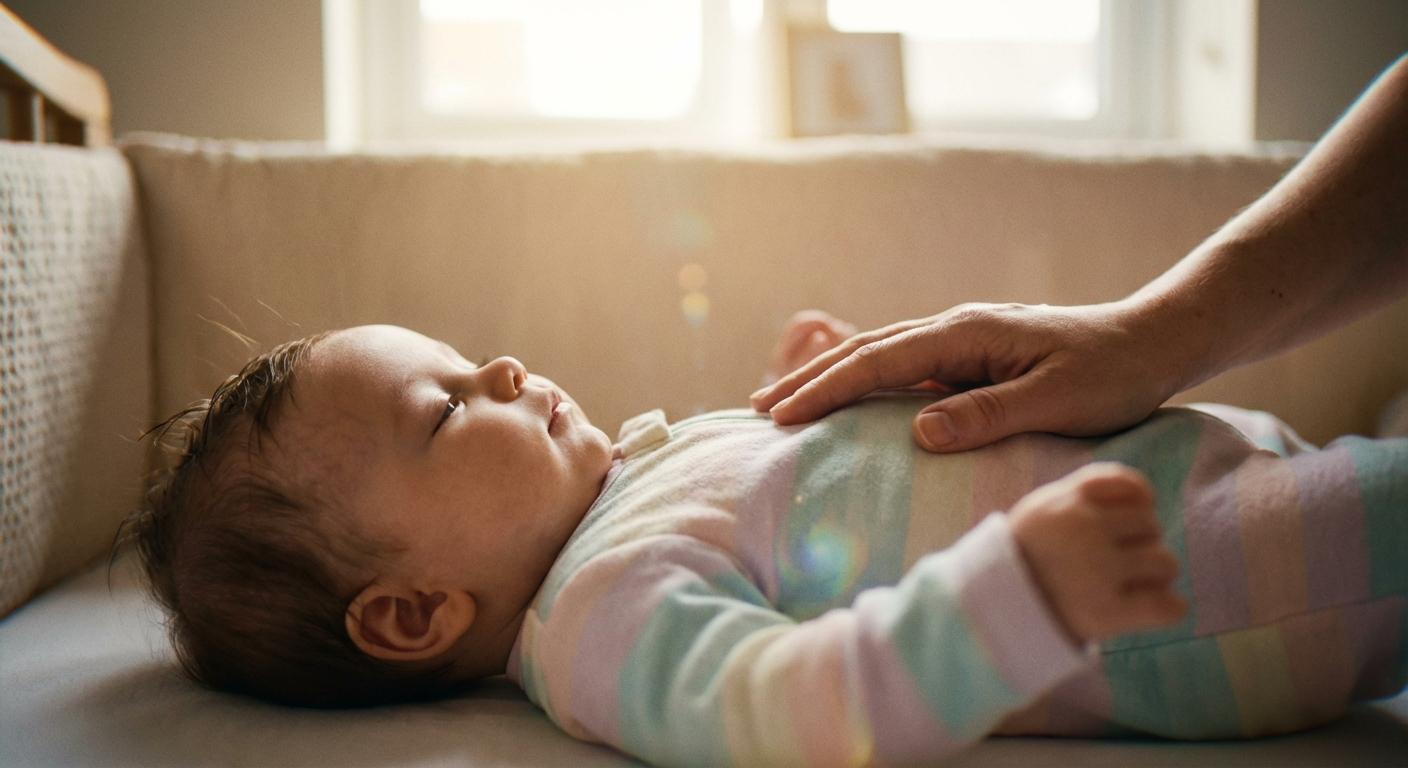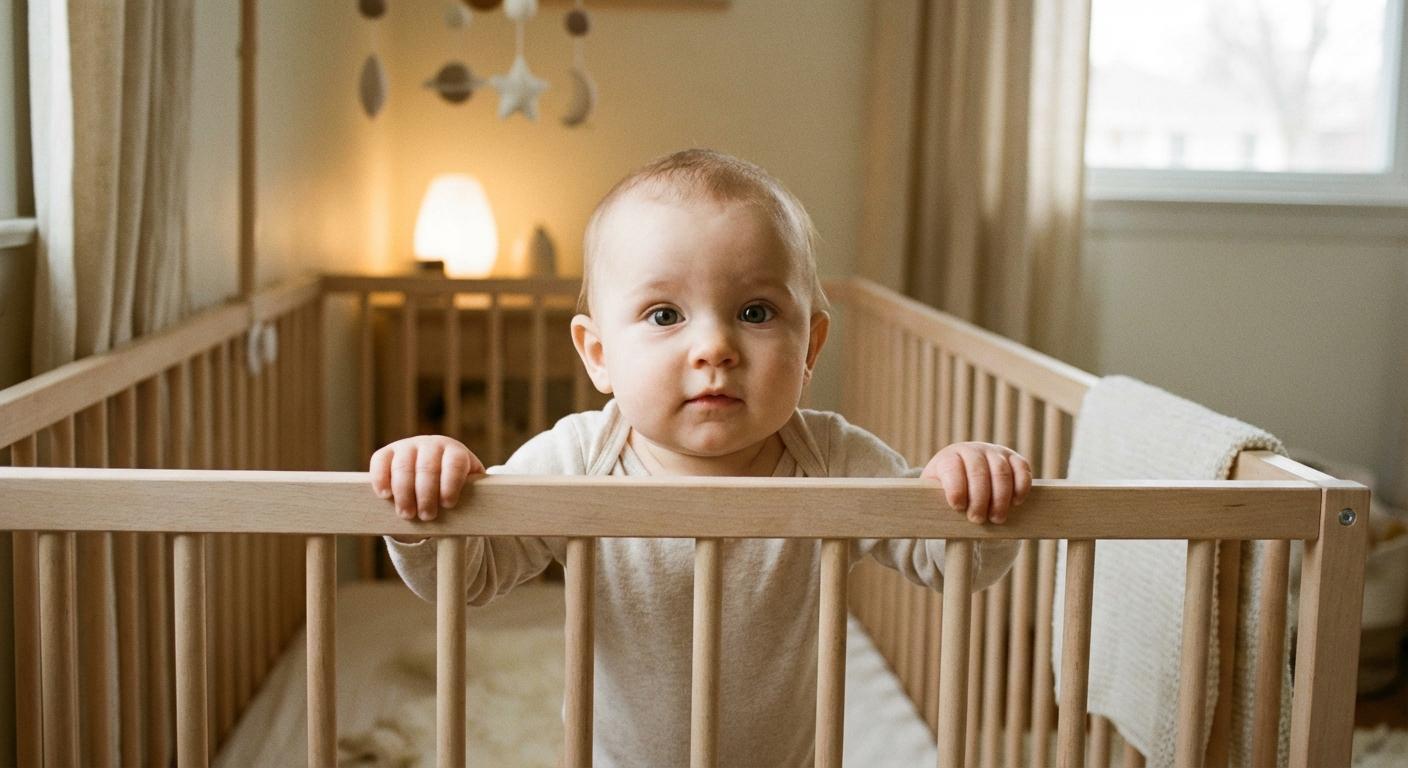
That moment is familiar: your baby sleeps peacefully in your arms, you tiptoe to the crib, and within seconds, eyes wide open, crying starts, everyone is awake again. When baby won’t sleep in crib, nights can feel endless and naps can turn into a daily struggle.
In many Indian homes, sleep happens with room-sharing, background sounds (fans, traffic, a TV in the next room), and sometimes shifting caregiving between parents and grandparents. So when baby won’t sleep in crib, it can feel extra confusing: “He sleeps on me… why not on the mattress?” Most of the time, the explanation is straightforward: sleep biology, timing, comfort cues, and sometimes mild health discomforts. With steady steps, crib sleep usually improves too.
Baby won’t sleep in crib: what it means and what’s normal
“Crib refusal” isn’t an illness. It’s a pattern:
- Baby settles while feeding, rocking, or being held, but wakes when placed down.
- Baby sleeps in the crib briefly (often 20–45 minutes) and then protests.
- You see “false starts” (sleep, then wake soon after) or naps that happen only as contact sleep.
Babies regulate breathing rhythm, temperature, and stress more easily with closeness and familiar sensations. A firm mattress can feel like a sudden sensory change.

When the pattern is time-specific (use it as a clue)
- Naps are hard, nights are better: daytime sleep pressure is lower.
- Bedtime is long, but the night is okay: the last wake window likely ran too long, or evening stimulation was high.
- Early morning falls apart: sleep is lighter towards morning, hunger or feeling cold can play a part.
- Baby wakes when you leave: reassurance needs, early separation anxiety, or “I fall asleep only with you.”
Age-typical phases vs. a persistent sleep issue
- 0–3 months: fragmented sleep, transfers are difficult. Focus on safety.
- 3–6 months: sleep becomes more organised, settling in the crib is a skill.
- 8–9 months: mobility + separation anxiety can increase protests.
- 12–24 months: more opposition and bedtime negotiation.
When baby won’t sleep in crib for weeks despite steady routines, or there are signs of pain, poor feeding, poor growth, breathing concerns, or frequent vomiting, medical input is sensible.
If nothing improves after 3–4 weeks of consistent timing and responses, speak with a paediatrician to check for health factors and to fine-tune sleep associations.
The three sleep drivers (simple biology)
- Sleep pressure: undertired babies resist, overtired babies get “wired.”
- Circadian rhythm: shaped by morning daylight and dim evenings.
- Sleep cycles: infants switch sleep stages quickly. If baby fell asleep with help that disappears, he may call for it at each cycle transition.
Baby won’t sleep in crib: when to worry
Most crib resistance is developmental, but some signs deserve prompt medical advice.
Red flags to mention
- Repeated pain signs: high-pitched crying, stiffening, marked back-arching
- Breathing difficulty: retractions, wheeze, fast breathing, pauses
- Fever that persists
- Clear drop in intake, fewer wet diapers, or significant vomiting
- Poor weight gain or unusual sleepiness
If baby is under 3 months with fever ≥38°C, seek urgent medical advice.
Timing problems: overtired vs. undertired
If baby won’t sleep in crib, check the clock before changing everything else.
Early tired signs: yawns, eye rubbing, slower blinking, losing interest, a tense face, restlessness.
Approximate wake windows (adjust to cues):
- 0–3 months: 45–60 minutes
- 3–4 months: 1h15 to 2h
- 4–6 months: 2–3h
- 6–9 months: 2.5–3.5h
- 9–12 months: 3–4h
- 12–18 months: 3–4h
- 18–24 months: 4–6h
Often, shifting bedtime 10–20 minutes earlier reduces crying and improves transfers.
Why baby won’t sleep in crib
The crib feels unfamiliar
A crib is open, flat, and still. Arms are contained, warm, and moving. Some babies react to smell, temperature, or the firm mattress. That mismatch can wake them fully.
Transitions disrupt sleep
Bassinet to crib, travel to grandparents’ place, a new home, daycare naps, or a room change can all break the usual cues. Babies need extra consistency during transitions.
Sleep associations don’t transfer
A sleep association is what baby expects at the instant sleep begins. If sleep begins at the breast/bottle, on your chest, or with rocking, baby may look for the same thing after each normal micro-waking.
The aim is not to remove comfort. It’s to help baby start sleep with the crib present.
Separation anxiety and need for closeness
Often around 8–9 months, baby may protest the moment he senses he is alone. This is brain development, not “bad habits.” Predictable routines and predictable responses work best.
Milestones and temporary regressions
Rolling, sitting, crawling, pulling to stand: exciting skills can fragment sleep for a few days or weeks.
Environment mismatch: temperature, light, noise
Most babies sleep better with:
- A dark room
- Steady white noise
- Comfortable temperature
A common comfort range is 18–22°C with suitable layers. In hot, humid seasons, preventing overheating matters, sweaty neck or chest is a useful clue.
Discomfort and health factors
Crib sleep can expose discomfort:
- Hunger
- Wet diaper
- Gas
- Reflux-like discomfort
- Teething
- Viral illness
- Skin itch (eczema)
If there is distress with spit-up, poor feeding, persistent vomiting, coughing/choking with feeds, or poor weight gain, talk to a paediatrician.
Nasal congestion: “can’t lie flat”
Young babies mainly breathe through the nose. Congestion can make lying flat difficult.
If baby won’t sleep in crib during a cold:
- Saline drops and gentle nasal clearing before sleep
- Smaller, more frequent feeds if sucking seems tiring
- Check room temperature and hydration
Seek medical advice if breathing becomes laboured or wet diapers reduce.
Family patterns that keep the cycle going
Trying many strategies in one night can make baby more alert and uncertain. Bright lights, chatting, or long playful resets can shift the body clock.
Pick a plan you can repeat calmly. Consistency teaches predictability.
Safe sleep first: crib setup
When baby won’t sleep in crib, adding pillows or soft items can feel tempting. Keep the sleep space safe:
- Back to sleep for all naps and nights
- Firm, flat mattress with tight sheet
- Bare crib: no loose blankets, pillows, bumpers, soft toys, or positioners
- Avoid routine sleep in car seats, swings, and loungers (inclined sleep can affect the airway)
Quick plan for tonight
Reset the room
Dim lights, darken the room, steady white noise, comfortable temperature.
Meet immediate needs
- Feed if due
- Burp gently, brief upright hold if gassy
- Diaper change if needed
- If fever, unusual cry, or lethargy, focus on health first
Align timing
If settling is taking ages, bedtime may be too late. Tomorrow, shorten the last wake window by 15–20 minutes.
Pick one response style
- In-room support: stay nearby, calm voice
- Brief checks: short reassurance at intervals
Keep it low stimulation.
Build the foundation for crib sleep
Keep routines short and consistent
10–20 minutes, same order: diaper, sleep sack, feed if needed (often not as the final step), a short song, then crib.
Mini nap routine
Dark room, same words, then crib.
Soothing cues that transfer
White noise, steady shush, gentle pat, one simple phrase.
Minimal-handling put-down
Slow movements. If baby fusses, hand on chest for 30–60 seconds, then release.
Positive crib time while awake
2 short “happy crib” moments daily while baby is awake and calm. A few minutes is enough.
Drowsy but awake
“Drowsy but awake” means sleepy signs are present, but baby is still aware. If sleep always begins in arms, baby may protest at each cycle transition.
Try a bridge: calm in arms → place in crib → settling finishes in the crib.
If crying builds: lights off, brief reassurance. If you pick up, calm baby, then place back down once calm (not fully asleep).
A micro-check that often helps
When baby won’t sleep in crib and wakes again and again, ask: “What changed since my baby fell asleep?” A parent moved away, the room became cooler, the white noise stopped, or a pacifier fell out. Keeping the environment steady and the response boring helps baby link sleep cycles.
Baby won’t sleep in crib after bassinet
A bassinet feels snug, a crib feels open. Try nights first, keep the same cues (darkness, white noise, sleep sack), then add one crib nap later.
Baby won’t sleep in crib unless held
Ask what is present at the moment sleep begins. That is the association. Gentle fading helps:
- Reduce rocking gradually
- Move from fully asleep-in-arms to sleepy-in-arms, then down
- Keep pick-ups brief if using pick-up/put-down
Start with nights, naps often improve later.
Support, then gradual withdrawal
- Same routine, same words
- Stay near the crib first, then move farther away over days
- Step out earlier, with brief reassurance if needed
Look for trends over 1–2 weeks: less crying, faster settling, fewer false starts.
A 14-day plan (simple and realistic)
- Days 1–3: set environment + bare crib + happy crib practice
- Days 1–5: focus on nights with one consistent response style
- Days 3–7: add the first nap in the crib
- Days 5–10: increase crib naps, reduce soothing in small steps
- Days 10–14: keep morning wake time steady, tweak wake windows by 10–15 minutes
Feeding, digestion, and comfort
If feeding is always the final step, baby may request it between cycles. Shift it slightly earlier: feed → diaper → sleep sack → song → crib.
For gas/reflux-sensitive babies: gentle burping, paced bottle-feeding if relevant, and 10–20 minutes upright after feeds may help. If reflux seems painful or there is poor growth, seek medical advice.
Pacifier use: helpful, but manage the “loss” problem
A pacifier can soothe some babies and may reduce SIDS risk in some studies when offered at sleep onset (if breastfeeding is established). But if baby won’t sleep in crib because the pacifier falls out every cycle, you may see frequent wake-ups. Options include: offering it only at the start of sleep, waiting a few seconds before replacing it, and (for older babies) practising daytime “pick and place” so they learn to replace it.
When to talk to a paediatrician
Seek medical advice if baby won’t sleep in crib and you see:
- Breathing problems (retractions, pauses, wheeze, bluish lips/face)
- Poor feeding, dehydration signs, or poor weight gain
- Persistent vomiting (especially forceful or green)
- Severe reflux symptoms with distress/choking
- Fever (especially under 3 months)
- Unusual sleepiness
- Repeated pain signs
Bring 7–14 days of notes: sleep times, where sleep happened, how baby fell asleep, wake-ups, feeds, diapers, symptoms.
À retenir
- When baby won’t sleep in crib, it is often timing + sleep cycles + associations.
- Keep safe sleep firm: back-sleeping, firm flat surface, bare crib.
- Small schedule changes (10–20 minutes) can shift bedtime.
- Illness, transitions, milestones, and separation anxiety can temporarily worsen crib sleep.
- If red flags appear, or there is no improvement after 3–4 weeks, speak with a clinician.
- Support exists: parents can get help from professionals, and you can download the Heloa app for personalised guidance and free child health questionnaires.