When your little one starts coughing, breathing faster, or getting tired mid-feed, the mind runs ahead. Could it be baby pneumonia? The term sounds heavy because it involves lungs, oxygen, and that small chest working overtime. The comforting part: most cases of baby pneumonia get better, especially when breathing changes are picked up early and the right care (supportive or medical) is started without delay.
You may be wondering what exactly happens inside the lungs, how baby pneumonia can resemble bronchiolitis or bronchitis, what you can observe at home, how doctors confirm the diagnosis (oxygen saturation, chest X-ray, and sometimes blood tests), which treatments are used, and when it’s time to treat it as urgent.
What happens in the lungs with baby pneumonia
Baby pneumonia is an infection of the lung tissue. Often, it involves the alveoli (tiny air sacs at the ends of small airways) where oxygen enters the blood and carbon dioxide exits. With inflammation, the alveoli can fill with fluid, mucus, and inflammatory cells.
That filling blocks efficient gas exchange. Your baby compensates by:

- breathing faster (tachypnoea, meaning rapid breathing),
- using extra muscles to breathe (you may see the chest wall pull in),
- tiring more quickly, especially during feeds.
Infants have limited respiratory “reserve”. So fatigue can show up suddenly. Morning may look manageable, evening may look tougher, simply because breathing has been hard work all day.
Bronchiolitis, bronchitis, and baby pneumonia: how they differ
The symptoms can look similar. The difference is mainly where the inflammation sits.
- Bronchiolitis: inflammation of the smallest airways (bronchioles), usually viral, often RSV. Typical clues include wheeze, congestion, cough, and laboured breathing.
- Bronchitis: inflammation of the larger airways (bronchi). Cough tends to be the main feature.
- Baby pneumonia: inflammation reaches the alveoli (and sometimes the surrounding lung tissue). Fever can be higher, breathing can become clearly faster, and overall energy can drop. On a chest X-ray, doctors may see consolidation (a patch of lung that looks “solid” because it is filled with fluid and inflammatory material).
In practice, clinicians use the full picture: lung sounds (crackles, reduced breath sounds), oxygen saturation, age, feeding, hydration, and general appearance. Sometimes imaging helps, sometimes it does not add much.
Baby pneumonia in newborns: special situations
Newborns can present differently, which understandably makes parents uneasy. There may be no high fever, and cough may be mild or absent.
- Early-onset pneumonia: present at birth or within the first hours. Signs can resemble a general infection: very quiet baby, greyish colour, unstable temperature (too low or fluctuating), poor feeding.
- Late-onset pneumonia: after about the first week. Breathing signs tend to stand out more (increased work of breathing, reduced intake).
- Hospital-acquired pneumonia: acquired in hospital settings, more likely in neonatal units, especially if invasive airway support (like intubation) is required.
If a newborn is feeding poorly, unusually sleepy, or “not themselves”, it deserves prompt medical review, even if the thermometer is not showing a high number.
Viral vs bacterial baby pneumonia (and rarer causes)
Parents often ask: viral or bacterial, how to tell? At home, it is not something to decide by guesswork.
- Viral baby pneumonia: common in infants. It may begin like a cold (runny nose, mild cough) and then shift to faster breathing and tiredness. RSV, influenza, parainfluenza, and adenovirus are frequent causes.
- Bacterial baby pneumonia: may come on more abruptly, sometimes with higher fever and a baby who appears more unwell.
- Rarer causes (fungal, parasitic): mainly in special situations (very fragile immunity, prolonged hospital stay).
Doctors base decisions on examination, the timeline of illness, age, and sometimes tests.
Causes of baby pneumonia: germs and how they spread
Respiratory viruses (RSV, influenza, and others)
RSV spreads easily through hands, surfaces, and droplets, especially in crèches, playgroups, and crowded homes. Influenza can also cause significant respiratory illness in young children. Viral infections can sometimes be followed by a bacterial secondary infection because the airway lining gets irritated and local defences dip.
Bacteria (pneumococcus, Hib, staphylococcus)
In infants, common bacteria include:
- Streptococcus pneumoniae (pneumococcus)
- Haemophilus influenzae type b (Hib)
- Staphylococcus aureus
Vaccines reduce severe disease but do not remove all risk, especially in very young babies.
Community-acquired vs hospital-acquired
- Community-acquired baby pneumonia: caught during routine life: family gatherings, childcare, public transport.
- Hospital-acquired baby pneumonia: caught in hospital. Risk increases when natural airway protection is bypassed (for example, assisted ventilation).
Why winter often hits harder (and monsoon can too)
In many parts of India, winter brings dry air, closed rooms, and higher viral circulation. During monsoon, crowding indoors and fluctuating humidity can also fuel respiratory infections. The net result: more bronchiolitis, and sometimes more baby pneumonia, plus bacterial infections that may follow a viral start.
Risk factors: which babies are more vulnerable
Some babies merit earlier review if breathing changes appear, without assuming the worst.
- Prematurity, low birth weight, and age under 1 year
- Congenital heart disease or lung malformations
- Immune deficiency (primary or due to treatment)
- Secondhand smoke exposure (including indoor smoking)
- Indoor air pollution (cooking smoke, poor ventilation, strong sprays)
- Immunisations not up to date
- Hospital settings with invasive devices
Baby pneumonia symptoms parents can spot
Baby pneumonia is not only “cough + fever”. Fever can be absent, especially in newborns. Watching breathing, feeding, and alertness is often more telling.
Respiratory signs
- Cough
- Faster breathing (tachypnoea)
- Chest retractions (skin pulling in between ribs, above the breastbone, or under the ribs)
- Nasal flaring
- Noisy breathing, sometimes wheeze
A clinician may hear crackles (fine popping sounds) or a localised reduction in breath sounds.
General signs
- Fever, or unstable temperature in very young babies
- Low energy, more sleepiness, reduced interaction
- Irritability or moaning
- Pallor, sweating
- Reduced intake, vomiting (often from coughing or exhaustion)
Newborn-specific signs
A newborn with baby pneumonia may simply feed less, fall asleep quickly on the breast or bottle, or appear unusually quiet. In newborns, infections can be less specific, so behaviour changes matter.
Breathing signs that suggest baby pneumonia is getting serious
Increased work of breathing
Signs that your baby is working hard to move air:
- nasal flaring
- grunting on exhale
- head bobbing
If these are present, a same-day medical assessment is sensible. If severe or worsening, it becomes urgent.
Chest retractions
Persistent, marked retractions, especially pulling in under the ribs, are concerning, particularly if feeding is poor.
Colour changes (pale, mottled, or blue)
- Pale or mottled skin can reflect significant stress.
- Blue lips, tongue, or face (cyanosis) can indicate low oxygen.
Bluish discoloration of lips or tongue is an emergency sign.
Pauses in breathing (apnoea)
Any episode of apnoea, especially with colour change or limpness, needs immediate medical attention.
Emergency warning signs: when to seek urgent care
Seek urgent evaluation if you notice:
- significant breathing difficulty (very fast breathing, marked retractions, grunting, pauses)
- cyanosis (bluish lips, tongue, or nails)
- inability to drink, refusal of feeds, or repeated vomiting
- dehydration signs (far fewer wet nappies or diapers, dry mouth, no tears)
- unusual sleepiness, limpness, or extreme agitation
- very pale colour, mottling, or unstable temperature in a very young baby
If you are thinking, “Maybe it will settle by morning”, remember: infants can worsen quickly because they tire.
How doctors diagnose baby pneumonia
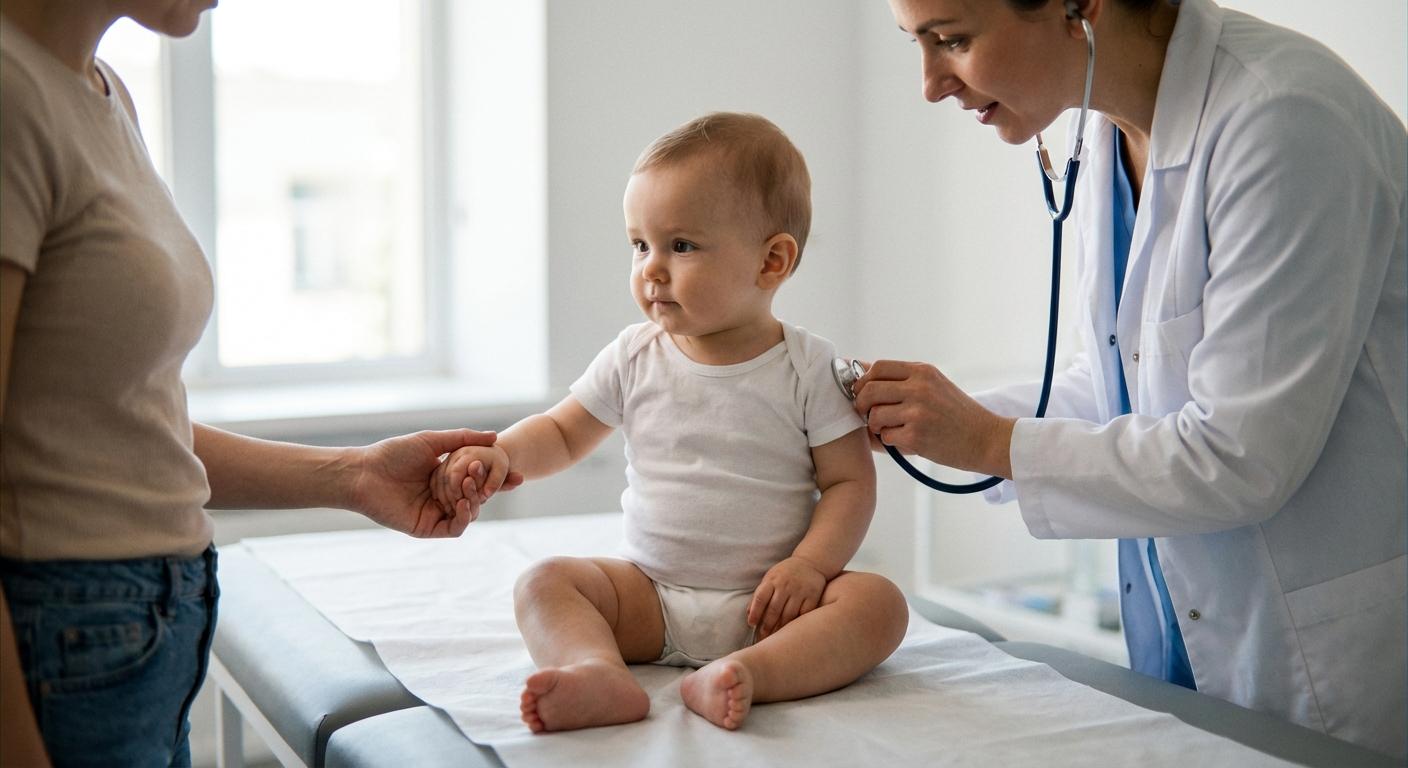
Diagnosis begins with observation and clinical examination: breathing rate, retractions, colour, lung sounds, hydration.
Pulse oximetry (oxygen saturation)
A pulse oximeter measures SpO₂ (oxygen saturation). It is quick, painless, and helps assess severity.
Chest X-ray
A chest X-ray may be used when:
- diagnosis is uncertain,
- illness looks moderate to severe,
- complications are suspected,
- recovery is not following expectations.
Blood tests and samples (depending on age and severity)
Depending on age and how unwell your baby appears, doctors may consider blood count and inflammatory markers. In very young babies, when a generalised infection is a concern, blood cultures may be taken. Viral swabs may be done in some settings.
Treatment of baby pneumonia: based on cause and severity
Treatment for baby pneumonia is chosen according to cause, age, oxygen level, and feeding ability.
Supportive care (often central)
In many cases, especially viral baby pneumonia, supportive care is the backbone:
- hydration (smaller, frequent feeds)
- fever comfort measures as advised by your clinician
- saline drops or spray and gentle suction for blocked nose
- oxygen if saturation is low
Antibiotics: when and how they are used
If bacterial baby pneumonia is suspected or confirmed, antibiotics are prescribed.
- Oral antibiotics may be used if your baby is stable, drinking, and oxygen is okay.
- IV antibiotics are used in hospital when the baby is very young, looks unwell, has hypoxaemia (low oxygen), vomiting with poor intake, dehydration, or concern for infection in the bloodstream.
Duration depends on response and severity. Stopping antibiotics early can increase relapse risk, follow the plan unless your doctor changes it.
Hospital care that may be needed
If breathing effort is high or oxygenation is not adequate, hospital care can include:
- oxygen therapy
- breathing support if required
- IV fluids
- close monitoring of vitals (breathing rate, SpO₂, temperature)
Medicines and remedies to avoid
- Cough suppressants (codeine or dextromethorphan-based) are not suitable for infants.
- Honey before 1 year is unsafe (risk of infant botulism).
Recovery, home monitoring, and follow-up
When hospitalisation is considered
Admission may be discussed for baby pneumonia if there is oxygen need, very young age, severe work of breathing, major feeding difficulty, dehydration, suspected complication, or concern for generalised infection.
At home: attentive, simple monitoring
- offer smaller, frequent feeds
- track wet diapers (a clear drop is a red flag)
- observe breathing effort (retractions, flaring, pauses)
- check temperature when useful, without repeated measuring that increases worry
- give medicines exactly as prescribed (including completing antibiotics if given)
How long for improvement? Fever and breathing discomfort often settle in a few days with appropriate care. Cough and tiredness can last 2-3 weeks.
Who can support follow-up
Follow-up with a paediatric clinician is common. After newborn illness, neonatal follow-up may be offered. If pneumonias recur, symptoms persist, or growth and feeding is affected, a paediatric respiratory specialist may be considered.
Possible complications (uncommon, but important)
Most children recover fully, yet complications can occur:
- respiratory distress and hypoxaemia
- feeding difficulty and dehydration
- pleural effusion (fluid around the lung), sometimes infected (empyema)
- rarely, lung abscess
- bloodstream infection (higher risk in newborns and medically fragile babies)
Persistent fever, worsening breathing, or a course that feels “off track” should prompt reassessment.
Preventing baby pneumonia
Prevention is about reducing exposure and strengthening protection:
- timely vaccines (including pneumococcal and Hib, influenza as per age and your doctor’s advice)
- handwashing, room ventilation, and cleaning of high-touch surfaces
- avoiding smoke exposure, improving kitchen ventilation and reducing indoor pollutants
- breastfeeding if chosen (antibodies can support protection, without guaranteeing it)
- in hospitals: strict hygiene and minimising invasive devices when possible
Key takeaways
- Baby pneumonia is a lung infection that affects alveoli and can reduce oxygen exchange, leading to fast breathing and fatigue.
- Symptoms vary: cough and fever may occur, but feeding difficulty, low energy, tachypnoea, and chest retractions often give earlier clues.
- Treat cyanosis, apnoea, marked breathing effort, inability to feed, dehydration, or unusual sleepiness as urgent.
- Care depends on cause and severity: supportive care is central, antibiotics are used when bacterial baby pneumonia is suspected, hospital care may be needed for oxygen, fluids, and monitoring.
- Help is available: your paediatric clinician can guide next steps, and you can download the Heloa app for personalised advice and free child health questionnaires.
Further reading :