

Breastfeeding comes with plenty of food-related doubts. One day it is masala, the next day it is coffee, then someone warns you about fish. So what are foods to avoid while breastfeeding in a realistic, evidence-based way? Think of it like this: a small “avoid” list (mainly safety issues), a sensible “limit” list (dose matters), and then baby-specific trials only when symptoms show a clear pattern.
Foods to avoid while breastfeeding: the big picture
Why most mums don’t need a strict “avoid” list
For most mothers, foods to avoid while breastfeeding does not mean giving up a normal Indian diet. Breast milk is a living biological fluid, full of protective factors like secretory IgA, enzymes, anti-inflammatory components, and HMOs (human milk oligosaccharides) that support the baby’s gut microbiome.
Milk can also carry subtle flavour notes from what you eat—jeera, garlic, hing, ajwain, or a rich curry. That is usually fine, and gentle flavour variety may even support your baby’s sensory learning.
Overly strict rules often do more harm than good: less enjoyment of food, higher stress, and a higher chance of nutrition gaps (protein, iron, calcium, iodine), without improving baby symptoms.

What can pass into breast milk (molecules, dose, tolerance)
Transfer into milk depends on:
- Molecular size
- Fat solubility (fat-loving molecules enter milk more)
- Protein binding
- Your dose and timing
- Half-life (how long it stays in the body)
Two common examples:
- Alcohol: milk alcohol level closely reflects blood alcohol level.
- Caffeine: passes into milk, newborns clear it slowly, so it can build up.
Tolerance varies by baby. A newborn’s liver enzyme systems are immature, a 4–5 month old clears exposures faster. Reflux tendency, colic-like crying, and an atopic background (eczema, family history of allergy) can also shift sensitivity.
“Avoid” vs “limit”: a calmer way to think
When you read about foods to avoid while breastfeeding, separate them into two buckets:
Avoid (clear or unnecessary risk):
- Alcohol close to feeds
- Frequent high-mercury fish
- Unpasteurised dairy or other foods with uncertain hygiene
- Cannabis/THC and CBD products
Limit (depends on dose and your baby):
- Caffeine
- Certain seafood choices
- Very spicy or highly fermentable meals only if symptoms repeat
When baby-specific reactions matter more than general rules
Diet changes are worth testing when there is a consistent, repeatable link between what you ate and your baby’s symptoms—especially if symptoms persist or affect feeding, sleep, or growth.
Common situations include suspected cow’s milk protein sensitivity, or symptoms that reliably return when a single food is reintroduced.
Signs a food may be an issue
Gas, spit-up, and crying spells can be normal newborn behaviour. What matters is a pattern:
- Symptoms repeatedly after the same food
- Improvement on removal and return on reintroduction
Symptoms to track:
- Gut: persistent diarrhoea, frequent vomiting beyond spit-up, mucus/blood in stools
- Skin: hives (urticaria), eczema flare, widespread rash
- Breathing: wheeze, persistent cough, facial swelling
- General: feeding refusal, poor weight gain, unusual sleepiness
Red flags need urgent medical advice: breathing difficulty, swelling of lips/face/tongue, repeated vomiting with dehydration, visible blood in stool, or poor weight gain.
Alcohol and breastfeeding: the most sensitive exposure
Alcohol is high on the foods to avoid while breastfeeding list because milk alcohol tracks your blood alcohol level. The breast does not filter it out, as your body metabolises alcohol, it leaves the milk.
Possible effects with higher intake:
- Disturbed infant sleep
- Irritability
- Reduced feeding volumes
- In some mothers, reduced let-down (oxytocin reflex)
Lower-risk timing if you choose to drink
The lowest-risk option is not drinking, especially with a newborn or preterm baby.
If you choose to drink occasionally:
- Wait about 2 hours per standard drink after your last sip before nursing again
- Two drinks: closer to 4 hours
Eating with alcohol slows absorption. If you feel even slightly drowsy or less alert, prioritise safety (carrying baby, bathing, sleep arrangements).
“Pump and dump”: what it can’t do
Pumping does not remove alcohol faster. Time does. Pumping can relieve engorgement or maintain supply if you skip a feed, but milk expressed while alcohol is present will contain alcohol too.
Caffeine while breastfeeding: how much is ok?
Caffeine often sits in the “limit” part of foods to avoid while breastfeeding because dose and baby age matter. Newborns metabolise caffeine slowly due to immature liver enzyme activity (CYP1A2).
A practical daily ceiling for many mothers is ~200 mg/day (some tolerate 200–300 mg/day).
Common caffeine sources
- Coffee and espresso
- Tea (black/green)
- Cola and energy drinks
- Chocolate/cocoa
- Some headache/cold medicines
Possible signs of caffeine sensitivity:
- Trouble settling, shorter naps
- More fragmented sleep
- Restlessness after feeds
If you suspect a link, reduce gradually over 3–5 days, then reassess.
Fish and seafood: avoiding mercury, keeping omega‑3
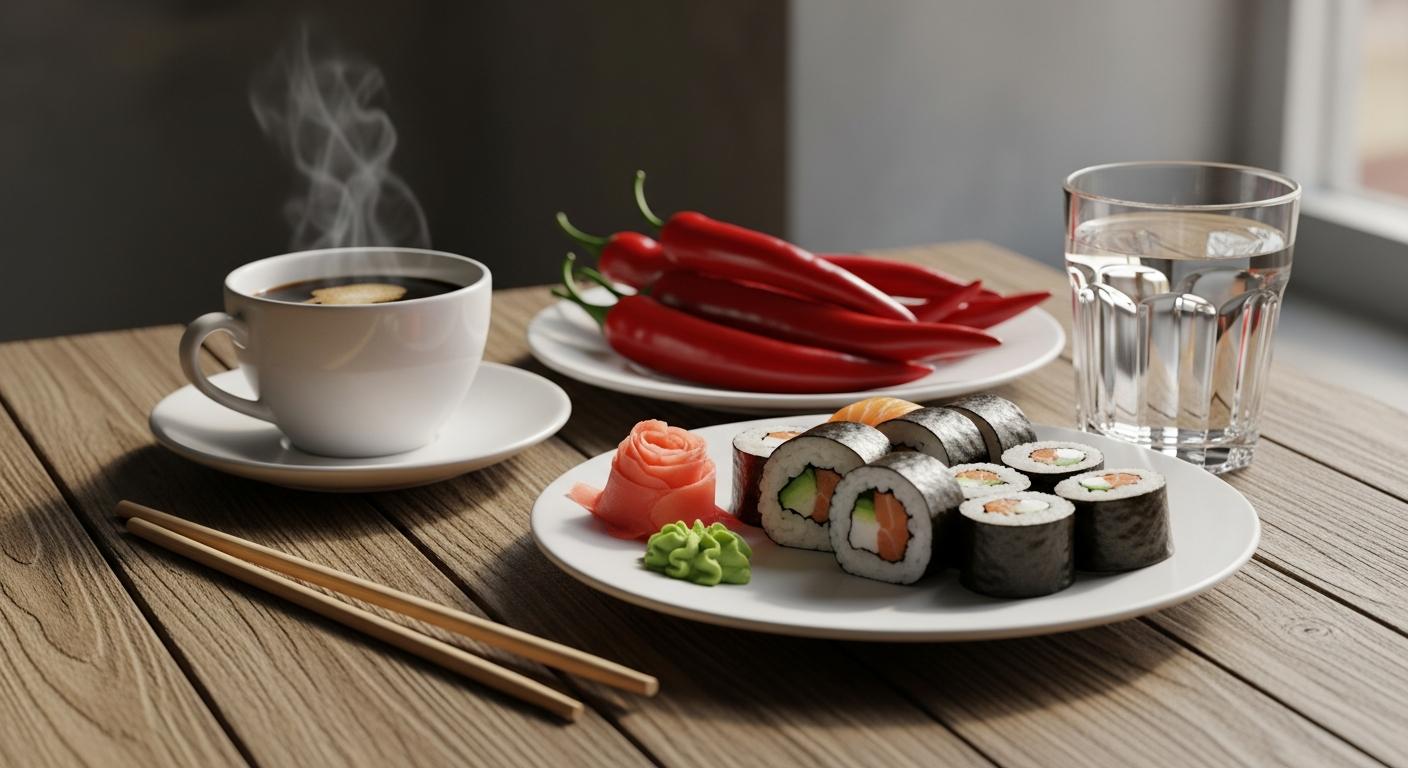
When parents ask about foods to avoid while breastfeeding, fish can sound confusing. You do not need to stop fish completely. You simply want lower-mercury choices more often, because mercury (methylmercury) can affect the developing nervous system.
Seafood also gives iodine, selenium, and omega‑3 fats (including DHA), which support brain and vision development.
High-mercury fish to avoid often
Avoid frequent intake of:
- Shark
- Swordfish
- King mackerel
- Tilefish
- Bigeye tuna
- Marlin
Lower-mercury options
Aim for 2–3 servings/week, varied (about 100–150 g per serving).
Lower-mercury choices include salmon, sardines, trout, prawns/shrimp, haddock, tilapia, and light canned tuna (skipjack).
Food safety while breastfeeding: protecting you first
Food poisoning can mean fever, dehydration, and exhaustion—very hard while breastfeeding. So food safety becomes a practical part of foods to avoid while breastfeeding.
Unpasteurised foods
Avoid:
- Unpasteurised milk and cheeses
- Unpasteurised juices
Raw or undercooked animal foods
- Avoid raw/undercooked eggs (some homemade mayonnaise, some desserts)
- Cook eggs until white and yolk are firm
- Cook meat thoroughly
- Avoid raw/undercooked seafood and shellfish
Kitchen habits that help
- Fridge at 0–4°C
- Perishables out for less than ~2 hours
- Thaw in the fridge
- Reheat leftovers till steaming hot
- Separate raw meat from ready-to-eat foods
Baby gas, colic, and reflux: what to watch (without panic)
Gas and reflux are usually multifactorial: immature gut motility, swallowed air, feeding position, bottle flow, feeding rhythm, and sometimes a strong let-down.
Some families notice patterns with:
- Dairy
- Very high caffeine
- Alcohol close to feeds
- Fermentable foods (onion/garlic, cabbage/cauliflower, rajma/chana)
Spicy foods are often tolerated. If a specific dish consistently precedes unusual fussiness, test a milder version and compare.
A simple elimination-and-rechallenge method
- Change one food at a time
- Remove for 1–2 weeks (often 2–3 weeks if allergy-type symptoms)
- Reintroduce and observe 48–72 hours
Allergy vs sensitivity: when to consider removing a food
A true food allergy involves the immune system:
- IgE-mediated allergy: rapid onset (minutes to ~2 hours). Hives, swelling, wheeze, vomiting.
- Non-IgE reactions: delayed (hours to days). Eczema flares, persistent vomiting/diarrhoea, irritability, sometimes blood in stool.
Seek urgent care for breathing trouble, facial/lip/tongue swelling, widespread hives, repeated vomiting with dehydration, blood in stool, or poor weight gain.
Cow’s milk protein (not lactose): the most common breastfeeding trial
If dairy is suspected, the focus is cow’s milk protein (casein/whey), not lactose. Breast milk naturally contains lactose, and it does not meaningfully decrease if you remove lactose from your own diet.
When a dairy-free trial makes sense
Consider a structured trial when symptoms are persistent and suggestive:
- Significant eczema
- Frequent vomiting or diarrhoea
- Blood in stool
- Marked ongoing discomfort linked to feeds
Hidden dairy to check
Milk powder/solids, whey, casein/caseinate, butter, cream, cheese, yoghurt.
How long and how to reintroduce
- Trial: 2–3 weeks (sometimes 2–4 weeks)
- Reintroduce gradually, observe 48–72 hours
If symptoms return clearly, discuss longer-term management with a clinician to support your nutrition (calcium, iodine, protein, vitamin B12 as needed).
Herbal teas, supplements, and “lactation blends”
Herbal products can vary in purity and dosing. Culinary use is usually fine, but concentrated teas, tinctures, or capsules can create higher exposure.
Sage and peppermint are sometimes linked with reduced milk supply in concentrated amounts. Check with a clinician/pharmacist before starting supplements, especially if baby was preterm or you take prescription medicines.
Cannabis and CBD
Cannabis/THC and CBD products belong in foods to avoid while breastfeeding because THC transfers into milk and can persist for days. There is no established safe level for infant exposure, and product labelling can be unreliable.
Artificial sweeteners
In moderation, artificial sweeteners are generally compatible with breastfeeding. If intake is heavy and you suspect a link, try a 7–14 day pause, then reintroduce and compare.
Key points for foods to avoid while breastfeeding
- Keep caffeine around ~200 mg/day, reduce if baby seems sensitive
- Alcohol: if taken, allow ~2 hours per standard drink before nursing
- Avoid frequent high-mercury fish, choose low-mercury seafood 2–3 times/week
- Prefer pasteurised products and thoroughly cooked foods
- If testing a trigger, change one thing at a time, for a defined period, then reintroduce
À retenir
- Foods to avoid while breastfeeding is usually a short, safety-focused list, not a long set of food bans. – Alcohol timing, caffeine dose, and mercury-aware fish choices have the strongest evidence. – For gas/colic/reflux, broad restriction rarely helps, targeted elimination with reintroduction is clearer. – If dairy is suspected, focus on cow’s milk protein, not lactose. – Support exists: your paediatrician, lactation consultant, and dietitian can help. You can also download the Heloa app for personalised guidance and free child health questionnaires.
Further reading: