Crib bumper danger comes up when a crib looks cosy, but infant sleep physiology needs the opposite: a clear airway, steady temperature, and no traps. Bumpers and liners add fabric, ties, and gaps. During sleep, that can mean a face pressed into material, a body wedged, or a strap forming a loop.
Parents in India often see bumpers bundled with nursery sets, heavily marketed online, or gifted by elders who remember them as “normal”. You may wonder: “Is mesh okay?” “Will my baby hurt themselves on the rails?” The aim is not perfection. It is reducing avoidable risk.
Crib bumper danger: the quick bottom line for parents
Crib bumper danger refers to predictable hazards linked to putting bumpers or liners inside a baby’s sleep space:
- Suffocation (nose/mouth pressed into soft or loose fabric)
- Entrapment/wedging (stuck between bumper and mattress or rails)
- Strangulation risk from ties, ribbons, or straps
- Overheating when extra textiles trap heat
These situations can happen quietly during routine sleep, especially in babies who cannot reliably lift the head or move away.

Paediatric guidance has been consistent: bumpers are not needed for safety, and they add avoidable risk. A widely cited review of U.S. CPSC incident databases (1985–2005) identified 27 infant deaths attributed to bumper pads or their ties, along with non-fatal injuries.
The simplest safer setup (a bare crib + safe sleepwear)
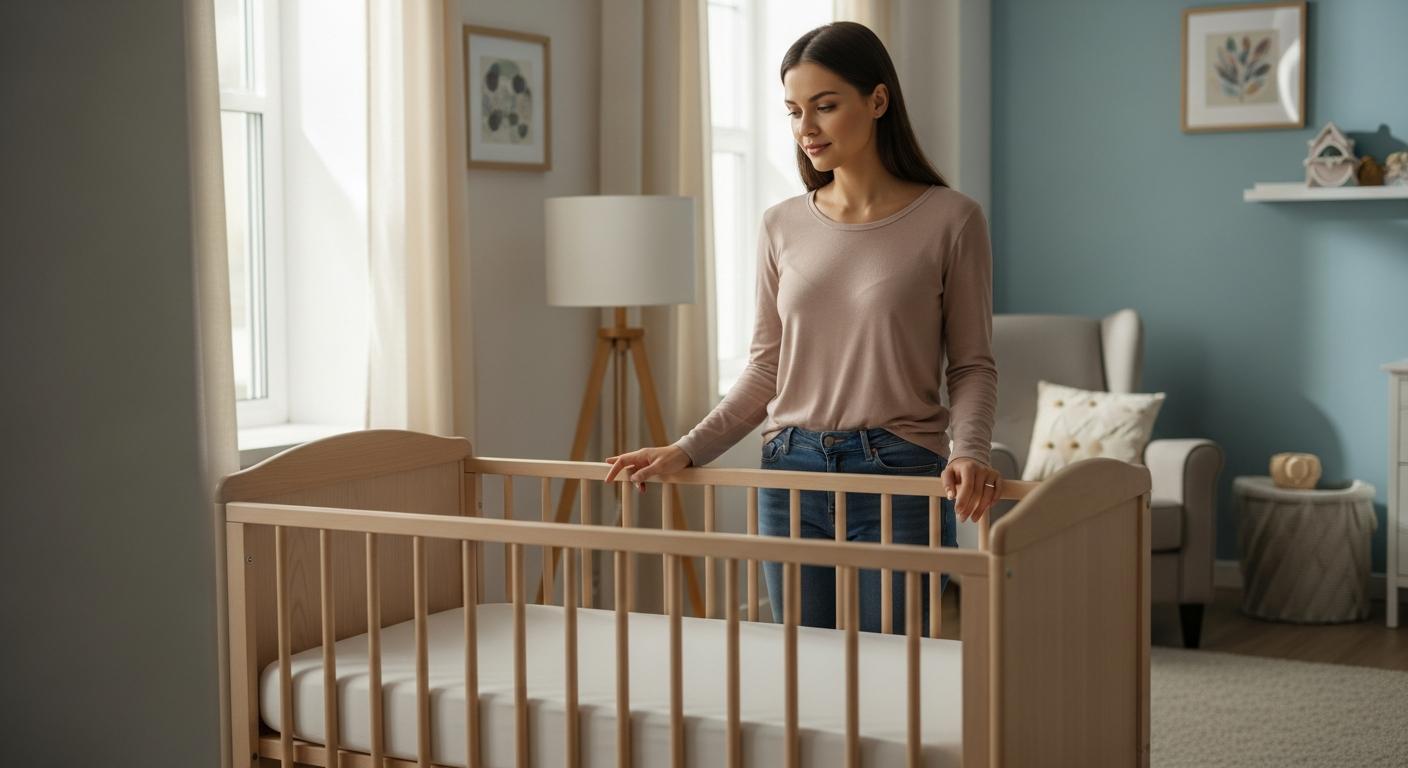
Aim for a bare crib:
- firm, flat mattress
- tight fitted sheet
- nothing else inside the crib
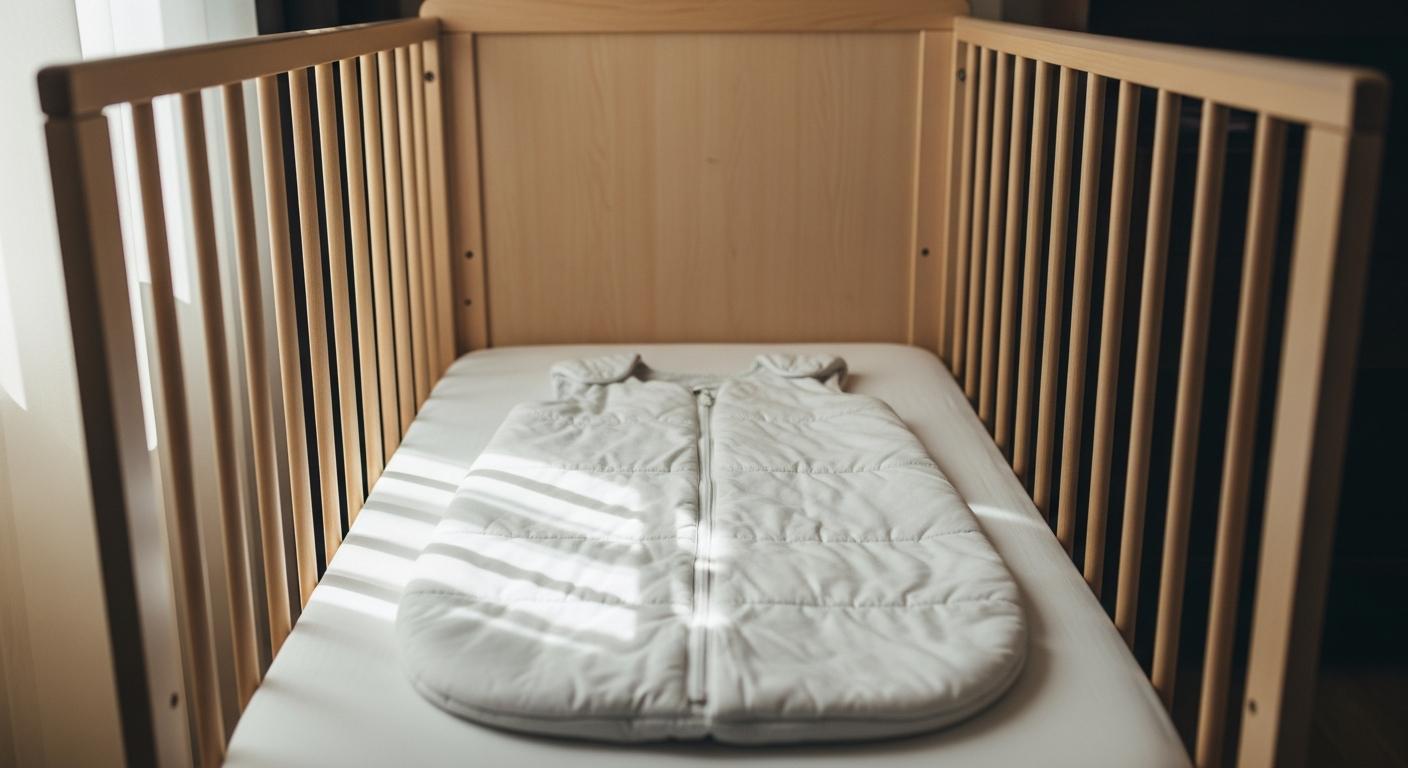
No bumper pads, no pillows, no loose blankets, no soft toys. For warmth, use a well-fitted sleep sack (wearable blanket) and season-appropriate clothing.
This reduces crib bumper danger directly: no soft padding to press into, no ties to loosen into loops, fewer gaps to wedge into.
What crib bumpers are, and why they feel tempting
A crib bumper is a padded or fabric panel lining the inside of crib rails. Older designs were linked to worries about hard sides and wider slat spacing. Modern cribs have safer slat spacing, so the original “need” has largely disappeared.
Why do parents still consider them?
- the crib looks softer and “complete”
- fear of head bumps
- dislike of arms/legs poking through slats
The uncomfortable truth: the risks tied to bumpers (breathing obstruction, wedging, ties, overheating) outweigh the minor injuries they try to prevent.
Types of bumpers and “safer” marketing terms
Padded crib bumpers
Classic thick pads, often tied with ribbons. Concerns include face-pressing into soft material, corner folding into a pocket, gaps forming, and ties loosening with washing. Longer fasteners increase strangulation risk.
Mesh or “breathable” crib liners
Mesh is sold as “airflow” and “safer than padded”. It still acts as a bumper: it lines the crib interior and is held by fasteners.
Even with mesh, crib bumper danger can persist because:
- fabric can sag or wrinkle
- gaps can create entrapment
- ties/straps can form loops
- extra textiles can add warmth when layered
Braided bumpers and decorative cushions
Soft, positionable items can shift and bunch, creating pockets near the face. Braided styles may later become a climbing foothold.
Vertical bumpers and rail padding
Even “minimal” padding inside the sleep space can introduce the same hazards: wedging and tie/strap loops. Rail protection is not a safe-sleep need.
The main risks behind crib bumper danger
Suffocation and rebreathing
A baby can roll or scoot until the nose and mouth press against a bumper. Softness and folds can block airflow, or the baby may rebreathe exhaled air (higher carbon dioxide, lower oxygen). Young infants have limited neck tone and immature arousal responses during sleep, so turning away is not guaranteed.
Strangulation from ties and fasteners
Ties can loosen over time and create loops. More attachment points mean more chances for something to come undone.
Entrapment/wedging
A narrow space can form between bumper and mattress/rails. Once wedged, an infant may not free the chest or turn the face easily.
Overheating
Bumpers reduce airflow and can trap heat, especially when combined with blankets or pillows. Check the back of the neck: hot and sweaty often means fewer layers.
How incidents tend to happen
- face pressed into bumper, especially at corners
- ties loosening after washing and daily movement
- baby slipping into a gap behind the bumper and getting stuck
Quiet, gradual, and during normal sleep: that is why crib bumper danger is taken seriously.
Crib bumper danger by age and movement
- Newborns/young infants: highest vulnerability, limited head control and repositioning.
- Rolling stage (often 4–6 months, variable): more contact with crib sides, rolling does not guarantee safe airway responses.
- Older babies: pulling, loosening, and climbing risks increase.
Laws families ask about
In the U.S., the Safe Sleep for Babies Act (2022) banned manufacture and sale of padded crib bumpers.
In India, availability may still be high. Regardless of local rules, the safety principle is the same: if it functions as a bumper inside the crib, it can contribute to crib bumper danger.
Safer alternatives that meet the same parent goals
Warmth without loose bedding
Use a sleep sack and appropriate layers. In many Indian homes, temperature can swing at night (AC on/off, fan speed changes, humidity). Stable sleepwear is usually safer than adding blankets.
Better fit, fewer gaps
Use a mattress made for your crib, fitted snugly with minimal gaps. Use only a tight fitted sheet.
Comfort cues without adding crib items
White noise can be kept outside the crib on a stable surface, moderate volume. Decor stays outside the sleep space (wall art, safe lighting). Keep cords far away.
Common worries, with safer responses
Arms/legs through slats
Very common in active sleep and usually short-lived. A sleep sack often reduces leg-through-slat moments. Adding liners can increase crib bumper danger more than it helps.
Head bumps
Small bumps can happen as babies learn to roll and scoot. Bumpers are not proven to prevent meaningful injury. Focus on back sleeping, a firm mattress, a tight sheet, and an empty crib. Supervised floor time helps motor control.
If a bumper is already in use
1) Move baby to a safe sleep spot.
2) Remove the bumper completely (all fasteners).
3) Check mattress fit and sheet tightness.
4) Inspect the crib for damage or loose parts.
Avoid donating or reselling old bumpers, remove ties and discard so it does not return to another baby’s sleep space.
Crib safety checklist (quick scan)
In: baby on the back, firm mattress, tight fitted sheet, sleep sack if needed.
Out: bumpers (padded, mesh, braided), blankets, pillows, soft toys, positioners, loose cloth items.
Key takeaways
- Crib bumper danger includes suffocation, entrapment/wedging, tie-related strangulation, and overheating, especially when the sleep space is layered with soft items.
- “Breathable” mesh does not erase crib bumper danger: sagging, gaps, and fasteners can still create risk.
- The safest baseline is a bare crib: firm mattress + tight fitted sheet, nothing else.
- If a bumper is already installed, remove it and keep the sleep space clear.
- For personalised guidance, speak with your paediatric clinician. You can also download the Heloa app for tailored tips and free child health questionnaires.
Further reading: