Crib bumper danger sits right at the intersection of what parents want (comfort, protection, a pretty nursery) and what infant sleep physiology demands (airway freedom, stable temperature, no traps). Bumpers can look harmless. Soft, tidy, reassuring. But during sleep, softness can become a surface the face presses into, fabric can shift into a pocket, and ties can turn into loops. So what is actually risky—and what can replace bumpers without leaving you feeling you’ve taken something “away” from your baby?
Crib bumper danger: what it means in real life
Crib bumper danger refers to repeatedly reported mechanisms: suffocation, entrapment (wedging), and strangulation from ties or fasteners. These scenarios can unfold quietly, during ordinary sleep, particularly in babies who cannot reliably lift the head, roll away, or free the nose and mouth.
Pediatric guidance has been consistent for years: bumpers are not needed for safety, and they add avoidable risk. A frequently cited review of U.S. CPSC incident data (1985–2005) identified 27 infant deaths attributed to bumper pads or their ties, plus non-fatal injuries, later CPSC summaries described additional deaths linked to padded bumpers.
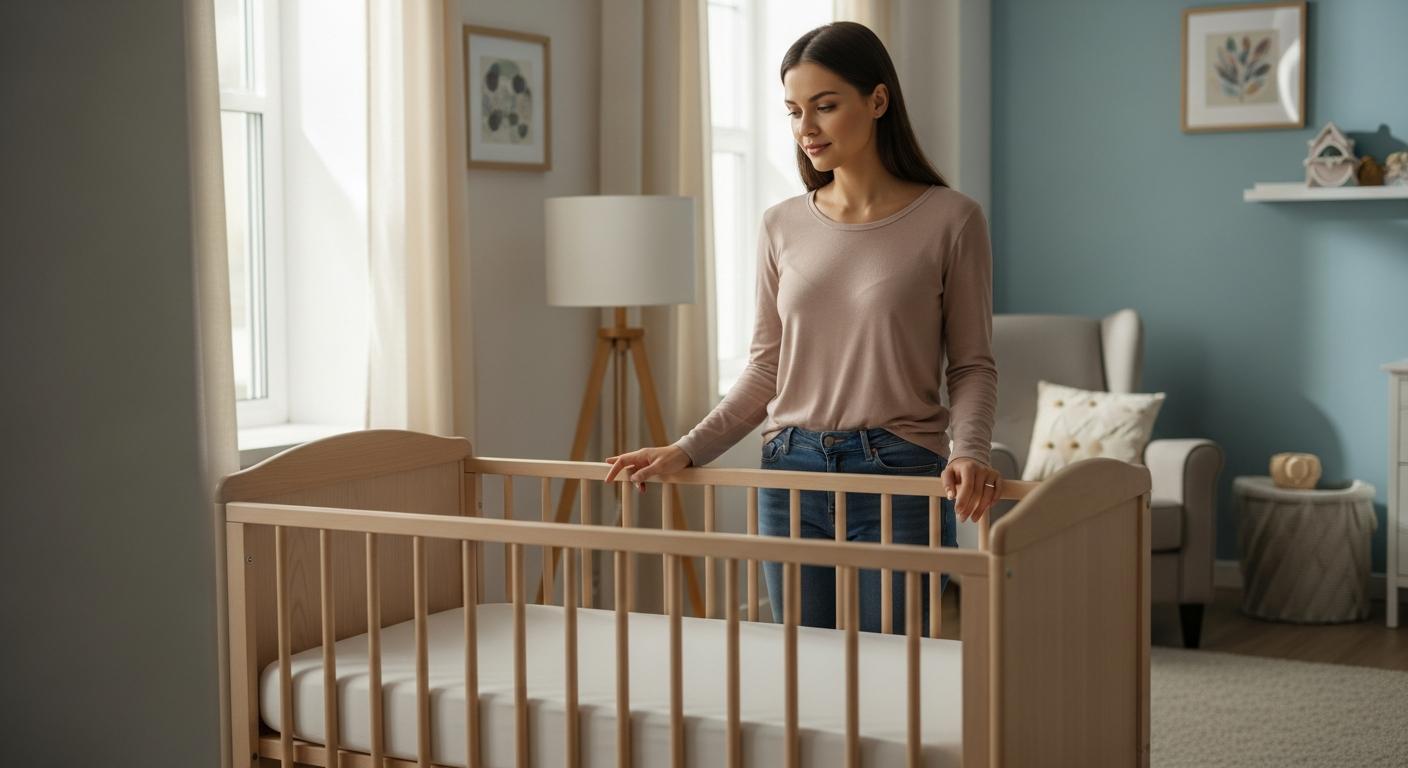
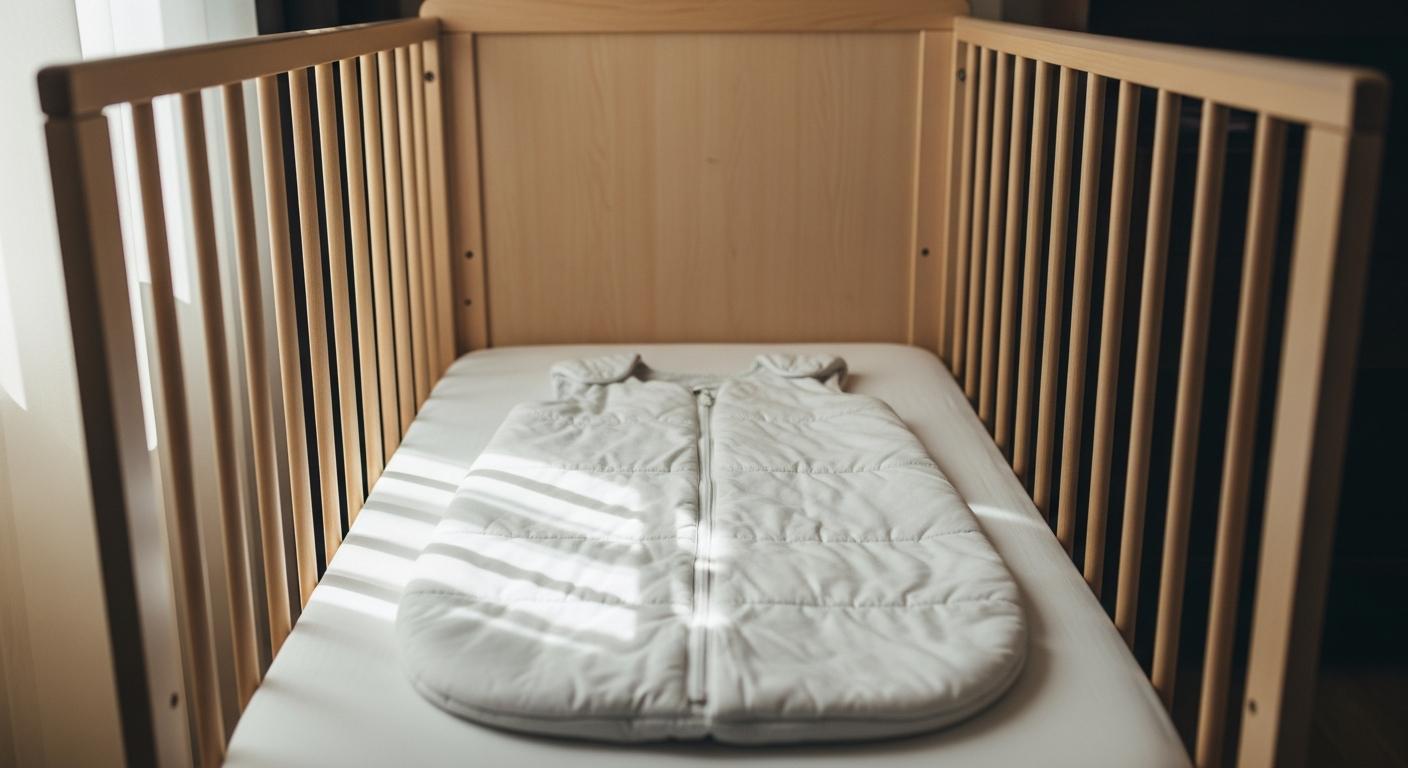
What is the simplest safer target? A bare crib: firm, flat mattress + tight fitted sheet, nothing else. Warmth comes from a sleep sack (wearable blanket) and appropriate pajamas.


Why parents consider bumpers (and why the trade-off is uneven)
A crib bumper is a padded or fabric panel placed along the inside of crib rails. Historically it was meant to soften wood and address older cribs with wider slat spacing.
Today’s cribs have safer slat spacing, so the old “need” is mostly gone. The hazards remain.
You might be thinking: what about bumps, limbs through the slats, that “unfinished” look? Those concerns are understandable. Yet the injuries bumpers try to prevent are usually minor, while crib bumper danger involves breathing obstruction, wedging, overheating, and tie hazards.
Bumper types and the marketing words that can mislead
Padded bumpers (classic tie-on pads)
Thick pads running around the crib, often fixed with ribbons.
Main concerns:
- baby’s face pressing into soft padding
- corner folding into a pocket
- gaps between bumper and mattress
- ties loosening over time
Mesh or “breathable” liners
Mesh liners are sold with “airflow” claims. They may allow more air movement than thick padding, but they still add a barrier inside the crib, and they still rely on fasteners.
Crib bumper danger can persist because:
- fabric can sag or wrinkle
- gaps can allow entrapment
- ties and straps can form loops
- extra textiles can contribute to overheating when layered
Braided bumpers and decorative cushions
They are soft, positionable, and prone to shifting—exactly what you do not want near a sleeping baby’s face. Later, they may even act as a step for climbing.
The core mechanisms behind crib bumper danger
1) Suffocation and rebreathing
If the nose and mouth press against a soft surface, airflow can be reduced. Another risk is rebreathing: the baby inhales exhaled air richer in carbon dioxide, lowering oxygen intake.
Why does age matter? Early on, infants have limited neck tone, a relatively heavy head, and immature arousal responses during sleep. Even a baby who lifts the head well while awake may not reposition effectively in deep sleep.
2) Strangulation from ties or fasteners
Bumper ties can loosen with washing, crib shaking, and re-tying. A short tie can become a longer loop. The more attachment points, the more opportunities for something to come undone.
3) Entrapment (wedging)
A bumper can create a narrow channel between the bumper and mattress or rails. If a baby becomes wedged, the chest may not expand well, and the face can be pinned in a position that compromises breathing.
4) Overheating
Textiles around the sleep space can trap heat and reduce airflow. Overheating is associated with sleep-related infant risks, especially when families stack items (bumper plus blanket plus plush items).
A practical check: feel the back of the neck. Sweaty or very hot often means fewer layers are needed.
How incidents tend to happen at home
- A baby rolls or scoots into a corner where fabric folds.
- A liner sags after repeated use, creating a gap.
- Ties loosen slowly and become reachable loops.
- A baby slides into the space behind a bumper and gets wedged.
Quiet, gradual, ordinary. That is why crib bumper danger is taken so seriously.
Crib bumper danger by developmental stage
Newborns and young infants
Highest vulnerability: limited ability to move away from a barrier. The prevention message is sharp—empty sleep space.
Rolling stage (often 4–6 months, variable)
More contact with crib sides. Rolling does not guarantee airway-protective repositioning.
Older, mobile babies
The risk can shift: pulling on padding, loosening fasteners, and using thick bumpers as footholds for climbing.
Laws parents ask about: the U.S. ban
In the U.S., the Safe Sleep for Babies Act (2022) prohibits the manufacture and sale of padded crib bumpers.
A ban does not remove items already in homes. Hand-me-downs and secondhand products still circulate, and some products avoid the word “bumper” by using names like “liner” or “decor.” Function matters more than the label.
Safer alternatives that meet the same goals
Warmth: sleep sacks instead of blankets
A well-fitted sleep sack provides warmth without loose fabric near the face. Choose the right size so it cannot ride up.
Fewer gaps: correct mattress fit
Use the mattress designed for the crib. It should fit snugly with minimal edge gaps. Add only a tight fitted sheet—flat and taut.
Comfort: temperature and routines
Many families aim for a room around 18–19°C (64–66°F), then adjust clothing layers. Want a soothing cue? Keep routines simple: dim light, calm voice, consistent timing.
White noise and decor—outside the crib
If white noise helps, place the device outside the crib on a stable surface. Decorate the room, not the sleep space (wall art, paint, safe lighting). If using a mobile, keep it secure, out of reach, and remove it when baby can grab.
Common worries, answered without adding risk
“My baby gets arms or legs through the slats”
Common, often more alarming than harmful. A sleep sack can reduce leg-through-slat moments.
The key is proportion: preventing a minor limb episode is not worth increasing crib bumper danger.
“My baby bumps their head”
Small bumps can happen during rolling and scooting. Bumpers have not shown meaningful injury prevention. Prioritize: back sleeping, firm mattress, tight sheet, empty crib, and supervised floor time during the day.
If a bumper is already in use: remove it safely
1) Move baby to a safe sleep spot.
2) Remove the bumper completely (all fasteners).
3) Check mattress fit and use only a tight fitted sheet.
4) Inspect the crib for damage or loose parts.
Avoid donating or reselling old bumpers, remove ties and dispose so they do not return to another sleep space.
Key takeaways
- Crib bumper danger includes suffocation, entrapment, tie-related strangulation, and overheating—risks that can stack when the crib fills with soft items.
- “Breathable” mesh does not eliminate crib bumper danger: barriers can loosen, gaps can form, and ties can create loops.
- The safest baseline stays simple: firm mattress, tight fitted sheet, and an empty crib.
- Sleep sacks, correct mattress fit, and temperature adjustments meet comfort goals without adding crib accessories.
- For questions tailored to your child’s age and health, a pediatric clinician can help—and you can download the Heloa app for personalized tips and free child health questionnaires.
Questions Parents Ask
Are “breathable” mesh crib bumpers actually safe?
It’s understandable to look for something that feels like a compromise. Mesh can let more air pass through than thick padding, but it still adds material inside the crib and usually relies on straps or ties. If it sags, loosens, or creates gaps, it can still contribute to risky situations (like wedging or getting caught). For many families, the most reassuring option remains the simplest: a firm mattress with a tight fitted sheet, plus a well-sized sleep sack for warmth.
When is it safe to stop worrying about crib bumpers?
Many parents hope there’s a clear “age” when bumpers become fine. The tricky part is that risk changes rather than disappears: younger babies are more vulnerable to breathing obstruction, while older babies may pull fabric loose, get tangled in fasteners, or use padded edges as a step for climbing. If you’re looking for a safer way to reduce bumps and keep baby comfortable, sleep sacks and correct mattress fit tend to meet those goals without adding crib accessories.
My baby keeps getting arms/legs stuck in the slats—what can I do instead?
No worries—this is very common and usually more upsetting to watch than dangerous. You can try a sleep sack (it often reduces leg-through-slat moments), double-check that the crib meets current safety standards, and keep the mattress at the right height for your baby’s stage. If your baby seems injured, or you notice repeated swelling or bruising, a pediatric clinician can help you sort out the safest setup.
Further reading: