You are cuddling your newborn, admiring that soft face… and then you spot tiny bumps on the cheeks. Allergy? Heat? Something in your diet? Should you scrub it off? baby acne can feel oddly stressful because it’s so visible, and because every aunty seems to have a different remedy.
Here’s the calming part: baby acne is very common, usually not painful, and most often settles on its own. Still, not every pimple-like rash is the same. The timing, the pattern, and a few warning signs will help you decide what is normal newborn skin behaviour—and when a doctor should have a look.
Baby acne basics for new parents
What baby acne is (neonatal acne), in simple words
baby acne is a common newborn skin change where small bumps show up on the face, especially the cheeks. Doctors often call it neonatal acne.
It can resemble teenage acne, but the reason is usually different. Your baby’s skin is adjusting to the outside world, oil glands may be temporarily overactive, and flare-ups often calm down as the skin barrier matures. In most cases, baby acne is mild, not itchy, and not a sign of poor hygiene.

Baby acne vs infantile acne (timing is a big clue)
Parents often ask: “Is this the usual newborn type, or something that needs treatment?” Timing helps.
- Neonatal acne / baby acne: typically starts in the first 2–4 weeks of life and often improves on its own.
- Infantile acne: starts later (often after 6 weeks, more commonly after 3 months). It is rarer, can last longer, and may include comedones (whiteheads, and sometimes blackheads).
If bumps start later, become more inflamed, spread beyond the face, or keep worsening instead of slowly settling, a chat with your paediatrician is sensible.
How common it is—and why it’s usually harmless
Many estimates put baby acne at around 1 in 5 babies. Most babies feed and sleep normally, and the skin clears gradually without special medicines.
What causes baby acne (and what can trigger flare-ups)
Hormones, oil glands, and sebum
A major driver is temporary hormonal stimulation. Towards the end of pregnancy, maternal hormones rise, including androgens (hormones that can increase oil production). Your baby is exposed to these, and newborn hormone fluctuations can also stimulate the sebaceous glands.
More sebum (skin oil) can block pores more easily, leading to bumps and mild inflammation. This is why baby acne can appear even when you are doing everything “right”.
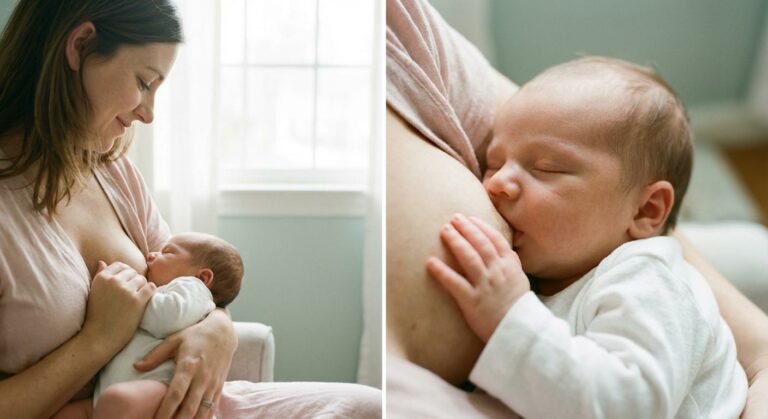
And yes—many parents worry about breastfeeding. Breastfeeding is not considered a direct cause of baby acne.
Follicles and normal skin microbes (not “dirty skin”)
Sebum is not dirt. It protects the skin barrier. But when it is produced in excess, it can block the hair follicle–oil gland unit, leading to papules and pustules.
At the same time, your baby’s skin microbiome is settling. Microbes that can live on healthy skin—like Cutibacterium acnes and yeasts such as Malassezia—may influence inflammation in some babies. This still doesn’t mean infection. In most cases, baby acne is not contagious and not caused by “unclean skin”.
Common triggers parents notice in daily life
Even if hormones are the main reason, irritation often makes baby acne look worse. Common triggers include:
- Heat and sweating (very common in warm Indian weather, or when babies are overdressed)
- Friction (bibs, collars, carrier straps, blankets rubbing the cheeks)
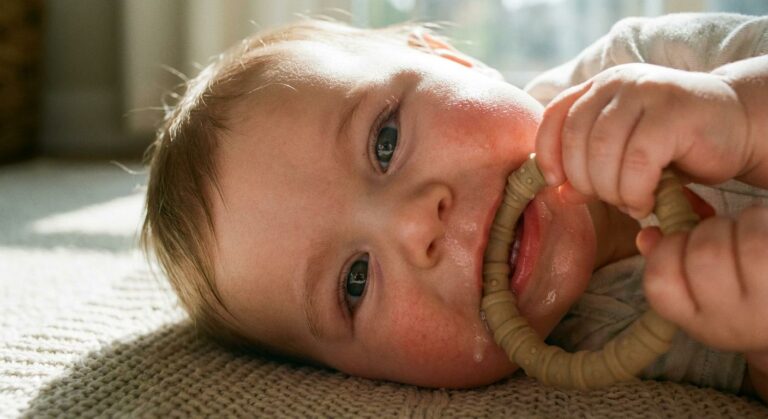
- Drool and spit-up sitting on the skin, especially around the mouth
- Products that are too strong, fragranced, or layered one over another
A useful self-check: Is the face getting rubbed or wiped many times a day? Less friction often means calmer skin.
Occlusive creams, oils, and wipes
On the face, thick, greasy products can be too occlusive—trapping heat and blocking follicles—so baby acne may linger.
This matters because many families use oils, heavy creams, or liniments as part of routine baby care. If bumps are active, it may help to simplify: fewer products, lighter textures, fragrance-free options.
What baby acne is not caused by
- Not “dirty skin”
- Not usually linked to breast milk, formula, or normal feeding
- Not commonly the first sign of food allergy
Trying to “dry it out” with frequent washing or harsh soaps often irritates the skin barrier and can make baby acne look angrier.
What baby acne looks like
Typical bumps and redness
baby acne often appears as:
- Papules: small red bumps
- Pustules: small bumps with a tiny white centre
- Sometimes a few comedones: mostly whiteheads (blackheads are less common in newborns)
Cheeks can look grainy or textured, with mild redness around the bumps.
Usual locations
Most common: cheeks, forehead, nose, chin. Some babies also get bumps on the scalp. Less commonly, the upper chest, shoulders, or back may be involved.
Is it itchy or painful?
Usually, baby acne is not itchy and not painful. If the skin looks very red, hot, swollen, tender, weepy, or crusted—or your baby seems uncomfortable—another diagnosis (or infection) becomes more likely, and medical advice is needed.
Different skin tones
On lighter skin, inflammation looks pink or red. On deeper skin tones, redness may be subtle, and you may notice brown, purple, or grey tones instead. After the bumps settle, temporary darker marks (post‑inflammatory colour change) can remain for some time, then fade.
Baby acne vs other baby rashes
Milia and sebaceous hyperplasia
- Milia: tiny white “pinhead” bumps, often present from birth, no redness, they clear on their own.
- Sebaceous hyperplasia: small yellowish bumps with a central pore, benign and self-resolving.
Heat rash (miliaria) and erythema toxicum
- Heat rash (miliaria): common with overheating and sweating, often in neck folds, chest, back, or under clothing. Cooling and airy clothing help quickly.
- Erythema toxicum: common in the first days of life, red blotches with small central bumps that come and go.
Eczema and contact dermatitis
- Eczema (atopic dermatitis): dry, rough, scaly patches, often itchy, cheeks may be involved early.
- Contact dermatitis: rash where something touched—fragranced soap, wipes, lotion, fabric, detergent—sometimes sharply limited to that area and may sting or weep.
If the rash is very itchy, eczema or irritation is more likely than baby acne.
Cradle cap on the face (seborrheic dermatitis)
Seborrheic dermatitis can affect scalp, eyebrows, and sides of the nose. It often looks like greasy yellow scale rather than pimples and usually doesn’t itch much. Sometimes it can be more inflamed and pustular—worth discussing with a clinician for tailored care.
When it might be infection (not baby acne)
If you see honey-coloured crusts, blisters, pus, rapidly spreading redness, warmth, swelling, or tenderness, infection such as impetigo becomes a concern. Because impetigo is contagious and often needs treatment, get medical advice promptly—especially if your baby seems unwell.
Food allergy: thinking clearly, without panic
Food allergy more often causes:
- Hives (raised itchy welts)
- Worsening eczema
- Sometimes vomiting or diarrhoea
An isolated acne-like facial rash is usually not the first sign of allergy.
When it starts and how long it lasts
Typical start
Neonatal baby acne commonly starts within the first 2–4 weeks (sometimes earlier).
How long it can last
Many babies improve within 2 to 6 weeks, though it can last a few months. Many are much better by 3–4 months, and it often resolves by about 6 months.
What can keep it going
- Overheating and sweating
- Thick, heavy ointments on the face
- Fragranced or irritating products
- Scrubbing, frequent rubbing
- Drool or milk left on the skin
Scars and marks
Typical neonatal baby acne rarely scars. Marks become more likely with picking/squeezing, secondary infection, or later-onset infantile acne that is deeper and more inflammatory.
Daily care that helps (simple, gentle, realistic)
Washing safely
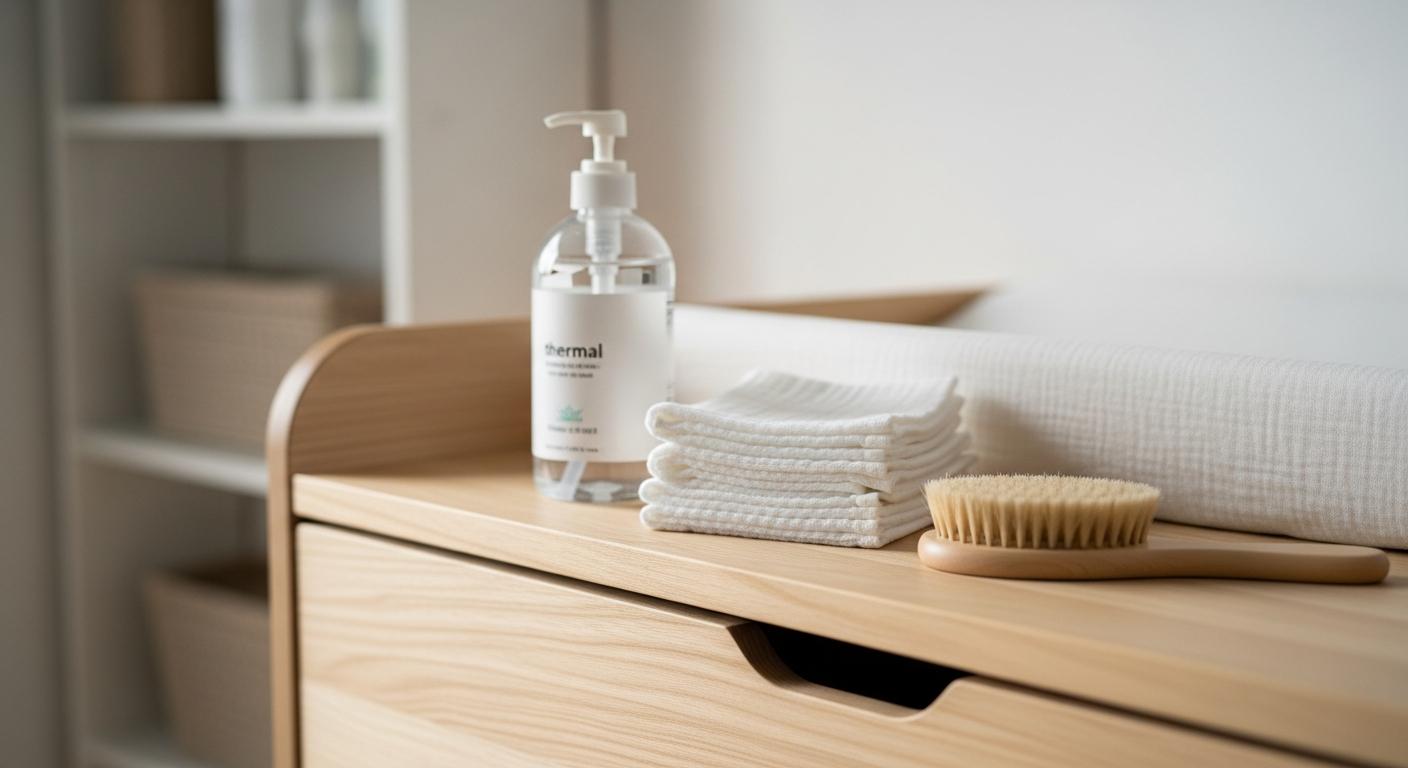
Use lukewarm water and clean hands. If you choose a cleanser, pick a mild, baby-appropriate, fragrance-free option. A soft cloth is fine—no scrubbing.
How often to cleanse
Once a day is usually enough. Some babies do well with 1–2 gentle cleanses daily if there is frequent drool or spit-up. Too much washing can strip the skin barrier and worsen irritation.
After feeds: gently rinse milk/saliva and pat dry.
Pat dry, don’t rub
Patting reduces friction. Rubbing can inflame baby acne and prolong redness.
Moisturiser and barrier products
Moisturiser is not always needed. Use it if the skin looks dry, tight, or flaky. Choose a light, fragrance-free moisturiser and apply a small amount.
If drool is irritating the mouth area, a thin layer of a gentle barrier cream can help. Avoid thick, greasy layers over acne-prone cheeks.
Fabrics and laundry
- Change bibs often (wet fabric irritates skin)
- Choose soft, breathable cotton
- Avoid tight collars/hats rubbing the cheeks
- Use fragrance-free detergent, rinse well
- Skip fabric softeners if irritation appears
- Keep the room comfortably cool to reduce sweating
Things to avoid (these commonly worsen baby acne)
- Picking, squeezing, or scratching
- Fragranced lotions, harsh soaps, antiseptics, alcohol-based products, scrubs
- Heavy oils and thick ointments on active breakout areas
- Adult acne treatments (benzoyl peroxide, salicylic acid, retinoids) unless prescribed
- Home remedies that sting or burn
Topical steroids should only be used with medical advice and for the correct diagnosis (for example, eczema), not as a quick fix for baby acne.
When treatment is considered (doctor-guided)
Why most cases don’t need medicines
Neonatal baby acne is usually self-limited. Gentle care and time are the main supports.
When a clinician may suggest treatment
Treatment is more likely to be discussed if:
- The rash is very extensive (face plus neck/trunk)
- Lesions are very inflammatory
- There is no improvement after weeks of gentle care
- It persists beyond several months (especially beyond ~6 months)
- The pattern suggests infantile acne or the diagnosis is unclear
- Deep, larger, painful bumps (nodules) appear
Possible options (only with medical advice)
Depending on age and appearance, a clinician may consider:
- Anti-inflammatory treatment in selected situations
- Topical antibiotics if inflammation is significant or secondary infection is suspected
- Antifungal treatment if a yeast-related seborrheic pattern is likely
Improvement still takes time—usually weeks, not days.
When to contact a doctor
Seek medical advice promptly if baby acne is associated with:
- Fever or your baby seems unwell (feeding less, unusually sleepy)
- Rapidly spreading redness
- Skin that feels warm, swollen, very tender, or painful
- Oozing, pus, blisters, or honey-coloured crusts
- Spots very close to the eyes or on the eyelids
Also contact a clinician if it starts after ~6 weeks (especially after 3 months), includes comedones, spreads widely, becomes deep, or persists beyond several months.
To prepare for the visit: keep clear dated photos, note start date and changes, list triggers (heat/drool/friction), and write down every product used on the skin and in laundry.
Questions parents commonly ask
Can baby acne spread to the body?
It can. baby acne is most common on the face, but some babies get similar bumps on the scalp, upper chest, or shoulders. If the rash is mainly in folds (neck/armpits) and comes after sweating, heat rash may be more likely. If it spreads fast, oozes, blisters, or your baby seems unwell, get a medical check.
Can I apply breast milk on baby acne?
Many families try this. Breast milk has not been shown to reliably clear baby acne, and leaving any liquid on the skin can sometimes increase irritation, especially around drool and spit-up areas. If you try, do a small patch first and pat dry afterwards. If redness increases, stop and keep care simple.
Does baby acne mean acne later as a teen?
In most cases, no. Typical newborn baby acne is linked to temporary hormones and early skin adjustment and usually resolves without scarring. Later-onset infantile acne (after a few months), especially with blackheads or deeper bumps, is different—your paediatrician or dermatologist can confirm the diagnosis and discuss care.
À retenir
- baby acne is common, temporary, and usually harmless.
- It often begins in the first weeks and commonly improves within 2–6 weeks, though it can last longer and often settles by 3–6 months.
- Typical lesions are small papules and pustules on cheeks/forehead/chin, sometimes the scalp is involved.
- Hormones and skin maturation are key drivers, heat, friction, drool, and heavy or fragranced products can worsen baby acne.
- Gentle care helps most: lukewarm cleansing, pat dry, minimal fragrance-free products, and no picking.
- Seek medical advice for fever, fast-spreading redness, warmth, pain, oozing/pus, honey-coloured crusts, eyelid involvement, deep lesions, late onset, or persistent acne.
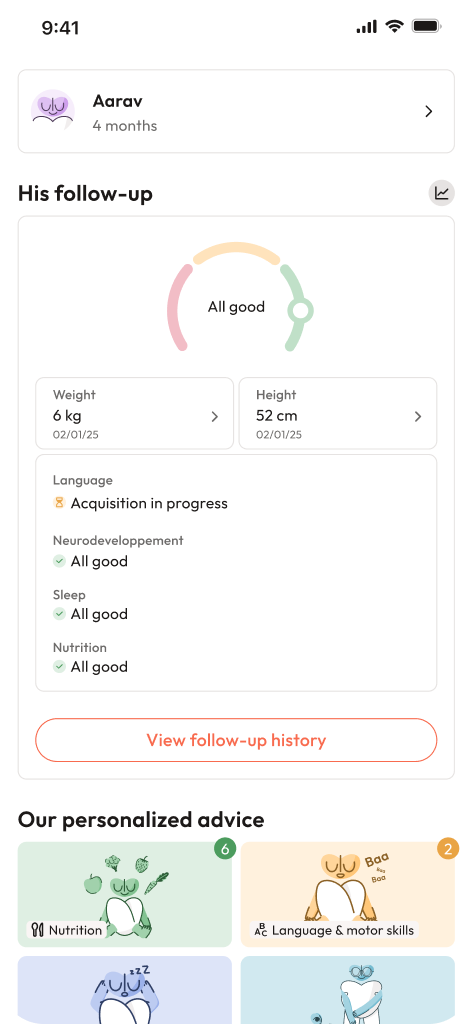
- Support is available through your paediatrician and, when needed, a dermatologist—and you can also download the Heloa app for personalised tips and free child health questionnaires.
Further reading: