
Cognitive development can feel like a moving target. One week your baby is fascinated by the ceiling fan, the next your toddler insists on doing things “by self”, and your school-going child suddenly forgets the second part of a simple instruction. Normal? Stressful? Both can be true.
cognitive development is the gradual shaping of thinking skills: attention, memory, language, reasoning, planning, and self-control, guided by brain maturation and daily experiences. In many Indian homes, where grandparents, cousins, festivals, tuition classes, and busy streets add layers of stimulation, children learn a lot, yet can also get overloaded. The goal is balance: enough challenge, enough rest, and steady, warm adult support.
Cognitive development: what it really means
Definition: thinking, learning, memory
cognitive development describes how a child’s thinking changes over time: how they take in information, organise it, use it to guide behaviour, and adjust when something changes. You see it in ordinary moments:
- A baby stares at a rattle, then looks away (attention is brief).
- A preschooler asks endless “why” questions, then melts down when a game feels “unfair” (reasoning is growing, self-regulation is still immature).
- A school-age child follows step 1, misses step 2 (working memory is limited).
In paediatrics, cognitive development is part of neurodevelopment (development of the brain and nervous system). It is shaped by brain maturation (for example myelination, which speeds up nerve signalling), everyday experience, and the quality of interactions with caregivers and teachers.

It is not a fixed intelligence score. cognitive development is often uneven: attention, memory, language, planning, and self-regulation may mature at different speeds in the same child.
Cognition vs cognitive development vs brain development
- Cognition: what the mind is doing right now (paying attention, remembering, reasoning, perceiving).
- cognitive development: the long-term change in those processes across childhood.
- Brain development: the biology underneath (synapses, neural networks, white matter).
They move together. Experience shapes brain wiring, and the maturing brain makes new kinds of learning possible.
Why cognitive development matters for school and daily life
These skills support learning (reading comprehension, maths reasoning, multi-step instructions) and daily independence (getting ready, remembering responsibilities, coping with change). Strong emotions can temporarily reduce attention and memory efficiency, even in capable children. Feeling safe and supported helps children explore, persist, and learn from mistakes.
Core skills that grow through childhood
Perception and sensory processing
Thinking starts with sensory input. Over time, the brain becomes better at filtering “signal from noise”, integrating senses, and using prior knowledge.
In a noisy classroom or a lively joint-family home, some children struggle more. Helpful tweaks:
- reduce visual clutter on the study table,
- keep one activity open at a time,
- use multisensory learning (see + hear + do).
Attention, executive function, and processing speed
Attention and executive skills grow gradually, alongside rising demands at home and school.
Executive functions include:
- inhibition (pausing before acting),
- flexibility (switching strategies),
- planning (organising steps and finishing tasks).
Processing speed generally increases as brain connections become more efficient.
When tasks exceed working-memory capacity or pace, it may look like “not trying”. Often, it is overload.
Ways to reduce cognitive load:
- short instructions (one or two steps),
- visual reminders (a small checklist),
- predictable routines (morning and bedtime sequences).
Memory development
Memory includes working memory, short-term storage, and long-term memory. Children also improve in strategy: rehearsing, grouping (“chunking”), organising by meaning, and retrieving deliberately.
Sleep supports consolidation, the brain process that stabilises new learning. If your child’s memory seems worse during exam season, check sleep first.
Language as a driver of thinking
Language structures thought. Words support categorisation (“fruit”, “vehicle”), and conversations teach children to explain, justify, and predict.
In multilingual Indian homes, mixing languages is common. It does not confuse most children, it reflects exposure. If there are concerns about speech clarity or understanding, a speech-language therapist can guide.
Reasoning and problem-solving
Early problem-solving is trial and error. With age, children become more goal-directed: planning steps, comparing options, learning from feedback.
Working memory and inhibitory control support better choices, especially under frustration.
Metacognition and self-regulation
Metacognition means noticing how your mind is working: “Do I understand?” “What should I try next?” Children gradually learn to plan, monitor, and adjust.
Teach simple strategies:
- self-testing (“Tell me what you learnt today”),
- spacing learning over time,
- summarising in their own words,
- checklists for routines.
Theories that can help parents
Piaget: broad shifts in thinking
Piaget described patterns: learning through action, then symbolic thinking, then logical reasoning, later abstract reasoning. Practical takeaway:
- younger children learn best through hands-on experiences,
- older children can handle rules and more complex ideas.
Vygotsky: learning with others
Vygotsky highlighted learning through social interaction.
The zone of proximal development is what a child cannot do alone yet, but can do with support. Scaffolding is that support: demonstrate, hint, break into steps, then step back.
Neuroscience in everyday terms
The brain changes with experience: frequently used connections strengthen, unused ones reduce (synaptic pruning). Myelination helps signals travel faster, supporting processing speed.
This is why daily routines rich in interaction, movement, play, and well-matched challenges support cognitive development.
Cognitive milestones by age (everyday signs)
Infants (0-12 months)
- Notice novelty and tune out repeated stimuli
- Respond to voices, babbling becomes richer
- Repeat actions to get a result
- Toward 10-12 months, many babies search for hidden objects
Toddlers (1-3 years)
- Rapid vocabulary growth, early word combinations
- Symbolic play (feeding a doll, block as a phone)
- Remember routines and anticipate what comes next
Preschoolers (3-5 years)
- Longer pretend-play stories
- Early logic in familiar tasks
- Many questions and explanations
School-age children (6-11 years)
- Stronger reasoning with structured examples
- Better sequencing and classification
- Memory strategies improve with adult coaching
Adolescents (12+ years)
- More abstract thinking
- Better argumentation and reflection
- Planning improves, but sleep debt and stress can still affect choices
What influences cognitive development
Health basics: sleep, hearing, vision, stress
- Sleep supports attention, emotion regulation, and memory consolidation.
- Hearing and vision issues, even mild, can affect language and learning.
- Chronic stress reduces attention efficiency and can make remembering harder.
Nutrition and brain function
Adequate iron, iodine, zinc, and omega-3 fats support brain function. With picky eating, aim for steady improvements rather than pressure.
Movement and routines
Physical activity supports attention and mood. Predictable routines reduce mental load and help self-regulation.
Technology and media
Screens can displace free play, movement, and conversation, all of which support cognitive development. Co-viewing (watching together and discussing) is more supportive than passive viewing. Protect sleep by avoiding screens close to bedtime.
Supporting cognitive development at home and school
The goal: challenge without overload
Support works best when it is regular, enjoyable, and adjusted to your child’s current abilities. Useful mistakes matter: trying, failing safely, and trying again with a small hint.
Ages 0-2
- Stacking, filling and emptying
- Simple cause-and-effect toys
- Board books: point, name, pause
Narrate actions (“You shook it, now it made a sound”): action plus word plus meaning.
Ages 2-6
- Progressive puzzles and simple memory games
- Sorting by colour, size, category
- Story talk: “What next?” “Why did he do that?”
- Pretend play and small responsibilities
Ages 6-11/12
- Active reading: short summary and one new word
- Rule-based games (board games, chess, carrom)
- Simple experiments: sprouts, magnets
- Everyday maths in cooking and shopping
Reduce cognitive load with steps, routines, and visual supports.
Ages 12+
Projects build planning: presentations, builds, investigations. Use three planning prompts: What do I need to do? How will I do it? How will I know it worked?
School support that often helps
School demands are heavy: listening, writing, remembering, transitions.
Practical supports include:
- quiet workspace and short work periods,
- instructions written down,
- chances to retell and explain,
- feedback focused on strategy (“You checked your work”).
When to seek extra support
Talk to a paediatrician or child development professional if difficulties persist and clearly interfere with daily life, or if there is loss of previously acquired skills. Before age 6, concerns often relate to language understanding and communication. After age 6, concerns may show up as persistent struggles in reading, writing, maths, or organisation.
Key concepts parents often search for
- Object permanence: understanding that something exists even when out of sight.
- Cause-and-effect reasoning: actions lead to outcomes.
- Assimilation vs accommodation: fitting new information into old categories vs adjusting categories to match reality.
Key takeaways
- cognitive development includes attention, memory, language, reasoning, executive skills, and self-regulation, it connects with motor, social, and emotional growth.
- Timelines vary, steady progress and daily functioning matter most.
- Sleep, hearing/vision, stress, movement, nutrition, and routines can strongly influence cognitive development.
- Simple supports help: shared reading, pretend play, puzzles, rule-based games, conversation, step-by-step routines.
- If concerns persist, professionals can assess and suggest practical supports that reduce cognitive load.
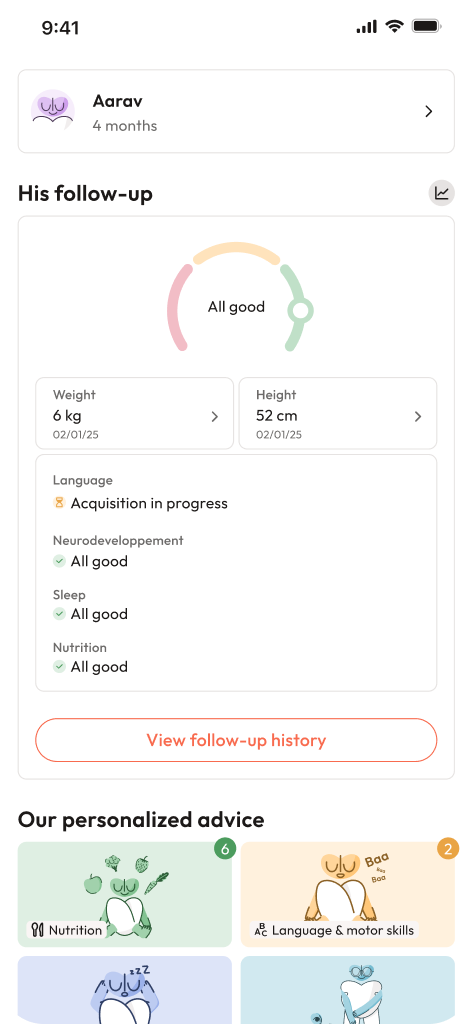
- You can also download the application Heloa for personalised guidance and free child health questionnaires.

Further reading: