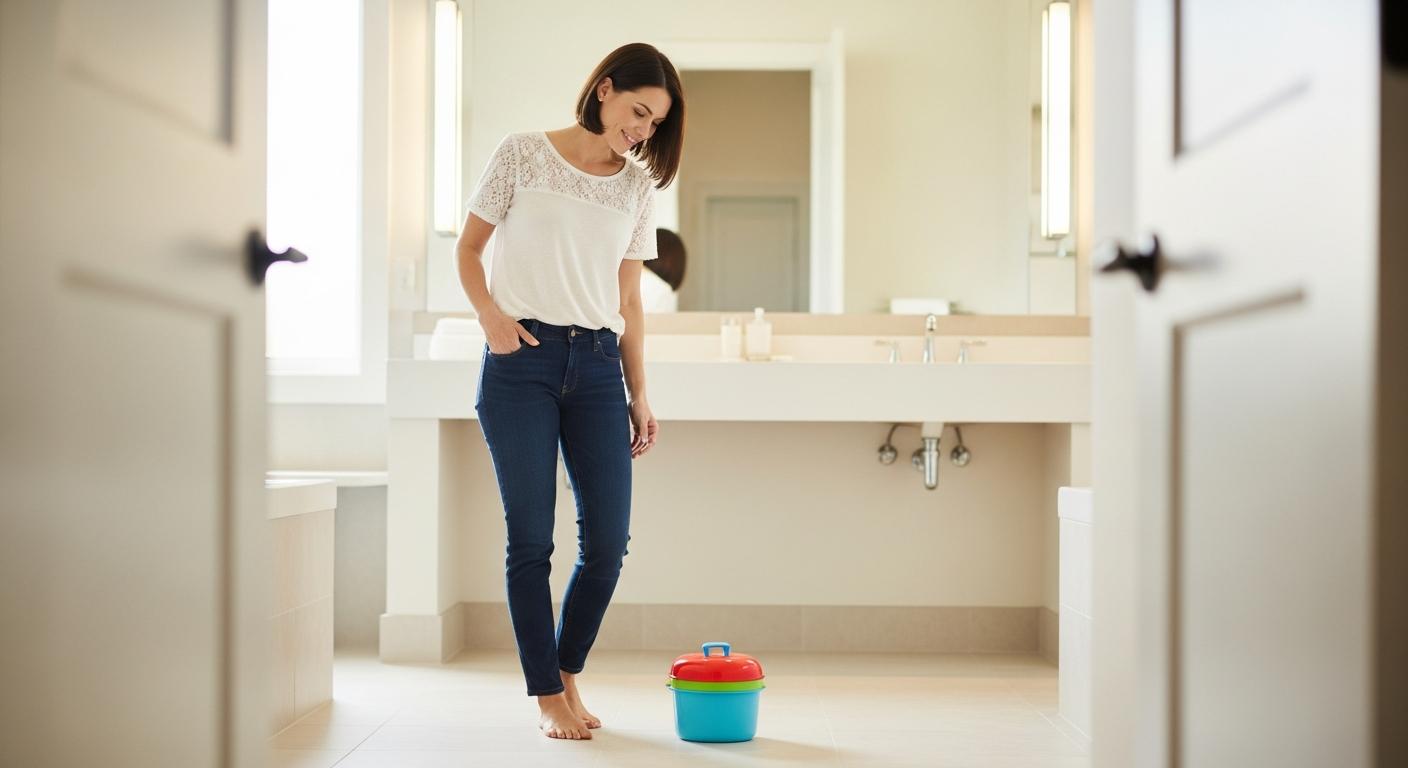
Between overflowing diapers during outings, worries about accidents at playschool, and that big question — “Should we start now?” — potty training can quickly become emotional. Under that single phrase, two things are happening together: your child’s body is maturing (bladder, bowel, nervous system), and your family is settling into a new routine (trust, language, predictability). The aim is not perfection. It is to spot readiness, pick reassuring equipment, build small rituals, support autonomy, and know when medical guidance may be needed.
What “being potty trained” really means (and why it takes time)
Potty training is not a trick or a competition. It is a developmental skill set. Your child gradually learns to:
- notice the urge to pass urine or stool (signals from the bladder and rectum),
- hold for a short time using the sphincters,
- move to the potty or toilet,
- relax and let go at the right moment.
Medically speaking, this depends on coordinated control between the detrusor muscle (the bladder muscle that squeezes) and the urinary/anal sphincters (the “valves” that hold back). This coordination improves as the nervous system matures, so pressure cannot speed up true readiness — the body has to be able to do the job.
Daytime vs nighttime potty training: two different timelines
Daytime continence
During waking hours, a child feels the signal, pauses what they are doing, and reaches the potty or toilet in time.

Nighttime continence
Night dryness depends more on biology: deep sleep dampens signals, the bladder must hold for longer, and many children also need sufficient night-time antidiuretic hormone (ADH), which reduces urine production during sleep. That is why a gap between daytime success and night dryness is common, and usually not a sign that something is wrong.
Potty training ages: helpful ranges, not rules
Many children become reliably dry in the day between 2 and 4 years, with wide normal variation. Night dryness often comes later. Once you begin potty training, progress may take a few weeks — or several months.
And yes, real life affects it. A new crèche or playschool, travel, shifting homes, a new baby, fatigue, viral fever — all can temporarily slow progress or increase accidents.
Potty training readiness: when to start with confidence
You may be thinking, “But how do I know my child is ready?” Look for a cluster of signs, not a single moment.
Physical signs your child may be ready
Readiness often includes:
- staying dry for longer stretches during the day (often 2 hours or more),
- sometimes waking from a nap with a dry diaper,
- predictable bowel movements (frequent constipation can make potty training harder),
- stable walking to the bathroom,
- sitting comfortably without stiffening or panicking,
- early skills to pull pants up and down (even if still clumsy).
Behavioural, emotional, and communication signs
A child who is ready often shows:
- curiosity about the toilet (watching, wanting to flush, copying adults),
- discomfort with a wet diaper and wanting a change quickly,
- ability to follow simple steps (“pants down”, “sit”),
- a way to communicate before or during elimination (words, gestures, leading you),
- growing interest in doing things independently — and, at least sometimes, pausing play.
A strong readiness sign is when your child alerts you: “I need to go!” Another common one is hiding to poop, which shows they recognise the sensation (even if they are not ready to use the toilet yet).
When starting too early backfires (and when a pause helps)
If your child runs away from the potty, cries, stiffens, refuses to sit, or starts holding stool until it hurts, slowing down is often the best option. The same is true if family life is already intense (major transitions, separation stress, lack of sleep). A pause does not erase learning — it protects the relationship and often leads to smoother progress later.
Potty training gear and bathroom setup that makes it easier
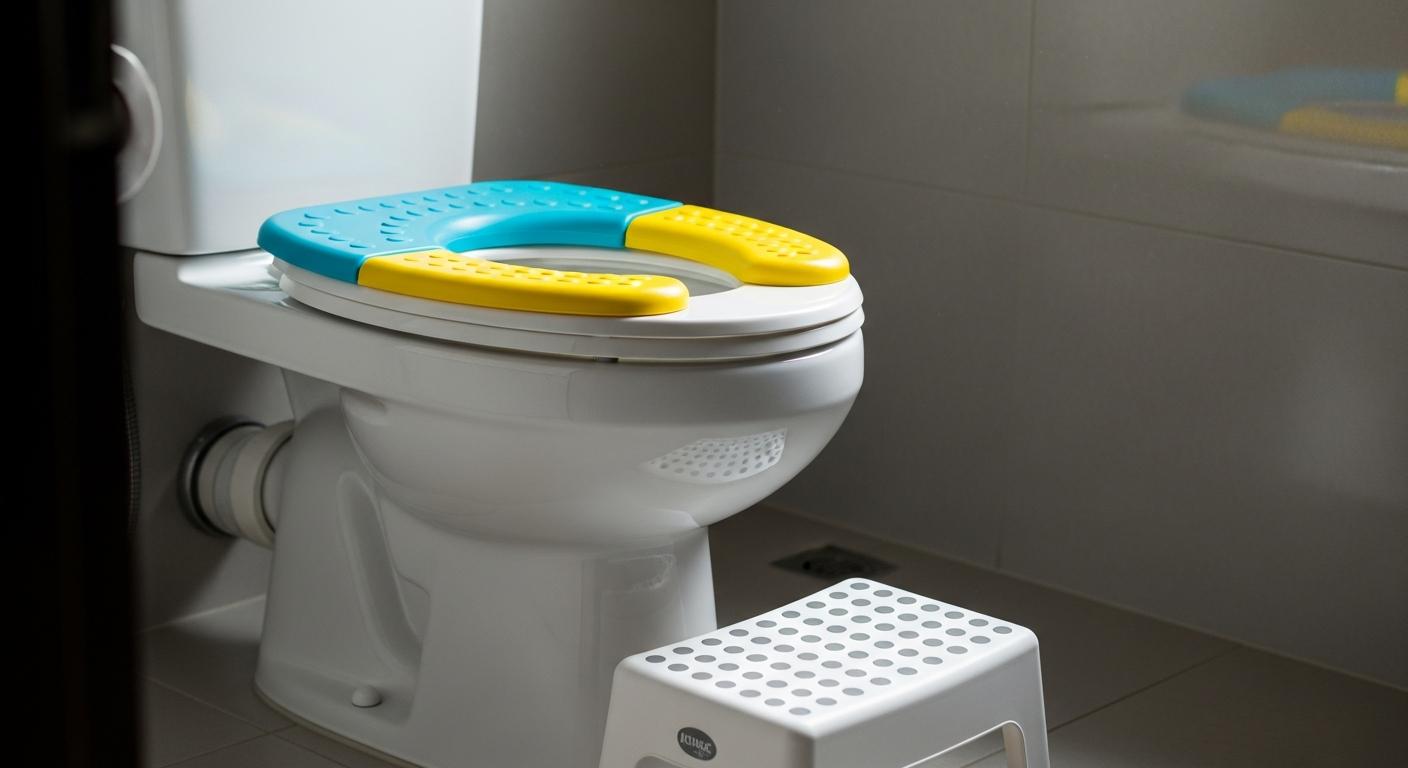
Potty chair vs toilet seat insert (how to choose)
- A potty chair is low and easy to access, so it can feel safer early on.
- A toilet seat insert can be great for children who want to “do it like grown-ups”, as long as the seat is stable and your child’s feet are supported.
Using the adult toilet without support is often too high for toddlers: legs dangling can make the pelvis unstable and can make pooping harder.
Step stool, foot support, and posture (especially for poop)
Foot support is not optional — it directly affects comfort and relaxation. Aim for:
- feet firmly supported (step stool or built-in foot support),
- a stable pelvis and relaxed back,
- short sits (often 2–3 minutes is enough when you are offering a try).
For poop, posture matters even more: knees slightly higher than hips can make elimination easier and reduce straining.
Underwear, diapers, and pull-ups: how to use each without confusion
Underwear gives clear feedback, which helps learning. Diapers and pull-ups absorb so well that some children get fewer signals to change behaviour.
A common, practical approach during potty training:
- underwear during the day when active training is underway (especially at home),
- pull-ups for naps, travel, and nighttime until dryness is reliable.
If you use pull-ups, name them clearly as “sleeping” or “travel” gear.
Clothing that supports independence (easy on/off)
Choose elastic waist pants, leggings, or shorts. Avoid belts, tricky buttons, or dungarees at the beginning. Fewer obstacles means fewer last-second accidents.
Cleaning, hygiene, and an on-the-go kit
Keep supplies where you need them: wipes or toilet paper, spare underwear, and a change of clothes. Clean a potty chair by emptying into the toilet, washing with soap and water (or a mild disinfectant), then rinsing well.
For outings, pack:
- 1–2 full changes of clothes,
- wipes and a small towel,
- plastic bags or a wet bag for soiled clothes,
- a portable seat insert or travel potty if public toilets are intimidating.
Before leaving, offer a quick potty try and locate toilets when you arrive. If an accident happens: change, reset, move on. Potty training does not require a flawless day.
Potty training methods: choosing an approach that fits your family
Child-led, readiness-first potty training
This follows your child’s cues and avoids pressure. You provide setup, language, and opportunities. It often feels calmer, especially for cautious children, but may take longer.
Routine-based potty training (scheduled sits)
A routine-based method uses predictable sits at times the body is naturally more ready:
- after waking,
- after meals (bowel activity often increases after eating),
- before outings,
- before naps and bedtime.
Keep sits brief to avoid battles.
Intensive “3-day” methods: who it can suit and common pitfalls
Boot-camp methods rely on several days of constant supervision. They may work for some children with strong readiness and for families who can clear their schedule. They are not a substitute for developmental readiness. If stress rises, flexibility helps more than stubbornness.
Elimination communication: what it is and where it can fit
Elimination communication involves observing timing and signals and offering a potty early. Some families like it, others find it too demanding. A flexible version can still help: noticing patterns (after waking, after meals) and offering chances without expecting “training”.
How to choose based on temperament and childcare constraints
- Pressure-sensitive children often do best with gradual exposure.
- Independent toddlers often respond to simple choices (“now or after snack?”).
- If daycare is involved, the most sustainable plan is usually a shared routine plus consistent language.
Potty training preparation: setting expectations before the first day
Simple words and body awareness
Pick a few clear terms and stick with them (pee, poop, potty, toilet, wash hands). Repetition helps your child connect sensations to action:
- “Your body is telling you something — let’s try sitting.”
Make the bathroom familiar
Let your child explore without expectations:
- sit on the potty fully clothed,
- watch you flush,
- practise with a doll,
- read a simple potty book.
Familiarity reduces fear.
Support regular stools with hydration and fibre
Soft stools protect confidence. Offer water through the day and fibre-rich foods (fruit, vegetables, whole grains). If stools are hard, painful, or infrequent, address it early — pain can trigger stool withholding and make potty training much harder.
Align all caregivers
Agree on:
- the words you will use,
- when you will offer sits,
- how you will respond to accidents.
Consistency reduces confusion. A simple daily note can help coordination without overprompting.
Potty training steps: a calm, practical plan
Step 1: Introduce the potty without pressure
Start with comfort, not performance. Offer short sits with no requirement to pass urine or stool. One short story, one song, and then finish neutrally.
Step 2: Build a predictable schedule
Offer sits at key times:
- after waking,
- after meals,
- before leaving the house,
- before naps and bedtime.
If accidents cluster at certain times, adjust timing rather than increasing pressure.
Step 3: Teach signals and self-awareness
Watch for cues: squirming, crossing legs, pausing play, hiding, holding the diaper area. Name what you see:
- “Your body is telling you you need to go.”
As skills build, shift from offering to letting your child initiate.
Step 4: Transition from diapers to underwear
When you see repeated successes and longer dry stretches, switch to underwear during awake time. Keep pull-ups for naps, travel, and nights if needed.
Step 5: Encourage effort, not performance
Praise works best when it is specific:
- “You tried.”
- “You told me you needed to go.”
- “You pulled your pants down.”
Stay neutral about accidents: clean up, remind gently where pee and poop go, return to play. Avoid punishment, shaming, or comparisons.
Step 6: Build independence step by step
Independence is a sequence:
pants down → sit → wipe → flush → wash hands → pants up.
Teach one step at a time. A stool at the sink helps handwashing. For girls, reinforce wiping front to back.
A simple daily potty training schedule at home
- Wake-up: potty sit (2–3 minutes)
- After breakfast: potty sit
- Mid-morning: offer a sit at transitions or every 1–2 hours
- After lunch: potty sit (often a good poop time)
- Before nap: potty sit
- After nap: potty sit
- Before leaving the house: quick try
- Before dinner: quick try
- Bedtime routine: final potty sit
Potty training accidents: staying positive and reducing mess
Why accidents are part of learning
Accidents usually mean timing is not automatic yet, not that your child is lazy or defiant. Distraction, excitement, transitions, and constipation all increase accident risk.
What to do in the moment (calm scripts)
Keep it short and warm:
- “Accidents happen. Let’s get cleaned up.”
- “Next time, pee goes in the potty.”
Then change clothes, wash hands, and move on.
Spot patterns and adjust
Track for a week: accident times, what happened right before, and drink timing. Add a potty stop before transitions (leaving the park, getting into the car). If accidents happen during deep play, offer earlier sits at natural breaks.
Potty training resistance and regression: supportive ways to get back on track
Why children refuse
Refusal often comes from:
- fear (flushing, loud bathrooms),
- discomfort (unstable seat, feet dangling),
- constipation pain,
- desire for control,
- life changes (new sibling, starting daycare, travel, illness).
Avoiding power struggles with respectful choices
Offer simple choices:
- “Potty now or after this book?”
- “Potty chair or big toilet?”
If your child refuses, do not force. You can say, “Okay, we’ll try again later,” and keep the routine calm.
Regression after progress
Regression is common and often contextual (fatigue, illness, routine changes, constipation). Return to basics:
- scheduled sits,
- easy clothing,
- more privacy and support,
- lighter expectations for wiping.
Poop and potty training: constipation, withholding, and fear
Why poop can feel harder than pee
Poop involves stronger sensations. One painful stool can create fear. Children may hold it, making the next stool bigger and harder — a pain–fear cycle.
Signs constipation may be affecting potty training
- hard, dry stools,
- pain, crying, or straining,
- going less often,
- belly pain,
- withholding behaviours (stiffening, crossing legs, hiding),
- repeated stool “smears” or accidents.
Constipation can also worsen urinary accidents because a rectum stretched by retained stool can press on the bladder and interfere with normal signals.
Making pooping easier
- prioritise posture and foot support,
- offer relaxed sits after meals,
- focus on hydration and fibre,
- avoid long “wait until you go” sessions.
If constipation persists, medical treatment may be needed to break the cycle safely.
Nighttime potty training and bedwetting: what is normal and what helps
Night dryness is a different skill and often comes much later than daytime potty training. Helpful strategies include:
- toilet before bed,
- a waterproof mattress cover and easy-to-change bedding,
- a clear path to the bathroom and a small night light.
A phase of bedwetting does not mean potty training has failed. If bedwetting persists, a clinician can review sleep patterns, hydration, and constipation.
Potty training at daycare or playschool: staying consistent outside home
Align your plan with their routine
Ask about:
- when they offer potty breaks (often after meals and after naps),
- rules around pull-ups,
- how accidents are handled.
Match your home routine as closely as possible.
Communication that helps
Share:
- your cue words,
- usual pee/poop timing,
- any constipation history,
- what helps your child cooperate.
Some children do well at home but hold it in group settings due to noise, lack of privacy, unfamiliar toilets, or embarrassment about asking.
Potty training boys vs potty training girls: practical tips
Boys: sit first, aim later
Starting with sitting reduces splashes and supports relaxation for poop. When your child is consistently successful and interested, you can teach standing with a stable stool and a simple target.
Girls: wiping front to back
Front-to-back wiping helps reduce irritation and urinary infection risk.
What matters more than gender
Temperament, readiness, comfort, routine, and caregiver calm predict success better than gender.
When to seek medical advice about potty training
Consider medical guidance if:
- daytime continence is not established around age 4, or potty training is causing significant distress,
- pain or burning with urination, fever with urinary symptoms, or blood in urine occurs,
- urination becomes very frequent with burning,
- constipation is persistent (hard, rare, painful stools),
- repeated stool soiling or leakage occurs (possible encopresis),
- your child starts wetting again after a dry period.
What to note before an appointment
For 2–4 weeks, track:
- timing of pee and accidents,
- stool frequency and consistency,
- any pain,
- context (daycare, travel, stress, fatigue),
- your current routine and prompting style.
À retenir
- Readiness matters more than age, potty training depends on nervous system maturation and coordination between the bladder and sphincters.
- Daytime and nighttime continence follow different biological timelines, night dryness often comes later.
- Stable seating, supported feet, and privacy make peeing and pooping easier.
- Accidents and regressions are part of learning, calm responses protect motivation.
- Constipation is a common barrier and can worsen both stool and urine accidents — address it early.
- Pain, urinary symptoms, repeated stool soiling, significant distress, or lack of daytime continence around age 4 are good reasons to seek medical advice.
- Parents can download the Heloa app for personalised guidance and free child health questionnaires.
Further reading :