Night-time in pregnancy is not only “rest”. Your body is redistributing blood flow, carrying a growing uterus, and reacting to hormones that soften tissues, all while you are trying to sleep properly. That is why Sleeping positions during pregnancy feel like a big deal: backache at 2 a.m., acidity after a late dinner, breathlessness when you lie flat, and that sudden worry when you realise you woke up on your back.
The aim is simple and realistic: comfortable breathing, steady circulation, and less strain on the back and pelvis. Not perfection. With Sleeping positions during pregnancy, it helps to start on your side, use pillows like practical supports, and reset calmly whenever you wake.
Sleeping positions during pregnancy: why they matter
How pregnancy changes sleep: hormones, body shape, circulation, and breathing
Sleep changes because physiology changes.
- Progesterone relaxes smooth muscle, including the lower oesophageal sphincter (the ring of muscle that helps keep stomach acid down). Result: heartburn and reflux can get worse. Progesterone also increases respiratory drive, some women feel breathless sooner, especially when lying flat.
- Oestrogen increases blood flow to mucous membranes, so nasal congestion and snoring can appear even early.
As the uterus grows, it takes more room in the abdomen. That can press on the stomach (reflux), push the diaphragm upward (shorter breaths), and load the spine and pelvis (hip and low-back pain). Blood volume rises, and venous return can be affected, which is one reason swelling and heavy legs are common.

Comfort and safety together: what best really means
The best posture is the one that supports breathing and blood flow and lets your pelvis relax, without turning bedtime into a stressful routine. With Sleeping positions during pregnancy, symptom control is the practical compass:
- Reflux: left side and gentle torso elevation
- Hip pain: alignment and side switching
- Dizziness when flat: return to side-lying
For many, this means side sleeping (left or right), with pillows keeping hips and spine aligned. Clinicians often prefer the left lateral position later in pregnancy because it may reduce pressure on major vessels and support placental perfusion. Still, comfort matters: forcing a painful side can fragment sleep.
Reassurance: shifting position at night is normal
Everyone changes posture during sleep. Pregnancy makes it more frequent because of baby movements, bladder signals, and aches. If you wake on your back, it usually happened naturally. Roll onto your side, rebuild pillows, and settle.
What changes after 20 weeks: the circulation point parents hear about
From around 20 weeks (sometimes earlier or later), lying flat on the back can allow the uterus to compress major vessels.
- The main one is the inferior vena cava, a large vein carrying blood back to the heart.
- Compression can reduce venous return, lower cardiac output, and drop blood pressure.
- In some cases, the aorta is affected too.
This is called aortocaval compression. Side-lying shifts the uterus away from these vessels, which is why Sleeping positions during pregnancy are discussed more strongly in the second half.
One important nuance: your fall-asleep position is not your whole-night position. Brief supine time can happen. The useful goal is to start on your side and avoid long, uninterrupted stretches flat on your back.
Best sleeping positions during pregnancy at a glance
Side sleeping (left or right): the easiest default
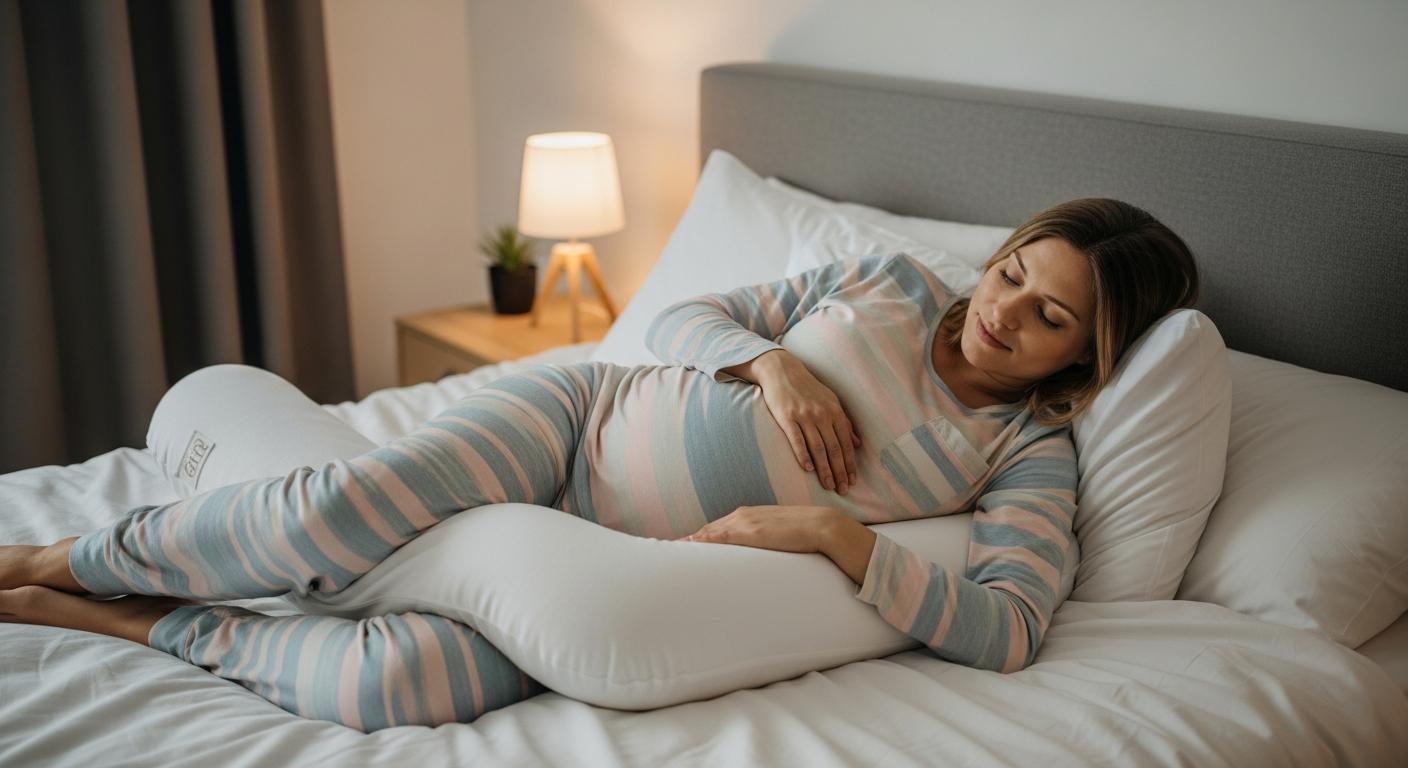
Side sleeping supports circulation and often reduces back strain. Left and right are both reasonable. If one side causes hip pain, shoulder pressure, or numbness, switching sides can help you sleep longer.
Comfort rule: avoid twisting. Keep shoulders and hips facing the same direction, knees gently bent, with support between the legs.
Semi-reclined sleep: helpful for acidity and breathlessness
If reflux, congestion, or breathlessness makes lying flat miserable, try upper torso elevation. Think stable incline of the chest and upper back, ideally with a slight side tilt.
Position to limit later: prolonged flat-back sleeping
After mid-pregnancy, prolonged supine sleep can worsen lightheadedness, nausea, and breathlessness. If you wake on your back, roll onto your side and settle again.
Sleeping positions during pregnancy by trimester
First trimester (0-12 weeks): more flexibility
In early pregnancy, most positions are fine if comfortable. The uterus is protected low in the pelvis, so back sleeping is usually not a circulation issue yet. Sleep is more often disturbed by nausea, fatigue, frequent urination, and breast tenderness.
Tummy sleeping is generally fine if it feels okay, many stop because it becomes uncomfortable. If you want to start a side-sleep habit gently, begin the night on your side with a pillow between the knees.
Second trimester (13-26 weeks): supported side sleeping
As the bump grows, many women naturally shift to side sleeping. Pillows make it easier:
- Pillow between knees (sometimes down to ankles)
- Small belly support
Some women start feeling sweaty, dizzy, or nauseated when lying flat. Treat it as feedback: return to side-lying and stabilise with pillows.
Third trimester (27+ weeks): side sleep first, then fine-tuning
In late pregnancy, side sleeping becomes the priority for most. Comfort often depends on small adjustments: belly support, a pillow behind the back to maintain a gentle tilt, and sometimes torso elevation for reflux or breathing.
If you wake up on your back, roll to your side (left if comfortable, right if needed). Turn as a unit, shoulders and hips together.
Left side vs right side: what parents should know
Left-side sleeping is often suggested because it may reduce pressure on the inferior vena cava and support uteroplacental blood flow. Many women also notice less ankle swelling and less reflux on the left.
Right-side sleeping is generally safe and can be more comfortable on nights when the left hip or shoulder is sore. Alternating sides reduces pressure points and nerve compression. When choosing between side-lying and flat-back lying in late pregnancy, side-lying usually wins.
Pillows and setup: quick wins that actually work
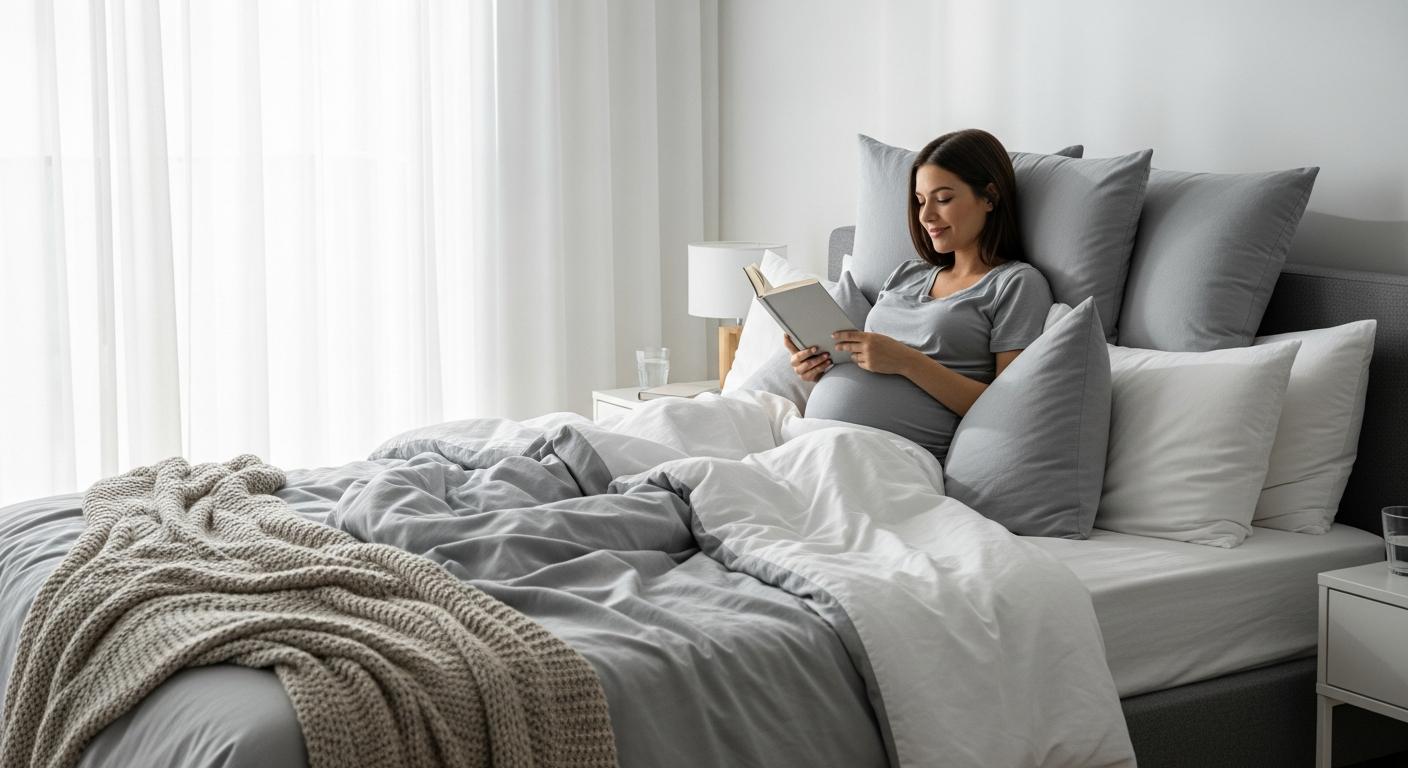
With Sleeping positions during pregnancy, pillows are not a luxury, they are biomechanics.
Try these placements:
- Between knees (and ankles if needed): reduces pelvic twist and supports a neutral spine.
- Under the belly: gentle lift to reduce the low-back “pull”.
- Behind the back: acts as a soft barrier so you stay in a side tilt.
For reflux or breathlessness, elevate the upper torso with a wedge or firm pillows under shoulders and upper back (not only under the head).
A very soft mattress can let the pelvis sink and worsen morning stiffness. A supportive, medium-firm feel often suits better.
Tweaks for common symptoms
Heartburn and reflux
Try left-side sleep plus stable upper-torso elevation. Keep dinner lighter and avoid lying down within 2–3 hours after eating. If acidity is frequent or painful, discuss pregnancy-safe treatments with your clinician.
Breathlessness, congestion, snoring
Side-lying plus a gentle incline may help. If snoring becomes very loud, breathing pauses are witnessed, or daytime sleepiness is marked, mention it, pregnancy can worsen sleep-disordered breathing.
Pelvic girdle pain (PGP/SPD), sciatica, low-back pain
Keep hips stacked, support the top leg so the pelvis does not twist, and turn in bed with a log-roll (shoulders and hips together). Perinatal physiotherapy can be very helpful when pain is persistent.
Special situations where advice may be more personal
- Twins/multiples: a larger uterus earlier can increase breathlessness and vessel pressure, side-lying with generous pillows can help.
- Hypertension, preeclampsia, fetal growth restriction: clinicians may emphasise left-side sleeping, follow your obstetric team.
When to call a doctor
Seek urgent assessment if you faint, have chest pain/pressure, or develop severe/worsening breathlessness when lying down that does not improve quickly after changing position. Contact your maternity team promptly for vaginal bleeding, leaking fluid, severe abdominal pain, or noticeably reduced fetal movements.
If your partner notices breathing pauses, you wake gasping, or daytime sleepiness becomes extreme, tell your clinician.
Key takeaways
- Sleeping positions during pregnancy work best when they support comfort, breathing, and circulation, without aiming for perfection.
- Side sleeping is usually the easiest default, left may help circulation and reflux, right is generally safe and often more comfortable on sore nights.
- After about 20 weeks, prolonged flat-back sleeping can trigger aortocaval compression symptoms (dizziness, nausea, sweating, breathlessness). Roll onto your side if it happens.
- For acidity or breathlessness, elevate the upper torso with a stable incline and a slight side tilt.
- Pillows between knees (sometimes to ankles), under the belly, and behind the back can prevent twisting and reduce pain.
- Support is available through your maternity team, and you can download the Heloa app for personalised tips and free child health questionnaires.
Further reading :
- Sleeping position during early and mid pregnancy does …: https://www.nichd.nih.gov/newsroom/news/092019-pregnancy-sleep-position
- Sleeping Positions During Pregnancy: https://www.urmc.rochester.edu/encyclopedia/content?contenttypeid=85&contentid=p01238