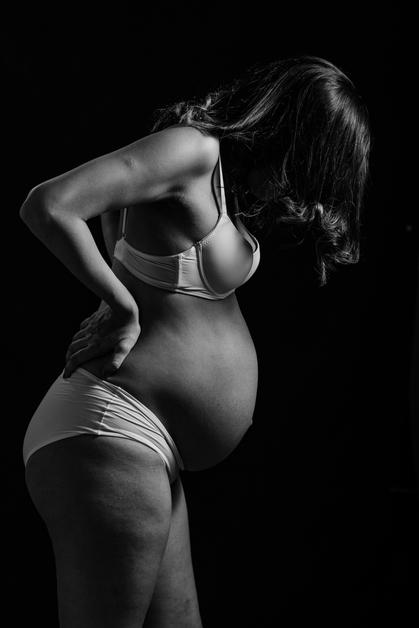
At night, a pregnant body isn’t simply “resting.” Blood volume shifts, the uterus takes up space, hormones loosen tissues, and breathing mechanics change, sometimes all at once. No wonder Sleeping positions during pregnancy raise so many questions: reflux burns, hips ache, you wake up on your back, and the same thought returns… “Is this safe, and how do I get comfortable again?”
The goal is realistic: support circulation, keep breathing easy, reduce pain, and protect sleep continuity, without turning bedtime into a posture performance. Side sleeping (left or right) usually becomes the easiest baseline, with a few pillow techniques and symptom-based tweaks.
Sleeping positions during pregnancy: why they matter
How pregnancy reshapes sleep: hormones, anatomy, breathing, circulation
Progesterone rises early and relaxes smooth muscle (including the lower esophageal sphincter, which can worsen gastroesophageal reflux). It also increases respiratory drive, some parents feel “winded” sooner, especially when lying flat. Estrogen increases blood flow to mucous membranes, so nasal congestion and snoring can appear.
As the uterus grows, it can crowd the stomach (reflux), elevate the diaphragm (shorter breaths), and load the lumbar spine and pelvis (hip/low-back pain). Later, lying flat can press on large blood vessels.


Comfort and safety together: the useful definition of “best”
The “best” posture isn’t the one you hold perfectly all night. Normal sleep includes position changes. With Sleeping positions during pregnancy, aim to start in a position that supports blood flow and breathing, then use supports that help you fall asleep and fall back asleep more easily.
Reassurance: waking up on your back happens
If you wake up supine, it usually means your body rolled naturally. The response can be calm and simple: roll onto your side, rebuild your pillows, settle.
How pregnancy affects sleep and positioning
Common sleep disruptors by trimester
First trimester: nausea, breast tenderness, fatigue, frequent urination.
Second trimester: sleep may improve, but reflux, leg cramps, pelvic discomfort, congestion can appear.
Third trimester: lighter, more interrupted sleep, baby movement, reflux, pelvic pressure, back/hip pain, shortness of breath, louder snoring. Some develop restless legs syndrome (an urge to move the legs at night), if persistent, discuss it with a clinician (iron status can contribute).
Aortocaval compression, explained simply
From around mid-pregnancy (often after ~20 weeks), lying flat on your back can let the uterus press on major vessels, especially the inferior vena cava (the large vein returning blood to the heart), and sometimes the aorta. Less venous return can lower cardiac output and blood pressure. Clinicians call this aortocaval compression.
Side-lying shifts the uterus off those vessels, which is why side sleep is often encouraged in the second half of pregnancy.
“Fall-asleep position” vs the whole night
One key idea with Sleeping positions during pregnancy: you can’t control every minute of sleep. Brief supine time can happen. What matters most is reducing long, uninterrupted stretches flat on your back later in pregnancy, and resetting to side-lying when you notice you’re supine.
Best Sleeping positions during pregnancy at a glance
Side sleeping (left or right): the simplest baseline
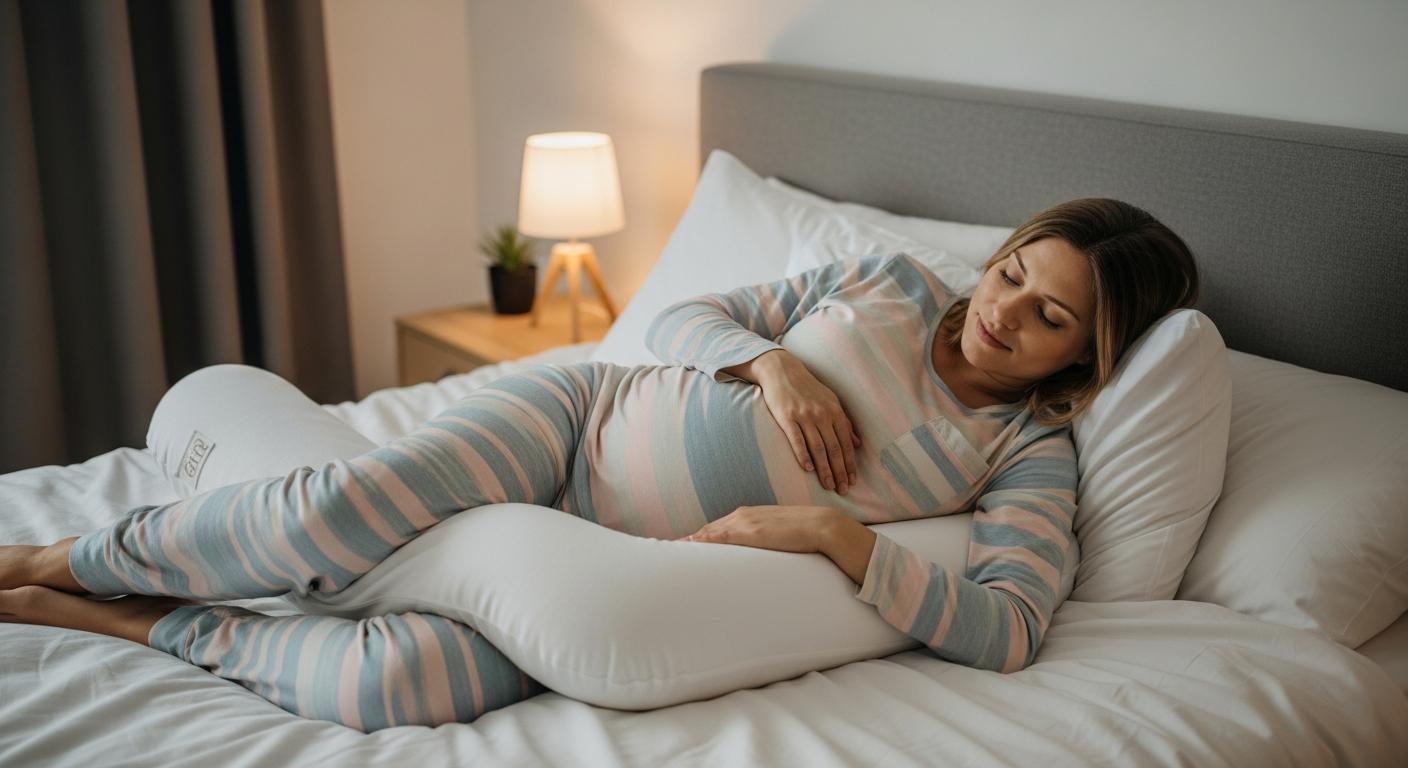
Side-lying supports circulation and usually reduces spinal strain. Left and right are both acceptable, switching sides can reduce pressure points.
A comfort rule: avoid pelvic twisting. Keep shoulders and hips facing the same direction, knees gently bent.
Semi-reclined sleep: for reflux and breathlessness
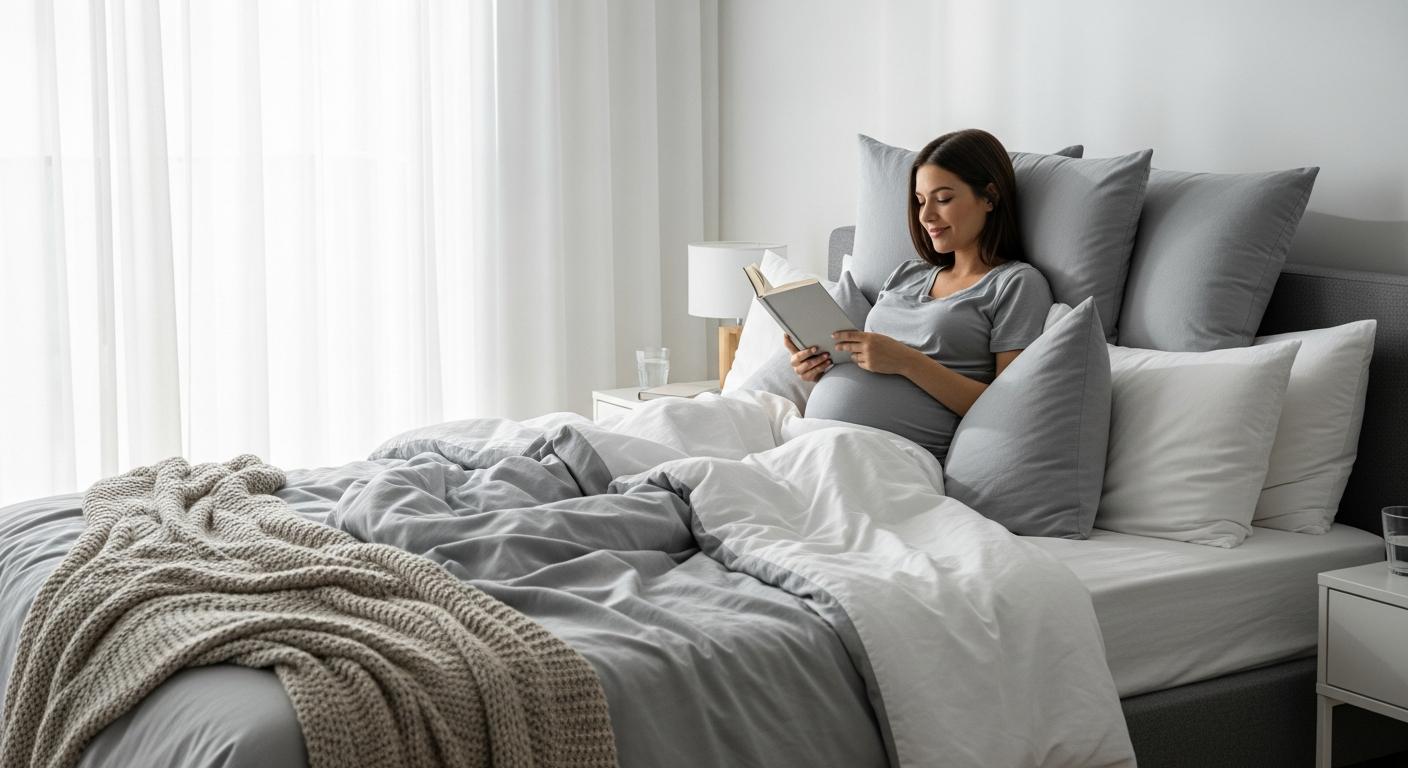
If reflux flares or breathing feels tight, try upper torso elevation, ideally with a slight side tilt rather than fully flat on your back.
Position to limit later: prolonged flat back sleeping
After mid-pregnancy, prolonged supine sleep is generally discouraged. If you wake up on your back, roll to your side and continue.
Sleeping positions by trimester
First trimester: more freedom, good time to build habits
Early on, most positions are usually fine if comfortable. The uterus remains low in the pelvis, so back sleeping is not typically a circulation issue yet. If you want a head start, begin the night on your side and add light pillow support, without forcing it.
Second trimester: supported side-lying
Helpful add-ons:
- a pillow between knees (and sometimes to the ankles)
- a small pillow or wedge under the belly
Some begin to feel unwell when lying flat (sweating, nausea, dizziness). Treat it as a cue: return to side-lying and stabilize with pillows.
Third trimester: side sleep first, then symptom tweaks
Late pregnancy comfort often depends on details: belly support, hip alignment, a pillow behind the back to maintain a gentle tilt, and sometimes upper-body elevation for reflux or breathing.
Left-side sleeping during pregnancy: why it can help
Left-side positioning tends to reduce pressure on the inferior vena cava, supporting venous return and potentially uteroplacental blood flow (blood delivery to the placenta). Many also notice less ankle swelling. It may reduce reflux episodes for some.
If heavy legs bother you, gentle calf elevation with a small pillow and a few ankle pumps before bed can feel soothing.
Back sleeping during pregnancy: what to know without panic
Supine hypotensive syndrome
This describes low blood pressure symptoms triggered by aortocaval compression when lying flat in later pregnancy. It’s physiology, not “something you did wrong.”
Signs to notice
While supine, you may feel dizziness, nausea, sweating, weakness, palpitations, or breathlessness. Rolling to your side usually improves symptoms quickly.
Research: associations, not proof
Some observational studies report an association between supine sleep in late pregnancy and adverse outcomes in certain groups. Associations are not proof of cause-and-effect.
Clinically, the message stays practical: avoid prolonged flat-back sleep later in pregnancy, aim for side-lying, and don’t catastrophize occasional rolling.
Right-side sleeping during pregnancy: practical reassurance
Right-side sleep is generally safe and often more comfortable when the left hip or shoulder is sore. If choosing between right side and flat back later in pregnancy, side sleep is typically the better option.
To reduce numbness and pressure:
- switch sides when hips or shoulders ache
- support the top leg fully to prevent pelvic twist
- use a pillow behind your back to reduce rolling fully supine
Stomach sleeping during pregnancy: when it stops working
Early on, it may feel fine, there is no evidence that early tummy sleeping harms the baby. Mid-to-late pregnancy, it usually becomes uncomfortable or impossible. Former stomach sleepers often like hugging a body pillow, plus a small wedge under the belly for gentle lift.
Pillows and setup: small tools, big difference
Smart pillow placement can transform Sleeping positions during pregnancy.
Options: U-shaped pillow, C-shaped pillow, straight body pillow, wedge.
Key placements:
- between knees (and ankles): reduces pelvic torque, keeps spine more neutral
- under the belly: gentle lift, less “pull” in the lower back
- behind the back: a soft barrier to keep a side tilt
Also check your head pillow: neck aligned with spine.
A very soft mattress can let the pelvis sink and increase lumbar arching, many do better with a supportive, medium-firm feel.
Symptom-based position tweaks
Heartburn/reflux
Try left-side sleep plus stable upper-torso elevation. Keep evening meals smaller and avoid eating 2–3 hours before lying down. If reflux persists, ask about pregnancy-compatible treatments.
Breathlessness, congestion, snoring
Side-lying plus gentle elevation can help. If snoring becomes very loud, breathing pauses are witnessed, or daytime sleepiness is marked, discuss possible sleep-disordered breathing with your clinician.
Pelvic girdle pain (PGP/SPD), sciatica, low-back pain
Keep hips stacked, avoid twisting, and turn with a “log roll” (shoulders and hips move together). A pillow between knees (often extended to ankles) and gentle belly support can reduce strain. Perinatal physiotherapy can help when pain is persistent.
Special situations where advice is more individualized
Twins or multiples
A larger uterus earlier can intensify breathlessness and vessel compression. Side-lying, often with a left tilt, plus generous pillow support may help.
Hypertension, preeclampsia, fetal growth restriction
Clinicians may emphasize left-side positioning to support uteroplacental blood flow. Follow the personalized plan from your maternity team.
When to call a doctor about sleep-related symptoms
Seek urgent assessment if you have fainting, chest pain/pressure, or severe/worsening shortness of breath that doesn’t improve after changing position. Vaginal bleeding, fluid leakage, severe abdominal pain, or a significant decrease in fetal movement also require prompt medical advice.
Discuss quickly as well if you repeatedly feel dizzy/sweaty with palpitations while lying flat, or if sleep apnea seems to worsen (witnessed breathing pauses, gasping, extreme daytime sleepiness).
Key takeaways
- Sleeping positions during pregnancy work best when they balance comfort, breathing, and circulation, no perfection required.
- Side sleeping is the easiest default, the left side may support uteroplacental blood flow, swelling comfort, and reflux relief, while the right side remains a safe alternative.
- After mid-pregnancy, prolonged flat-back sleep can trigger aortocaval compression symptoms (dizziness, nausea, sweating, breathlessness), if it happens, roll calmly onto your side.
- For reflux or breathlessness, elevate the upper torso with a stable incline rather than stacking pillows only under the head.
- Pillows between knees (and sometimes ankles), under the belly, and behind the back can reduce twisting and improve alignment.
- Professionals can support you if symptoms persist, you can also download the Heloa app for personalized guidance and free child health questionnaires.
Questions Parents Ask
Can sleeping position cause the umbilical cord to wrap around the baby?
Rassurez-vous: the cord can loop around a baby for many reasons, and it’s not something parents “cause” by sleeping on the “wrong” side. Normal baby movements in the womb are the main reason a cord can end up around the neck (and in most cases, it’s managed safely at birth). If you’re feeling anxious, focusing on positions that help you breathe and rest—usually side-lying with good pillow support—can be more helpful than trying to control what you can’t.
What if I can’t stay on my side all night—does it still “count”?
Yes, absolutely. Sleep isn’t a fixed pose, it’s a series of natural position changes. What often matters most in later pregnancy is your “fall-asleep” setup and avoiding long stretches flat on your back. A simple trick: place a pillow or wedge behind your back so you stay in a gentle side-tilt even if you roll a little. And if you wake up supine, you can just roll back to your side—no guilt.
Are pregnancy sleep wedges and positioners safe to use?
Many parents find wedges helpful for a small belly lift, a back “buffer,” or a gentle incline for reflux. It’s important that any support feels stable, doesn’t force your neck, and doesn’t trap you in one rigid position. If you have dizziness when lying flat, high-risk conditions, or persistent discomfort, it’s a good idea to ask your maternity team which setup is best for you.
Further reading :
- Sleeping position during early and mid pregnancy does …: https://www.nichd.nih.gov/newsroom/news/092019-pregnancy-sleep-position
- Sleeping Positions During Pregnancy: https://www.urmc.rochester.edu/encyclopedia/content?contenttypeid=85&contentid=p01238