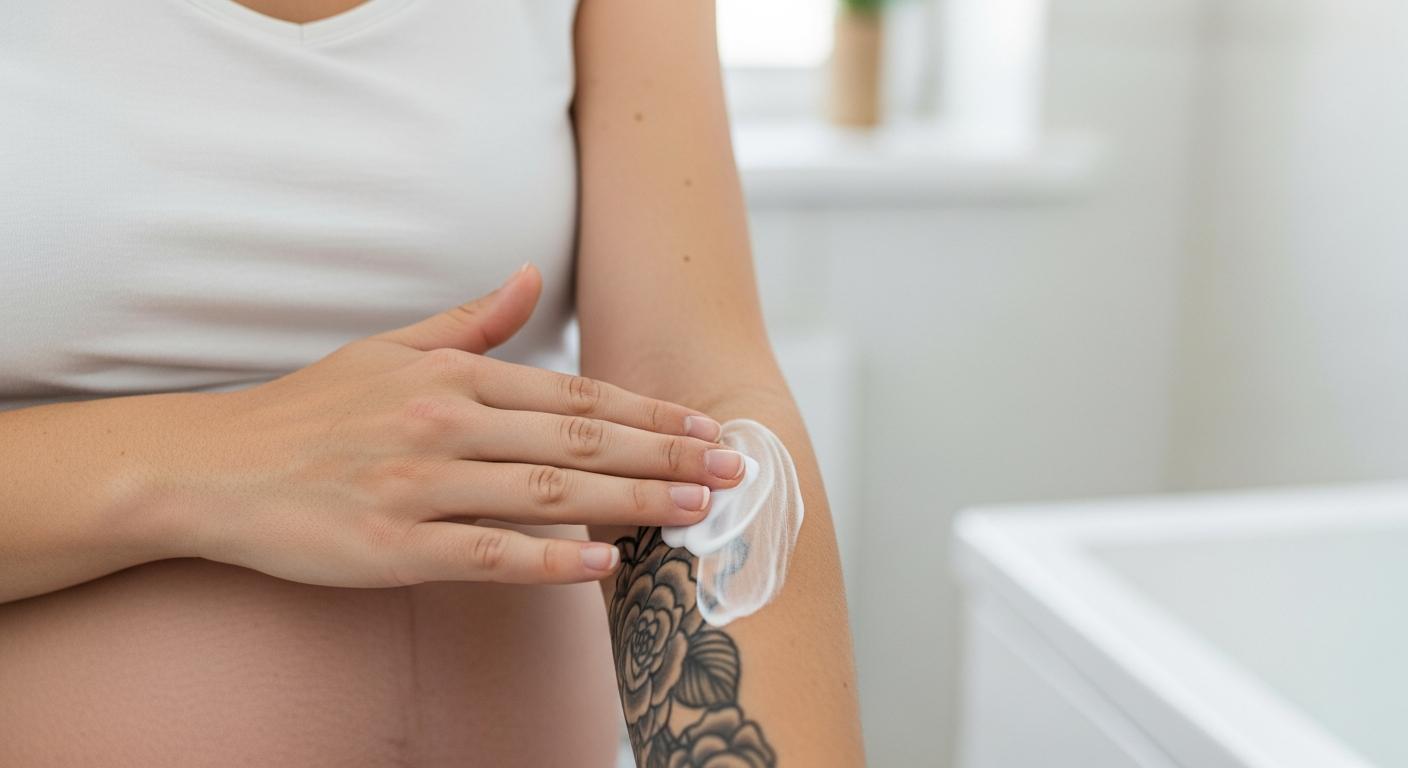
Pregnancy can make you look at your body with fresh eyes – strong, changing, sometimes surprisingly sensitive. So it is completely understandable if a pregnancy tattoo feels like more than “just ink”. Is it safe right now? Will it heal well? Could it affect your baby? And in India, where studio standards can vary widely, hygiene becomes the big question.
One simple clarification helps: are you thinking of getting tattooed during pregnancy, or planning a pregnancy tattoo that celebrates this chapter but booking it after delivery?
Pregnancy tattoo: what it can mean for expecting parents
Tattooing during pregnancy vs a pregnancy-themed tattoo after birth
A pregnancy tattoo can refer to two different choices:
- Tattooing while pregnant: a procedure that breaks the skin and needs wound healing.
- A pregnancy-themed tattoo later: a design that marks the journey once your body is more stable.
Many parents wait until postpartum to add final details (name spelling, exact date) and reduce the risk of distortion from stretching.

How pregnancy can change your skin
Pregnancy hormones and circulation can lead to:
- more skin sensitivity and itching
- dryness and contact dermatitis (an irritated or allergic rash)
- pigmentation changes (darker patches)
- easier swelling and tenderness
Stretching matters too: belly, breasts, hips and flanks can expand quickly, and fine lines may not stay crisp.
Can you get a tattoo while pregnant?
What is known, what is uncertain
There is not strong research proving that tattooing during pregnancy directly harms the baby. The difficulty is limited studies and widely varying inks.
What we do know about a pregnancy tattoo done during pregnancy:
- Tattooing breaks the skin, so there is a real risk of bacterial infection.
- Poor hygiene can expose you to blood-borne infections.
- Pregnancy can make skin more reactive and healing more uncomfortable.
What remains uncertain:
- how much pigment/impurities become systemic
- whether any components cross the placenta in meaningful amounts
Because the benefit is elective, many clinicians advise postponing a pregnancy tattoo until after delivery.
When your OB/GYN or midwife may advise postponing strongly
Extra caution is common with:
- high-risk pregnancy, bleeding, hypertension/preeclampsia concerns, preterm labour risk
- diabetes or gestational diabetes concerns
- immune suppression or medicines that slow healing
- active eczema/dermatitis/infection near the planned site
- severe allergy history (pigments, adhesives, latex, metals)
- keloid tendency or recurrent skin infections
Permanent vs temporary options
Permanent tattoos: deeper injury, longer healing
A permanent pregnancy tattoo places pigment into the dermis. Expect inflammation and healing that can take weeks. Stretching (abdomen, breasts, hips) and friction (bra line, waistbands) can change the final look.
Temporary tattoos and body paint
They do not inject pigment, so infection risk is usually lower, but irritation from adhesive, dyes, or fragrance is still possible. Patch test 24-48 hours earlier.
Key risks before a pregnancy tattoo during pregnancy
Infection and fever
Tattooing creates many tiny openings in the skin. If bacteria enter, you can develop local infection or cellulitis (a spreading skin infection). Watch for:
- redness spreading beyond the tattoo
- increasing warmth/pain after 48-72 hours
- significant swelling
- pus-like discharge or bad smell
- fever, chills, feeling unwell
A fever of 38°C (100.4°F) or more needs medical advice promptly in pregnancy.
Blood-borne infections and tetanus
With strict sterile technique, hepatitis B/C and HIV transmission is uncommon. With unsafe practice (reused needles, poor disinfection), risk rises sharply.
If you are unsure about tetanus protection, speak with your clinician.
Allergic reactions and dermatitis
Some people react to pigments, latex, adhesives, or aftercare products. It may show as persistent itching, blistering, or a rash spreading beyond the tattoo.
Pain, dizziness, fainting
Pregnancy can increase lightheadedness. Pain, heat, anxiety, dehydration, and long sessions can trigger a vasovagal episode (sweating, nausea, dizziness, fainting). Eat beforehand, hydrate, and stop if you feel unwell.
Healing may be less predictable
Dryness, friction, and stretching can cause thicker scabs, patchy colour, or touch-up needs – especially on abdomen, hips, and breasts.
Tattoo ink and pregnancy: why doctors talk about “unknowns”
Ink is pigment suspended in a carrier (water, glycerin, propylene glycol, alcohols) plus stabilisers/preservatives. Pigment particles can be taken up by immune cells and reach lymph nodes. What is unclear in pregnancy is systemic exposure and any placental transfer.
That uncertainty – plus infection/allergy risk – is why many clinicians suggest delaying a pregnancy tattoo.
Timing choices: trimester-by-trimester
First trimester
Often nausea and fatigue, plus organ formation. Many clinicians prefer avoiding elective procedures.
Second trimester
Comfort and positioning may improve, but the same cautions apply.
Third trimester
Swelling and back discomfort are common. Lying flat can cause supine hypotensive symptoms (dizziness, nausea).
If you still proceed
- choose short sittings (often 60-90 minutes)
- take breaks, sip water, eat beforehand
- ask for side-lying or semi-reclined positioning
- avoid overheating
Placement: comfort now and how it may look later
Ask:
- Will it stretch?
- Will it rub?
More likely to change: belly, breasts, hips/flanks. More affected by fluid retention: ankles/feet. High-friction zones (waistbands, under-bra line) may heal poorly.
Often more stable: upper back, shoulder blade, nape, outer upper arm.
Lower back tattoos and epidurals
A lower back tattoo usually does not prevent an epidural. Concerns are higher with a very recent tattoo over the epidural area or a large dense piece. If epidural is likely, discuss placement early.
Choosing a studio in India: hygiene is the make-or-break factor
Non-negotiables
Look for:
- single-use needles opened in front of you
- autoclave sterilisation for reusable equipment (with logs)
- fresh gloves, hand hygiene, barriers on surfaces/machines
- correct antiseptic skin prep with single-use supplies
- ink poured into single-use caps (no shared dipping)
- traceable inks (batch/lot number, expiry when available)
Red flags
- vague sterilisation answers
- reuse of ink caps
- poor glove hygiene or dirty surfaces
- no written aftercare plan
- pressure to continue when you feel unwell
Aftercare that stays gentle in pregnancy
- Clean with mild fragrance-free soap, lukewarm water, pat dry
- Apply a thin layer of fragrance-free moisturiser/ointment
- Wear loose cotton clothes, avoid rubbing
- Avoid baths, pools, hot tubs, lakes, sea water until healed
- Avoid numbing creams unless your OB/GYN agrees
Signs of infection: when to contact a clinician
Seek medical advice promptly for spreading redness, pus, red streaks, worsening pain, or fever 38°C (100.4°F) or more.
For pain, paracetamol is commonly used in pregnancy, avoid ibuprofen unless advised.
Breastfeeding and tattoos
Tattooing while breastfeeding is generally considered compatible with lactation when done hygienically. During healing, keep the area clean and avoid ointment transfer during cuddles. For comfort, avoid tattooing the nipple/areola area.
Postpartum, C-section scars, and stretch marks
Many parents prefer waiting 3-6 months postpartum (sometimes longer). After a C-section, waiting 6-12 months before tattooing directly over the scar is common.
Stretch marks (striae) can affect crispness and ink uptake, shading and flowing motifs often look more forgiving.
Pregnancy tattoo ideas parents often love
- due date/birth date
- initials with a tiny symbol
- coordinates of “home”
- constellation linked to a meaningful month
- botanical motifs, minimalist line art
- gentle memorial symbols (rainbow, star)
Alternatives if you prefer to wait
Temporary tattoos and body paint can work well for maternity photos. Patch test.
Henna and jagua can stain beautifully, but avoid “black henna” (often contains PPD (para-phenylenediamine), a strong allergen).
À retenir
- A pregnancy tattoo during pregnancy is a controlled skin injury, healing and reactions can be less predictable.
- Main risks are infection and allergy, fever after tattooing needs prompt medical advice.
- Ink formulations vary and pregnancy exposure is uncertain, so many clinicians prefer postponing a pregnancy tattoo.
- If you proceed, prioritise hygiene, shorter sessions, and gentle aftercare.
- Professionals can support you, and you can download the Heloa app for personalised guidance and free child health questionnaires.