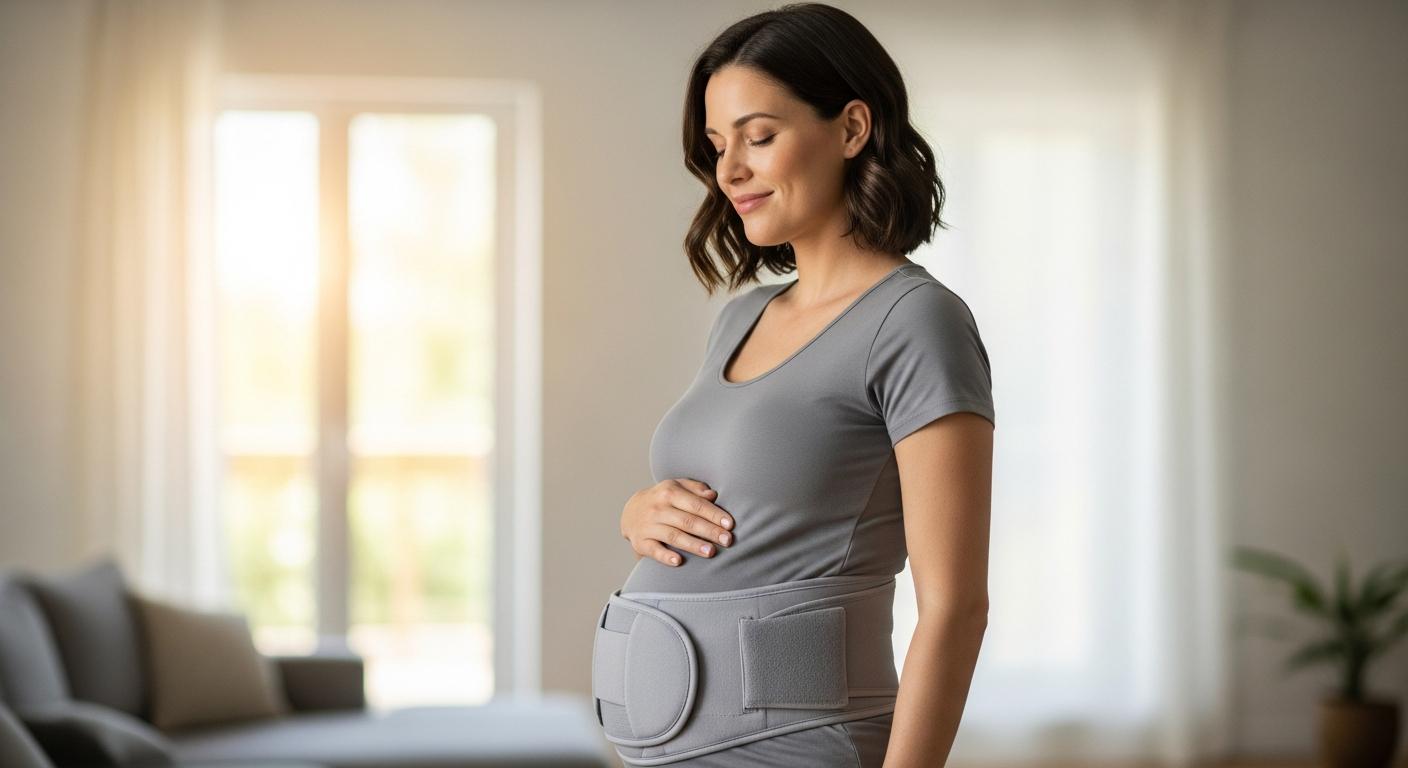
Pregnancy can change your body quickly – sometimes overnight, it feels. The bump shifts your centre of gravity, the lower back tends to arch more (hyperlordosis), and the pelvic joints become a bit more mobile under hormones like relaxin. The outcome is low back ache, a pulling feeling under the tummy, pubic pain, hip discomfort, and that end-of-day heaviness when even a short grocery run feels like a workout.
If you are considering a Maternity belt, you probably want practical relief – support while standing in the kitchen, commuting in traffic, teaching all day, or carrying an older child – without feeling squeezed.
Maternity belt: what it is, and what it is not
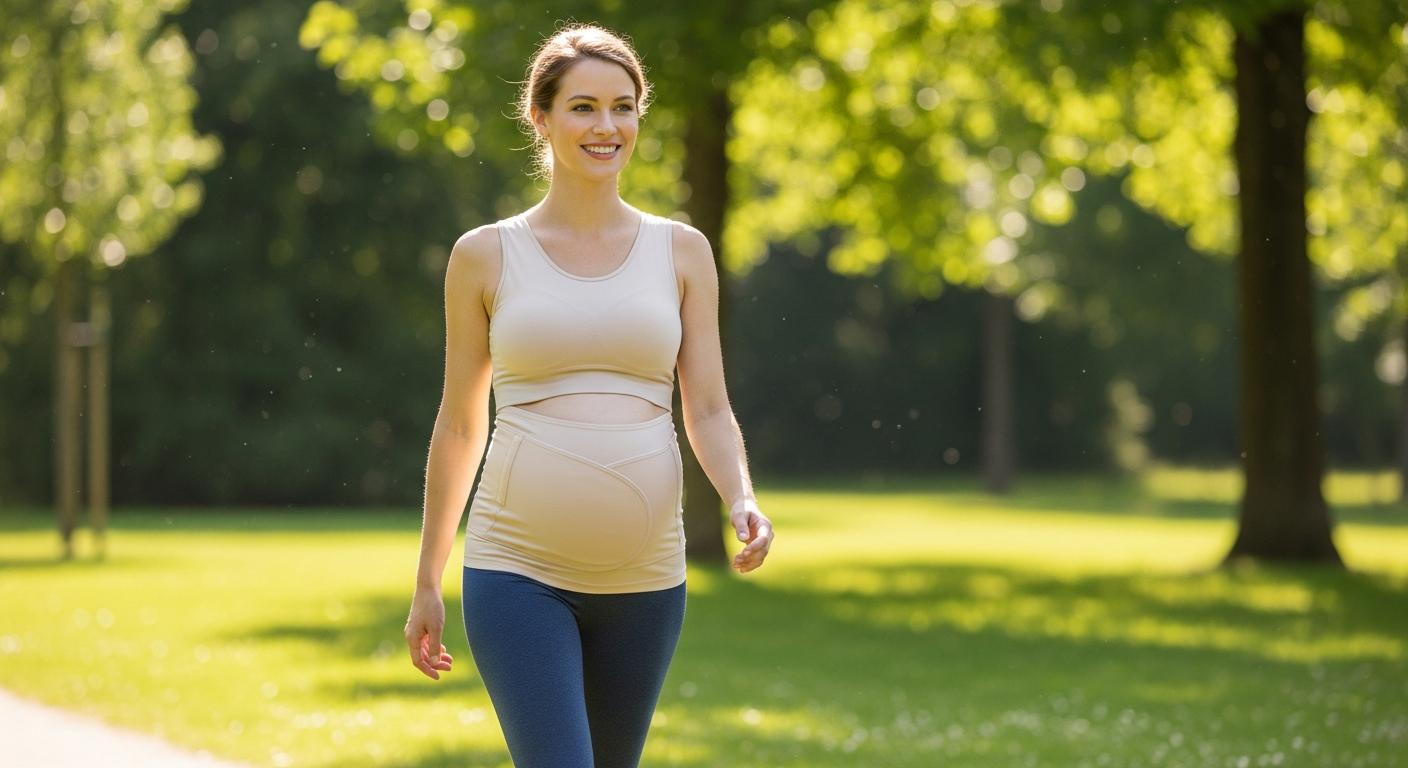
A Maternity belt (also called a pregnancy support belt) is a wearable wrap that supports the lower abdomen, pelvis, and lower back as the bump grows. Most designs use Velcro-style fastening and allow small day-to-day adjustments (very helpful when swelling and comfort change by evening).
A Maternity belt is different from:

- A soft belly band (more for light comfort and clothing fit)
- A postpartum binder (mainly after delivery)
- A waist trainer (high compression and best avoided in pregnancy)
How a Maternity belt works: lift, comfort, and pelvic stability
A well-fitted Maternity belt usually offers:
- Under-bump lift, so the belly feels less “draggy”
- Comfortable compression (gentle pressure) to improve body awareness and reduce strain
- Stabilisation of the lumbopelvic region, which may reduce painful micro-movements at the sacroiliac (SI) joints and the pubic symphysis
You might be thinking, “Is it like a corset?” Not really. The goal is support, not locking you in place.
Why parents in India often try a Maternity belt in the 2nd and 3rd trimester
Discomfort commonly increases as pregnancy progresses, especially with long standing, crowded public transport, or daily stair use.
A Maternity belt is often considered for:
- Diffuse low back pain (worse later in the day)
- Pelvic girdle pain (PGP) – pain around the back of the pelvis, hips, groin
- Symphysis pubis dysfunction (SPD) symptoms (front-of-pelvis pain, sharp with steps)
- SI joint pain (above the buttocks)
- Sciatica-like pain that feels worse with walking or standing
It is important to set expectations: a Maternity belt does not “repair” the spine or pelvis. It reduces mechanical strain, which can make daily activities more manageable.
Benefits of a Maternity belt (and its limits)
Lower back support
As the bump grows, many pregnant women naturally arch the lower back more. A Maternity belt can give lumbar support and a gentle reminder to stack ribs over pelvis, reducing muscle fatigue.
Pelvic pain support (PGP and SPD)
For PGP/SPD-type pain, a Maternity belt – or sometimes a lower pelvic/SI belt – may improve the sense of stability during walking, turning in bed, getting in and out of the car, or climbing stairs.
Less heaviness under the bump
Some parents feel immediate relief: “The belly feels lighter.” The baby’s weight has not changed, the load is simply redistributed.
The limits: support tool, not a cure
A Maternity belt can:
- Reduce symptom intensity during activity
- Improve perceived stability
- Help you stay active with less discomfort
A Maternity belt cannot:
- Treat red-flag symptoms (bleeding, fluid leakage, reduced fetal movement)
- Replace strengthening and movement strategies
- Replace postpartum pelvic floor rehab
Avoid wearing it non-stop
Wearing a Maternity belt all day can encourage deep trunk muscles (transversus abdominis, spinal stabilisers, pelvic floor) to “switch off” too often. Intermittent use generally makes more sense.
When to use a Maternity belt (timing and duration)
First trimester
Usually not needed, unless you already have SI/back issues or you stand for long hours.
Second trimester
A common time to start, especially for walks, work shifts, household chores, or travel.
Third trimester
Often the most helpful stage, as the bump feels heavier and pelvic joints may feel more sensitive. Breathable fabric matters a lot in hot, humid weather.
How long to wear it in a day
Many clinicians suggest time blocks rather than all-day wear:
- Wear the Maternity belt for 1-3 hours during demanding activities
- Take a break of at least 30 minutes without it
- Loosen for sitting, slightly firmer for walking (still comfortable)
If you feel numbness, tingling, pressure points, overheating, dizziness, palpitations, or breathing discomfort – pause and reassess.
Types of Maternity belt: which one suits which symptom?
- Under-belly Maternity belt: sits under the bump and around the hips, helpful for heaviness and mild back strain.
- Pelvic/SI belt: sits lower, around the bony pelvis, often preferred when pain is focused around the pubic symphysis or SI joints.
- Wider lumbar support belt: more back coverage, useful when low back pain is the main complaint.
- Adjustable/evolving designs: adaptable across months, sometimes usable in early postpartum depending on design.
Night use? Only for very soft, minimal-compression designs, and only if breathing stays fully free.
How to choose a Maternity belt that actually fits
Start with one question: what is bothering you most?
- Mostly low back pain: choose stronger lumbar support
- Mostly pubic/SI pain: consider a pelvic/SI-style belt
- Mostly heaviness: under-bump lift styles often work well
Sizing tips
Most brands size by hip/low pelvis circumference.
- Measure around the widest part of the hips/low pelvis
- If you swell in the evening, measuring later can be more realistic
- Between sizes? The larger size is often safer than over-tight compression
Signs it is not fitting well:
- Restricted breathing (especially when sitting)
- Tingling/numbness in legs or pelvic region
- The belt rolls up or keeps slipping
How to wear a Maternity belt correctly
Placement
Most Maternity belt designs sit under the bump, with a back panel centred over the lower back. Pelvic/SI belts sit lower, around the bony pelvis.
Tightness
Snug, supportive contact – never a squeeze. You should be able to take a deep breath and sit without pinching.
Quick step-by-step
1) Stand (or lean slightly forward if that feels easier).
2) Place the back panel in the correct position.
3) Bring the ends forward under the bump (or around the bony pelvis for pelvic belts).
4) Fasten gently, then tighten in small increments.
5) Walk a few steps and adjust evenly.
Safety: when to talk to a clinician
Seek medical advice before using a Maternity belt if you have pregnancy complications where compression/positioning needs caution, or if you have severe circulation issues or a clotting history.
Stop and get checked if you notice:
- Worsening pain, leg weakness, spreading numbness
- Bleeding, fluid leakage, reduced fetal movement
- New or worrying abdominal sensations, or breathing restriction
Using a Maternity belt with movement and exercise
A Maternity belt is usually most helpful for specific triggers: commuting, errands, standing tasks, housework, and short walks.
For walking with pelvic pain, slightly firmer tension may reduce pelvic “sway” – but you should still breathe normally and move your hips freely.
For prenatal yoga or gentle Pilates-style work, a flexible Maternity belt can be used if it does not interfere with breathing. Many parents benefit from guidance by a prenatal physiotherapist.
After delivery: postpartum support, diastasis recti, and C-section notes
After birth, the goal changes. A Maternity belt may not sit correctly on postpartum anatomy, so many parents stop it soon after delivery.
A postpartum binder may feel comforting in the first weeks – especially when standing up, coughing, climbing stairs, or carrying the baby – because it supports the abdominal wall and provides containment.
- Diastasis recti: a belt can improve comfort, but progress comes from rehab exercises and pressure management.
- C-section: support over the incision should be gentle and never painful, increased redness, sharp pain, or breathing discomfort are reasons to stop and seek advice.
Key takeaways
- A Maternity belt can ease low back pain, pelvic girdle pain, and heaviness, especially in the 2nd and 3rd trimester.
- Choose the style based on your main symptom (back-focused vs pelvic/SI-focused vs under-bump lift).
- Wear the Maternity belt in time blocks (often 1-3 hours with breaks), not continuously.
- Any restriction of breathing, numbness, skin problems, or obstetric warning signs means stop and get medical advice.
- Support exists: your obstetrician, midwife, and prenatal physiotherapist can help, and you can download the Heloa app for personalised tips and free child health questionnaires.