Pregnancy can reshape your body fast. One week you feel “fine,” the next your bump pulls forward, your lumbar spine arches (hyperlordosis), and your pelvis becomes more mobile under the effect of hormones such as relaxin. The mix can lead to low back pain, pelvic girdle pain, pubic symphysis pain, or that heavy, dragging sensation under the belly that turns a short walk into a long one.
If you’re weighing up a Maternity belt, you probably want something very practical: less pain, more stability, and the freedom to keep moving—without doing anything risky for you or the baby. So, what can a Maternity belt realistically do? When is it useful? And how do you avoid the common trap of tightening it “just a bit more” until it becomes uncomfortable?
What a Maternity belt is (and what it is not)
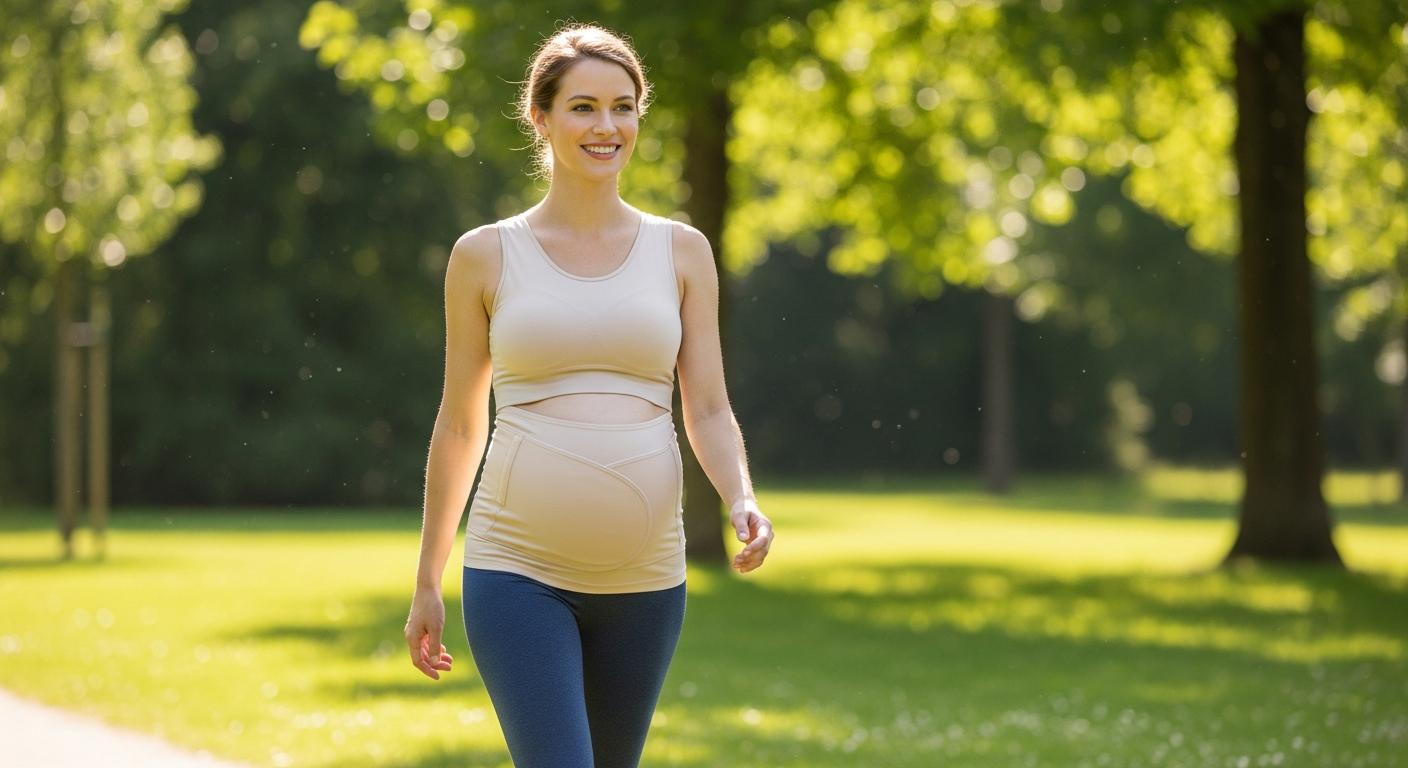
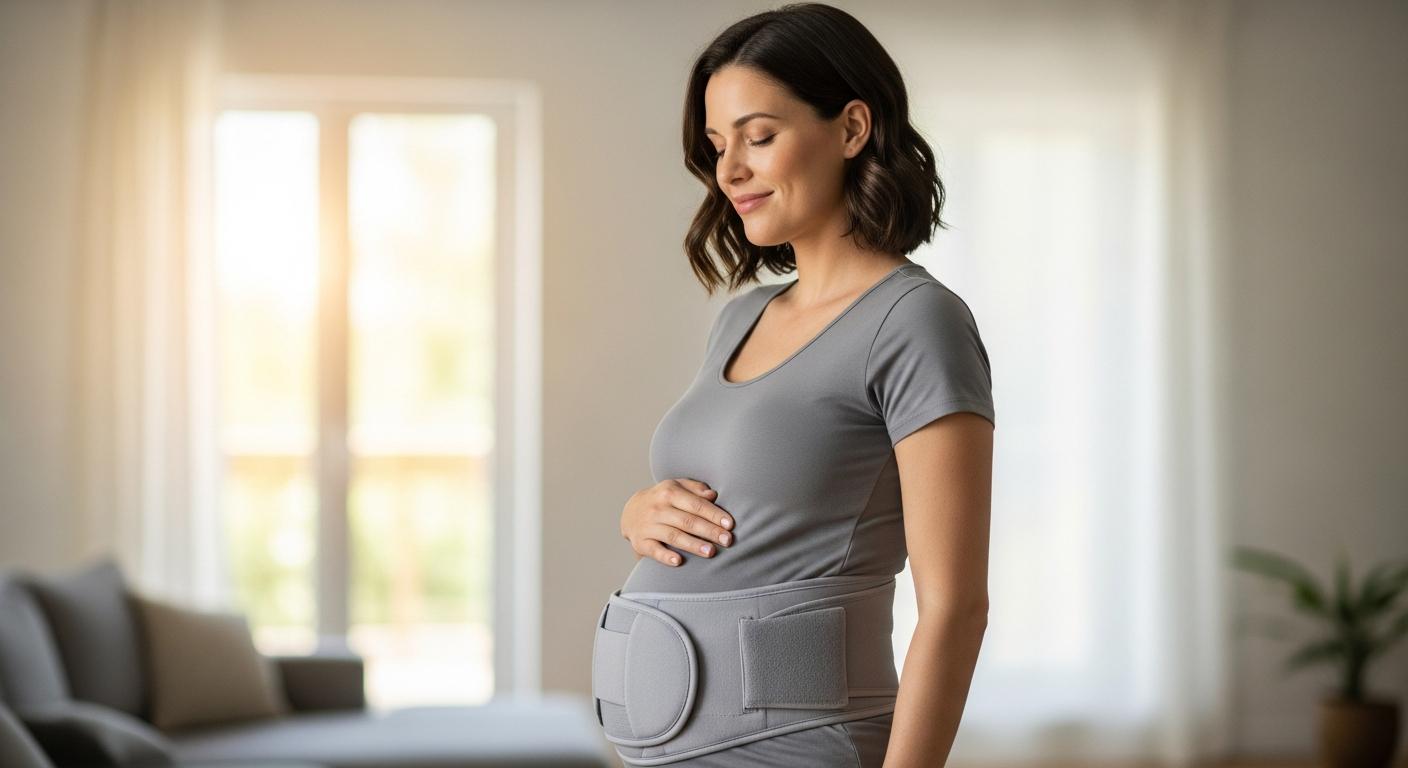
A Maternity belt (also called a pregnancy support belt) is a wearable support device that wraps around the lower abdomen and pelvis, with a supportive panel at the lower back. Most models close with hook-and-loop fastening and allow small, day-to-day adjustments.
Its aim is simple: redistribute part of the bump’s load and improve lumbopelvic stability during movement.


It is not the same as:
- A soft belly band used mainly for light comfort and clothing fit
- A postpartum binder (used after birth)
- A waist trainer (high compression—best avoided in pregnancy)
How a Maternity belt may help: the mechanics behind the comfort
A well-fitted Maternity belt tends to combine three effects:
- Under-bump lift: a gentle lift can reduce the “pulling down” feeling.
- Comfortable compression: light pressure can improve proprioception (your body’s sense of position), which sometimes helps you move with more confidence.
- Stabilization: added support around the pelvis may reduce painful micro-movements at the sacroiliac joints and the pubic symphysis.
Think “assistance,” not “armor.” You should still breathe freely, rotate your hips, and walk normally.
Why parents reach for a Maternity belt during pregnancy
Symptoms often ramp up in the second and third trimesters, when the center of gravity shifts and the abdominal wall stretches.
A Maternity belt is commonly considered for:
- Achy lower back, worse at the end of the day
- Pelvic girdle pain (pain at the back of the pelvis, hips, or groin)
- Pubic symphysis pain (front-of-pelvis pain, sometimes sharp with steps)
- Sacroiliac joint discomfort (above the buttocks)
- A heavy, downward pressure sensation when standing or walking
And yes—life logistics matter. Standing jobs, long commutes, carrying groceries, lifting a toddler, climbing stairs: these are everyday “tests” for an already-stressed pelvis.
Benefits of a Maternity belt (and the limits to keep in mind)
Low back pain: less strain, less fatigue
When the bump pulls forward, back muscles often work overtime. A Maternity belt may reduce muscular fatigue by offering external support and a subtle postural cue (ribs stacked over pelvis, less over-arching).
What it doesn’t do: “fix” a disc problem or erase all pain. It can, however, make activity more tolerable.
Pelvic girdle pain and SPD-type symptoms
Pelvic girdle pain (PGP) covers discomfort around the pelvic ring, SPD is often used to describe pain focused at the pubic symphysis. Pain typically flares with asymmetrical movements—rolling in bed, getting out of a car, stairs, or dressing on one leg.
A Maternity belt, especially a low pelvic/SI style, may improve the feeling of stability by reducing shear forces across those joints.
Less belly heaviness and “pulling” sensations
Some parents describe it immediately: “My bump feels lighter.” The baby’s weight hasn’t changed—but load distribution has. Less downward drag can also feel kinder to the pelvic floor during standing tasks.
A tool, not a cure (and not a 12-hour-a-day habit)
Here’s the trade-off: if you wear a Maternity belt all day, every day, your deep stabilizers (transversus abdominis, multifidus muscles, pelvic floor) may become less active.
A better pattern is strategic use: support during demanding moments, freedom the rest of the time.
When to use a Maternity belt (trimester-by-trimester, symptom-by-symptom)
First trimester
Often unnecessary—there isn’t much bump to support. It can still be helpful if you already have SI pain or significant low back sensitivity, especially with long standing.
Second trimester
A common starting point. The bump becomes more prominent, posture changes accelerate, and discomfort may show up during walks or work shifts. A Maternity belt can be useful for “high-load” blocks of the day.
Third trimester
Support may feel more noticeable as the abdomen gets heavier and pelvic joints become more reactive. Re-check sizing and adjust frequently (swelling and heat can change comfort quickly).
How long to wear it
A practical rhythm many clinicians like:
- Wear the Maternity belt for 1–3 hours during the most demanding activities
- Take breaks (at least 30 minutes without it)
- Loosen slightly when sitting, snugger when walking—without squeezing
If you put it on and immediately feel worse, that’s information. Stop, reposition, and reassess.
Choosing the right Maternity belt: match the design to your main symptom
You might be tempted to buy the “most supportive” model. But the best fit is the one that targets your pain pattern.
- Mostly low back pain: choose a model with a wider back panel
- Mostly pubic or SI pain: consider a pelvic/SI belt that sits low on the bony pelvis
- Mostly heaviness under the bump: an under-belly lift style is often enough
Sizing and fit: the safety check
Most brands size by hip or low-pelvis circumference.
Good signs:
- You can take a deep breath
- No numbness, tingling, or color change in legs
- No pinching when you sit
Bad signs (loosen or change model):
- The belt rolls, slips, or digs into the groin
- You feel overheated quickly
- You feel pressure that increases pelvic pain rather than easing it
How to wear a Maternity belt correctly (quick, concrete steps)
1) Place the back panel centered over the lower back (or lower, if it’s a pelvic/SI belt).
2) Bring the ends forward under the bump (or around the bony pelvis).
3) Fasten gently first—then tighten in small increments.
4) Walk 10–20 steps. Better? Worse? Adjust evenly on both sides.
You may wonder: “Should it feel tight?” It should feel secure, not restrictive.
Safety and precautions: when a Maternity belt is not the priority
A Maternity belt should never cause breathing discomfort, dizziness, new pelvic pressure, or neurological symptoms.
Stop using it and seek medical advice if you notice:
- Worsening pain, leg weakness, spreading numbness or tingling
- Significant skin irritation that persists
- Obstetric warning signs: vaginal bleeding, fluid leakage, reduced fetal movements, or contractions that concern you
Talk with your maternity clinician before use if you have major circulatory issues, a clotting history, or a pregnancy situation where external compression devices need extra caution.
Pairing a Maternity belt with movement (so your body stays strong)
A Maternity belt tends to help most during specific triggers: errands, standing chores, commuting, short walks.
To support your own stability, simple strategies often work beautifully alongside the belt:
- Shorter steps and symmetrical movements (especially on stairs)
- Rolling in bed with knees together (log-roll style)
- Gentle core activation on exhale (think “hug the baby in” without holding your breath)
If you’re working with a prenatal physiotherapist, bring the belt to an appointment. Tiny fit tweaks can change everything.
After birth: what changes, what stays useful
Once the baby is born, the role of a Maternity belt changes quickly. Many parents stop using it, because the anatomy and pressure needs are different.
A postpartum binder can feel comforting in the first weeks—especially when standing up, coughing, or carrying the baby—because it offers containment to the abdominal wall.
Diastasis recti and C-section notes
- Diastasis recti (abdominal wall separation) improves with rehabilitation and pressure management, a belt may support comfort but doesn’t “close” it on its own.
- After a C-section, any support should be gentle and never painful over the incision. Increased redness, sharp pain, or discomfort when breathing are reasons to stop and get checked.
Key takeaways
- A Maternity belt can ease low back pain, pelvic girdle pain, and belly heaviness by improving lumbopelvic support during activity.
- Use a Maternity belt in time blocks (often 1–3 hours with breaks) to support comfort while keeping deep core and pelvic floor muscles active.
- Choose the Maternity belt style based on your main symptom: back-focused, pelvic/SI-focused, or under-bump lift.
- The Maternity belt should feel secure, never restrictive, stop and seek advice for warning signs (bleeding, fluid leakage, reduced fetal movement, neurological symptoms).
- For tailored support and free child health questionnaires, you can download the Heloa app and reach out to your maternity care professional for guidance.
Questions Parents Ask
Can I wear a maternity belt every day?
Yes, many parents do—especially on busy days. The key is balance. Wearing a maternity belt occasionally (for errands, commuting, standing work, longer walks) can feel really supportive, while giving your body time without it helps your deep core and pelvic floor stay active. If you notice you “need” it all day to cope, it can be a good moment to chat with a prenatal physiotherapist and adjust your plan—no worry, it’s a common situation.
Can a maternity belt hurt the baby?
Reassure yourself: when it’s correctly fitted, a maternity belt is designed to support you, not compress the baby. It should feel secure, but you should still be able to breathe comfortably and move normally. If you feel strong pressure, increased discomfort, or you’re tempted to keep tightening for relief, try repositioning or choosing a different style. When in doubt, your maternity clinician can confirm what’s appropriate for your pregnancy.
Should I wear a maternity belt over clothes or on bare skin?
Most parents find it more comfortable over a thin layer of clothing. It can reduce rubbing, help with sweat, and limit skin irritation—especially in warmer months. If your skin is sensitive, a soft camisole or seamless top underneath often makes a big difference.