Hand, foot and mouth disease can feel like it arrives overnight: a child who was fine at bedtime wakes up cranky, feverish, and refusing water. Then come the mouth ulcers. Then the spots on palms and soles. In India – daycare runs, playgroups, cousins sharing toys, grandparents cuddling – hand, foot and mouth disease spreads very easily.
Most cases of hand, foot and mouth disease are mild and settle on their own. The part that trips families up is pain (especially in the mouth) and the very real risk of dehydration when drinking becomes a battle. Knowing what changes day by day, what helps at home, and when to call the doctor keeps things under control.
Hand, foot and mouth disease symptoms: what parents often notice first
Early signs in the first 1–2 days
- Fever, sore throat, runny nose, and reduced appetite can look like any viral illness at the start.
- Toddlers may be extra irritable, sleep poorly, or refuse usual foods.
- Babies may feed less, drool more, or cry during feeds because swallowing hurts.
Mouth symptoms: sores that make eating and drinking uncomfortable
- Small red spots can turn into painful mouth ulcers (tiny breaks in the mouth lining) on the tongue, gums, cheeks, and sometimes the palate.
- The pain is often worse than the visible sores suggest.
- A sore throat can accompany the mouth lesions.
If your child is refusing fluids, treat it as a pain problem first – this is very typical in hand, foot and mouth disease.
Skin symptoms: rash and small blisters on hands and feet
- Red spots may become small fluid-filled vesicles (blisters).
- Common locations: palms, soles, sometimes buttocks, legs, wrists, or around the mouth.
- Coxsackie A6 can cause a more widespread, dramatic-looking rash.
Symptom timeline
- Days 1–2: fever, low energy, reduced appetite.
- Days 2–4: mouth ulcers become obvious, rash/blisters appear.
- Days 4–7: fever settles, mouth pain improves, rash fades.
- Days 7–10: most children feel well, skin may look dry or flaky.
What hand, foot and mouth disease is (and what it is not)
Hand, foot and mouth disease (HFMD) is a common enterovirus infection, especially in children under 5. It spreads easily in close-contact settings, but it is usually self-limited.

HFMD is not the same as foot-and-mouth disease in animals, they are caused by different viruses.
Adults can also catch hand, foot and mouth disease – sometimes with only mild mouth sores or no symptoms – and can still pass it on.
Causes: which viruses can trigger HFMD
Several viruses can cause the same pattern:
- Coxsackievirus A16: a more typical HFMD pattern.
- Coxsackievirus A6/A10: often more widespread rash.
- Enterovirus 71 (EV71): uncommon, but linked to rare nervous system complications.
A child can get hand, foot and mouth disease again later because immunity to one strain may not protect against another.
How it spreads and how long it can be contagious
Hand, foot and mouth disease spreads through saliva, nasal secretions, blister fluid, and stool.
Transmission in real life
- Close contact (kissing, cuddling, sharing cups/utensils).
- Touching contaminated surfaces (toys, taps, phones), then touching the mouth.
- Diaper changes and toilet accidents through fecal-oral transmission.
- Droplets from coughs and sneezes.
Incubation and contagious period
- Incubation is usually 3–7 days.
- Children are often most contagious during the first week, and sometimes even before symptoms are obvious.
Stool shedding after recovery
The virus can be shed in stool for 2–4 weeks after symptoms settle. Practically, this means handwashing after toileting and diaper changes remains the strongest prevention step – especially in homes where one child has recovered and a younger sibling is still putting hands in the mouth.
Diagnosis: how clinicians confirm HFMD
Most of the time, clinicians diagnose hand, foot and mouth disease by the typical pattern: fever + painful oral lesions + rash or blisters on palms/soles (often also buttocks).
Testing (PCR from throat, blister fluid, or stool) is not routine, but may be used when the presentation is unusual or severe.
Other conditions that can resemble HFMD include herpangina, HSV gingivostomatitis, chickenpox, impetigo, scabies, and other viral rashes.
Treatment: what helps children feel better at home
There is no specific cure for hand, foot and mouth disease. Care is supportive: pain relief + hydration.
Fever and pain relief
- Paracetamol (acetaminophen) is commonly used for fever and pain (dose based on age/weight, follow your doctor’s guidance).
- Ibuprofen may help in many children, but avoid it if your child is dehydrated or has kidney disease, ulcers, or bleeding disorders – ask a clinician.
- Avoid aspirin in children/teens.
Antibiotics do not help because HFMD is viral, they are only used if a secondary bacterial infection is suspected.
Helping with mouth pain so kids can drink
- Offer cold fluids, chilled curd/yoghurt, smoothies, or ice lollies.
- Prefer soft foods: khichdi, dal water, idli, curd rice, mashed banana, oats, lukewarm soups.
- Avoid foods that sting: citrus, tomato-heavy dishes, spicy snacks, chips, achar.
- Give small frequent sips instead of one large glass.
Hydration: what matters most
Hydration matters more than solids in the worst 48–72 hours.
Watch for dehydration:
- Fewer wet diapers or urinating much less
- Very dark urine
- Dry mouth, no tears
- Unusual sleepiness, lethargy
An oral rehydration solution (ORS) can be useful if intake is low.
Skin care
- Keep skin clean and dry.
- Trim nails, discourage scratching.
- Do not pop blisters.
- Seek advice if lesions become increasingly red, hot, swollen, painful, or ooze.
Recovery time
Most children feel much better within 7–10 days.
Return to daycare and school
In many settings, return is considered when:
- The child is fever-free without fever reducers.
- The child is drinking well and can participate.
Because stool shedding can continue, keeping a child home until every spot disappears is usually not practical.
Prevention at home: reducing spread
No one prevents every exposure. With hand, foot and mouth disease, small habits reduce spread.
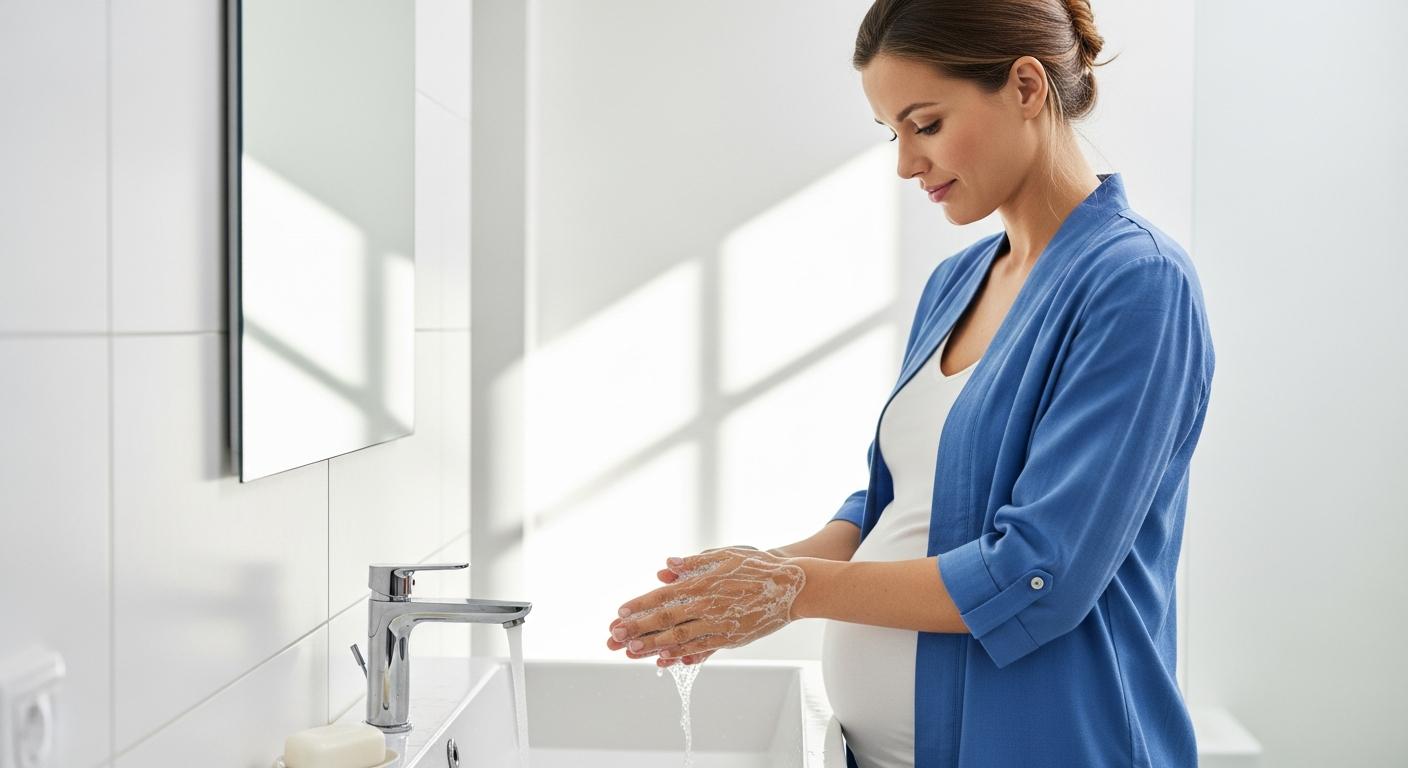
- Handwashing with soap after diaper changes/toileting and before meals.
- Clean high-touch surfaces (toys, taps, doorknobs, phones).
- Avoid sharing cups, straws, toothbrushes, towels.
- After recovery, continue strict toilet and diaper hygiene for a few weeks because of stool shedding.
Complications and special situations
Complications are not common, but two issues come up repeatedly.
Dehydration
This is the most frequent complication because mouth ulcers make drinking painful. If your child is not passing urine for many hours, looks unusually drowsy, or cannot keep fluids down, seek urgent care.
Secondary skin infection
If blisters are scratched open, bacteria can infect the skin. Increasing redness, warmth, swelling, pus, or worsening pain needs medical review.
Nail shedding weeks later (onychomadesis)
Some children develop onychomadesis – nails partially lifting or shedding – weeks after hand, foot and mouth disease. It is usually temporary, and nails grow back.
HFMD with eczema (eczema coxsackium)
Children with atopic dermatitis may develop clustered, angry-looking lesions in eczema areas. Because it can resemble other skin infections, a clinician may want to see the rash.
Hand, foot and mouth disease during pregnancy: what changes
If hand, foot and mouth disease is circulating at home and you are pregnant, the main concerns are fever, hydration, and timing close to delivery.
Symptoms in pregnancy can be subtle
Pregnant adults may have mild symptoms (sore throat, mouth ulcers, low fever) or none at all, yet still transmit the virus.
Treatment considerations during pregnancy
- Paracetamol (acetaminophen) is typically preferred for fever and pain in pregnancy (follow clinician advice).
- NSAIDs (like ibuprofen) are generally avoided in pregnancy unless a clinician specifically advises them.
- Supportive care: cool drinks, small frequent sips, soft foods.
Trimester and infection near delivery
- First trimester: fever should be discussed early with your prenatal team.
- Third trimester/near delivery: inform your maternity team if symptoms occur, so newborn observation can be planned if needed.
When to contact your doctor or midwife
Reach out if you have fever ≥ 38°C, fever that persists, mouth pain limiting fluids, or symptoms close to delivery.
When to see a doctor (for children or adults)
Seek medical advice if:
- Hydration is difficult (child or adult)
- Fever is high or lasts more than a few days
- Pain is not settling with appropriate measures
- The person looks unusually sleepy, confused, or very unwell
Seek urgent care for dehydration (no urine for many hours, lethargy), breathing trouble, severe headache/neck stiffness/confusion/seizures, chest pain/shortness of breath/fainting, persistent vomiting, or severe abdominal pain.
Key takeaways
- Hand, foot and mouth disease is a common enterovirus infection, especially in children under 5, causing fever, mouth ulcers, and a rash on palms and soles.
- Incubation is usually 3–7 days, contagiousness is highest in the first week, stool shedding can last 2–4 weeks.
- Care is supportive: pain relief and hydration. Dehydration is the most frequent practical complication.
- During pregnancy, the main concerns are fever, hydration, and timing close to delivery, inform your prenatal care team if symptoms appear.
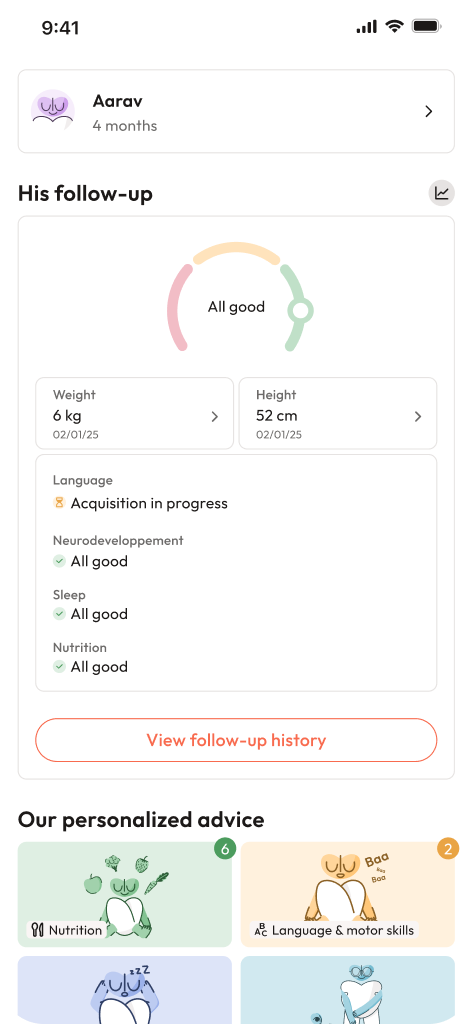
- Support exists: your paediatrician, family doctor, and local hospital can guide you. For personalised advice and free child health questionnaires, you can download the Heloa app.
To remember
- If you suspect hand, foot and mouth disease, focus on fluids first, solids can wait.
- Call a clinician early if fever persists, drinking is poor, or the child is unusually sleepy.
- For tailored support, you can also download the Heloa app.
Further reading :