
Starting solids can feel like a cliff edge: yesterday milk was enough, today you’re staring at a banana spear and thinking, “Will this go well… or sideways?” Child-led weaning appeals because it changes the mood at the table: less coaxing, more watching, while still keeping nutrition and safety in view. Sounds good, no?
Understanding child-led weaning (and what it is not)
Child-led weaning is complementary feeding where your baby self-feeds and decides the pace and quantity. You provide the structure: safe foods, safe posture, and steady supervision.
One medical point makes a big difference to expectations: before 12 months, breast milk or infant formula stays the main source of calories and key nutrients. Solids are practice plus gradual nutrient support (iron is the big one).
You may also hear “baby-led weaning (BLW)”. In real homes, child-led weaning often looks hybrid:

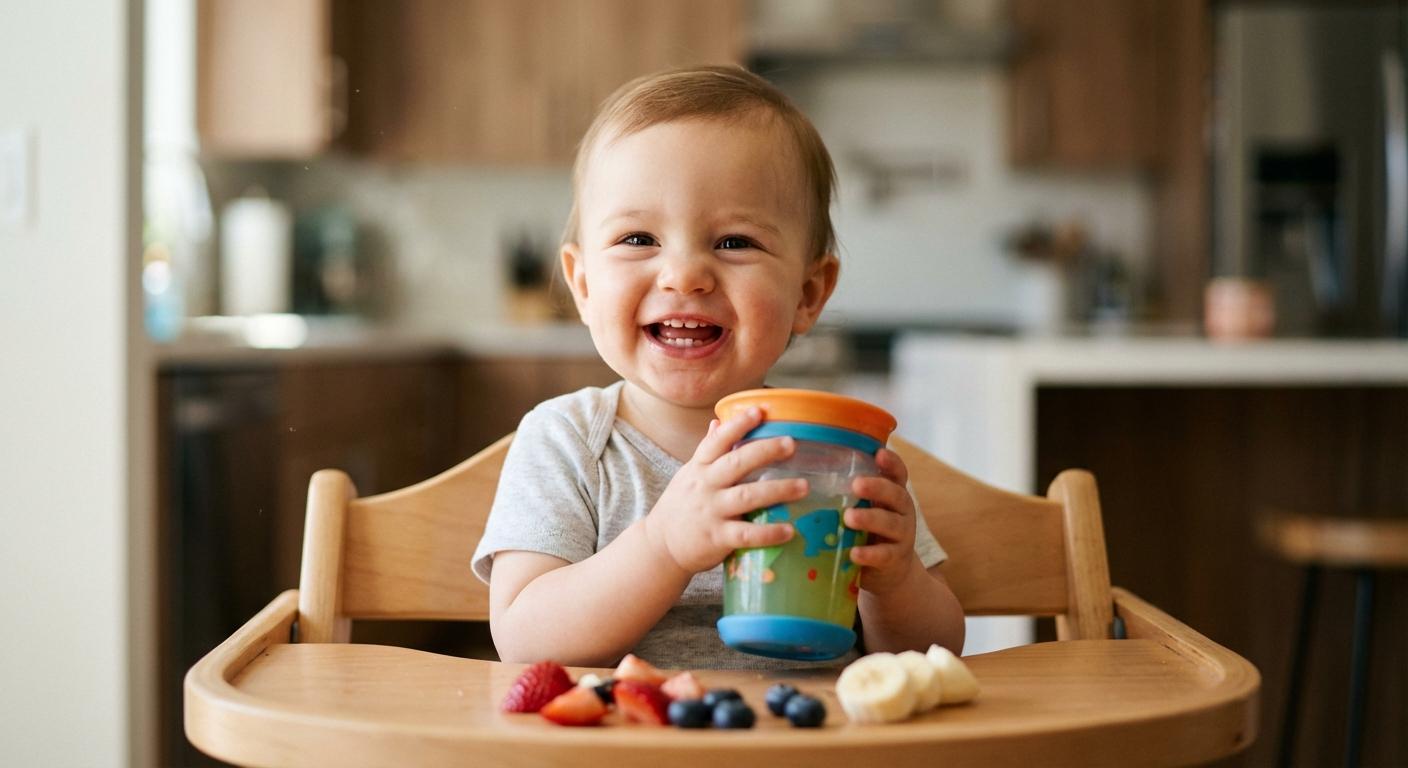
- finger foods most of the time
- purees on a pre-loaded spoon that your baby brings to the mouth
Purees are not “forbidden”. Pressure is the real issue.
Why families choose child-led weaning
Skill-building you can actually see
Hands, mouth, and brain train together. Early on, many babies use a palmar grasp (whole hand). Later, pincer grasp (thumb and index finger) develops, and you suddenly notice more precision: smaller bits, better aiming, more confident chewing.
A calmer relationship with food
When feeding is responsive and baby-paced, infants can practise appetite self-regulation: eating when hungry, stopping when full. Research does not prove child-led weaning is superior for every long-term outcome, but responsive feeding is consistently linked with a healthier feeding dynamic.
Variety without daily battles
Touching, licking, squishing, dropping… it all counts as learning. Repeated exposure to different textures and flavours supports acceptance over time.
Is child-led weaning a good fit?
Mess is common in child-led weaning. Not because your baby is being naughty, but because sensory exploration is part of oral-motor learning (how the mouth handles food).
If mess raises stress, keep it small and predictable:
- start with one meal a day
- use a mat under the chair
- keep meals short (10 to 20 minutes)
- offer tiny portions, then top up
Indian family meals can fit beautifully: soft dal, well-cooked sabzi, khichdi, idli, upma, dahi-based foods. The key is texture, salt, and shape.
When to start child-led weaning
Most babies start solids around 6 months, but readiness matters more than the calendar.
Look for:
- sitting with support and good head/neck control
- stable upright posture (not collapsing forward)
- bringing hands/toys to the mouth smoothly
- clear interest in food (watching you eat, reaching)
- reduced tongue-thrust reflex (less automatic pushing food out)
It can be safer to wait or adapt if there is poor trunk control, significant distress, or suspected swallowing difficulty (for example, coughing every time food enters the mouth). For preterm babies, corrected age and development guide timing.
Getting started: setup first, then food
Posture and seating (a major safety lever)
Aim for:
- a stable high chair with back support
- hips and knees supported, feet on a footrest
- baby upright, facing forward, and closely supervised
Avoid feeding in a car seat, stroller, swing, or reclined position. Posture really matters for airway safety.
Minimal gear
You can start child-led weaning with:
- a stable high chair with foot support
- a few easy-to-wash bibs
- a cup for small sips of water
Optional (helpful, not mandatory): suction plate, short-handled spoon for pre-loading.
The first meal, realistically
Pick one soft food, offered when your baby is alert (not overly hungry, not too sleepy). Sit close and eat alongside.
Easy starters:
- avocado slice
- steamed sweet potato strip
- banana spear
Early meals are mostly skill practice. Swallowing may be minimal, and that’s normal.
First foods: what works well in child-led weaning
Texture: soft enough to mash
Choose foods that mash between your fingers:
- ripe fruits (banana, pear, peach)
- well-cooked vegetables (carrot batons, broccoli florets)
- soft starches (sweet potato, very well-cooked pasta)
Indian options that often work (when soft and low-salt):
- idli fingers (soft, not dry)
- well-cooked rice or soft khichdi formed into easy-to-hold portions
- thick curd (dahi) on a pre-loaded spoon
Shape: bigger helps at first
In early child-led weaning, finger-length spears or strips are easier to grip. As pincer grasp develops, smaller pieces become practical.
Protein in safe formats
- Egg: well-cooked omelet strips or soft scrambled pieces
- Fish: flaky low-mercury fish (salmon, trout), bones removed
- Meat: very tender strips or moist shredded meat
- Yogurt/curd: plain full-fat on a pre-loaded spoon
Iron: plan it on purpose
Around 6 months, infant iron stores fall. Babies 7 to 12 months typically need about 11 mg/day.
Child-led weaning can cover iron needs, but it takes intention. Build meals around:
- meat, poultry, fish
- well-cooked egg
- lentils/beans (mashed, or formed into soft patties)
- iron-fortified infant cereal (offered in a self-feeding format)
Boost absorption by pairing plant-based iron with vitamin C foods (tomato, capsicum, citrus, strawberries).
Healthy fats for growth
Avocado, olive oil, full-fat yogurt/curd, and oily fish (DHA) support growth and brain development. Nut butters can be offered safely as a very thin smear or mixed into yogurt/oatmeal, never thick sticky lumps.
Textures over time (and how to progress)
Start soft and mashable, then gradually offer lumpier, minced, and family textures as chewing improves. Progress is not always straight-line: teething, colds, or travel can make skills wobble for a few days.
Purees can still fit child-led weaning when baby controls the spoon. If gagging increases and meals feel tense, step back to simpler textures and rebuild slowly.
Safety: gagging, choking, and prevention
Gagging vs choking
Gagging is common and usually loud: coughing, sputtering, watery eyes. It is a protective reflex.
Choking is often silent or ineffective: little/no sound, weak cough, breathing trouble, blue/pale colour change, sudden stillness. If unsure, treat it as choking and act.
Prevention basics
- supervise closely, every bite
- keep baby upright and supported
- avoid distractions (screens)
- keep eating baby-paced, no rushing
High-risk foods to avoid or modify: whole nuts, popcorn, whole grapes/cherry tomatoes/olives, hot dog coins, raw apple, hard raw vegetables, sticky nut-butter blobs.
Safer prep: cook until soft, shred meats, grate or cook hard produce, cut round foods lengthwise when appropriate, thin nut butter.
Hygiene, salt, and foods to avoid
Basic hygiene: clean hands and surfaces, cook animal products thoroughly, chill leftovers promptly, reheat until steaming then cool.
Avoid:
- honey under 12 months (botulism risk)
- unpasteurised dairy
- raw/undercooked egg
Skip added salt and keep added sugar minimal. Water with meals is enough, avoid juice and sugary drinks.
Milk feeds, water, and a simple routine
Milk remains the nutritional foundation through 12 months. Many families find child-led weaning smoother when milk feeds stay steady while solids slowly expand.
A common rhythm:
- 6 to 7 months: 1 meal/day
- 8 to 9 months: 2 meals/day
- 10 to 11 months: 2 to 3 meals/day (snacks if needed)
- 12+ months: 3 meals + snacks
Offer small sips of water with meals from around 6 months using an open cup or straw cup.
Allergens in child-led weaning
Most babies can start common allergens around 6 months once ready for solids. Introduce one at a time when you can observe for a few hours.
Safe self-feeding formats:
- peanut: smooth peanut butter thinned into yogurt/oatmeal, or a paper-thin smear on toast (never thick lumps)
- egg: well-cooked omelet strips/scramble
- dairy: plain full-fat yogurt/curd or soft cheese (cow’s milk is not the main drink before 12 months)
Watch for hives, facial swelling, vomiting, wheeze, or breathing changes, urgent care is needed for breathing difficulty or widespread swelling. If your baby has severe eczema or known allergy risk, plan introductions with your paediatrician.
Common bumps (and when to get help)
Not interested? Try a different time of day, keep it low-pressure, and consider a pre-loaded spoon.
Throwing food often means exploration or “I’m finished”. Pocketing (food held in cheeks) can mean the texture is too hard or the pace too fast.
Seek professional advice if there is poor weight gain, repeated choking, persistent distressed gagging, coughing with meals, or suspected swallowing difficulty.
Key takeaways
- Child-led weaning means baby-led pace with adult-led safety: you choose and prepare, your baby decides whether and how much.
- Start around 6 months when readiness signs are present, corrected age matters for preterm babies.
- Upright posture, close supervision, and safe food shapes lower choking risk.
- Prioritise iron early and often, plan it intentionally in child-led weaning.
- Allergens can fit child-led weaning in safe formats, introduced one at a time.
- Support exists (paediatrician, paediatric dietitian, SLP/OT), and you can download the Heloa app for personalised tips and free child health questionnaires.
Further reading :