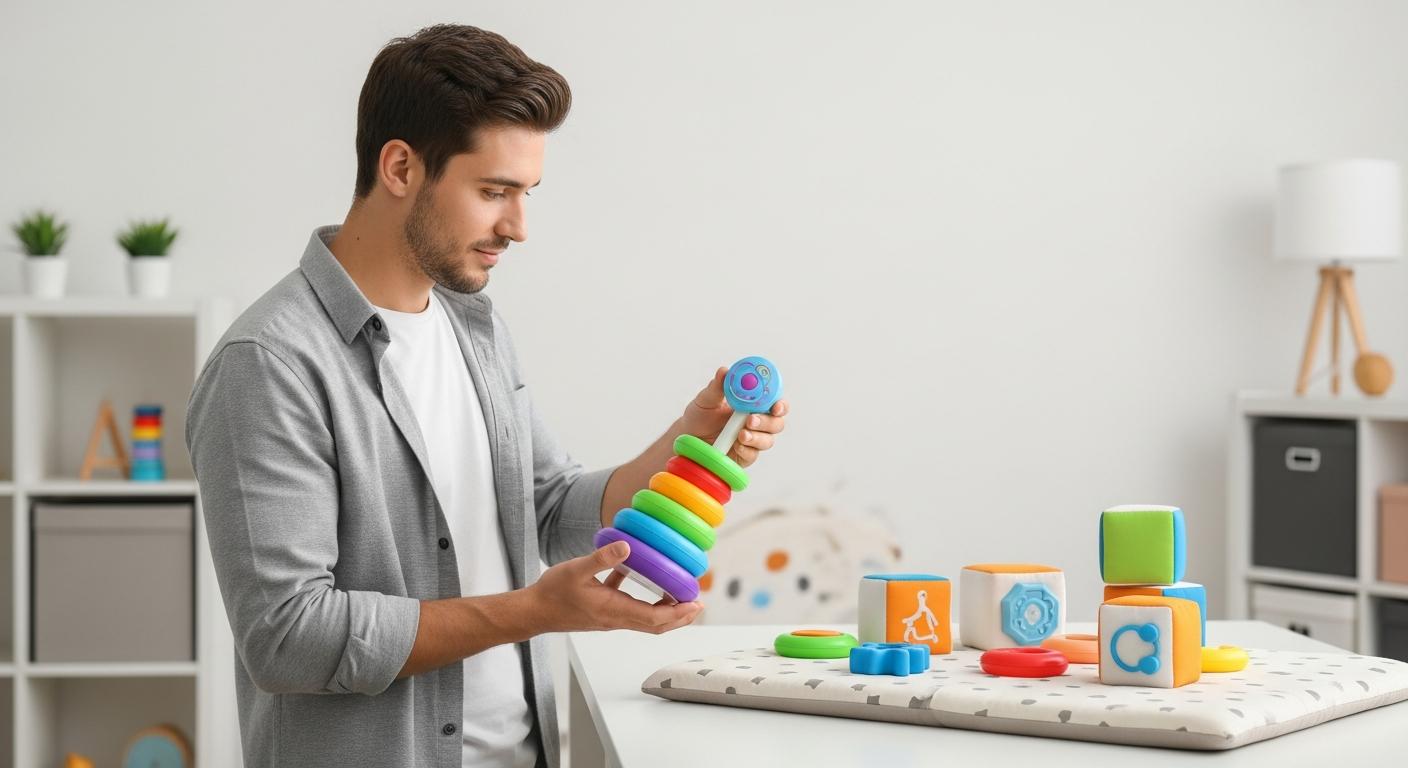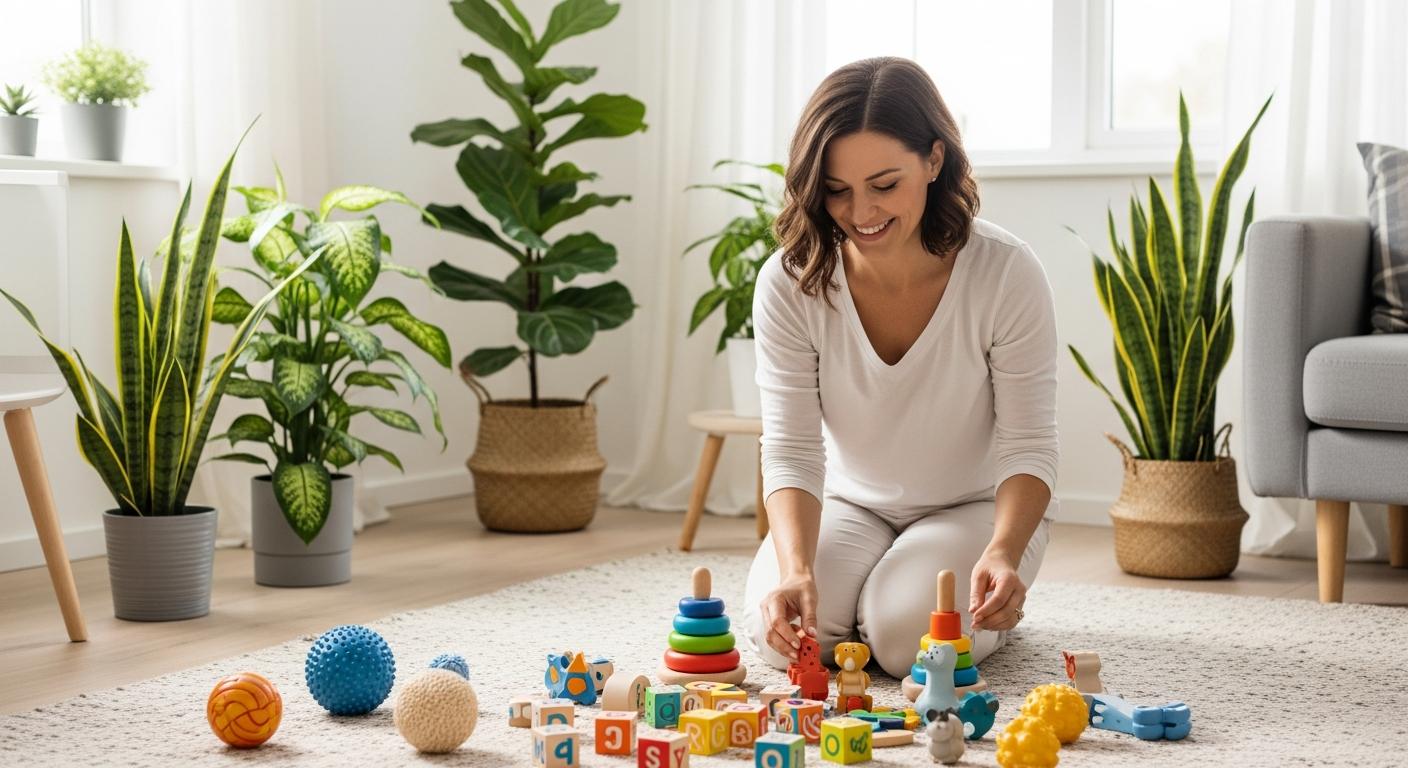
Between birth and the first birthday, your baby’s body changes at lightning speed. One day they are quietly watching your face, the next they are grabbing your dupatta, rolling, scooting, pulling up—and sometimes it feels like three new skills arrived overnight. baby motor skills games are safe, everyday opportunities to move, handle objects, and repeat actions, without turning playtime into a performance.
Maybe you are wondering what to offer, when to offer it, and how to respect your baby’s rhythm while still supporting healthy psychomotor development (coordination between movement, the nervous system, and learning). You will find age-wise ideas, safety pointers for Indian homes, and signs that deserve a chat with your paediatrician.
Why baby motor skills games help (and what your baby is really learning)
How play builds baby motor development
In the first year, your baby’s brain is highly adaptable. Doctors call this neuroplasticity (the brain changes with experience). Movement is not just movement, it is a feedback system.
Here is the simple science: a sensorimotor loop.


- The brain sends a motor command.
- The body attempts the action (lift, reach, roll, grasp).
- Sensory feedback returns and fine-tunes the next attempt:
- Vision: Where is the toy?
- Touch: Is it soft, hard, cold?
- Proprioception: Where are my hands and feet? (body’s internal GPS)
- Vestibular system: Am I tilting, rolling, moving? (balance and head position)
That back-and-forth is exactly what baby motor skills games feed. The more your baby can move on a safe floor space, the more they refine body awareness, force control (how tightly to grip), and early planning.
Motor learning depends on three things working together:
- your baby (muscle tone, strength, mood, alertness),
- the task (reach a rattle, drop a ball into a bowl),
- the environment (floor grip, space, your support).
Short and frequent practice is better than one long session.
Fine motor vs gross motor skills (and how they work together)
Gross motor skills are larger movements: head control, rolling, sitting, crawling/scooting, standing, cruising.
Fine motor skills are precise hand movements: grasping, transferring hand-to-hand, controlled release, wrist rotation, and later the pincer grasp (thumb and index finger).
They grow together. Better trunk stability supports steadier reaching. And hand play gives your baby a reason to shift weight, rotate the torso, and coordinate both sides.
Benefits beyond movement
Good baby motor skills games support more than muscles:
- Physical: posture, balance, coordination, tummy time supports neck and trunk control.
- Cognitive: cause-and-effect (push → it rolls), early problem-solving.
- Emotional: confidence and the ability to try again.
- Social: imitation, turn-taking, and language that appears during action (up, more, again).
Motor milestones from 0 to 12 months: what to expect (and what varies)
Typical ranges vs normal variation
Milestones have wide windows. A difference of weeks—sometimes even a couple of months—can still be typical.
A useful self-check: Is my baby progressing, experimenting with new strategies, and gaining control over time?
If your baby was born early, your clinician may use corrected age (chronological age minus weeks of prematurity), especially up to around 2 years.
Bring it up with your paediatrician if you notice:
- persistent asymmetry (one side used much less),
- loss of skills (regression),
- very stiff posture (hypertonia) or very floppy posture (hypotonia) that does not improve,
- limited progress across expected windows, especially if you feel worried.
Month-by-month snapshot
0–3 months
- Gross motor: head control improves, brief head/chest lift in tummy time, forearm support often by ~3 months.
- Fine motor: hands open more, hands move towards midline, early reaching attempts.
4–6 months
- Gross motor: rolling appears (often tummy-to-back first), stronger push-ups, sitting with support and brief independent sitting for some by ~6 months.
- Fine motor: purposeful reaching, stronger grasp, early transfers, lots of mouth-and-hand exploration.
7–9 months
- Gross motor: steady sitting, tummy pivoting, crawling or scooting may start, some pull to stand.
- Fine motor: refined grasp, intentional release begins, early pincer grasp for many around 8–9 months.
10–12 months
- Gross motor: confident pull-to-stand and cruising, some babies take a few independent steps.
- Fine motor: stronger pincer, controlled drop-in play, keen interest in in-and-out games.
How to choose baby motor skills games in daily life (without pressure)
Follow readiness cues, not only the calendar
Age guidance helps, but your baby’s signals matter more: steadier head/trunk, curiosity for a toy just out of reach, repeated attempts to roll, active interest in exploring.
If your baby is unwell, teething, or overtired, simplify. Two minutes can be plenty.
Duration, frequency, and routines that actually work
Think small doses:
- 0–3 months: 1–3 minutes, 2–4 times a day
- 4–6 months: 5–8 minutes, 2–4 times a day
- 6–12 months: 10–15 minutes as attention allows
Consistency matters more than a perfect schedule.
Free movement: why the floor is your best tool
A safe floor space is your baby’s gym. It supports rolling, pivoting, crawling, and later pulling up.
Seats, swings, and loungers can be used occasionally, but they do not replace floor exploration. Avoid baby walkers (the sit-in type), they increase injury risk and do not teach true balance.
Progress gently (change one thing at a time)
To level up baby motor skills games, change only one variable:
- same activity, slightly longer time,
- same time, toy placed slightly farther,
- same setup, less support from your hands.
Safety basics for motor play at home
Create a safe play space (Indian home realities)
- Choose a firm, non-slip surface (play mat, yoga mat layered with a sheet, foam tiles). Avoid slippery marble without a mat.
- Clear small items (coins, buttons, beads), cords, and sharp edges.
- Anchor heavy furniture if possible, keep stools and unstable side tables away.
- Stay close during new skills like rolling, crawling, and standing.
Choose safe toys and materials
- Avoid objects that can fit fully into a small cylinder opening (about 3 cm / 1.25 inches). When unsure, choose larger.
- Keep button batteries and magnets fully out of reach.
- Prefer washable, non-toxic toys, babies explore with their mouths.
- Skip long strings, necklaces, or cords during play.
Water and sensory play safety
- Water play needs constant arm’s reach supervision, even with shallow water.
- Empty buckets/mugs/tubs after play.
Baby motor skills games by age (0–12 months)
How to make an activity easier or more challenging
Easier
- Bring the toy closer and to midline
- Use a bigger, lighter object
- Add trunk support (your hands, a rolled towel)
Harder
- Place the toy slightly to one side to invite crossing the midline
- Use a smaller container opening for drop-in play
- Reduce your prompts gradually
Baby motor skills games (0–3 months)
Gross motor: head control and early core strength
- Tummy time with a mirror
- Baby on a firm mat, a baby-safe mirror 20–30 cm away. Your face next to the mirror often encourages lifting and turning.
- Chest-to-chest tummy time
- Recline and place baby on your chest.
- Side-lying head turns
- Support baby on one side, offer a toy at eye level to encourage gentle neck rotation and symmetry.
- Face-to-face gaze play
- Calm eye contact and your voice support attention and early head control.
Cues: keep sessions short (1–2 minutes), repeat often, pause if baby is distressed.
Fine motor: grasp, midline, and early reaching
- Palmar grasp practice
- Place a soft rattle/teether in the palm, let fingers close, then relax.
- Hands to midline meet
- Offer a soft cloth at the centre of the chest so both hands come together.
- Gentle guided reach (once)
- Guide the arm one time, then pause so baby attempts.
- Slow visual tracking
- Move a high-contrast object slowly left/right at 20–30 cm.
Baby motor skills games (4–6 months)
Gross motor: rolling, pushing up, sitting preparation
- Rolling with a toy prompt
- Place a toy to the side and slightly forward, guide the hip gently if needed, then let baby finish.
- Forearm push-ups in tummy time
- Toy at midline, encourage pushing up and holding briefly.
Fine motor: reaching, grabbing, transferring
- Reaching for a held toy (no strings)
- Hold the toy within reach at midline, then alternate sides.
- Textured grasp play
- Soft blocks, teethers, cloth balls.
- Hand-to-hand transfer practice
- Present one toy, guide towards the other hand, reduce help over days.
Baby motor skills games (7–9 months)
Gross motor: sitting, pivoting, crawling readiness
- Sit-and-reach with trunk rotation
- Place toys to each side so baby rotates to reach and returns to centre.
- Pivot-to-toy on the tummy
- Toy slightly out of reach to the side invites weight shift and pivoting.
Fine motor: refined grasp, intentional release
- Drop-in bowl game
- Large objects into a wide bowl, later, smaller objects or narrower openings.
- Stacking cups and knock-down
- Supports bilateral coordination.
- In-and-out play
- Container + large objects to remove and put back.
Baby motor skills games (10–12 months)
Gross motor: pull-to-stand, cruising, early steps
- Pull-to-stand: toy at the edge
- Place a toy on a sturdy sofa/low table to motivate rising.
- Cruise lane
- Clear a safe furniture path, add a destination toy, encourage side-stepping.
- Supported steps
- Use your hands or a stable push toy with a wide base.
Safety: anchor furniture, pad corners, and prefer barefoot/grippy socks for traction.
Fine motor: pincer grasp, precision, wrist rotation
- Pincer practice with safe finger foods
- Only when solids are well established and baby is seated, offer soft, age-appropriate pieces.
- In-and-out containers (smaller targets)
- Start big, then gradually smaller openings.
Tummy time games for every stage
For babies who dislike tummy time
Many babies need gradual exposure.
- Start on your chest or across your lap.
- Use a rolled towel under the chest for a small lift.
- Use one mirror or one toy, too much stimulation can backfire.
- Do many short sessions.
If reflux is present, avoid tummy time right after feeds, try 20–30 minutes later.
Tummy time progressions
- Forearm prop: elbows under shoulders, toy at midline.
- Straight arms: toy slightly higher to encourage pushing up.
- Reaching: toy to one side for weight shift and one-handed reach.
Indoor baby motor skills games (small spaces, minimal equipment)
Everyday at-home games
- Scarf tracking (kept away from face)
- Slow left-right movement encourages visual tracking and head turns.
- Laundry basket destination
- Place a toy beside a basket as a stable target for crawling towards.
Keep the setup simple
Often, fewer items work better:
- one non-slip mat,
- two or three objects,
- a clear floor area.
Common mistakes to avoid (gently)
- Too many toys at once (overstimulation)
- Comparing babies like they are on the same timetable
- Forcing positions (long sitting before readiness)
- Overhelping: offer support, then let baby attempt
Noticing progress and knowing when to seek support
Signs your baby is gaining strength and control
- Head steadier in tummy time and upright holds
- Longer pushes up on forearms/hands
- Smoother rolling and more stable sitting
- More intentional reaching, transferring, and releasing
- Increased comfort bearing weight through legs with support
When to talk to a paediatrician
Variation is expected. Consider a check-in if you notice:
- persistent asymmetry over several weeks,
- loss of skills,
- consistently very stiff or very floppy tone,
- ongoing feeding difficulties or distress linked with movement,
- limited progress across expected windows, especially if you are concerned.
A short video of what you observe at home often helps the clinician assess symmetry, posture, and coordination.
Key takeaways
- Keep baby motor skills games short, simple, and repeated throughout the day.
- Gross motor (tummy time, rolling, crawling, cruising) and fine motor (grasp, transfer, pincer) develop together.
- A safe floor space and calm, baby-led practice support strong learning.
- Follow cues and progress gently—small steps add up.
- If you notice regression, persistent asymmetry, unusual stiffness/floppiness, or limited progress, discuss it with a healthcare professional.
To remember
Your baby’s development is shaped by everyday opportunities to move. When in doubt, your paediatrician or a paediatric physiotherapist can guide you with personalised assessment and exercises.
You can also download the Heloa app for personalised tips and free child health questionnaires.