
Many parents search how to get baby to sleep through the night after yet another broken night, wondering if they missed a trick. The reality is simpler: infant sleep is biological, changeable, and sensitive to feeding, comfort, development, and the sleep environment. Longer stretches usually come from small, repeatable changes, plus time.
Expectations matter, safety matters, and consistency matters. Bring those three together and how to get baby to sleep through the night becomes far more realistic.
What sleeping through the night means (by age)
Sleeping through the night rarely means your baby never stirs. It usually means your baby can link sleep cycles and, for an age-appropriate stretch, does not need feeding or hands-on help.
A practical marker: the first block of night sleep gets longer, and you do fewer full resets (feeds, changing, extended soothing).

Typical longest stretches (variation is normal):
- 0 to 2 months: often 2 to 4 hours
- 2 to 4 months: longer stretches may appear, night feeds common
- 4 to 6 months: many manage 4 to 6 hours
- 6 to 9 months: many reach 6 to 8 hours, some still need a feed
- 9 to 12 months: many sleep 9 to 12 hours with brief awakenings
Why it varies: temperament, feeding patterns, medical comfort (reflux, eczema itching, congestion), growth spurts, and the sleep environment.
Why babies wake at night (what’s normal)
If you are asking how to get baby to sleep through the night, know this: waking is part of normal infant biology. Babies often wake between cycles and either drift back or call for help.
Two patterns:
- Brief arousals: seconds to a couple of minutes, then back to sleep
- Full wake-ups: crying and alertness needing feeding or soothing
Key drivers:
- Circadian rhythm: day-night rhythm matures over the first months, daylight helps
- Melatonin: darkness supports the body’s night signal
- Sleep pressure: missed naps or too-long wake windows can raise cortisol and fragment sleep
Try asking: is this a full wake-up or a transition? Jumping in too fast (bright light, lots of talking, picking up) can make a short stir become a long wake.
Get medical advice quickly if night waking comes with poor weight gain, dehydration signs (fewer wet nappies, unusual sleepiness), persistent vomiting, breathing difficulty, loud snoring, pauses in breathing, or clear pain.
When baby may be ready for longer nights
Readiness for how to get baby to sleep through the night is less about a birthday and more about thriving.
Signs:
- steady weight gain along your baby’s growth curve
- adequate daytime intake (feeds feel satisfying, wet nappies are regular)
- longer stretches appearing naturally
- occasional settling with less help (short fussing, hand-on-chest, then sleep)
Age windows (broadly):
- 0 to 3 months: focus on safety and rhythm, not training
- 3 to 4 months: gentle habit-building may help, though sleep can feel fragile
- 4 to 6 months: many can handle more structured changes if health and growth are stable
- 6 to 12 months: stronger rhythms, but also separation anxiety and new skills
Safe sleep and a sleep-friendly setup
No plan for how to get baby to sleep through the night works if sleep isn’t safe.
Safe sleep basics:
- back to sleep for every sleep until age 1
- firm, flat surface (crib, bassinet, play yard) with fitted sheet only
- empty sleep space: no loose bedding, pillows, bumpers, wedges, or positioners
- room sharing (same room, separate surface) for at least 6 months, ideally up to 12 months
Swaddling:
- only if baby is not rolling, stop at first signs of rolling, use a sleep sack
Room tweaks that reduce avoidable wake-ups:
- darker room (blackout curtains can help early waking)
- white noise kept moderate (about 50 to 60 dB) and placed a few feet away
- comfortable temperature: often 20 to 22°C, some babies sleep better around 18 to 20°C
Daytime foundations that support better nights
This is the quiet engine of how to get baby to sleep through the night.
Wake windows and naps
Both overtired and undertired babies can wake more.
Typical wake windows:
- 0 to 2 months: 45 to 60 min
- 2 to 4 months: 1.25 to 2 h
- 4 to 6 months: 2 to 3 h
- 6 to 9 months: 2.5 to 3.5 h
- 9 to 12 months: 3 to 4 h
If bedtime is a battle, consider an earlier bedtime first. Overtiredness can raise cortisol and make sleep lighter.
Feeding patterns
Night sleep often improves when daytime calories are strong:
- offer feeds regularly in the day (many babies do well every 2 to 4 hours while awake)
- follow hunger cues, avoid forcing strict schedules
- solids around 6 months may help some babies feel satisfied, but it’s not a guaranteed fix
A common trap: very large evening bottles. They can increase discomfort (spit-up, gas) and do not reliably buy longer sleep.
Bedtime routine: simple, predictable
A calm routine is a powerful answer to how to get baby to sleep through the night.
Keep it:
- calm and in the same order
- short enough to repeat even on tough evenings
Examples:
- 0 to 3 months: feed -> nappy -> brief cuddle or song -> bed
- 4 to 6 months: bath or wipe-down -> feed -> short book -> bed
- 6 to 12 months: dinner or solids -> calm play -> bath -> feed -> story -> bed
If you want to reduce feed-to-sleep, move the final feed earlier so the last step is falling asleep in the sleep space.
Sleep associations and settling skills
When parents ask how to get baby to sleep through the night, sleep associations are often the missing piece: what your baby expects to fall asleep and return to sleep.
More challenging associations can be:
- feeding to sleep
- rocking or bouncing to full sleep
- contact-only sleep
They’re not bad habits. They are effective soothing tools. But they may lead to needing the same help at each normal arousal.
Gentle shifts:
- feed-to-sleep -> feed-then-bed (add a short buffer like a song)
- rocking -> fade minutes gradually, then use calming touch in the crib
Try the 60 to 120 second pause when baby is safe and only lightly fussing. Many micro-arousals settle on their own.
Night wakings: respond to the cause
A steady approach: target one likely driver at a time: hunger, discomfort, pain, reassurance, overstimulation, or overtiredness.
Clues hunger is real (especially under 6 months): rooting or searching, strong focused sucking, clear calming after the feed.
Keep interventions quick and boring: dim light, low voice, minimal stimulation.
Pain changes the pattern. If crying is unusually intense, if reflux symptoms are prominent (back arching, distress with spit-up), or if illness is suspected, comfort first and consider medical advice.
Night feeds and night weaning
A plan prevents 2 a.m. decision fatigue, very relevant to how to get baby to sleep through the night.
Night weaning (only if growth is on track and your doctor agrees):
- gradual reduction (minutes or ounces down every few nights)
- delay feeding (soothe first, then feed, extend the delay slowly)
- drop one feed at a time
After 6 months, many babies do not need a regular night feed nutritionally, but it depends on growth, daytime intake, and medical history.
Common hurdles (quick troubleshooting)
- Wakes often but falls asleep easily: often a sleep association or schedule mismatch
- Early morning waking (4 to 5 a.m.): add darkness, review bedtime, keep mornings low-stimulation
- Around 4 months: sleep cycle maturation can increase waking temporarily
- 8 to 10 months: separation anxiety and new motor skills can disrupt sleep, it usually passes with steady routines
To remember
- how to get baby to sleep through the night usually means longer blocks and easier resettling, not zero stirring.
- Safe sleep (back sleeping, firm flat surface, empty sleep space) is the base.
- Daytime rhythms (feeds, naps, wake windows) and a predictable bedtime routine support longer stretches.
- If you’re considering night weaning, keep it gradual and link it to growth and medical advice.
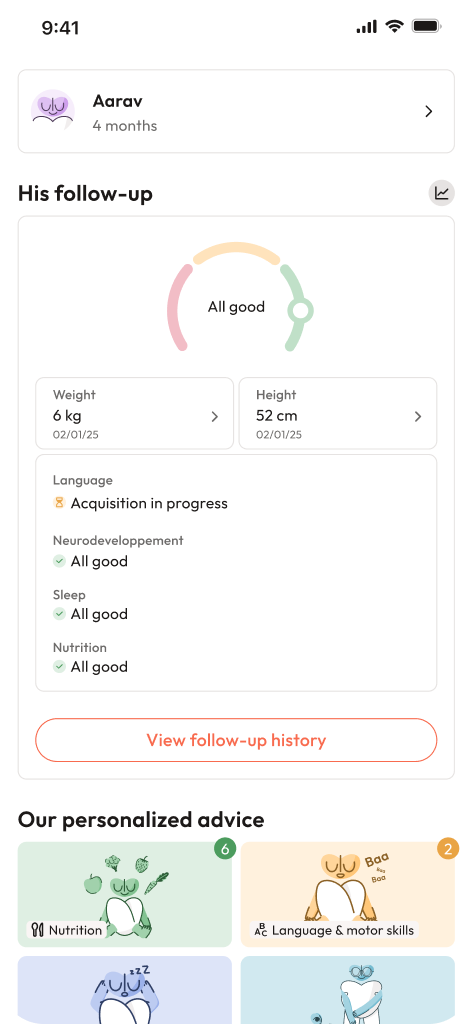
For personalised support and free child health questionnaires, you can download the Heloa app.

Further reading: