Adjusting to motherhood comes with a fair share of challenges—sleep deprivation, round-the-clock feeding, soreness, and an emotional rollercoaster that can leave you both exhilarated and drained. Yet, amidst all this, there’s a surprisingly common and frequently underestimated issue: postpartum constipation. A simple act like visiting the washroom can become a source of anxiety, discomfort, and persistent worry, especially when your body is still healing and your hands are endlessly busy with a newborn.
Perhaps you’re noticing that your bowels have fallen out of sync after delivery, or maybe the fear of pain, stitches, or hemorrhoids is making you hesitate in the bathroom. You’re definitely not imagining it—physiological, hormonal, and lifestyle shifts collide in the days following childbirth, sometimes leaving the digestive system feeling heavy, slow, even “locked down”. Concerns bubble up: Could pushing too hard damage perineal sutures? Will this slow down breastfeeding? Am I supposed to wait it out, or act fast? The good news: with the right knowledge, a few science-backed strategies, and a pinch of patience, postpartum constipation can be managed gently and effectively, even in the thick of new parenthood.
You’ll find a panorama of approachable medical explanations, practical steps to ease bowel movements, and tailored tips for C-section births, perineal tears, and those thorny issues like hemorrhoids. The aim: supporting your recovery, comfort, and baby’s wellbeing—without adding another layer of stress to an already intense season.
Understanding postpartum constipation: what’s really happening?
Postpartum constipation moves in with a remarkable regularity—no less than the cluster feedings and nappy changes. Medically speaking, it means passing stool less than three times a week, tough or dry stools, feeling unsatisfied after passing motion, or needing to put in what feels like a superhuman effort to go. The Bristol Stool Chart, often used by doctors, marks types 1–2 (hard pellets or a sausage with lumps) as clear pointers of slow transit.


But let’s step beyond numbers. Many mothers describe a sense of pelvic heaviness, unease, or even the anxious dread that the “first time” after birth will be disastrous. Sometimes, especially after significant perineal trauma or a C-section, the worry isn’t just about pain—it’s about the horrifying thought of tearing open stitches or making healing tissues worse. Will passing motion upset breastfeeding? Here’s some reassurance: soft, well-hydrated stools and correct toileting techniques shouldn’t disturb scars or interfere with milk supply. The real signals doctors watch for are: overall wellbeing, returning appetite, passage of gas, and a sense of gradual improvement. Not the tick of a deadline or a fixed number of days.
Why does this happen so often now? Here’s where the medical story gets layered:
- Hormonal turmoil, particularly after the drop in pregnancy hormones, means your intestine’s rhythm is slow to resume.
- Anaesthetic agents used during C-section or for pain relief (such as opioids), further slow bowel movement.
- Reduced mobility—laying in hospital beds, awkward shuffling, sore bodies—means the intestine isn’t “jostled” into moving.
- Fluid shifts and dehydration—thanks to blood loss, intravenous fluids, fever, or just forgetting water during a long labour—lead the colon to squeeze every drop it can from your stool, making it firm and tricky to pass.
- Perineal soreness, stitches, and the discomfort of hemorrhoids make you instinctively tighten instead of relaxing, holding your breath when you should be exhaling.
When these stars align, it’s hardly surprising that the bowels can be sluggish for two, three, even four days post-delivery. If you feel unable to pass motion at all after day 4, or if you experience abdominal pain, nausea, or bloating, reaching out to your care provider is wise—it usually leads to rapid, gentle solutions.
The science behind postpartum constipation
Hormonal and physiological ripples
It’s almost poetic, the way pregnancy hormones orchestrate gut function. Progesterone and relaxin make the smooth muscles in your digestive tract ultra-chilled—wonderful during pregnancy, but a recipe for slow motion inside the intestines. After birth, these hormones crash, but the “wake up” process takes days or weeks. Plus, oxytocin—the famous “love hormone” that triggers uterine contractions and milk letdown—interacts with nerves controlling bowel contractions, sometimes leaving mothers more sensitive, bloated, or with variable digestive rhythms.
The “gut-brain axis,” a hot topic in medical research, explains how emotional stress, disrupted sleep, and the physical stress of labour can impact bowel movements. Cortisol and adrenaline surge, especially in those rollercoaster first days, tensing up the entire gut.
Surgical anaesthesia or regional blocks layer on their own effects. Intestines, once gently rocking and rolling, now slow to a crawl—no wonder so many mothers report feeling “blocked” or experiencing trapped wind pains after a cesarean.
Behavioural, mechanical, and medicinal culprits
Postpartum constipation is a puzzle with many pieces. Immediately after vaginal birth, the perineum is stretched, bruised, maybe stitched—so it’s no surprise if you’re skittish about sitting on the commode or pushing at all. Any delay, however, means more water gets sucked out from stool in the rectum, making future trips even harder.
A C-section doesn’t spare you: if you’re taking opioids for pain, the locks on gut activity tighten even more. Iron supplements—so common to replace blood loss—make stools dark, sticky, and stubborn. Medications such as certain antacids (especially those with aluminium), anticholinergic drugs, and some antiemetics all put the brakes on.
Prolonged bed rest, even for a day or two, spells trouble. The usual, gentle, up-and-down motion from walking isn’t there to encourage the colon’s natural movements. In the end, a perfect scenario for postpartum constipation.
Who’s more likely to get postpartum constipation?
Medical and birth-related risk factors
Some birth scenarios carry a higher risk:
- Cesarean sections—particularly unplanned or emergency ones—bring surgery, anaesthesia, and often strong painkillers into the mix.
- Deep perineal tears or episiotomies, especially those affecting the anal sphincter, increase discomfort and anxiety around defecation.
- Instrumental births (forceps or vacuum) often carry more significant perineal trauma.
Plus, health conditions such as:
- High body mass index (BMI),
- Pre-existing digestive troubles—like irritable bowel syndrome with a constipation pattern,
- Metabolic or hormonal imbalances: hypothyroidism, diabetes, or celiac disease,
add their own complexities.
Lifestyle factors matter, too. If your diet has little fibre, low fluids, and is high in processed foods, the bowels slow down. Bed rest or limited activity—whether due to fatigue, hospital stays, or hesitation around moving post-surgery—exacerbates the picture.
Iron and opioid use, while medically necessary, push the body towards constipation. Breastfeeding doesn’t cause constipation itself, but because feeding increases fluid requirements, even slight dehydration tips the balance.
Signs, symptoms, and when to take action
What does postpartum constipation feel like?
Expect a mix—hard, dry, or pellet-like stools, needing to push forcefully, that frustrating feeling of unfinished business, a tight, bloated belly, pain, burning, or itching while passing stool. Emotional anxiety often flares up about the first bowel movement after birth, leading to further delays, which paradoxically makes the next attempt even more painful. Mild, bright red bleeding from hemorrhoids or fissures isn’t unusual, but large amounts or persistent pain ring alarm bells.
When is it more than just an inconvenience?
A few symptoms merit urgent attention:
- No bowel movement even by day 4 postpartum, especially if you feel bloated or in pain,
- Increasing, severe abdominal pain or swelling,
- Persistent vomiting, inability to keep food or drinks down,
- Large quantities of bright red blood in the stool, or tarry black stools,
- Gas or stool leakage with or without pain,
- New fever, chills, or a generally unwell feeling.
If any of these appear, consulting your healthcare provider is non-negotiable—they’ll quickly determine whether more than postpartum constipation is at play and provide immediate support.
Medical assessment: what to expect
History, examination, and beyond
Doctors and midwives start with a conversation: details of pregnancy, type of birth, any complications, medications you’re taking (especially iron or painkillers), your usual bowel habits, current diet and hydration, activity levels. A quick check of abdominal tenderness or swelling, and a gentle inspection of the perineum, often suffice.
If symptoms persist, blood tests to check anaemia or thyroid, screening for diabetes, or even referral to a gastroenterologist or pelvic floor physiotherapist might follow—nothing intimidating, but always tailored to your wellbeing and breastfeeding needs.
Gentle, effective relief strategies for postpartum constipation
Foundational habits
- Hydration: aim for about 2 to 2.5 litres per day. Water, milk, soups, natural juices all count. A helpful trick? Sip a large glass of water at each feed.
- Fibre: introducing fruits, vegetables, oats, whole grains, and legumes—gradually—to hit the target of 25–35 grams per day. The two main types: soluble fibre (oats, chia, lentils), which softens stool by holding water, and insoluble fibre (wheat bran, skins, some vegetables) for bulk.
- Movement: gentle walks, stretching, a few trips down the hallway—every bit counts.
- Toilet routine: try sitting on the commode after breakfast, use a footstool to elevate your knees (mimicking a squat position widens the angle of the rectum for easier passage), and take deep, measured breaths. Instead of tensing, exhale slowly, leaning forward with forearms on thighs.
Comfortable toileting techniques
Support stitches with a clean pad or tissue if it feels better, this perineal support can allay anxiety about tearing. For hemorrhoids or fissures, avoid prolonged straining and try using a peri bottle or sitz baths to soothe the area.
If you feel urgency but can’t pass stool, glycerin suppositories can lubricate and gently stimulate movement. Remember to review medications: sometimes a switch in iron supplement type or pain relief can make all the difference.
Breastfeeding-compatible remedies
- Stool softeners: Docusate sodium is a gentle, commonly used choice that can reduce pain when passing motion.
- Osmotic laxatives: Polyethylene glycol (PEG) and lactulose are well-studied, draw water into the stool, and are safe while breastfeeding.
- Bulk-forming agents: Psyllium husk, when paired with good hydration, can work wonders.
- Stimulant laxatives: Senna or bisacodyl may be used for a few days but only when other options don’t suffice—for long-term use, always check with your doctor.
Topical relief for perineal or anal soreness (hydrocortisone cream, witch hazel pads, lidocaine gels), and comfort measures (sitz baths, peri bottles) complete the toolkit.
Addressing medication and persistent constipation
If iron supplements are a must (as is often the case), gentler forms or alternate-day dosing can ease symptoms, especially when combined with vitamin C-rich foods to improve absorption. If opioids for pain can’t be avoided, a bowel regimen incorporating an osmotic laxative is often prescribed from day one.
When constipation doesn’t ease despite all efforts, medical professionals may check for conditions like hypothyroidism, diabetes, celiac disease, or more complex pelvic floor dysfunctions. In these situations, working with specialists ensures the underlying issue is addressed, not just the symptoms.
Special considerations: perineal tears, C-sections, hemorrhoids
Vaginal birth with tears or an episiotomy
Priority number one: keep stool soft and easy to pass to protect stitches and promote healing:
- Regular stool softeners and osmotic laxatives as needed,
- Hydration,
- Soft fibre-rich foods (cooked vegetables, porridge, yoghurts),
- Gentle perineal support while passing motion,
- Sit baths to relax perineal muscles and ease soreness.
After a C-section
Gas pains are a notorious companion, sometimes radiating up under the ribs due to sluggish bowels. Effective strategies include:
- Gentle mobilisation as soon as allowed (even sitting and standing a few steps helps),
- Supporting the incision with a pillow while moving,
- Early, preventive use of osmotic laxatives,
- Occasionally, gum chewing to stimulate gut activity.
First motion may take 3–4 days—if there’s no gas or stool, or significant pain emerges, prompt evaluation is best.
Hemorrhoids, fissures, and pelvic floor issues
Soft, bulky stools and gentle strategies are key. Sitz baths, fibre, hydration, topical treatments—plus avoiding endless sitting on the toilet—help. For trouble in coordinating the pelvic floor (feeling blocked or the anus “locks up” when pushing), pelvic floor physiotherapy with trained specialists is remarkably effective.
Nutrition and daily strategies for regularity
Building supportive meals
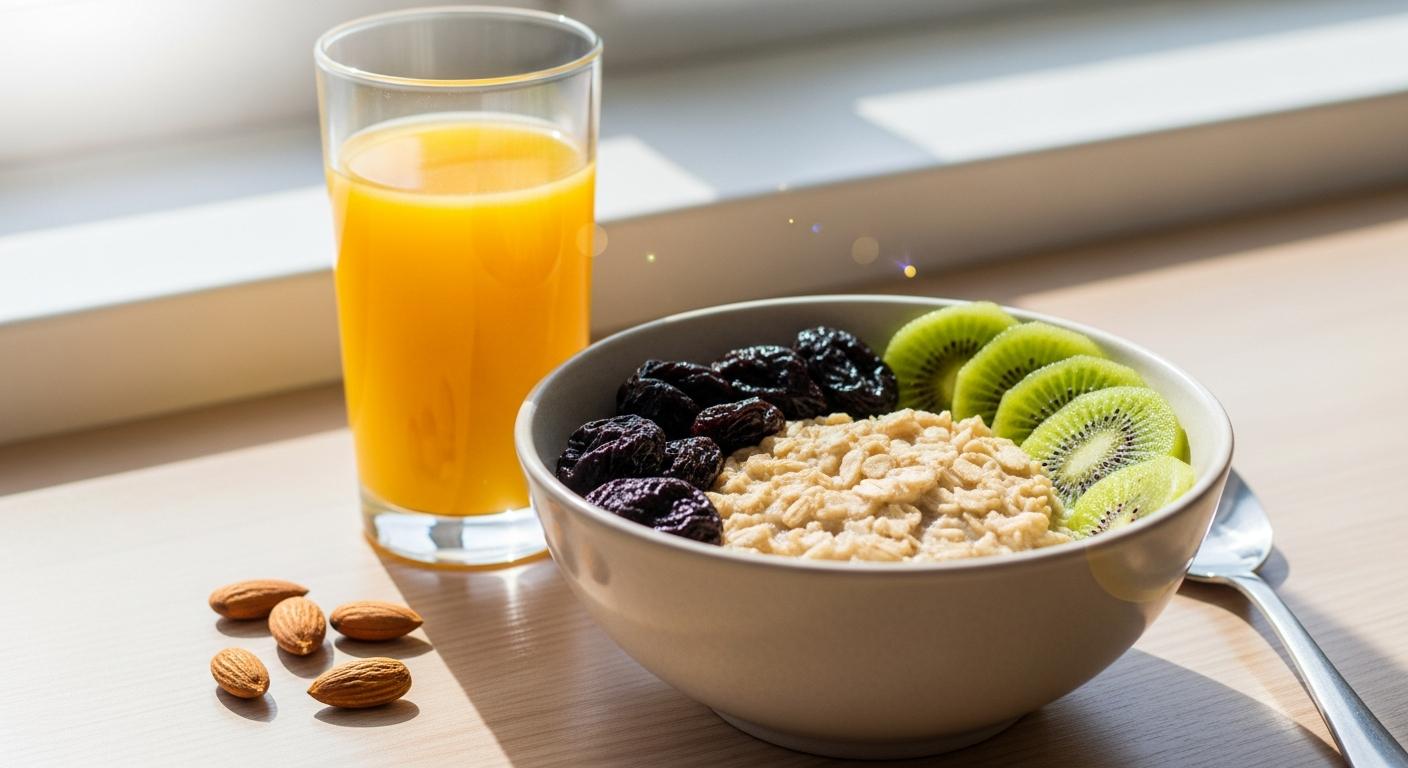
A colourful plate makes things move: half filled with vegetables and fruit, a quarter with whole grains or starchy vegetables, and a quarter with proteins (fish, eggs, beans, tofu). Add nuts, seeds, and healthy fats for a gut-friendly finish. Prunes, oats, lentils, fermented foods like yoghurt—these are your allies.
Having small, fibre-rich snacks ready—apples, berries, wholegrain wraps, seed mixes—makes good choices simple when feeding a baby dominates your hands and schedule.
Smart fibre supplements
If diet alone doesn’t cut it, psyllium husk, partially hydrolysed guar gum (PHGG), or wheat dextrin can nudge things along—just introduce slowly and hydrate well. For those using prune juice, a small glass daily is often enough, monitor how your baby reacts, especially if breastfeeding, as some fibres can cause gassiness in infants.
Limit caffeine (stick to about two small cups of coffee per day), and avoid constipating snacks in excess—cheese, refined grains, processed foods—though you need not cut them out completely.
Stress, sleep, and gentle movement
The gut-brain axis means stress amplifies bowel sluggishness. Five-minute breathing exercises, even while nursing or soothing your baby, can bring welcome relief. Napping whenever possible (yes, the cliché!) and simple bits of daily activity—short walks, gentle stretches—support natural rhythms.
Create a warm, private bathroom time, ideally after breakfast, and aim for routine. Multitasking isn’t your friend here—distractions can keep you tense and block progress.
Managing complications
Hemorrhoids, fissures, rectocele
Untreated constipation can lead to or worsen hemorrhoids (swollen veins), anal fissures (painful tears), and, sometimes, rectocele (the rectum bulging into the vaginal wall). Conservative management focuses on softening stools, sitz baths, and local creams. Surgical intervention is rare in the early weeks, patience and regular bowel habits usually bring steady improvement.
Postoperative issues
Occasionally, adhesions (internal scarring), long-lasting bowel sluggishness after abdominal surgery, or pelvic organ prolapse demand medical attention. Persistent heaviness, bulging, or control issues with stool or urine should prompt a pelvic health evaluation.
Long-term prevention of postpartum constipation
Habits that stand the test of time
A simple way to lock in success: three fibre-rich meals a day, three large glasses of water (plus more as needed), and three “movement moments”—any daily physical activity. Keep a mental eye on the Bristol Stool Chart: aim for soft, formed stools (types 3–4). If things slip toward the hard end, increase fibre and hydration, if they get loose, review your supplements and medications.
Plan ahead: prepping a few freezer-friendly, fibre-rich meals during pregnancy can make regularity easier after the baby arrives.
Adjusting over time
Around the 6–12 week mark, most will find bowels returning to a happy, regular rhythm. Taper laxatives as needed—in consultation with your clinician—while sustaining those daily lifestyle habits. If symptoms return or new issues arise (pain, heaviness, bleeding), review with your doctor, and consider allied care with dietitians and pelvic floor physiotherapists.
Key Takeaways
- Postpartum constipation is widespread and stems from a combination of hormonal, mechanical, and behavioural factors, it usually resolves with gentle, consistent strategies.
- Hydration, gradual increases in dietary fibre, daily gentle movement, and a relaxed, scheduled bathroom routine underpin comfort and recovery.
- Medically compatible remedies—osmotic laxatives, stool softeners, and topical treatments—provide safe relief, even for breastfeeding mothers.
- Iron supplements, opioids, and certain medications are major contributors, modifying doses or opting for gentler alternatives, in collaboration with your doctor, can help.
- Special postpartum scenarios—cesarean births, perineal tears, and pelvic floor struggles—require tailored care and sometimes referral to allied health professionals.
- Watching for alarming symptoms—persistent constipation, severe abdominal pain, bleeding, or fever—is key, prompt medical attention leads to rapid solutions.
- Routines established early—hydration at every feed, ample fibre, and heeding the body’s urge—lay the foundation for a comfortable, predictable bowel pattern long-term.
- There are dedicated resources for ongoing support, and you can download the application Heloa for personalised advice and free health questionnaires for your child.
Questions Parents Ask
How long does postpartum constipation usually last?
Postpartum constipation normally starts to resolve within a few days as your digestion “wakes up”, movement increases, eating resumes, and painkillers are adjusted. Most mothers notice improvement by 1–2 weeks. After a cesarean, if strong painkillers or iron are needed, the trouble can stretch into several weeks. If bowel movements remain very challenging after 2–3 weeks, if straining is constant, or pain returns or worsens, consulting a healthcare professional is the next step. Adjustment of treatment, a review of other possible causes, or pelvic floor support may be advised.
Can postpartum constipation cause long-term problems?
Usually, postpartum constipation is a transient, passing issue. Normal bowel function typically returns as healing progresses, variety returns to your meals, and movement increases. Hard, infrequent stools that persist for too long, however, might aggravate:
- Painful hemorrhroids or small anal fissures,
- Growing apprehension about going to the toilet, which can make the problem self-reinforcing,
- Extra pressure on the pelvic floor—a zone already stretched by pregnancy and birth.
Still, plenty of solutions exist! Early intervention—medical, nutritional, or via pelvic floor specialists—can accelerate recovery and prevent chronic discomfort.
Is postpartum constipation different after a C-section compared to a vaginal birth?
Absolutely, the experience often varies. After a cesarean:
- Anaesthesia, abdominal surgery, and potent painkillers slow transit more persistently.
- Worry about “pulling” on the abdominal scar can make you hesitant to push.
- Gas pains may become more pronounced and uncomfortable.
After a vaginal birth, the issue is more connected to perineal discomfort (tears, episiotomy, hemorrhoids) and a fear of pain while passing stool. Regardless of delivery mode, the shared goal is soft, easy stools and minimal pain. Following a cesarean, gentle activity, hydration, and sometimes early use of preventive laxatives are key. If pain or delayed bowel function worsens, a healthcare professional should reassess to ensure safe, gentle recovery.
Further reading :
- Interventions for preventing postpartum constipation – PMC: https://pmc.ncbi.nlm.nih.gov/articles/PMC6492314/