A diaper change can feel like a tiny pit stop you repeat all day… and yet it quietly protects comfort, sleep, and skin. Heat, moisture, and friction build fast in a closed diaper. Add stool enzymes, and irritation can flare in hours. So parents tend to ask the same things: How often is “often enough”? What’s the gentlest way to clean? When is redness just mild diaper rash, and when does it need a clinician’s eye?
You’ll find timing cues, a practical step-by-step routine, newborn-specific tips (including the umbilical stump), boy/girl cleaning notes, toddler strategies, leak prevention, and a medically grounded approach to diaper-area skin care.
Why diaper changes matter for your baby
Hygiene, comfort, and skin protection
A diaper change is about more than “being clean.” In the diaper area, skin barrier function is challenged: humidity rises, temperature climbs, and the outermost layer of skin (the stratum corneum) becomes over-hydrated. That softened skin lets irritants pass more easily, and rubbing from elastics or wipes can then trigger inflammation.
Regular diaper change routines reduce:


- Time in contact with urine that can generate ammonia (from urea breakdown),
- Exposure to stool digestive enzymes (lipases and proteases),
- Maceration (skin weakened by prolonged moisture),
- Friction that “grabs” fragile skin.
You may wonder why a baby can look fine in the morning and suddenly get red by lunchtime. The diaper area has thin skin, lots of folds, and constant rubbing from movement, so small irritants add up quickly.
Why diaper-area skin is so reactive
Irritation often follows a loop:
1) Moisture softens skin.
2) A closed diaper keeps humidity high.
3) Friction from movement or wiping adds micro-trauma.
Stool is usually the most irritating ingredient because enzymes and bile salts can inflame quickly, especially during diarrhea or diet changes.
Signs you should change right away
A prompt diaper change makes sense when:
- There is stool (even “just a smear”),
- There’s a leak,
- The diaper feels heavy, puffy, or the wetness indicator has changed,
- Skin looks hot, shiny-red, or your baby seems suddenly uncomfortable.
Diaper change basics: when and how often
How to tell a diaper change is needed
Some cues are obvious: poop, a heavy diaper, or that telltale smell.
Others are behavioral:
- Waking soon after falling asleep,
- Repeated squirming or arching,
- Tugging at the diaper area.
If you’re seeing frequent leaks or a strong urine odor, check sooner, fit and saturation are often the real culprits.
How often to change (newborns, infants, toddlers, day vs night)
There isn’t one perfect schedule. Aim for skin that stays comfortable and free of persistent redness.
Typical patterns:
- Newborns (0-2 months): often every 2-3 hours while awake and after each poop (commonly 8-12 changes/24h).
- Infants (3-12 months): often every 3-4 hours in the day, plus after poops.
- Toddlers: about every 3-4 hours while awake, and always after poop.
Nighttime is its own category. If it’s urine only and the skin is calm, many babies tolerate a single highly absorbent night diaper. Poop at night, however, deserves a quick diaper change.
A small practical trick: if your baby tends to fall asleep at feeds and then wakes irritated, try changing just before the feed. If feeds relax your baby, changing right after may be easier.
Medical note (hydration clue): after the first week, many babies have roughly 6-8 wet diapers per 24 hours. A noticeable drop, very dark urine, dry mouth, no tears, or unusual sleepiness can suggest dehydration, call your clinician promptly, especially for young babies.
Disposable vs cloth: what changes day to day
The diaper change steps stay the same: safe setup, gentle cleaning, thorough drying, and a good fit.
- Disposable diapers often wick moisture away efficiently.
- Cloth diapers vary, some need more frequent changes unless you use a stay-dry liner.
- With cloth, a consistent wash routine matters. Residual urine/stool can irritate skin and cause persistent odor.
Many families mix both (cloth at home, disposable for outings or nights).
Diaper change supplies: what to keep within reach
Essentials checklist
- Clean diaper (correct size)
- Warm water + soft cloth/cotton, or fragrance-free wipes
- Changing mat/pad (wipeable)
- Small towel for drying
- Disposal bags + lidded bin/diaper pail
- Barrier ointment if your baby tends to get redness
Helpful extras (especially for outings)
- Spare outfit
- Portable changing pad
- Wet bag if you use cloth
Sensitive skin: ingredients to choose carefully
If skin reacts easily, simpler usually wins.
- Choose wipes that are alcohol-free and unscented, avoid added fragrance.
- Be cautious with essential oils and strongly scented “baby” products.
- If redness appears after a new wipe, cream, or detergent, pause it and return to basics (warm water + soft cloth, then a simple barrier).
Common barriers:
- Zinc oxide
- Petrolatum
Setting up a safe diaper change space
Safe setup and ergonomics
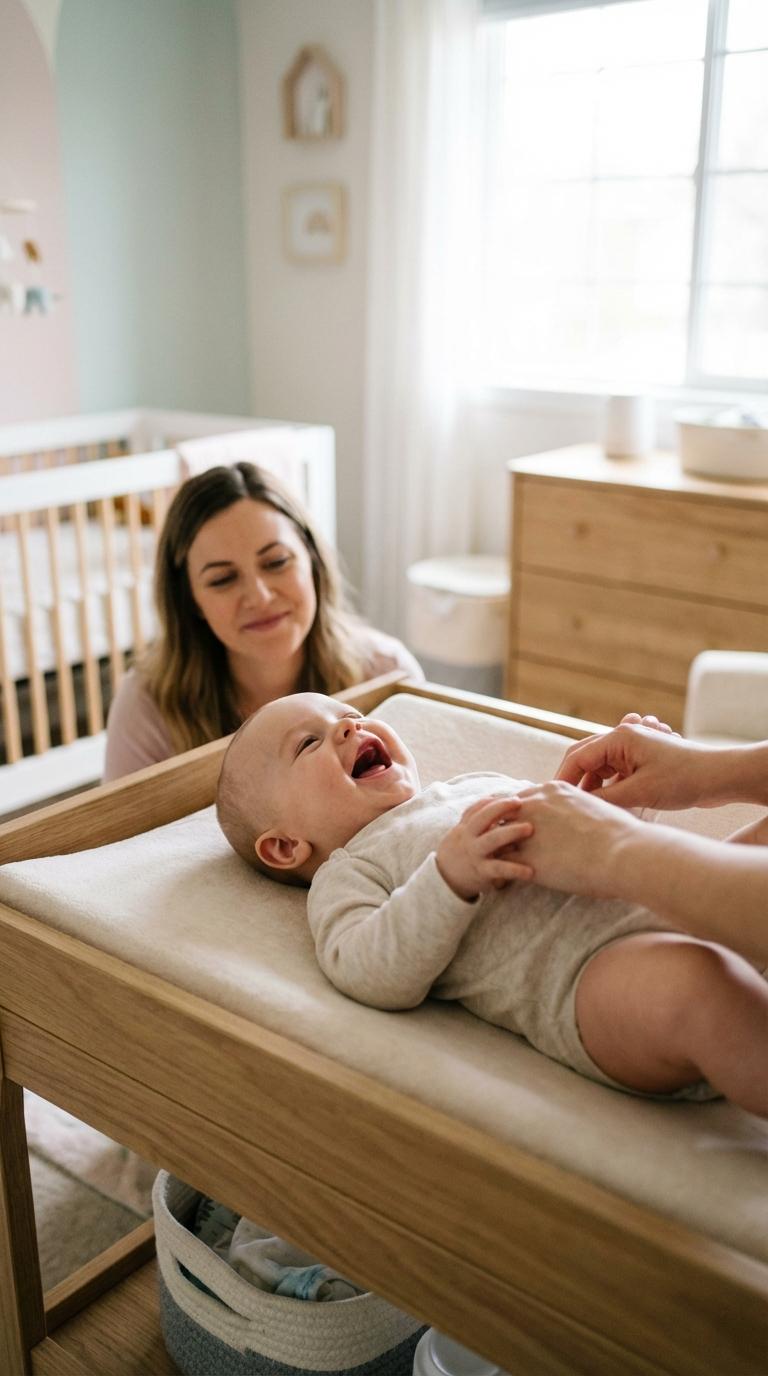
Pick a stable, flat, easy-to-clean surface: a changing mat on a sturdy dresser, or the floor (often easiest once rolling begins). Keep supplies organized so both hands stay available.
Ergonomics matter. A surface at the right height, or sitting while changing, can spare your back.
Safety basics
Falls are the biggest hazard.
- Keep one hand on your baby on any raised surface.
- Straps help, but they never replace supervision.
- If your baby is rolling or “alligator-twisting,” choose a floor change.
Hygiene routines
Wash hands before and after changes when possible. Clean the surface after poop or leaks.
How to do a diaper change: gentle step-by-step
Before you start
1) Gather supplies first.
2) Place baby on a stable surface, keep one hand in contact.
3) Use a predictable routine and a calm voice.
Remove, clean, and dry: pee vs poop
4) Open the diaper. If possible, use the front of the dirty diaper to lift away the first mess.
After pee:
- Warm water on soft cotton is often enough.
- Gentle strokes, no scrubbing.
After poop:
- Remove the bulk first.
- Clean the folds: buttocks, groin creases, and where stool may spread.
- If needed, use a gentle, fragrance-free cleanser, then wipe/rinse away residue.
Sex-specific basics:
- For girls: wipe front-to-back.
- For boys: clean around the penis and scrotum, don’t forget thigh creases.
- Do not forcibly retract an infant’s foreskin, non-retractability is commonly normal in early life.
5) Pat dry. Don’t rub. A few seconds of supervised air time can help.
Protect skin and refasten
6) If skin is red or your baby is rash-prone, apply a barrier layer on clean, dry skin.
7) Slide a clean diaper under the bottom, bring the front up, fasten evenly.
8) Pull leg ruffles out so the cuffs seal, check for gaps.
9) Roll and dispose of the dirty diaper, then wash hands.
Newborn diaper changes: gentle care from day one
Umbilical stump
Keep the stump clean and dry. Use diapers with a cord cutout or fold the front down so it doesn’t rub.
Call your clinician if you notice increasing redness, swelling, oozing, or a bad odor around the stump.
Meconium: sticky first stools
Meconium (dark, sticky early stool) can smear. Warm water on a soft cloth is often gentler than repeated wiping. Clean thoroughly, pat dry, then consider a thin barrier layer.
Typical newborn frequency and fit tips
Many newborns need 8-12 changes per day.
- Snug, not tight (one finger under the waistband).
- Persistent red marks? Loosen or size up.
Diaper change tips for boys
Preventing surprise sprays
Before fastening, point the penis downward. A clean cloth can briefly cover the penis to catch a quick spray.
Cleaning boys well
Wipe gently around the scrotum and penis and along thigh creases. If stool has spread forward, clean from the cleanest area toward the dirtiest.
Diaper change tips for girls
Wiping direction
Wipe front-to-back to reduce irritation risk.
Cleaning folds
Clean groin creases softly and thoroughly.
If redness shows up
Simplify for a couple of days:
- gentle cleaning,
- careful drying,
- barrier at each diaper change.
Seek medical advice if redness lasts more than 2-3 days, spreads, becomes very painful, shows oozing/bleeding/ulcers, or comes with fever.
Toddler diaper changes: faster, safer, less wrestling
Standing changes and cooperation
If your toddler is steady, a standing diaper change can work. Keep supplies ready and one arm around the hips for stability.
Predictability helps. Offer two small choices (“blue diaper or green?”), keep sentences short, and stay calm.
Daycare continuity
Share timing of changes, stool description, skin condition, and what product was applied.
Fit, sizing, and leak prevention
How to choose the right size
Start with the brand weight range, then adjust for body shape. Size up when leaks become frequent or red marks persist.
Quick fit check
Most leaks are fit issues. Look for:
- Waistband snug, not tight,
- Leg ruffles pulled out,
- Diaper centered in the groin,
- No gaps at the back when your baby moves.
Extra leak help
For long stretches (overnight, long naps), try an overnight diaper or add a booster insert.
Skin care and diaper rash prevention
Everyday skin care
Gentle cleansing + excellent drying prevent many rashes. Clean folds, pat dry, and add brief, supervised diaper-free time if redness is starting.
Barrier creams: when you can skip them
If the skin looks healthy and you’re changing promptly, you can often skip barrier products. If irritation appears, use a barrier consistently for a few days.
Diaper rash: triggers, home care, and when to call
Common triggers:
- prolonged moisture and friction,
- diarrhea,
- tight elastics,
- fragranced wipes or detergents,
- more acidic stools after diet changes.
Home care:
- increase diaper change frequency,
- gentle cleaning and careful drying,
- protective barrier.
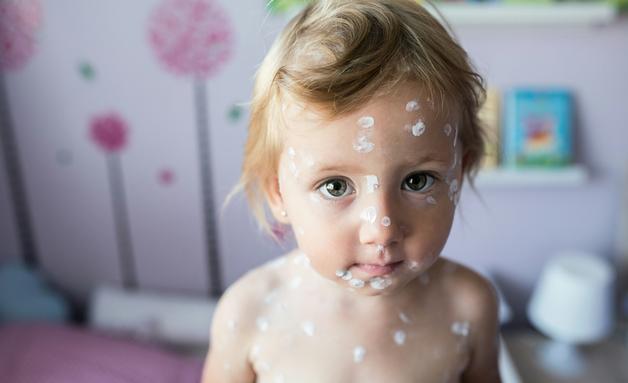
Consider yeast (Candida) when a rash is very bright red, persists, and has small “satellite” spots around the main patch, a clinician may suggest an antifungal cream.
Seek medical advice if:
- rash lasts 48-72 hours despite good care,
- there is oozing, bleeding, or ulcers,
- your baby has fever, seems unwell, or is in significant pain.
Troubleshooting common diaper change problems
Rolling, arching, or crying
Safety first: keep one hand on your baby.
Try changing on the floor, timing changes before your baby is overly hungry, and handing a small safe object to hold. Instead of pulling on the ankles, gently rolling your baby onto their side for cleaning can feel better for some babies.
Recurrent irritation
Go minimalist for several days: warm water + soft cloth, then barrier. If a reaction seems linked to one product, stop it and reintroduce later only if needed.
Diaper changes on the go
- Pack: diapers, wipes/cloth + water, changing pad, disposal bags, spare outfit, small barrier.
- Choose flat, stable surfaces (car back seat beats balancing on your lap).
- Use a barrier pad on public stations, wash hands as soon as you can.
Cloth diaper changes in practice
- Prefolds + cover, pocket diapers, and all-in-ones each handle differently.
- Leaks often improve with better leg fit and more absorbency (booster for naps/nights).
- Thorough washing and complete drying support comfort.
Key takeaways
- A prompt diaper change for poop helps protect skin because stool enzymes irritate quickly.
- Typical frequency: newborns often 8-12 changes/24h, infants and toddlers often every 3-4 hours while awake, plus after poops.
- Safety prevents falls: stable surface, supplies within reach, one hand on baby, never leaving them unattended.
- Gentle cleaning + careful drying matter as much as the product you choose, barriers like zinc oxide or petrolatum help when redness starts.
- Leaks are often fit-related: waistband snug, cuffs out, centered diaper, no persistent red marks.
- Call a clinician if wet diapers drop noticeably, dehydration signs appear, stools look concerning (blood, black/tarry, pale/clay), or a rash is severe, persistent beyond 48-72 hours, oozing/bleeding, very painful, or linked to fever.
Parents can also download the Heloa app for personalized guidance and free child health questionnaires.
Questions Parents Ask
Do I need to use soap every time I change a diaper?
No worries—most of the time, warm water (or a gentle, fragrance-free wipe) is enough. Soap can be helpful after very sticky poop, but frequent soaping may dry or irritate the skin. If you do use a cleanser, choosing a mild, rinse-off formula and keeping it away from the diaper area’s folds can help. A simple routine often works best: clean gently, pat dry, then add a thin barrier if the skin looks a little sensitive.
What if there’s poop stuck in baby’s hair or on the clothes during a blowout?
It happens to many families, and it’s not your fault. You can start by lifting off the “bulk” with a soft cloth, then rinse with lukewarm water. For hair, a tiny amount of mild baby shampoo can help, followed by a good rinse. If the outfit is heavily soiled, soaking it first (cold water is often easier for stains) before washing can make cleanup less frustrating.
Is it OK to use baby powder for diaper area moisture?
Many parents wonder this. In general, powders aren’t necessary for keeping skin healthy, and airborne particles can be irritating if inhaled. If you’re trying to reduce dampness, it’s often gentler to focus on thorough drying, brief diaper-free time, and a protective barrier (like zinc oxide or petrolatum) when redness starts.

Further reading: