
Noticing a white spot on gum can stop you in your tracks, especially when it’s your baby’s mouth and everything seems to change overnight. Is it a tooth pushing through? Thrush? A tiny cyst that looks dramatic but means little? The uncertainty is often the hardest part.
A white spot on gum is a sign, not a diagnosis. What helps most is context: the exact location, whether it’s raised, whether it wipes off, how long it’s been there, and whether your child is otherwise well (feeding, playing, sleeping as usual, or not).
What a white spot on gum can look like (and why the look matters)
A white spot on gum may appear as:
- A pinpoint dot on the gum ridge
- A soft bubble-like bump (translucent, whitish, sometimes bluish)
- A creamy coating that also involves tongue/cheeks
- A shallow sore with a pale center and red rim
- A thicker plaque that seems stuck
The mouth lining (the oral mucosa) reacts in patterns. Friction can thicken the surface layer (it looks paler). Yeast can form a coating. Viruses can create tiny blisters that rupture into ulcers. And erupting teeth can stretch gum tissue so it looks glossy and white in one specific place.


Spot, patch, bump, ulcer: quick definitions
You might be wondering, “Am I looking at a film, a pimple, or a wound?” These labels help you describe what you see.
- Spot: small and well-defined.
- Patch: wider film or plaque.
- Bump: raised (blister, nodule).
- Ulcer: shallow break in the lining, often painful.
Home clues that are genuinely useful
Flat or raised? Single or multiple?
- Flat + single after crunchy food, a toothbrush change, or braces friction often fits irritation.
- Raised bump near one tooth can suggest a draining dental infection.
- Multiple areas across gums/tongue/cheeks often points to a diffuse cause (commonly thrush).
Does it wipe off?
Gently rub with damp gauze.
- If it wipes off and leaves a red, tender base, think superficial coating (often thrush).
- If it does not wipe off, think thicker mucosal change or chronic irritation, if it persists, book a check.
Painful or painless?
Pain points toward ulcers (aphthous sores, viral ulcers) or an inflamed area after injury. Painless plaques can still matter if they persist, enlarge, harden, or change color.
Location clues
- Baby gum ridge: eruption is likely.
- Gumline: plaque, brushing friction, contact irritation.
- Over one tooth: consider abscess/fistula if there’s swelling or drainage.
- Under aligner/retainer: friction plus yeast risk.
- Newborn palate midline: benign inclusion cysts can look like “pearls.”
Timing: when “wait and see” stops making sense
Many minor mouth injuries improve fast. Typical ulcers heal in 7–14 days.
A white spot on gum that spreads, keeps returning, or lasts more than 2 weeks should be assessed. Why? Because persistence shifts the odds away from simple trauma and toward conditions that benefit from targeted care (an infection, a chronic irritation point, or an inflammatory pattern).
Common causes of a white spot on gum
Tooth eruption (very common in babies)
A single white spot on gum in an infant is often a tooth just under the surface: the gum looks stretched, shiny, and paler over the enamel.
What you might see:
- Small white dot on the ridge (incisor zone)
- Tiny firm bump
- Mild surrounding redness
Day-to-day changes are common because eruption pressure fluctuates. If unsure, take a photo every 2–3 days in similar light.
First teeth often arrive around 4–7 months, but later can still be normal. Some babies show a white spot on gum days to a couple of weeks before the tooth edge is visible.
A temperature ≥ 38°C (100.4°F) should prompt you to look for another cause (viral illness is common), not teething alone.
Eruption cyst (benign blister)
An eruption cyst is a fluid-filled swelling over an erupting tooth. It looks like a soft bubble, whitish or translucent, sometimes blue-purple (eruption hematoma).
Most resolve as the tooth breaks through. Don’t pop, pierce, or scrape it. That can create a wound and, in a mouth full of bacteria, wounds can become infected.
Newborn inclusion cysts
Some newborns have tiny white-yellow bumps on the gum ridge or palate that fade over weeks.
Timing helps: present at birth/first days, unlike the eruption-related white spot on gum that shows up months later.
Minor irritation or trauma
Hot food burns, sharp snacks, vigorous brushing, or rubbing from orthodontic hardware can leave a localized white area. The mucosa can look white because the superficial layer becomes waterlogged or thickened while healing.
Questions that help:
- Did your child bite their cheek or gum while chewing?
- Did a new toothbrush arrive (stiffer bristles, bigger head)?
- Was there a braces adjustment or a retainer edge rubbing?
If it keeps recurring at the same point, something is rubbing and may need adjustment.
Aphthous ulcer (canker sore)
Usually an oval, painful ulcer with a pale center and red halo, it stings with acidic foods and brushing, and heals in 1–2 weeks.
Why do canker sores happen? Often, no single cause is found. But common contributors include minor injury to the mucosa, stress, and sometimes nutritional deficiencies (iron, folate, vitamin B12). If sores are frequent, unusually large, or slow to heal, it’s worth discussing with your clinician.
Oral thrush (oral candidiasis)
Thrush (often Candida albicans) causes creamy patches on gums, tongue, and cheeks.
Typical clues:
- Often wipes off → red base underneath
- Feeding discomfort, clicking off the breast/bottle, fussiness
- More likely after antibiotics or with inhaled steroids (without rinsing)
It usually needs an antifungal prescribed by a clinician. If breastfeeding, parent and baby may both need treatment to prevent ping-pong reinfection. Cleaning pacifiers and bottle teats (and replacing very worn ones) can reduce recurrence.
Viral mouth lesions (including primary herpes)
Viruses can cause blisters that turn into painful ulcers, sometimes with fever and swollen neck glands. Primary oral herpes can look dramatic, with sore gums (gingivostomatitis) and multiple ulcers.
The practical concern is hydration. If drinking drops, wet diapers decrease, or your child can’t be comforted because of pain, seek medical care.
Gum boil (fistula) from a dental abscess
A small bump with a white point, sometimes draining foul-tasting fluid, may signal infection from a tooth root. Pain can be surprisingly mild if the infection is draining, so don’t use pain level alone as your compass.
Prompt dental treatment is needed, especially with fever, worsening pain, facial swelling, or a child who looks unwell.
Contact irritation (toothpaste, mouthwash, whitening products)
A new toothpaste or mouthwash can trigger burning, peeling, and pale/white patches where it touches. Some products contain stronger detergents or flavoring agents that irritate sensitive mouths.
A strong clue is timing: symptoms begin after a product change and improve when it’s stopped.
Plaque, calculus, and friction-related keratosis near the gumline
When plaque and hardened calculus sit near the gumline, the gum tissue inflames (gingivitis). Chronic rubbing (for example, from aggressive brushing) can also make the surface look paler or thicker.
You may notice:
- Bleeding with brushing
- Persistent bad breath
- Tenderness along the gumline
A professional cleaning plus technique tweaks (soft brush, smaller circles, less pressure) often helps.
Persistent white plaques (more typical in adults)
Non-wipeable plaques that persist can relate to chronic irritation (for example, leukoplakia) or inflammatory conditions (like oral lichen planus). These are uncommon in children.
Still, a white spot on gum that stays put beyond a couple of weeks, especially if it thickens, ulcerates, or develops irregular borders, deserves an exam.
White spot on gum in children: common patterns by age
Babies and newborns
Most often:
- Eruption-related white spot on gum
- Eruption cyst
- Thrush
- Newborn inclusion cysts
Toddlers and school-age children
Commonly:
- Mouth injuries (falls, bites)
- Aphthous ulcers
- Viral illnesses with mouth sores
If drinking drops, sleep is heavily disrupted by pain, or fever appears, earlier assessment is sensible.
Orthodontic appliances
Braces and aligners can rub and trap plaque.
Helpful measures:
- Orthodontic wax on rubbing spots
- Interdental brush around brackets
- Careful brushing at the gumline
A recurring white spot on gum at the same contact point may mean the appliance needs adjustment.
Symptoms to watch
- Pain, burning, itching
- Bleeding or swollen gums
- Bad breath, bad taste, pus-like drainage
- Fever, swollen lymph nodes
- Facial/jaw swelling
- Trouble eating, drinking, brushing, or sleeping
Reduced drinking in young children matters: dehydration can develop quickly when the mouth hurts.
Is it serious? Reassuring signs and red flags
Often reassuring
- Clear trigger (burn, bite, friction)
- One small area that isn’t spreading
- No fever, no facial swelling
- Improving within a few days
Red flags (especially in babies)
- Temperature ≥ 38°C (100.4°F)
- Child seems unusually unwell
- Refusal to drink/feed
- Dehydration signs (few wet diapers, dry mouth, no tears)
After dental work: healing film or warning?
A thin white-yellow film can be normal healing. Worrying signs include: worsening pain after day 2–3, increasing swelling, fever, pus, or a patch that thickens rather than fades.
How clinicians evaluate a white spot on gum
A dentist or doctor will assess borders, thickness, texture, gum inflammation, and nearby teeth for decay or tenderness. They’ll also check the rest of the mouth: tongue, cheeks, palate.
Sometimes they add:
- Dental X-rays for suspected abscess or bone changes
- Swab in unusual, persistent infections
- Discussion of biopsy for persistent, non-wipeable, atypical plaques (often beyond 2–3 weeks)
Practical self-check before you book
Note:
- Start date and evolution
- Pain score (0–10)
- Recent triggers (new toothpaste, braces adjustment, hot food, bite)
- Wipeable or not
- Exact location (gum ridge near an erupting tooth?)
A clear photo repeated every 2–3 days can help track change.
Care at home (and what to avoid)
If symptoms are mild and improving:
- Soft brushing, avoid scrubbing the sore
- Fluids first, meals can be simpler for a day or two
- Warm saltwater rinses only if old enough to spit (1/2 tsp salt in warm water)
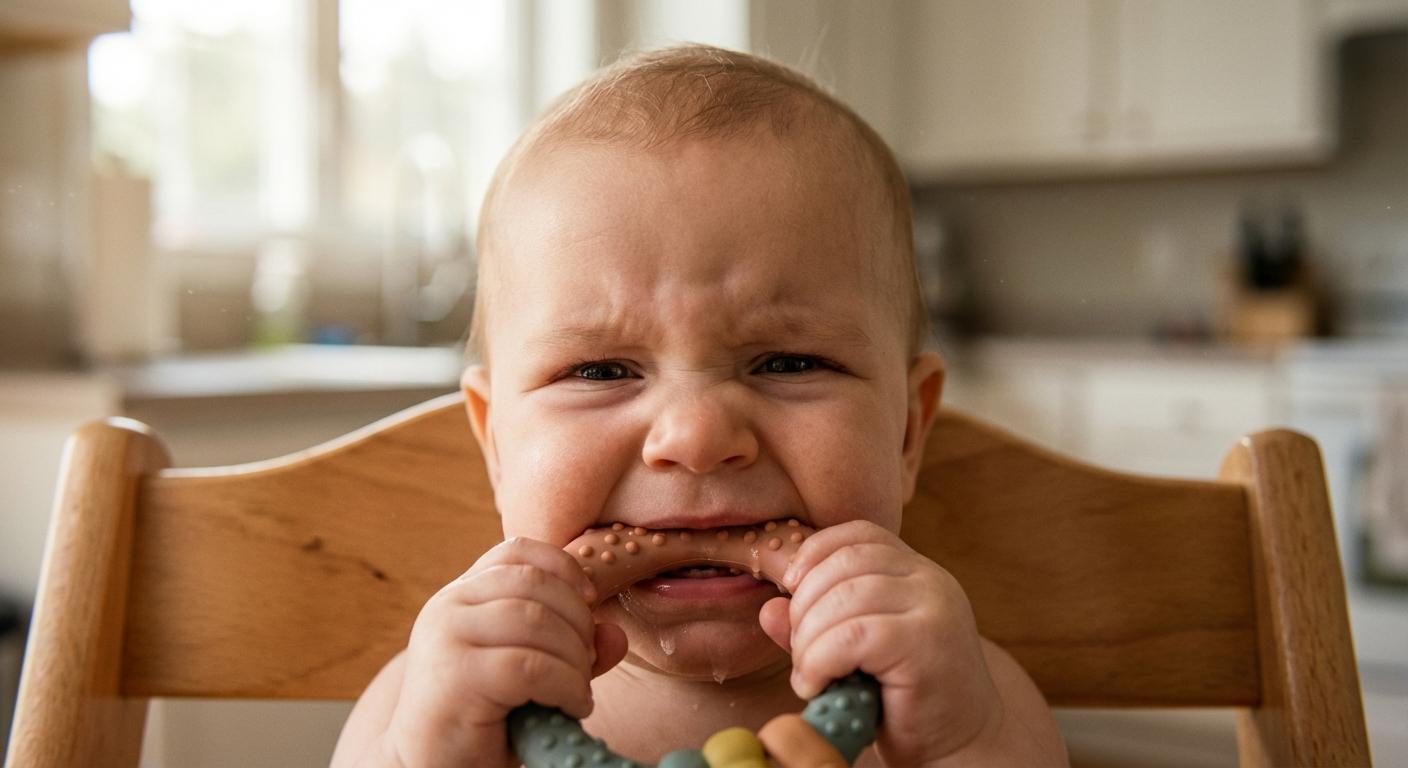
For teething discomfort: a chilled teething ring from the refrigerator (not the freezer) and gentle gum massage around (not on) the white spot on gum.
For suspected aphthous ulcers: bland foods, avoiding citrus/spice, and age-appropriate pain relief can make a big difference.
Avoid:
- Scraping or popping bumps
- Aspirin placed on the gum
- Undiluted peroxide or essential oils (chemical burns happen)
- Freezer-cold objects directly on gums (risk of cold injury)
When to see a dentist or doctor
Urgent care
Facial/jaw swelling, trouble swallowing or breathing, drooling, high fever, rapidly spreading redness, or dehydration signs.
Within 24–48 hours
Painful bump near a tooth, pus/bad taste, increasing swelling, fever with worsening mouth pain.
Within 1–2 weeks
Any white spot on gum lasting > 2 weeks, recurring lesions, non-wipeable plaques, or changes in color/texture.
For babies: if a tooth-related white spot on gum shows no evolution after 1–2 weeks, or persists 2–3 weeks after the tooth is visible, a check is reasonable, especially if it spreads or becomes painful.
Prevention: lowering the odds of white spots on gums
- Brush twice daily with fluoride toothpaste (age-appropriate amount)
- Interdental cleaning when teeth touch
- Regular dental checkups
For babies:
- Before teeth: gentle gum wiping if needed
- After the first tooth: small soft toothbrush, brief gentle brushing
Reduce irritants: ensure appliances fit well, use orthodontic wax, and stop harsh whitening products if burning/peeling begins.
Key takeaways
- A white spot on gum is common and often benign, especially during tooth eruption.
- Wipeability, duration, pain, swelling, drainage, and fever are the most useful clues.
- Thrush often wipes off and can affect feeding, a gum boil suggests tooth infection and needs prompt dental care.
- Seek urgent help for facial swelling, breathing/swallowing difficulty, high fever, or dehydration.
- If a white spot on gum lasts more than 2 weeks, keeps returning, or changes, book an assessment.
- Support exists: health professionals can examine your child’s mouth, and you can download the Heloa app for personalized tips and free child health questionnaires.
Questions Parents Ask
Can a white spot on the gum be a sign of cancer?
In children, this is very uncommon—so try not to panic. Most white spots are linked to irritation, infection, or healing. Still, it’s sensible to book a dental or medical check if the patch doesn’t wipe off, lasts longer than 2 weeks, gets thicker, bleeds, develops irregular borders, or keeps returning in the same place. The goal is usually reassurance—and, if needed, identifying a simple trigger to remove.
Is a white spot on the gum contagious?
Sometimes, yes—depending on the cause. A yeast infection (thrush) or a viral mouth infection can spread through saliva (shared spoons, pacifiers, teats). A spot caused by friction, a small burn, or brushing irritation isn’t contagious. If more than one family member develops mouth discomfort or white patches, it can be worth mentioning this when you seek advice.
Why is there a white patch on the gum after dental work or a tooth comes out?
A thin white-yellow film can be part of normal healing: it’s like a protective “scab,” just in a wet environment. It often looks impressive but tends to fade as the gum closes. It’s important to seek care sooner if pain intensifies after a couple of days, swelling increases, fever appears, or there’s a bad taste/pus—these signs can suggest infection.
Further reading :