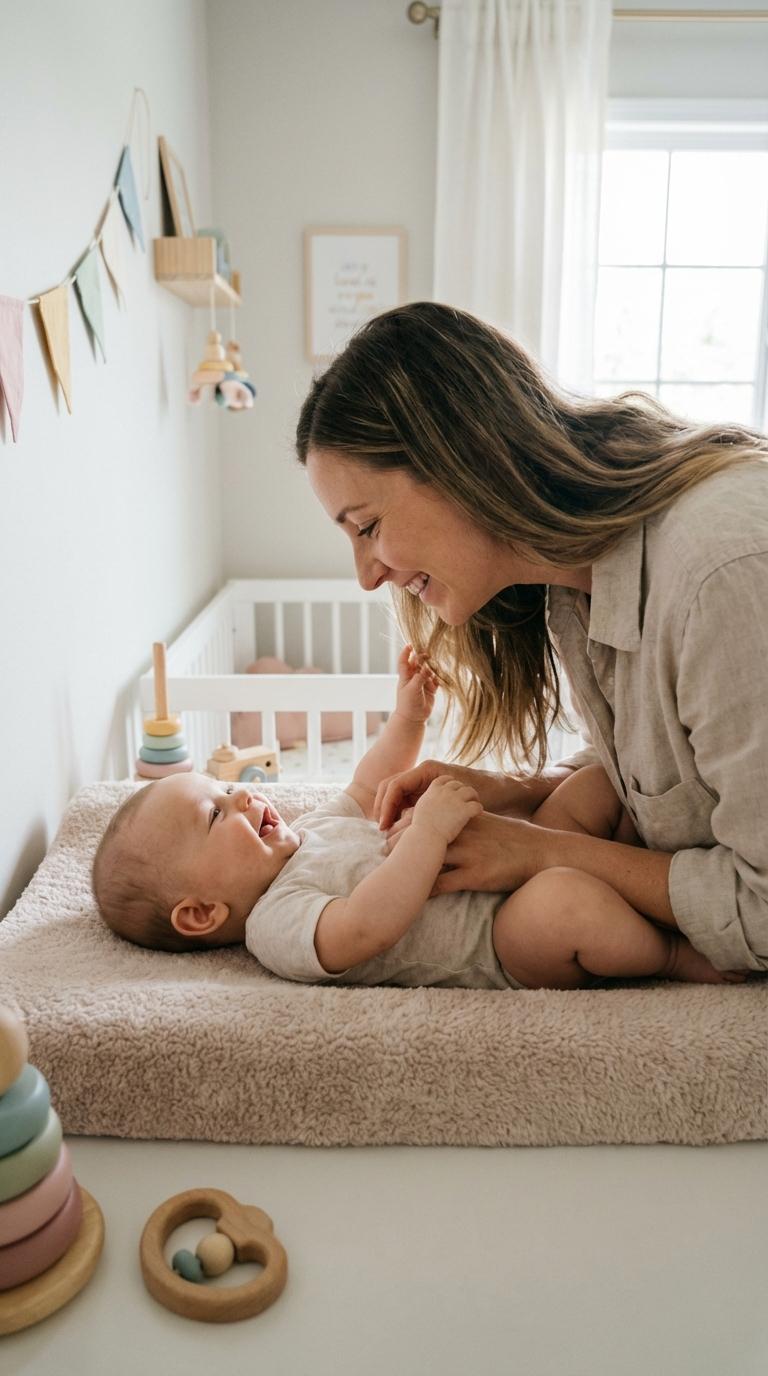
Those first days, a diaper change can feel like an Olympic event: tiny legs kicking, wipes everywhere, and the fear of missing a fold. Then comes the bigger worry: red skin, leaks at 3 a.m., a suspicious smell, or a rash that seems to appear “between two changes.” You may be wondering what really matters: speed, sterility, cream, air time, fit?
A good diaper change is simple, repeatable, and gentle. It protects the skin barrier, limits irritation from urine and stool, and keeps your baby comfortable (which often means more calm for everyone). Safety matters too: falls from changing surfaces happen fast. Skin health matters as well: infant skin is thinner and more permeable than adult skin, so it reacts quickly to moisture and friction.
Diaper change basics to feel confident
What a diaper change is and why it matters
A diaper change is the act of removing a wet or soiled diaper, cleaning the diaper area, drying, and refastening a clean diaper with a fit check. It sounds routine. Yet medically, it is a small prevention strategy repeated many times a day.
Why does it help?


- Moisture softens the outer skin layer (maceration), making it easier to irritate.
- Friction (rubbing, tight edges, lots of movement) disrupts the skin barrier.
- Urine and stool change the skin’s chemistry: urine can raise pH, which can activate stool enzymes (lipases and proteases). Those enzymes can irritate skin more quickly.
Put together, moisture + friction + irritants = irritant diaper dermatitis (classic diaper rash). A timely diaper change, especially after poop, shortens contact time and reduces inflammation.
And there is a human side. Your baby hears your voice, feels your hands, and learns that discomfort is noticed and relieved. That predictable rhythm can become a calm anchor in the day.
Signs baby may need a change
Some babies barely flinch, others protest loudly. Common cues:
- Wetness indicator line has changed color
- Diaper feels heavy, swollen, or cold and damp
- Strong urine odor or any stool smell
- Leaks at the legs or waistband, or a blowout
- Squirming, sudden fussiness, or grabbing at the diaper area
Extra vigilance helps when irritation tends to flare:
- Diarrhea (frequent stools, higher enzyme exposure)
- Antibiotics (stool changes, yeast overgrowth can appear)
- Hot weather (sweat adds moisture)
- New foods (stools often become thicker and more irritating)
How often changes happen by stage
There is a wide normal range. “Check often, change when needed” works well, with faster action for stool.
- Newborns: often 10 to 12 changes per day
- Infants: often 6 to 8 changes per day
- Mobile babies: often 4 to 6 changes per day
- Toddlers: often 4 to 6 changes per day (varies with diet and potty learning)
Always change after a poop. For urine-only diapers, look at fullness, odor, leaks, and skin condition.
“Diaper change” vs “nappy change”
Same routine, different wording. “Diaper” is common in North America, “nappy” is common in the UK and many other regions. You may also see “changing table” vs “changing unit.”
Diaper change essentials and helpful extras
Must-haves before you start
Keeping everything within reach makes a diaper change safer and smoother.
- Clean diaper (correct size)
- Wipes or warm water + soft cloth/cotton
- Wipeable changing pad or mat
- Disposal bag/diaper pail (or wet bag for cloth)
- Soft towel for drying
- Spare outfit (blowouts happen)
A practical habit: set up a small basket in the rooms you use most. Fewer “I will just grab…” moments means fewer near-misses.
Skin care items: barrier ointment and cream
Think: clean, dry, protect.
- Petrolatum or dimethicone: reduce friction and moisture contact.
- Zinc oxide: thicker barrier, often helpful when skin is already red.
- Powders: usually best skipped. Particles can be inhaled and irritate the airways, powders can also worsen moisture trapping.
Avoid topical antibiotics or steroid creams unless a clinician specifically advises them.
Ingredients to look for (or avoid)
If your baby reacts easily, simpler products often behave better.
- Choose fragrance-free, dye-free, alcohol-free wipes
- Be cautious with essential oils and strong botanical extracts
- If a new product coincides with a sharply bordered rash, think contact dermatitis (an irritant or allergic reaction)
Setting up a safe, easy changing station
Choosing the space
A changing table helps your back, but increases fall risk once rolling begins. The floor is often the easiest default for very mobile babies.
Good options:
- Changing table (keep one-hand contact at all times)
- Bed/couch (only if you keep a steady hand on baby)
- Floor mat (excellent when rolling starts)
Safety habits that prevent falls
Falls are the most preventable injury linked to a diaper change.
- One-hand rule: one hand stays on your baby on raised surfaces.
- Use straps if available, but never trust them as the only protection.
- Keep supplies within arm’s reach.
That tiny “just one second” turn is often the whole problem.
Keeping the area clean and calm
- Use wipeable covers or waterproof pads you can launder
- Disinfect after stool contact
- Keep the room warm, babies cool fast
- Overnight: dim light, low stimulation
Pets and siblings? A clear perimeter helps. A sibling can “help” by handing a clean diaper, while you keep your full focus on safety.
How to do a diaper change step by step
1) Hand hygiene and setup
Wash hands when possible (or sanitize as a backup). Lay out wipes/water, towel, cream, disposal bag, and the clean diaper.
A wiggle-friendly trick: slide the clean diaper under the hips before removing the dirty one completely.
2) Unfasten and contain the mess
Open tabs. If stool is present, use the front of the diaper to lift away the bulk gently, then fold the dirty diaper under the bottom as a “dirty layer.”
Avoid pulling by the ankles. Instead, lift the pelvis gently or roll baby slightly to the side.
3) Clean thoroughly, without scrubbing
Clean front-to-back, especially for girls (helps reduce bacteria moving toward the urethra). Focus on skin folds:
- Groin creases
- Between the buttocks
- Around the vulva/scrotum
- Upper thighs
Wipes are convenient, warm water + cotton can be soothing for very sensitive skin. Several gentle passes beat one vigorous wipe.
Boys: clean the penis and scrotum externally, do not forcibly retract the foreskin.
Girls: clean creases gently, a small amount of whitish discharge in infancy can be normal. External gentle cleaning is enough.
4) Drying: the underrated step
Pat dry. Rubbing increases friction.
If skin looks shiny or mildly pink, a few seconds of diaper-free air time can help, while keeping baby warm (a towel over the belly works well).
5) Barrier cream: when it helps, when to skip
Use a thin layer when:
- Skin is pink or irritated
- Stools are frequent/loose
- Your baby tends to rash easily
If skin is healthy and dry, barrier products are optional. Too many layers can create residue and make cleansing harder.
6) Put on the clean diaper and do a fit check
Bring the front up, fasten snugly.
- Two fingers should fit under the waistband
- Pull leg cuffs/ruffles outward
- Make sure leak guards are not folded in
For boys: point the penis downward before closing.
Deep red marks that linger suggest a diaper that is too small/tight or poorly positioned.
7) Dispose, clean the surface, wash hands
Seal the diaper, dispose it, wipe the changing surface if soiled, and wash hands again.
Diaper change tips for newborns
Frequency, including meconium days
Newborns often need very frequent diaper change cycles, especially in the first weeks. Checking every 2 to 3 hours and changing promptly after stool is a practical rhythm.
Meconium (dark, sticky first stool) can cling to skin. Warm water and soft cloths help, plus a thin barrier layer on clean, dry skin to reduce sticking next time.
Umbilical stump care
Keep the stump dry and reduce friction:
- Fold the diaper edge down
- Prefer sponge baths until it falls off
Call a clinician for spreading redness, swelling, foul odor, discharge, or fever.
Sensitive newborn skin
Warm water + cotton is often very well tolerated. If wipes cause redness, pause them and simplify.
Everyday diaper change routines for infants
Typical daytime rhythm
Many families anchor a diaper change around predictable moments:
- After waking
- Before naps
- After feeds (or before feeds if baby spits up with handling)
- Immediately after poop
Wiggly baby strategies
Rolling can begin suddenly.
- Consider floor changes for safety
- Offer a distraction object you can see
- Keep one steady hand on the torso, pause, reset, continue
Toddler diaper changes that feel easier
Standing changes and pull-ups
Standing changes work well for quick pee diapers. Pull-ups can speed up standing changes and support independence, while tabbed diapers may contain leaks better overnight.
Cooperation without power struggles
Toddlers often resist interruptions. What helps?
- Two simple choices (“Which diaper?” “Wipes or diaper first?”)
- A short, consistent script
- Calm countdowns
Boys vs girls: small differences, same gentle routine
- Boys: cover the penis briefly if sprays happen, point downward before fastening.
- Girls: wipe front-to-back, clean folds gently without pulling skin.
Poopy diaper changes without feeling overwhelmed
Containment and blowouts
The cleanest sequence is usually:
- Use diaper front to remove bulk
- Fold dirty diaper under the bottom
- Clean baby fully (creases included)
- Change clothes if needed
- Disinfect the surface
If the blowout is big, warm water in the bathroom can be faster than endless wipes.
Diarrhea: skin protection and hydration clues
Diarrhea raises rash risk quickly. During each diaper change, prioritize gentle cleaning, careful drying, and zinc oxide barrier.
Seek medical advice if you notice dehydration signs: fewer wet diapers, dry mouth, no tears, unusual sleepiness, or a sunken fontanelle.
Nighttime diaper change without derailing sleep
When to change overnight
Usually, you do not need a diaper change for a sleeping baby with a wet diaper only, if there is no leak and skin is fine. Change at night for:
- Poop
- Leaks
- Strong odor
- Discomfort
Keep it dim, quiet, and efficient.
Overnight leak fixes
- Check fit (waist and cuffs first)
- Increase absorbency (overnight diaper, booster)
- Avoid pajamas that compress the diaper
- Use mattress protection and spare sheets nearby
Diaper rash prevention and care during diaper changes
Prevention: clean, dry, protect
Most rashes improve with three habits repeated at every diaper change:
- Gentle cleansing
- Thorough drying
- Barrier protection when needed
Common triggers: over-wiping, friction, tight diapers, fragranced products, lingering moisture.
When medical care can help
Ask for help if a rash:
- Lasts more than 3 to 5 days despite good care
- Worsens, bleeds, oozes, blisters
- Spreads beyond the diaper area
- Comes with fever or marked pain
- Looks like yeast (beefy red, often in folds, with small “satellite” spots)
When diaper contents suggest a health issue
During a diaper change, you get quick health clues.
Call for medical advice if you see:
- Blood in stool or urine
- Pale/clay-colored stools
- Black tarry stool beyond the newborn meconium period
- Markedly fewer wet diapers than usual
Key takeaways
- A diaper change is repeated skin care: it limits moisture, friction, and exposure to urine/stool irritants.
- For prevention, the winning sequence is steady: secure baby, clean gently, dry well, protect when needed, then fit-check.
- Safety is non-negotiable on raised surfaces: use the one-hand rule.
- Prompt poop changes protect skin, wet diapers can be changed based on fullness, odor, leaks, and skin sensitivity.
- Persistent rash, open sores, fever, suspected yeast, or dehydration signs justify medical advice.
- Resources and health professionals can support you, and for tailored tips and free child health questionnaires, you can download the Heloa app.
Questions Parents Ask
Can you reuse a diaper if it’s only wet?
Many parents wonder this, especially at night. In general, it’s most comfortable (and kinder to skin) to switch to a clean diaper once it feels heavy, cold, or starts to smell. If your baby is sleeping, the diaper is just lightly wet, there’s no leak, and the skin looks calm, it may be reasonable to wait until the next wake-up. Trust your baby’s cues and your own rhythm—there isn’t one “perfect” schedule.
Do I need to wipe after every pee diaper change?
Not necessarily. For many babies, a pee-only diaper change can be as simple as changing the diaper and making sure the skin is dry. Over-wiping can sometimes increase irritation. If there’s strong odor, sticky residue, diaper cream buildup, or your baby tends to rash easily, a gentle clean with water/cotton or a mild wipe can help—then pat dry.
When can a baby safely start using a pull-up for diaper changes?
Pull-ups can be helpful once your child can stand steadily with support and enjoys participating. They’re great for quick daytime pee changes and on-the-go. For naps and overnight (or frequent leaks), many families still prefer tabbed diapers for a snugger fit and better containment. A mix is totally fine—choose what feels easiest for your routine.
Further reading :