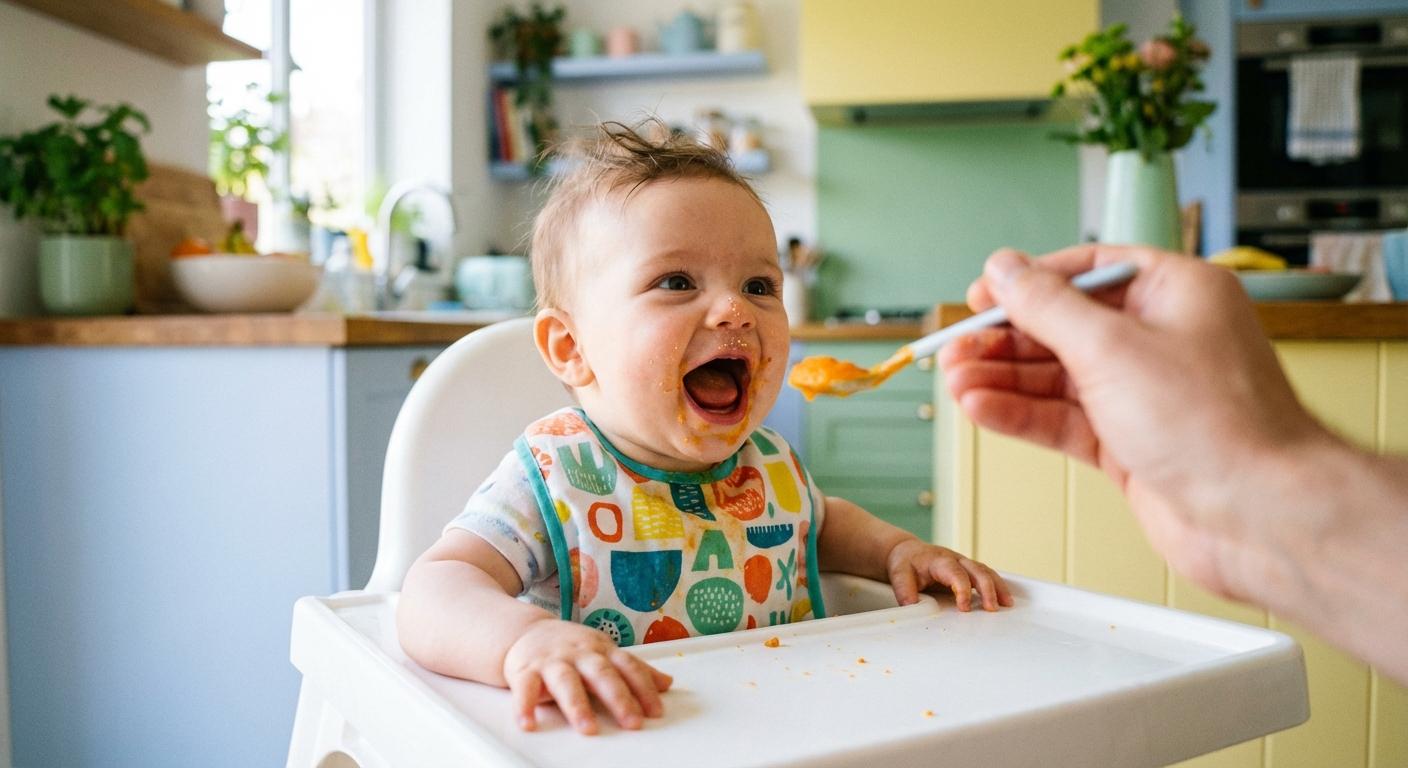
Starting baby food 6 months can feel like standing at the edge of two worlds. On one side: milk, familiar, predictable, still doing most of the nutritional heavy lifting. On the other: spoons, purées, soft sticks, tiny coughs, big faces, and that very normal mess that makes you wonder, “Is anything being eaten at all?” The aim is simple and steady: support growth, protect safety, and gradually widen nutrients (especially iron) while your baby’s mouth learns textures beyond sucking.
Is my baby ready for baby food 6 months?
Calendar age helps, but development leads. A baby who can hold posture, coordinate hands and mouth, and manage swallowing is a safer, calmer eater.
You may be thinking, “Ready in theory, but how do I know at the table?” Look for skills, not perfection.
Signs of readiness
- Sitting with minimal support and stable head and trunk control.
- Bringing toys to the mouth (hand to mouth coordination matters).
- Curiosity at the table: leaning forward, opening for the spoon.
- Less tongue-thrust (extrusion) reflex, meaning food is not pushed straight back out every time.
If posture is still wobbly or swallowing looks uncertain, slowing down is not “falling behind”, it is smart pacing.


Tongue-thrust reflex: what is normal
Early infancy includes a protective reflex where the tongue pushes foreign material out. With baby food 6 months, it often looks like:
- Food immediately pushed forward
- Drooling and “spit-outs”
It commonly fades around 6 months and is usually far less noticeable by 7 to 9 months. If it is strong, keep textures ultra-smooth, offer tiny tastes, and pause often.
Myths vs facts (teeth, size, interest)
- Teeth are not required: gums can handle very soft foods.
- Size or weight is not a start-line. Solids are not a competition.
- Interest helps, but posture and swallowing skills are the safety markers.
Hunger and fullness cues
Body language is your best dashboard.
- Hunger or interest: leaning in, reaching, relaxed open mouth.
- Fullness or fatigue: turning away, sealing lips, fussing, pushing the spoon.
A grimace can simply mean “new taste”. Surprise is not rejection.
Milk still comes first at 6 months
For baby food 6 months, breast milk or formula remains the main source of calories, protein, calcium, iodine, and much of hydration. Solids are complementary: they add nutrients and teach skills.
How solids fit with breast milk or formula
Think “practice plus nutrition”, not replacement. Early amounts can be microscopic. Two teaspoons can be a full success.
How much milk at 6 months?
Landmarks (not rules):
- Breastfeeding: on demand, growth, alertness, and wet diapers are reassuring.
- Formula: often around 500 to 800 ml per 24 hours, with wide normal variation.
Avoid pushing bottle or breast “to finish”. Protecting hunger and satiety regulation now can reduce later mealtime struggles.
Timing solids
Many babies do best when not ravenous.
- Start with 1 small solid meal daily.
- Choose a well-rested window.
- Keep it brief: 5 to 15 minutes.
If the meal collapses into tears, timing is often the hidden culprit: shift by 30 minutes and reassess.
Water at meals
Milk covers hydration. Once baby food 6 months begins, offer a few sips of plain water in a cup with meals.
Skip juice. It is unnecessary and trains a preference for sweet.
Best first foods for a 6-month-old
There is not one perfect first spoonful. A manageable progression:
- Vegetables (single ingredient, smooth)
- Fruits (very ripe or cooked, no added sugar)
- Starches (well-cooked, for energy and texture)
- Proteins (fully cooked, blended smooth, tiny amounts)
Refusals are common. Calm re-offers often change everything.
Iron-rich foods to prioritize
Around 6 months, iron stores from pregnancy naturally decline. Iron supports hemoglobin (oxygen transport) and neurodevelopment. Strong options for baby food 6 months:
- Puréed meats (chicken, turkey, beef) thinned smooth
- Lentils or beans cooked very soft, blended
- Iron-fortified infant cereals (oat, multigrain)
Pair iron with vitamin C
Vitamin C increases absorption of non-heme iron (plant foods, fortified cereals). Easy pairings:
- Cereal plus fruit purée
- Lentils plus a vitamin C vegetable (broccoli or tomato, well cooked and blended)
Healthy fats: a real need
Fat supports brain development and boosts energy density.
- 1 teaspoon oil added after cooking (canola or rapeseed, olive)
- Avocado purée
- Plain full-fat pasteurized yogurt (small amounts)
Grains and starches, including gluten
- Potato
- Very well-cooked rice (not daily)
- Oats, barley, quinoa
- Small pasta cooked very soft
Rice products may contribute more arsenic exposure than other grains, so variety helps.
Flavor without salt or sugar
Babies can enjoy nuance.
- Herbs: basil, parsley, dill
- Mild spices: a pinch of cinnamon or cumin
Avoid added salt and sweeteners, taste learning is happening right now.
Foods to avoid and smart safety limits
For baby food 6 months, limits are mainly about infection risk, kidney load, and choking.
- No honey under 12 months (infant botulism risk).
- Avoid unpasteurized dairy and juices.
- Avoid added salt and added sugar.
- No cow’s milk as the main drink before 12 months (pasteurized yogurt is usually fine in small amounts).
- No juice or sweet drinks, offer water with meals.
Fish and mercury
Fish can be introduced around 6 months.
- Lower-mercury: salmon, trout, cod, haddock, sardines (low-sodium)
- Avoid or limit: shark, swordfish, king mackerel, marlin, bigeye tuna
Textures and feeding methods
Texture is where many parents feel unsure with baby food 6 months.
Smooth purées first
Cook until very soft, blend finely, then adjust.
- Not watery soup
- Not sticky paste
Thin with breast milk, formula, or water if needed. Offer tiny amounts and wait for swallowing.
Progressing textures
As coordination improves:
- Thicker purées
- Fork-mashed textures
- Very soft “melting” pieces that squash between fingers
Gagging can look dramatic. Often it means the bite is too large or the texture is too ambitious.
BLW and combination feeding
Baby-led weaning can start when sitting is stable (often 6 to 7 months). Many families blend approaches:
- Spoon-feeding for iron-focused purées
- Finger foods for skills and autonomy
Choking prevention
You want confidence, not constant fear. A few rules do most of the work.
- Feed fully upright in a stable high chair, use the harness.
- Stay within arm’s reach.
- Offer small bites, wait for swallowing.
Gagging vs choking, quickly
Gagging is a safety reflex. It is usually noisy, with coughing and lots of movement. Choking is different: it can be silent, with trouble breathing and an inability to cough or cry.
If you ever suspect choking, act immediately and start infant first-aid steps while calling emergency services.
High-risk choking hazards to avoid
Avoid or modify:
- Whole grapes and cherry tomatoes (quarter them lengthwise)
- Popcorn
- Whole nuts and seeds
- Hard raw vegetables or apple chunks
- Hot dog rounds
- Thick globs of nut butter (always thin and mix)
Introducing new foods and allergens
With baby food 6 months, variety grows best through repetition and calm exposure.
A simple approach
- Start with single-ingredient foods.
- Rotate vegetables, fruits, proteins, and grains across the week.
- Expect stool changes (smell and texture). Seek advice for blood in stool, persistent diarrhea, dehydration signs, or a baby who seems very unwell.
Common allergens: when and how
Once a few basics are tolerated:
- Introduce one allergen at a time.
- Start with a tiny amount.
- Keep the rest of the meal familiar.
- Wait 3 to 5 days before another new allergen.
Safe forms:
- Peanut or tree nut butter: smooth and well thinned, mixed into purée (never a thick spoonful).
- Egg: fully cooked, mashed.
- Sesame: tahini thinned and mixed.
- Fish: low-mercury, cooked and mashed.
Stop the new food and seek medical advice for hives, swelling, repeated vomiting, wheeze, or breathing difficulty. Breathing symptoms or facial swelling require urgent emergency care.
How much should a 6-month-old eat?
With baby food 6 months, small starts are normal.
- Begin with 1 meal per day.
- Typical starting total: 1 to 2 tablespoons, or a few BLW bites.
- Increase by teaspoons when interest is clear.
Milk remains the foundation. If milk intake drops sharply, discuss it with your pediatric clinician.
6-month feeding schedule examples
- Morning: milk feed
- Midday: baby food 6 months meal, then milk as usual
- Afternoon: milk feed
- Evening: milk feed
If evenings are fussy, many babies do better keeping solids earlier in the day. If mornings are the calmest, use that instead. Flexibility is a feeding skill too. Some parents also like a “micro snack” of purée after a morning nap, just to practice.
Sample 7-day starter menu
- Day 1: iron-fortified oat cereal (mixed with breast milk or formula)
- Day 2: carrot purée
- Day 3: sweet potato purée
- Day 4: avocado mash
- Day 5: pear compote
- Day 6: pea purée (strained if needed)
- Day 7: banana mash
Easy recipes for baby food 6 months
- Carrot: steam until collapsing-soft, blend smooth.
- Zucchini: cook until very tender, blend.
- Pear: steam peeled pear, blend.
- Avocado: mash, thin with milk if needed.
Iron-focused options
- Lentils: cook until very soft, blend.
- Chicken: cook until tender, blend with cooking liquid.
- Iron-fortified cereal: mix to a smooth spoonable texture.
Simple combinations
- Carrot plus potato plus rapeseed oil (added after cooking)
- Sweet potato plus lentils
- Pear plus plain yogurt
Homemade vs store-bought baby food
Both can work well for baby food 6 months. What matters is the overall pattern: iron regularly, no added salt or sugar, textures that progress, and a relaxed pace.
If you use pouches, consider squeezing them into a spoon sometimes. Why? Sucking purée from a spout is convenient, but spoon and finger practice better support oral motor skills (lip closure, lateral tongue movement) that later help with lumps.
Storage and hygiene
- Wash hands and surfaces, keep raw meat and eggs separate.
- Refrigerate homemade purées within 2 hours, use within 24 to 48 hours.
- Freeze in small portions, label dates, use within about 3 months.
- Thaw in the fridge, reheat once, discard leftovers that contacted saliva.
Key takeaways
- baby food 6 months is about readiness: stable posture, improving tongue-thrust, coordinated swallowing.
- Breast milk or formula stays first, solids complement, with a strong focus on iron.
- Start smooth, then move gradually toward thicker and mashed textures, add soft finger foods when sitting and grabbing skills allow.
- Avoid honey, unpasteurized foods, added salt or sugar, juice, and choking hazards, cow’s milk is not a main drink before 12 months.
- Introduce allergens one at a time in safe textures, seek urgent help for breathing symptoms or facial swelling.
- Support exists if feeding feels stressful, and for tailored guidance and free child health questionnaires, you can download the Heloa app.
Questions Parents Ask
Does starting solids at 6 months help babies sleep better?
It’s a very common hope—especially when nights feel long. Reassuringly, many babies’ sleep changes around this age, but solids don’t reliably lead to longer stretches. At 6 months, milk (breast milk or formula) still provides most calories, so a spoonful of purée rarely “fills them up” for the night. If sleep gets worse right after starting solids, it can simply be timing (too close to bedtime), tummy adjustment, or excitement around new skills. You can try offering solids earlier in the day and keep evenings calm and milk-focused.
My 6-month-old seems constipated after starting solids—what can I do?
This is very normal when digestion is learning a new job. You can often help by choosing “softening” foods (pear, prune, peach, plum, well-cooked zucchini), adding a little extra fluid in purées, and offering a few sips of water with meals. Iron foods are important, but some options feel “binding” for certain babies—so rotating grains (oats, barley, quinoa) and balancing with fruits/veg can help. If there’s blood in stool, persistent vomiting, strong pain, or dehydration signs, it’s a good idea to seek medical advice.
How many tablespoons of purée should a 6-month-old eat per meal?
Small amounts are a success. Many babies start with 1–2 tablespoons total, sometimes less, then increase gradually when interest is clear. Appetite can vary day to day—watch cues (leaning in vs turning away) rather than aiming for a fixed number.
Further reading: