
Parents often wonder whether baby naps “count” if they happen in arms, a stroller, or the car, and why a day of short naps can snowball into a difficult evening. Add daycare schedules, teething, starting solids, and the famous 4-month shift, and nap planning can feel like a moving target.
The good news? When you understand a few physiology basics (sleep pressure, circadian rhythm, infant sleep cycles), baby naps become easier to time, easier to troubleshoot, and much easier to talk about with your pediatrician when something seems off.
What really counts as baby naps (and what changes from one place to another)
A nap is daytime sleep, full stop. Baby naps in a crib, in a parent’s arms, in a carrier, or on the go all “count” in the 24-hour total.
What changes is mainly:


- Sleep quality (lighter sleep in motion, more awakenings)
- Body position and airway (flat on a firm surface is the gold standard)
- Safety (especially in car seats outside the car)
Crib or bassinet naps
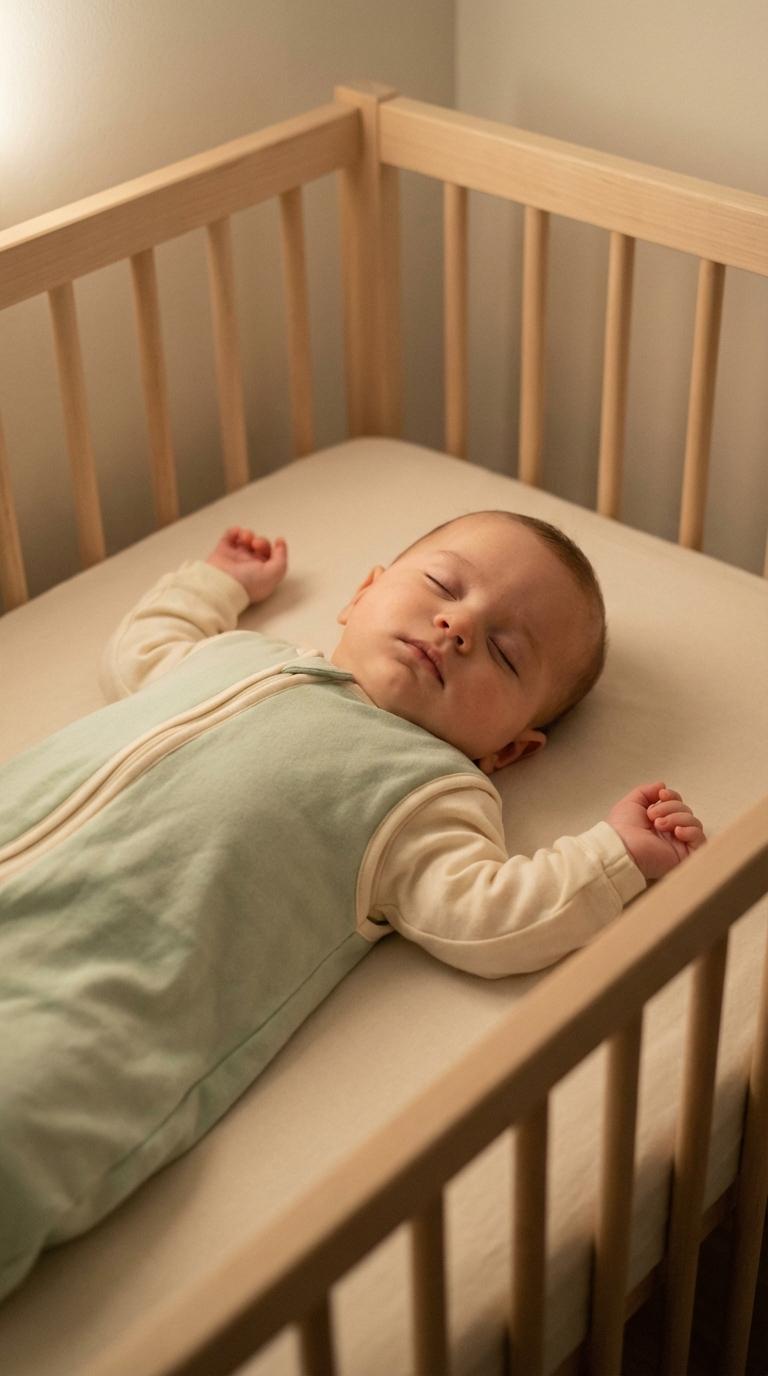
These are typically the most restorative baby naps because baby lies supine (on the back) on a firm, flat surface, which supports stable breathing and easier linking of sleep cycles.
Contact naps
Very common, especially in the first months. Skin-to-skin, warmth, and your breathing can regulate an infant’s autonomic nervous system (heart rate, stress response). If contact baby naps are the only naps that work for a while, it does not mean you’ve “broken” anything.
Stroller and car-seat naps
Real life happens. Motion can help sleep onset, but sleep may be lighter.
Safety note, without drama: car seats are for travel. If baby falls asleep and you arrive home, transferring to a flat safe sleep space is preferable for longer sleep.
The science behind baby naps (simple, but accurate)
Two biological systems drive sleep timing:
- Circadian rhythm: the internal clock, mainly set by light exposure.
- Sleep pressure (homeostatic drive): the “need to sleep” that builds while awake.
If you offer baby naps too early, sleep pressure may be low: settling drags on, naps shorten. Too late, and stress hormones (cortisol, adrenaline) rise: baby looks wired, protests, then wakes after one short cycle.
Melatonin, daylight, and the evening “second wind”
Melatonin is a hormone that helps the body recognize nighttime. In early infancy, melatonin secretion and day-night organization are still maturing, so daytime sleep is less “anchored” hormonally than night sleep.
A practical lever is light:
- Bright outdoor light in the morning (even 10 to 20 minutes) helps set circadian rhythm.
- Dimmer light and calmer stimulation in the hour before bed supports melatonin rising.
You might be thinking: “Does this really matter for naps?” Often, yes. A well-timed morning signal can make baby naps more predictable over several days, because the whole 24-hour rhythm stabilizes.
Why 30 to 45 minute naps are common
Infants have shorter sleep cycles than adults. Many babies complete one daytime cycle in roughly 30 to 45 minutes. A “one-cycle” baby nap can be entirely normal, especially if baby wakes calm and can stay comfortably awake afterward.
If your baby wakes upset after 30 to 45 minutes, that’s different. It can suggest overtiredness, hunger, discomfort, or difficulty linking cycles. The pattern over 4 to 7 days matters more than one hard afternoon.
Baby naps by age: realistic ranges (not rigid rules)
Every baby varies, but these ranges help you spot patterns.
0 to 3 months
- Often 4 to 6+ baby naps
- Wake periods: about 45 to 90 minutes
- Daytime sleep: often about 4 to 6 hours
Priorities: safe sleep, feeding on demand, and catching early sleep cues.
3 to 4 months (the “shift” many parents notice)
Sleep cycles mature. Baby naps may suddenly shorten and become harder to extend. Many babies still need 3 to 4 naps.
Helpful levers: bright morning light, a repeatable pre-nap routine, and wake windows that aren’t stretching too far.
4 to 6 months
- Often 3 baby naps
- Wake windows frequently about 2 to 3 hours
- A longer nap often begins to appear
6 to 12 months
Many babies move toward 2 naps, sometimes with a short third nap during the transition.
- Typical wake windows: about 2.5 to 3.5 hours (last window often the most sensitive)
- Daytime sleep often totals about 2 to 3 hours
A common two-nap shape looks like:
- a morning nap (often the most reliable)
- an early afternoon nap
If days feel chaotic, ask a simple question: “Is bedtime protected?” When bedtime drifts later and later, sleep debt can build, and baby naps often get even shorter.
12 to 24 months
A gradual move to one midday nap is common (often between 12 and 18 months), usually 1 to 2 hours.
2 to 3 years
Some toddlers still nap, others switch to quiet time. If naps consistently push bedtime late, quiet time may fit better.
Wake windows: the simplest way to time baby naps
A wake window is the usual amount of time baby can stay awake comfortably before sleep becomes difficult.
Typical ranges:
- 0 to 6 weeks: about 45 to 90 minutes
- 2 to 4 months: about 1.25 to 2 hours
- 4 to 6 months: about 2 to 3 hours
- 6 to 12 months: about 2.5 to 3.5 hours
- 12 to 18 months: about 3 to 4 hours
- 18 to 24 months: about 4 to 6 hours
Cues + wake windows: a strong pairing
Wake windows are your map. Cues are your road signs.
Early cues: softer gaze, yawns, rubbing face, turning away from stimulation.
Late cues: crying, arching, “second wind” hyperactivity.
If you’re unsure, adjust only one thing at a time (10 to 15 minutes earlier or later) and watch for 3 to 4 days.
Under-tired or overtired: quick pattern matching
You may see one of these loops:
- Under-tired: longer settling, playful in the crib, then a short nap.
- Overtired: faster crash, more tears, then waking after one cycle and struggling to resettle.
No label is permanent. It is just data you use to tweak timing.
Building a schedule that fits baby naps and real life
Consistency helps, rigidity hurts. A schedule that works has a few anchors and plenty of flexibility.
Useful anchors:
- a fairly steady morning wake time
- the first nap window
- bedtime
Why the first nap? Because it sets the tone for the day. When Nap 1 is wildly late, everything else slides.
Two mini examples (because planning helps)
These are not prescriptions, just realistic templates.
Example: 6 to 9 months, two naps
- Wake: 7:00
- Nap 1: 9:30 to 10:45
- Nap 2: 2:00 to 3:15
- Bedtime: 7:15 to 7:45
Example: 7 to 12 months, three naps (transition day)
- Wake: 7:00
- Nap 1: 9:15 to 10:15
- Nap 2: 12:45 to 1:45
- Nap 3: 4:15 to 4:30 (micro-nap)
- Bedtime: 7:15
Notice the goal: the late nap is short, and bedtime stays protected.
A nap routine that supports longer baby naps
A routine does not need to be long. It needs to be repeatable.
Try 5 to 15 minutes:
- diaper change
- dim lights
- white noise (steady, not loud)
- brief book or song
- into sleep space
Environment basics for baby naps:
- back to sleep
- firm, flat mattress
- fitted sheet only (no loose bedding)
- comfortably cool room (often around 20 to 22°C)
Short baby naps: the most common reasons (and what to try)
1) Overtired timing
Signs: escalating fussiness, harder settling, wakes after one cycle.
Try: move the nap earlier by 10 to 15 minutes for several days, and use an earlier bedtime buffer (15 to 30 minutes) if the day unravels.
2) Undertired timing
Signs: happy in the crib, long time to fall asleep, then a brief nap.
Try: add 10 to 15 minutes of awake time before that baby nap for 3 to 5 days.
3) Sleep associations
Rocking, feeding, motion, and contact can be helpful tools. They become limiting when baby cannot resettle between cycles without the same help.
Gentle experiments:
- finish feeding before the final wind-down
- reduce rocking intensity gradually
- choose one nap per day to practice settling in the crib
4) Light, noise, and temperature
Bright rooms and inconsistent sound can shorten baby naps. Many babies sleep longer in darkness with steady white noise.
5) Discomfort: reflux, teething, congestion
Sometimes the timing is fine and the body is the issue.
- Gastroesophageal reflux can cause burning discomfort when lying flat, discuss persistent symptoms (back arching, frequent spit-ups with distress, poor growth) with a clinician.
- Nasal congestion increases mouth breathing and can fragment sleep, saline drops and gentle suction (when needed) may help.
- Teething can cause short bursts of pain and more night waking, your pediatrician can guide safe pain relief.
Nap transitions: why they feel bumpy
Dropping from 3 naps to 2 (often 7 to 12 months)
Common signs:
- third nap is refused or very short
- bedtime is harder on three-nap days
- baby tolerates longer awake periods
Bridges that often work:
- keep a short micro-nap (15 to 20 minutes) if needed
- cap the late nap to protect bedtime
- temporarily move bedtime earlier
Dropping from 2 naps to 1 (often 12 to 18 months)
Expect mixed days. Keep mornings steady, aim the main nap around midday, and protect bedtime during the transition.
Baby naps and feeding: a practical rhythm
Hunger and sleep are tightly linked in infancy. Many babies settle better with a comfortable tummy, but feeding as the last step before every nap can become a strong association.
A commonly helpful pattern is eat-play-sleep:
- feed after waking
- play during the wake window
- wind down into sleep
If naps are short and you wonder about hunger, a small top-up 15 to 30 minutes before sleep can help some babies, especially during growth spurts. The key is to keep feeding from becoming the only “on switch” for sleep, if that is creating frequent wake-ups.
Starting solids can also affect baby naps: heavy meals right before sleep may increase discomfort in some babies (gas, reflux-like symptoms). A small gap before the wind-down can help.
Baby naps in real life: daycare, travel, and on-the-go days
- Daycare: share wake window ranges and your short calming routine, ask for a simple nap log.
- Travel/on the go: expect lighter, shorter baby naps. Aim for safety first, then return to the crib when you can.
- Late bedtime once in a while: anchor the next morning wake time and rebuild with normal wake windows.
When to seek medical advice
Discuss sleep with a clinician if you notice:
- pauses in breathing, persistent loud snoring, gasping
- labored breathing or bluish lips/face
- poor weight gain, extreme lethargy
- repeated signs of pain around sleep
Also consider a check-in if an older infant (past about 4 to 6 months) has baby naps consistently under about 30 to 45 minutes for more than 1 to 2 weeks despite appropriate timing and environment, especially if nights are also very disrupted.
Key takeaways
- Baby naps add to the 24-hour total, the place matters mainly for safety and how restorative the sleep is.
- Timing is driven by circadian rhythm (light) plus sleep pressure (awake time).
- Morning daylight can stabilize the clock and make baby naps easier to predict.
- A 30 to 45 minute baby nap often equals one infant daytime sleep cycle and can be normal.
- Wake windows plus sleepy cues help you place baby naps without rigidity.
- During nap transitions (3->2, then 2->1), micro-naps and earlier bedtime can prevent overtired spirals.
- If you’re worried about breathing, growth, or persistent distress, speak with your pediatrician.
- For tailored tips and free child health questionnaires, you can download the Heloa app.
Questions Parents Ask
Should I wake my baby from a nap?
Often, it’s fine to let a nap run its course. Waking can be helpful when a very long late-afternoon nap is pushing bedtime later and later, or when you’re protecting a consistent day rhythm (for example, to keep a 2‑nap day on track). You can try a gentle wake: open curtains, talk softly, and give a cuddle. If your baby is ill or going through a growth spurt, extra sleep can be completely normal—if you’re unsure, a quick check-in with your pediatrician can reassure you.
Why is my baby fighting naps even when they seem tired?
This is so common, and it doesn’t mean you’re doing anything wrong. Many babies resist sleep when they’re either a little under-tired (not enough sleep pressure yet) or a bit overtired (second wind, more cortisol). A simple experiment is to shift the nap start by just 10–15 minutes for a few days and watch what changes. Also, stimulation can be sneaky: bright light, noisy play, or an exciting room can make winding down harder.
Do baby naps affect night sleep?
Yes, in both directions. Too little daytime sleep can build sleep debt and make nights more restless, while very late or very long naps can reduce sleep pressure at bedtime. A helpful focus is balance: aim for age-appropriate total sleep and keep the last nap from drifting too close to bedtime, while staying flexible on busy days.

Further reading :
- Baby naps: Daytime sleep tips (https://www.mayoclinic.org/healthy-lifestyle/infant-and-toddler-health/in-depth/baby-naps/art-20047421)