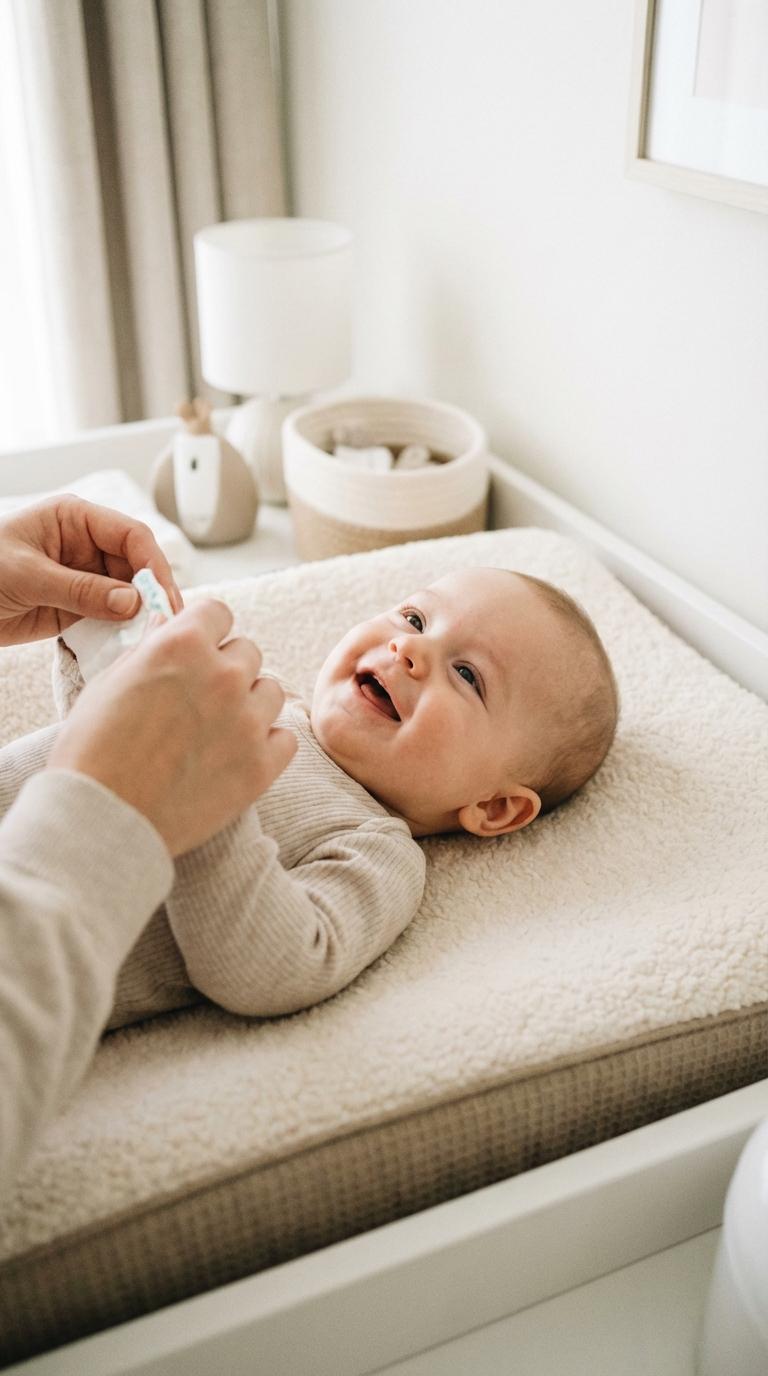
Worried you’ll do it “wrong” the first time? A diaper change can look deceptively simple until you’re facing a wriggly newborn, a surprise poop, and a wipe that seems to stick to everything except what you need. The good news: with a safe setup and a gentle sequence, you protect comfort, sleep, and skin. Moisture, friction, and stool enzymes are the usual troublemakers—so the goal is to keep the diaper area clean, dry, and calmly protected.
Diaper change basics: what it is and why it matters
A diaper change is a short care routine: remove the wet/soiled diaper, clean the diaper area, dry the skin, add protection when useful, then put on a fresh diaper.
Why does it matter beyond comfort? Baby skin is still maturing. The outer layer, called the skin barrier (it limits water loss and blocks irritants), is thinner and more reactive than adult skin. When a diaper stays wet, skin becomes overhydrated and fragile—this is maceration (softening from prolonged moisture). Add stool, which contains digestive enzymes (lipases and proteases), and irritation can appear quickly.
A regular diaper change rhythm can:


- reduce moisture and maceration,
- lower friction in the folds,
- limit leaks and blowouts,
- support better sleep for some babies,
- create a predictable caregiving moment.
When it’s time for a diaper change: what to look for
Some diapers have a wetness indicator. Helpful? Yes, especially in the first weeks. Still, your hands and eyes are reliable.
Plan a diaper change:
- as soon as there is poop,
- when the diaper feels heavy, swollen, or misshapen,
- if there’s a strong urine smell or dampness at the thighs,
- if leaks show up at the legs or up the back,
- if you notice red marks in the creases.
A detail for girls: wiping front-to-back reduces bacterial spread toward the urinary tract.
How often diaper change happens by age (realistic ranges)
There’s no “perfect number.” Absorbency, hydration, feeding (breast milk, formula, solids), and skin sensitivity all shift the pattern.
Common ranges:
- 0–3 months: often 6–10+ changes a day.
- 3–12 months: many families check every 2–3 hours during the day, plus before naps and bedtime.
- After 12 months: stool frequency can drop, but movement and sweating increase friction, fit becomes even more important.
If a diaper change is delayed: what can happen
One late change won’t “damage” skin permanently. But repeated delays raise the chance of:
- irritant diaper rash (diffuse redness, warmth, discomfort),
- small cracks/abrasions from friction,
- yeast overgrowth (often very bright red, involving folds, with small “satellite” spots),
- irritation → heavy product layers → residue → trapped moisture.
Supplies and a safe setup for diaper changes
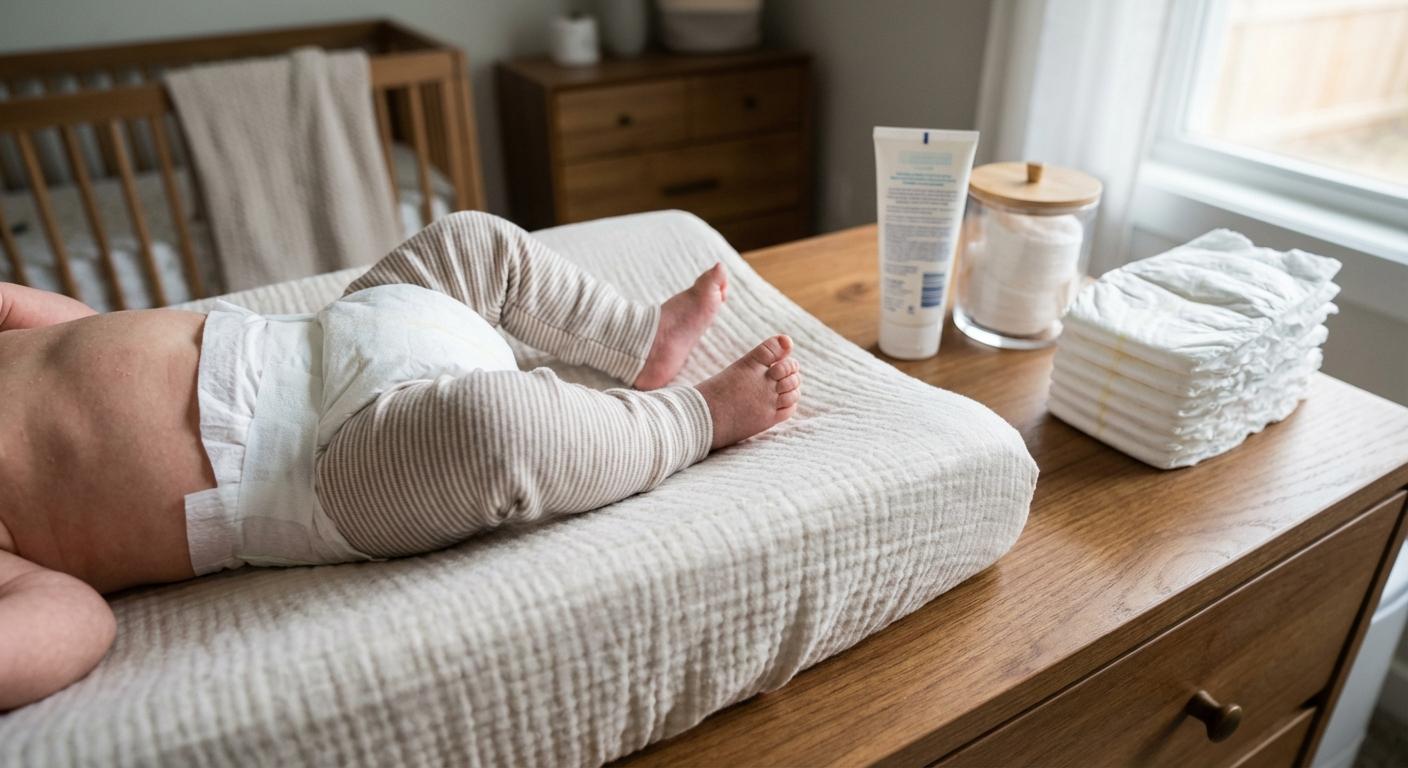
You don’t need a mountain of gear. Just the basics, within reach:
- diapers in the right size
- fragrance-free, alcohol-free wipes or warm water + cotton/soft cloth
- a small towel/cloth to pat dry
- a barrier product when needed (petrolatum or zinc oxide)
- a changing pad with a wipeable cover
- a disposal option (lined bin, pail, or bags)
Diaper size and fit: leaks, red marks, and a sneaky clothing culprit
Fit matters as much as brand.
Quick fit check:
- waistband lies flat,
- tabs are even,
- you can slip two fingers under the waistband comfortably.
Too small: compression, deep marks, leaks. Too big: gaps and leaks.
One surprising leak trigger is clothing. A tight bodysuit can compress the diaper, flatten the leg guards, and push moisture toward the back.
Wipes, water, and soap: what to choose for sensitive skin
- Warm water + soft cloth: often the gentlest, especially if skin is irritated.
- Wipes: practical when you’re out, pick fragrance-free, alcohol-free.
- Soap: only when stool is sticky. Use a very mild cleanser, then rinse.
Oils, creams, zinc oxide: what each does
- Oily balm: can reduce friction on healthy skin, it doesn’t replace cleaning after poop.
- Diaper cream: a lighter barrier for early redness.
- Zinc oxide paste: thicker, more isolating—useful when redness is more noticeable or stools are frequent.
Tip: a protective layer should be visible, but not lumpy. If layers build up, remove residue with warm water, dry well, then reapply evenly.
Creating a safe changing station (table, dresser, floor)
Falls are the main preventable risk.
- On a table/dresser: stable surface, supplies within reach, hand on baby.
- If rolling starts—or you feel unsure—the floor on a mat is often the safest.
- Keep the room warm, babies lose heat quickly when undressed.
How to do a diaper change, step by step
Set the clean diaper, wipes/water, towel, cream, and disposal option within arm’s reach. Wash hands when possible. If you’re on an elevated surface, keep one hand in contact with your baby.
2) Remove the dirty diaper without spreading mess
Undo tabs. Fold the front inward. If there’s poop, use the front of the diaper to remove the bulk, then fold it onto itself. You can briefly slide the dirty diaper under your baby as a “shield” while cleaning.
3) Clean gently, in the right direction
After urine only: gentle wipe, no scrubbing.
After poop: clean carefully, including folds (groin creases, thigh folds, between the buttocks). If needed, use mild cleanser and rinse.
Clean from the cleanest area toward the dirtiest.
- Girls: wipe front-to-back, clean external folds without over-rubbing.
- Boys: clean pubic area, penis, and scrotal folds. Do not force the foreskin back. In young children it’s often non-retractable, pulling can cause pain and tiny tears. To reduce spraying, briefly cover the penis with a clean wipe or cloth.
4) Dry well
Pat dry—especially in folds. Damp skin under a diaper macerates faster.
5) Apply barrier product when it helps
Barrier products reduce contact with moisture and irritants.
- Petrolatum: useful for prevention or very mild irritation.
- Zinc oxide: helpful when redness is clearer or stools are frequent.
Aim for a thin, even, visible layer.
6) Put on a clean diaper and check fit
Slide the diaper under your baby, keep the back waistband high enough to cover the lower back. Fasten snugly (not tight). Pull leg cuffs outward so they seal.
7) Finish: dispose, wipe down, wash hands
Roll the dirty diaper, secure with tabs, place in bag/pail. Don’t flush wipes or diapers. Clean the surface if soiled, then wash hands.
Hygiene and safety during every diaper change
Babies can roll sooner than expected. Never leave a baby unattended on an elevated surface, even for a second. If your baby squirms, a gentle side-rolling position can be easier than lifting by the ankles.
Hand hygiene
Wash hands before and after, especially after poop. Out and about? Adult hand sanitizer helps until soap and water are available.
Surface cleaning when needed
If stool or urine gets on the pad, clean with soapy water, rinse, dry.
Diaper change tips by age and situation
Meconium (the first black, sticky stools) can cling. Clean gently with warm water and a soft cloth or fragrance-free wipes, then pat dry. Keep products minimal unless redness starts.
Rolling babies: faster changes and smart positioning
Once rolling begins, treat every diaper change like a roll attempt.
- Set up first, then move briskly.
- Consider floor changes.
- Use a small distraction (a toy reserved for changes).
Toddlers and standing diaper change
Standing changes can work, especially with pull-up diapers.
- Pick a stable spot.
- Keep one hand supporting.
- Offer small choices (which diaper, which song).
After poop, lying down is often cleaner and lets you check folds and early redness.
Nighttime diaper change and feeding timing
At night:
- Poop: change.
- Urine only: if sleep is good and skin looks healthy, many babies don’t need to be woken.
Keep it low-stimulation: dim light, calm movements.
To reduce leaks:
- do a diaper change right before bed,
- consider a more absorbent overnight diaper,
- keep the back waistband higher.
Before or after breastfeeding/bottle?
- Before feeding: often more comfortable, less handling of a full tummy.
- After feeding: practical if your baby often poops during or right after feeding.
If spit-up is frequent, avoid big handling right after meals unless there’s poop.
Diaper change away from home
Pack a bit more than you think:
- diapers
- wipes or cotton + water
- portable changing pad
- disposal bags (or a waterproof bag)
- spare full outfit
- hand sanitizer
A helpful habit: do a preventive diaper change before a long car ride.
Staying hygienic on the go
Use your own pad as a barrier on public tables. Sanitize your hands afterward, then wash properly when you can.
Quick options: car and stroller
Car: park safely, use a flat surface. Never change while the car is moving.
Stroller: lock wheels, use a pad, keep a hand on your baby.
Diaper disposal and odor control
At home: a lidded pail or lined bin, empty often. On the go: seal in bags. Cloth diapers: store in a zipped wet bag, wash regularly.
Odor-control habits
- Close lids promptly.
- Empty pails frequently.
- Wipe down pails and changing surfaces as needed.
Skin care and diaper rash prevention
Most babies tolerate fragrance-free wipes well. If skin reacts or redness is present, lukewarm water and a soft cloth can be calmer for the skin.
Daily prevention and the 48–72 hour “reset”
Common triggers: moisture, friction, acidic stools (diarrhea, new solids), scented products.
For 48–72 hours when irritation begins:
- do diaper change more often,
- clean very gently,
- dry carefully (folds!),
- apply a visible barrier,
- add short diaper-free air time when possible.
Air time and drying techniques
After cleaning, pause for a brief air-dry before closing the diaper.
Troubleshooting common diaper change problems
Most leaks improve with basics:
- recheck size and fit,
- pull out leg cuffs,
- keep the back waistband higher and snug,
- check for tight clothing,
- for boys, point the penis downward before fastening.
Blowouts
Frequent blowouts can mean the diaper is too small or the back isn’t high enough.
- Consider sizing up.
- During cleanup, fold the diaper inward to contain stool.
Persistent redness or rash: when to seek medical advice
Get medical advice if:
- a rash lasts more than 2–3 days despite frequent diaper change, gentle cleaning, careful drying, and barrier protection,
- redness spreads beyond the diaper area,
- you see blisters, oozing, crusting, pustules, or open sores,
- fever, unusual sleepiness, poor feeding, or significant pain appears,
- yeast is suspected (very bright red rash in folds with satellite spots).
Caregiver comfort during diaper change
- Set the surface near elbow height.
- Bring baby close instead of leaning.
- Keep supplies within reach.
Calmer changes through routines
Predictability helps. Use a steady sequence, narrate calmly, keep movements confident and gentle. Often, a short, consistent diaper change reduces crying.
Key takeaways
- A diaper change protects comfort and skin by reducing moisture, maceration, friction, and leaks.
- Poop calls for an immediate diaper change, urine-only changes can be adapted to comfort, skin, and absorbency.
- Clean gently, reach the folds, and dry thoroughly before closing the diaper.
- Correct sizing, cuffs pulled out, a higher back waistband, and non-tight clothing prevent many leaks.
- At night, change for poop or leaks, keep the routine calm and low-stimulation.
- If redness persists beyond a few days or looks severe, get medical advice.
- Parents can download the Heloa app for personalized tips and free child health questionnaires.
Questions Parents Ask
Can you change a diaper too often?
Not really. Frequent changes are usually gentle on skin, especially if you wipe softly, pat dry, and avoid heavy rubbing. If you notice new redness after very frequent changes, it’s often from friction or product buildup rather than “too many” changes. You can try using warm water + a soft cloth for pee-only diapers, then add a thin barrier layer to reduce rubbing.
Do I need to use diaper cream at every change?
Many babies don’t. If skin looks calm, a cream isn’t always necessary. A barrier can be helpful during higher-risk moments (diarrhea, teething stools, new foods, long outings, daycare, or early redness). For prevention, a light petrolatum layer can be enough, for more visible irritation, zinc oxide tends to protect better. If cream starts to “cake,” a gentle warm-water clean can reset things.
Is it normal for my baby to cry during diaper changes?
Yes—especially in the early weeks or when babies start rolling. Cold wipes, bright light, hunger, reflux, or a sore rash can make the moment harder. You can keep the room warm, use slow hands, offer a small distraction, and keep your routine predictable. If crying suddenly becomes intense or skin looks very sore, it may be worth checking for irritation or infection with a healthcare professional.
Further reading: