
Parents often recognize croup the same way: a child who was sniffling at dinner suddenly wakes at night with a harsh, barking cough, followed by that startling high-pitched noise on the inhale. Is it dangerous? Will it pass? Should you rush out the door?
Croup is usually viral and short-lived, yet it can look dramatic in babies and toddlers because their upper airway is naturally narrow. Knowing what is happening in the throat, what you can do at home, and which warning signs call for urgent care can make the night feel far more manageable.
What croup is (and where it happens)
Croup (often called laryngotracheitis) is inflammation of the upper airway: the larynx (voice box) and the trachea (windpipe). The swelling is often strongest in the subglottic area – just below the vocal cords.
Why does that detail matter? Because in a 1-year-old, that subglottic space is already tight. Add a thin “ring” of swelling and airflow becomes turbulent. Turbulence makes noise.


So you may hear:
- A “seal-like” barking cough
- A hoarse voice
- Stridor (a high-pitched sound, usually when breathing in)
Croup is common between 6 months and 3 years (peak around 1-2 years) and tends to show up more in fall and early winter.
Why croup often worsens at night
You might wonder why croup waits for bedtime. Several factors stack up:
- Nighttime cortisol levels are lower (cortisol naturally dampens inflammation)
- Children are tired, crying ramps up breathing effort and noise
- Lying flat can worsen congestion and pooled secretions
The result can be sudden: a child who seemed almost fine at 9 pm may wake at 1 am sounding frightening.
Types of croup: viral, spasmodic, and rarer severe forms
Most families encounter viral croup. It often begins like a simple cold (runny nose, mild fever), then within 12-48 hours the cough turns barky and the voice gets raspy.
Spasmodic croup is different in its rhythm: it can start abruptly at night, sometimes with little or no fever, and may recur in the same child. Viruses can still be involved, but airway sensitivity seems to play a role.
A rarer, more serious condition is bacterial tracheitis (sometimes called bacterial croup). It may start looking like viral croup and then worsen, with:
- Higher fever
- A child who looks very ill
- Thick secretions and breathing that does not improve as expected after standard croup treatment
This form typically needs hospital care and antibiotics.
Causes and how croup spreads
Croup is most often triggered by parainfluenza viruses (types 1 and 2 are classic). Other common viruses can do it too: RSV, influenza, adenovirus, rhinovirus, enterovirus.
During some SARS-CoV-2 waves (notably Omicron), COVID-19 has also been associated with croup in children, and some reports suggested more hospital-level care than usual.
How it spreads
The viruses behind croup spread through droplets/aerosols from coughs and sneezes, and via hands and shared surfaces (toys, doorknobs).
Typical timing:
- Incubation: about 2-6 days
- Most contagious: first days of symptoms, especially if fever is present
Irritants that amplify symptoms
Irritants rarely cause croup by themselves, but they can worsen swelling and coughing:
- Tobacco smoke
- Very dry indoor air from heating
- Pollution, dust
- Strong scented sprays
Reflux can also irritate the larynx in some children, particularly when lying down. If episodes are frequent, it is worth raising with a clinician.
How to judge severity: what to look at first
When your child has croup, the most useful question is surprisingly simple: Is there stridor when your child is calm?
Stridor: “only when upset” vs “at rest”
- Stridor only when crying or very agitated often points to milder swelling.
- Stridor at rest (heard when your child is quiet) is more concerning and needs prompt medical assessment.
Signs of increased work of breathing
Look for the body working hard to pull air through the narrowed area:
- Retractions (skin pulling in at the base of the neck, between ribs, under ribs)
- Fast breathing
- Nasal flaring
- Grunting
- Fatigue, reduced interaction, or a child who seems “worn out”
Color changes (blue/gray lips or face) or low responsiveness are emergencies.
Feeding, drinking, and wet diapers: the practical reality check
Croup can reduce intake because breathing is harder and the throat feels sore. Some children vomit after a coughing spell.
Track:
- Drinking much less than usual
- Dry mouth, no tears
- Fewer wet diapers
- No urine for 4-6 hours in a young child
These clues help you spot dehydration early.
How long croup lasts
Croup typically peaks over the first 1-3 nights. The noisy phase often improves within 48 hours, especially after a steroid dose, but the cough can linger for 1-2 weeks.
Reassessment is wise if:
- Symptoms worsen after initial improvement
- Stridor at rest persists beyond 48-72 hours after treatment
- Fever is high or persistent, or your child looks increasingly unwell
How clinicians diagnose croup
Most of the time, croup is diagnosed clinically: history (barking cough, hoarseness, nighttime worsening) plus a breathing exam.
Depending on severity, clinicians may:
- Check oxygen saturation with pulse oximetry
- Use a grading tool such as the Westley croup score
X-rays and viral tests are not routine, they are reserved for unclear cases or unexpected course.
Conditions that can mimic croup (and red flags)
Not every noisy breath is croup. Seek urgent assessment if symptoms suggest another diagnosis:
- Epiglottitis (rare with vaccination): drooling, trouble swallowing, muffled voice, severe illness
- Foreign body aspiration: sudden onset after a choking episode, often without fever
- Anaphylaxis: rapid swelling, hives, vomiting, collapse after allergen exposure
- Deep neck infections (retropharyngeal/peritonsillar abscess): severe sore throat, neck stiffness, drooling, difficulty opening the mouth
Medical treatments that work
The aim is straightforward: reduce upper-airway inflammation, ease breathing, and protect hydration.
Steroids (anti-inflammatory treatment)
A single dose of dexamethasone is standard care for croup across many severity levels. Many children improve within about 2 hours.
Alternatives may include prednisolone or nebulized budesonide, depending on local practice and the child’s needs.
Nebulized epinephrine
For moderate to severe croup, especially stridor at rest, clinicians may give nebulized epinephrine. It acts quickly, but the effect is temporary, so observation (often 2-4 hours) follows.
Oxygen and fluids
If oxygen levels are low or breathing is very labored, oxygen and monitoring are provided. If dehydration is developing, children may need IV fluids.
Antibiotics
Antibiotics do not help viral croup. They are reserved for suspected bacterial infection such as bacterial tracheitis.
Caring for croup at home (mild symptoms)
If symptoms are mild and your child is breathing comfortably when calm, home care can be appropriate.
Keep your child calm – yes, it matters
Turbulent airflow gets louder with panic and crying. Holding your child upright, speaking softly, and reducing stimulation can ease the cycle.
Fluids, rest, and position
- Offer frequent small drinks (breast milk, formula, water as age-appropriate)
- Keep your child upright during flare-ups
- Prioritize sleep and quiet
Clear a blocked nose
Nasal congestion can increase total breathing effort and make feeding harder. Saline drops/spray plus gentle suction (age-appropriate) can help.
Fever and pain relief
- Acetaminophen can help fever and throat discomfort.
- Ibuprofen can be used from 6 months of age.
Use weight-based dosing as labeled or advised by your clinician.
Humid air, cool air, steam: what’s safe
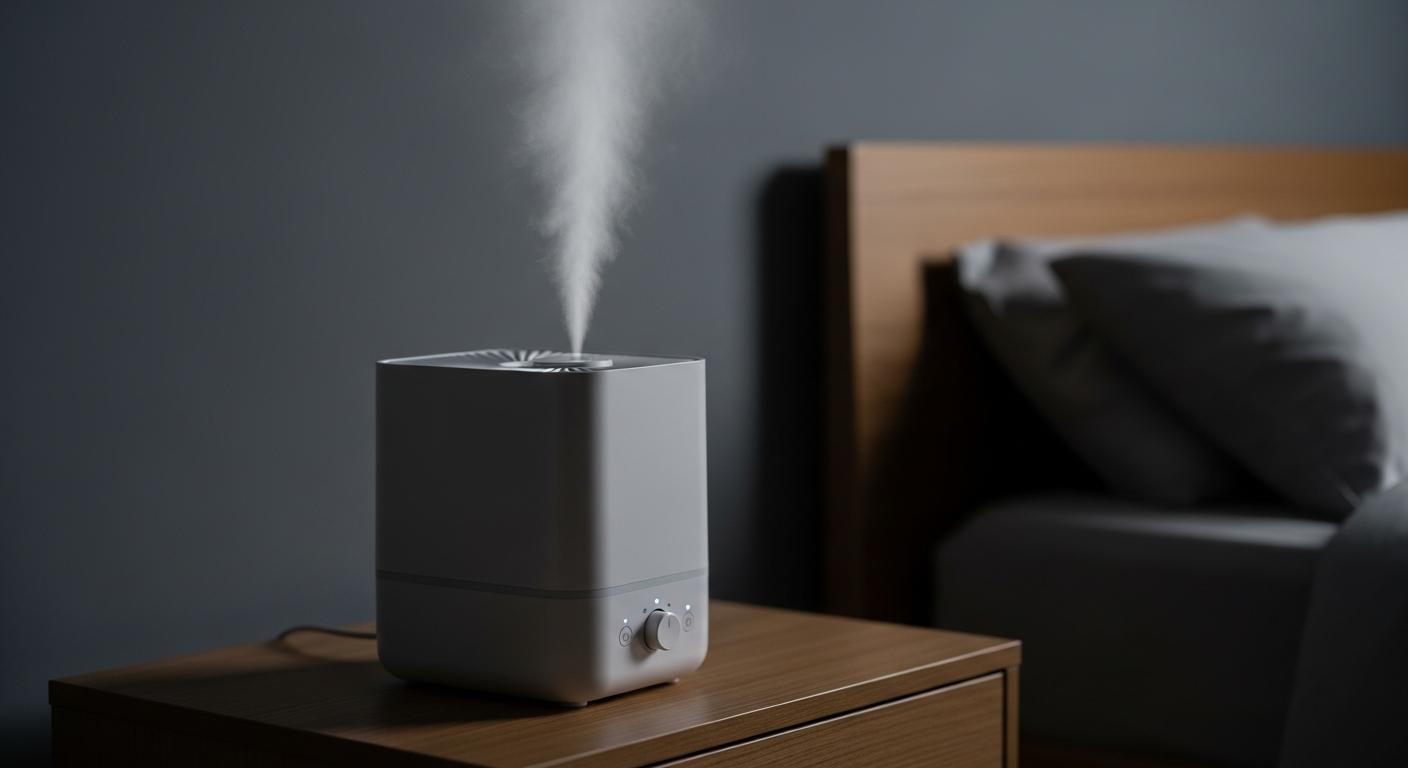
Humidified air may feel soothing, but strong evidence of major benefit is limited. If you use a humidifier, clean it regularly to avoid mold.
Avoid hot steam (steam rooms, very hot showers) because burns are a real risk and the effect is unreliable.
What to avoid
- Over-the-counter cough/cold medicines unless a clinician has advised them
- Smoke exposure and strong odors
When to call a clinician or seek emergency care
You may ask: “Is this a wait-and-see night?” Use these practical thresholds.
Same-day medical review is a good idea if
- Retractions appear
- Breathing becomes fast or clearly labored
- Stridor happens with minimal upset
- Drinking becomes difficult
- Fever persists, or your child seems unusually drained
Emergency care now if
- Stridor at rest
- Blue/gray lips or face, low responsiveness
- Drooling, trouble swallowing, or muffled voice
- Irregular breathing, pauses in breathing, extreme exhaustion
- Rapid worsening despite comfort measures
Higher-risk children need earlier evaluation
Earlier assessment is often needed for:
- Infants under 3 months
- Children born very prematurely
- Chronic lung disease, congenital heart disease
- Immune compromise
If hospital care is needed
After epinephrine, staff observe for recurrence as the medication wears off. Admission is more likely if stridor at rest persists, oxygen is required, the child is tiring, or hydration is poor.
ICU care and intubation are uncommon in croup, but they can be necessary if severe obstruction continues or if an alternative diagnosis such as bacterial tracheitis is suspected.
Prevention and returning to childcare
Croup spreads most easily in the first days of illness.
A practical return plan:
- Fever-free for 24 hours without fever reducers
- Comfortable breathing (no stridor at rest)
- Energy and intake are adequate
To reduce spread at home: hand washing, cleaning high-touch surfaces, not sharing cups/utensils, and extra caution around young babies.
Key takeaways
- Croup is a common upper-airway infection (laryngotracheitis) that can cause a barking cough, hoarseness, and stridor, often worse at night.
- In croup, the key severity check is whether stridor is present when your child is calm, stridor at rest needs prompt medical assessment.
- Most croup is viral, a single dose of dexamethasone often improves symptoms within hours and reduces return visits.
- Supportive care for croup includes calm upright comfort, frequent fluids, and clearing nasal congestion.
- Seek emergency help for croup with blue/gray color, exhaustion, drooling/trouble swallowing, irregular breathing, or rapid worsening.
- For extra support, resources exist and health professionals can guide you. You can also download the Heloa app for personalized tips and free child health questionnaires.
Questions Parents Ask
Can adults get croup, or is it only in young children?
Croup is most common in children (especially ages 6 months to 3 years) because their airways are smaller. Adults can develop a similar infection, but it’s uncommon. If an adult has noisy breathing, chest tightness, drooling, or trouble swallowing, it’s important to get medical advice promptly, as other causes may be more likely.
Is croup contagious—and when can my child return to daycare?
Yes, the viruses that trigger croup spread easily through coughs, sneezes, and hands/surfaces. Many families find the first few days are when it passes most readily. Returning to childcare is often reasonable once your child is fever-free for 24 hours (without fever reducers), breathing comfortably (no stridor when calm), and drinking/playing close to usual—no need to feel pressured if recovery is taking a bit longer.
Why does my child keep getting croup?
Recurrent episodes can happen, and it doesn’t mean you did anything wrong. Some children simply have more sensitive upper airways, and common viral infections can repeatedly “set it off,” especially in colder months. Smoke exposure and reflux can also irritate the throat in some children. If croup is frequent, unusually severe, or happening outside the typical age range, a clinician can help check for triggers and rule out other causes.
Further reading: