Pool time with a baby can feel like a small expedition: bag, towel, snacks, backup clothes… and one item that often raises questions at the entrance desk—baby swim diaper. Parents usually want the same things: avoid leaks, keep baby comfortable, respect pool rules, prevent skin irritation from chlorine or salt. A few clear principles make everything simpler: what a swim diaper can (and cannot) do, how fit prevents mishaps, and how to handle changes calmly.
Baby swim diaper basics for calmer pool days
What it is—and what it’s designed to do
A baby swim diaper (also called a swim nappy) has one primary purpose: to help contain solid stool in the water. That design is intentional. Unlike a day-to-day diaper, a swim diaper is not meant to soak up liquid.
Why? Because absorbent materials swell when saturated. In a pool, an absorbent diaper becomes heavy, droopy, and prone to gaps around the legs. A baby swim diaper stays relatively slim, allowing your baby to kick and move while relying on snug seals at the waist and thighs.
From a hygiene angle, the logic is straightforward. Pool disinfection (often chlorine, sometimes bromine) reduces germs over time, but it’s not instantaneous, and its effectiveness drops when organic matter is present. Keeping solids contained protects other swimmers—and keeps facilities from needing emergency cleaning procedures.


Baby swim diaper vs regular diaper: what changes in water
A regular diaper contains superabsorbent polymers (SAP): gel-forming particles designed to lock urine away from the skin. Put that in a pool and it behaves exactly as chemistry predicts—it absorbs water fast, swells, sags, and can pull away from the thighs.
A baby swim diaper does the opposite:
- It lets water pass through.
- It does not balloon.
- It depends on a close fit (waist + leg elastics) for containment.
What it can hold in… and what it can’t
A baby swim diaper:
- Helps hold stool in place thanks to tight seals.
- Does not hold urine in the pool. Urine passes through and dilutes in the water.
That can feel counterintuitive—“What’s the point then?” The point is shared hygiene and practical containment of solids. Think of it as a barrier garment, not a mini waterproof tank.
Why babies need a baby swim diaper at pools and lessons
Hygiene and public health: the rationale behind the rule
Fecal material can carry pathogens (for example E. coli, norovirus, Giardia). Even with proper chlorination, a stool incident may force staff to clear the pool, check disinfectant levels, and sometimes close for treatment.
Many facilities use a simple timeframe: if a child has had diarrhea, they should not swim for around 48 hours after symptoms stop (policies vary). It’s not about judging parents, it’s about preventing outbreaks in a setting where many children share warm water.
Swim school policies and the “double layer” request
A lot of pools require a baby swim diaper for any child not fully toilet trained. Swim schools often ask for more: a double diaper system—an inner swim diaper plus an outer cover (frequently neoprene).
Why neoprene? It fits snugly, improves the thigh seal, and adds a second barrier if stools are soft or if baby is very active during lessons.
Rules differ widely. A quick look at the facility’s policy before leaving home can spare you a stressful turn-around at the door.
Baby swim diaper types and styles to compare
Disposable baby swim diaper: when it shines, and where it’s limited
Disposable options are popular for occasional swims, holidays, or when laundry access is limited.
Advantages
- Convenient and fast to change
- Easy to pack
- Often have tear-away sides
Limits
- Ongoing cost, more waste
- If the size runs a little large, containment becomes less reliable
Reusable baby swim diaper: a steady choice for frequent swimmers
Reusable designs are washable and often adjustable. Fabrics may include PUL/TPU laminates (water-resistant layers bonded to fabric) or neoprene.
Advantages
- Cost-effective over a season
- Adjustable waist/leg settings on many models
- Often feel softer and more tailored
Limits
- You need a rinse-and-wash routine
- Very low absorption outside the water (so change promptly after swimming)
Some parents add an insert only after swimming for the short walk to the car—if the product allows it—because in the water, absorption is not the goal.
Swimsuits with integrated containment: convenient, but check acceptance
Some swimwear has an integrated diaper panel. The idea is appealing: one garment, fewer steps. Still, containment depends on fit at thighs and waist, and some facilities do not accept integrated designs as a substitute for a dedicated baby swim diaper.
If a pool requires a specific type (or double-layer system), it’s better to match the rule than argue at reception with a wet baby in your arms.
Closures and fit styles: snaps, pull-on, hook-and-loop
- Snaps: precise adjustments, durable over time
- Pull-on: fastest, but sizing must be exact
- Hook-and-loop: quick micro-adjustments (helpful with a wiggly baby), can wear with repeated washing
Choose the closure you can manage with wet hands and a baby who suddenly discovers the joy of twisting.
How to choose the best baby swim diaper
Sizing: weight charts are a start, not the final answer
Most brands give weight ranges. Use them—but then do a real fit check. A well-fitting baby swim diaper should:
- Sit flat at the waist (often at or just below the belly button)
- Seal at the thighs without digging deeply into skin
- Allow free movement: squat, kick, arch, sit, be carried
A practical test: you can usually slide one finger under the edge, yet you shouldn’t be able to pull the leg opening away from the skin easily.
Too small vs too big: quick signs
Too small
- Deep red marks that last
- Rubbing, baby seems bothered
- Irritation that persists after drying
Too big
- Gaps at the thighs or waist
- Repeated leaks
- The diaper rotates or slides with movement
Baby between sizes: how to decide without guesswork
Between sizes is common—babies grow in bursts. Sizing up can reduce pressure marks, but only if the thigh seal stays snug. Adjustable reusable options often handle the “in-between” weeks better.
Leak protection: what it realistically prevents
A baby swim diaper reduces stool leakage risk, it does not guarantee zero accidents. If baby poops, the correct response is simple and quick: exit the water, change immediately, and follow pool procedures.
Double-layer systems help, especially for softer stools, but supervision and prompt changing still matter most.
Comfort and skin: chlorine, salt water, friction, sensitive babies
Chlorine and sea salt can dry the skin. Add friction and dampness (skin maceration, meaning softened skin from prolonged moisture), and diaper-area irritation becomes more likely—especially in babies prone to eczema.
Habits that often help:
- Prefer soft fabrics and avoid strong fragrances
- Keep early sessions short if skin reacts
- Change out of wet swimwear promptly
- Rinse with fresh water after the pool/sea
- Pat dry (rubbing increases friction)
- Apply a simple moisturizer after rinsing if skin tends to dry
If redness returns after every swim, consider shorter water time, a different cut/material, and a second layer with softer edges.
Materials parents often see: PUL/TPU, polyester, neoprene, liners
- PUL/TPU laminates: common in reusable swim diapers, durable, quick-drying
- Polyester shells: lightweight, often chlorine-friendly
- Neoprene: snug support, frequent choice for outer covers in lessons
- Liners: can simplify cleanup after stool, but must lie flat and never interfere with the leg seal
Textile labels (such as OEKO-TEX): what they can mean
A label such as OEKO-TEX Standard 100 indicates testing for certain undesirable substances in textiles. For a garment worn on damp, sometimes chlorine-exposed skin, that can be a reassuring quality marker.
Baby swim diaper fit: putting it on without stress
How snug is “snug enough”?
Aim for “snug like swim goggles,” not painfully tight. You want continuous contact at waist and thighs, without pinching or deep indentations.
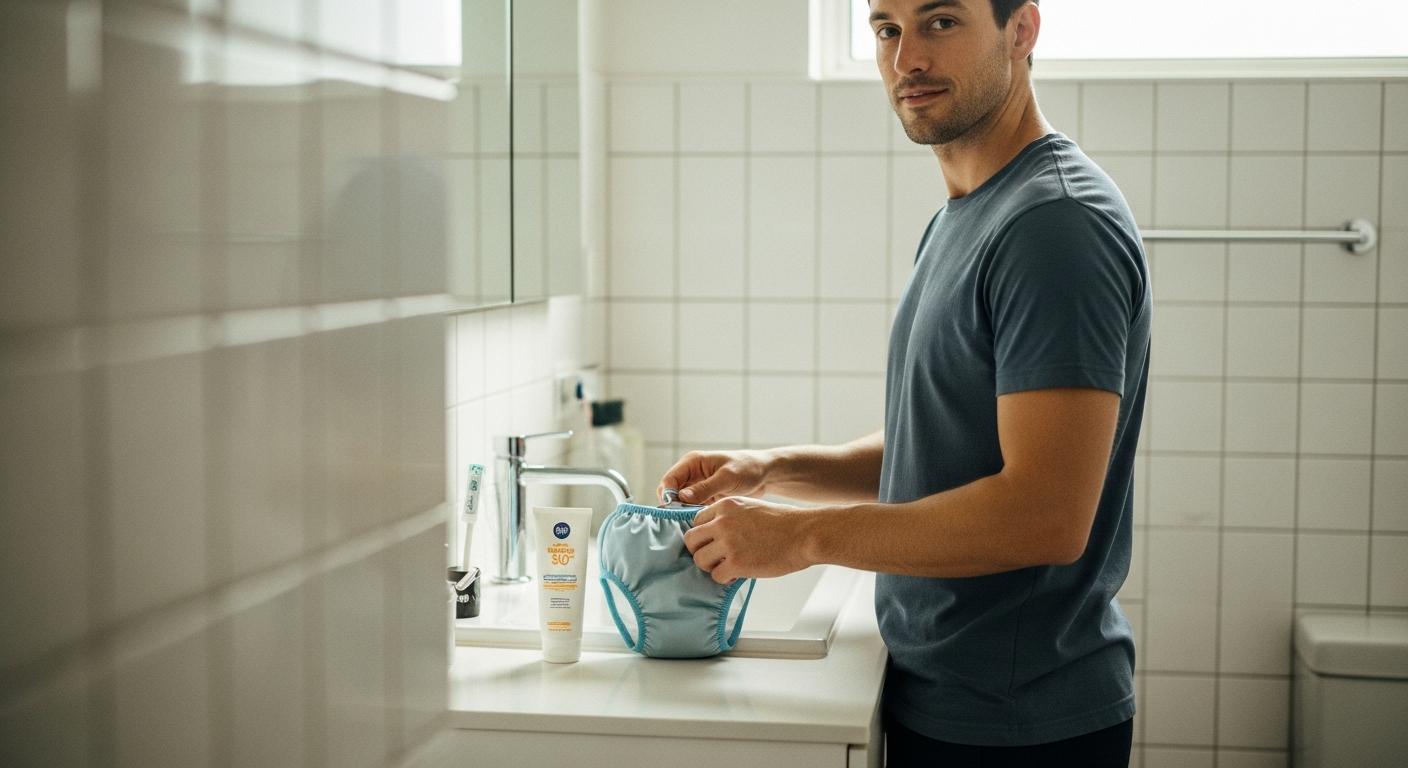
Putting on a disposable pull-on baby swim diaper
- Pull on like underwear
- Fully unfold it, make sure leg gathers aren’t tucked in
- Confirm the waistband is flat and the diaper sits into the groin creases
Putting on a reusable baby swim diaper (snaps or hook-and-loop)
- Set the waist first, then adjust legs
- Do a quick finger-check around edges
- If changes are a battle, hook-and-loop often speeds up fine-tuning
Layers: what helps and what to avoid
A rash guard or UPF top over the diaper is fine. What to avoid? A regular absorbent diaper underneath. It swells in water, drags down the fit, and increases leak risk.
If a second layer is required, use the recommended outer cover (often neoprene) and keep it smooth—no bunching.
When double-layering helps
Double-layering (inner baby swim diaper + outer cover) helps when:
- Your swim school requires it
- Stools are looser
- You want extra reassurance during lessons
A common combination: disposable swim diaper under a snug neoprene cover.
How to use a baby swim diaper at the pool, in lessons, and at the beach
Timing: why putting it on too early can backfire
Put the baby swim diaper on right before entering the water. Too early, and a poop in the lobby becomes a messy changing scenario, plus the fit may loosen once soiled.
During and after swimming: checks, changes, and switching back
- Check about every 30–60 minutes (and immediately if you suspect a bowel movement)
- If stool occurs, exit the water right away and change promptly
- After swimming, switch to a regular diaper for absorption
A simple routine that works: change just before the pool, and change immediately after.
Beach and sea swims: sand, rubbing, rinsing
Sand irritates quickly. Keep wipes, a towel, and a spare diaper within reach.
After sea water:
- Rinse skin folds with fresh water when possible
- Pat dry gently
- Change out of wet swimwear promptly to limit salt + friction irritation
Public pool vs lessons: what often changes
Public pools may focus on rule compliance. Lessons often add structure: arrive early to change, double-layer if required, and leave the water quickly if stool occurs.
If you’re unsure, ask ahead.
Leaks, poop containment and diaper rash: realistic troubleshooting
Preventing blowouts: the few factors that matter most
- Change right before swimming
- Don’t put the diaper on too early
- Recheck leg gathers (tiny thigh gaps cause most leaks)
- Avoid sizing up “just in case”
Urine outside the water: avoid the surprise soak
Out of the pool, a baby swim diaper absorbs very little. If you keep it on for the walk to the car, leaks onto towels or car seats are possible. Switching to a regular diaper after swimming prevents most problems.
If your baby poops in the water or diaper
Exit immediately, inform staff, and change in the designated area. Clean skin gently, seal soiled items in a bag, and follow the facility’s instructions.
Accidents happen even with a perfect fit. Calm, quick action beats panic.
Red marks vs chafing: what’s normal?
Light red lines that fade within an hour can be normal from a snug seal. Chafing looks like rubbed, persistently irritated skin. If that appears, try a different size or cut, or choose softer leg edges.
Baby swim diaper rash: common causes, prevention, quick relief
Common triggers:
- Friction + prolonged dampness
- Chlorine or salt drying the skin
- Staying in wet swimwear too long
Helpful prevention:
- Rinse and pat dry after swimming
- Change promptly
If rashes recur, a simple barrier cream after swimming (not right before the pool if it might affect the seal) can help. Seek medical advice if the rash is severe, oozing, very painful, or not improving after a few days.
Reusable baby swim diaper care: rinsing, washing, storage
Rinsing and storing
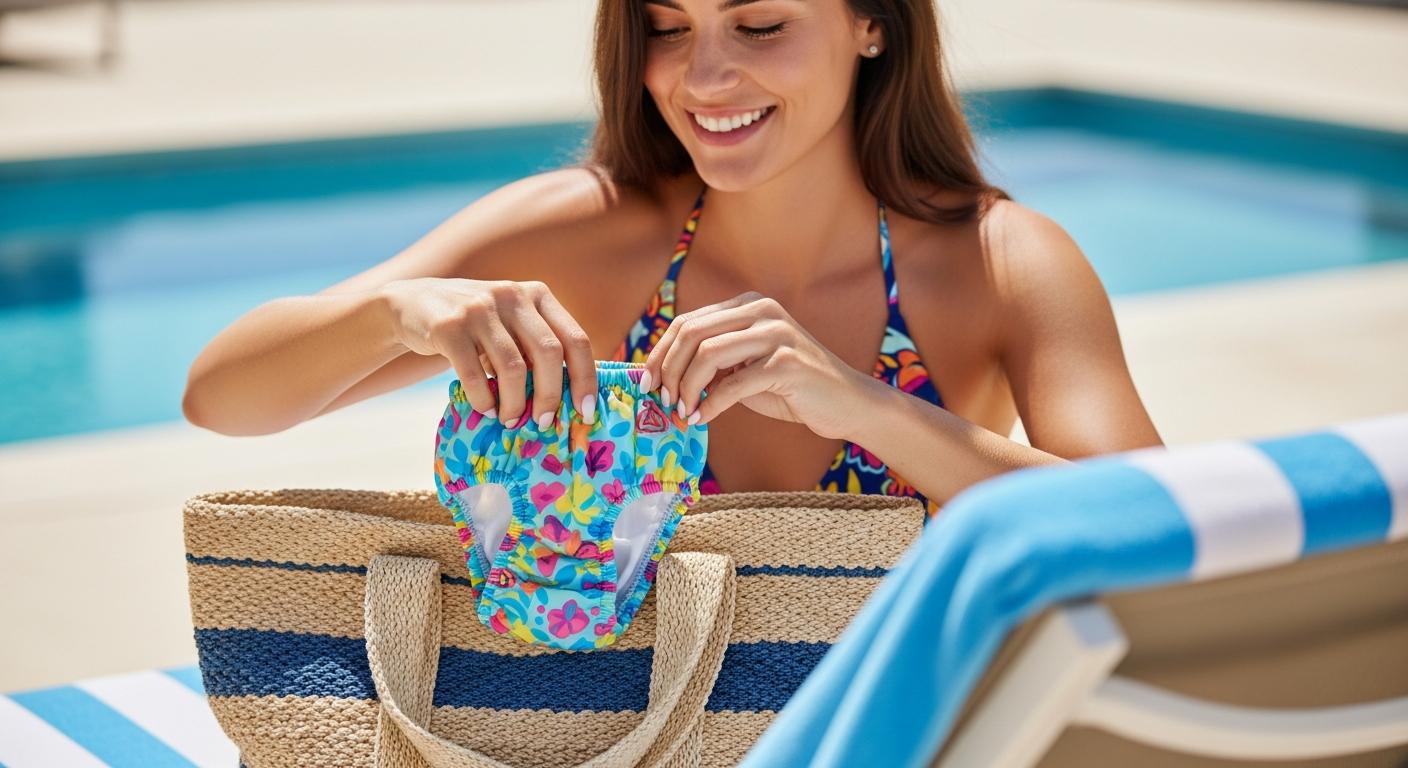
Rinse reusable items with fresh water after pool or sea use. Transport in a wet bag, then take them out at home quickly to rinse and dry.
Washing and drying: what to avoid
Follow the care label and use a mild detergent. Avoid fabric softeners (they can leave residue and trap odors). Dry fully before storing to prevent damp smells.
Key takeaways
- A baby swim diaper is designed to help contain stool in the water, it does not absorb urine like a regular diaper.
- Fit is the real leak control: snug waist and thigh seals matter more than brand.
- Disposable, reusable, and integrated options can work—choose based on swim frequency, budget, laundry access, and facility rules.
- Avoid putting a regular diaper under a swim diaper, it swells in water and can increase leak risk.
- Change right before swimming and immediately after, rinse skin after chlorine or sea water and pat dry to reduce irritation.
- For tailored tips and free child health questionnaires, download the Heloa app.
Questions Parents Ask
Do swim diapers work for diarrhea or very runny poop?
Rassurez-vous, you’re not the only parent wondering this. Swim diapers are designed to reduce the risk of stool spreading, but very loose stools can escape more easily—especially if the leg seal isn’t snug. If your baby has diarrhea, many pools ask families to wait until symptoms have been gone for about 48 hours (policies vary). If your swim school allows it, a snug neoprene cover over the swim diaper can add extra reassurance.
Can my baby wear a swim diaper under a swimsuit—or do we need a special cover?
In many pools, a regular swimsuit worn over a swim diaper is fine, as long as the waist and thighs stay well sealed. Some facilities, especially swim classes, prefer (or require) a dedicated outer cover (often neoprene) for a tighter fit and better containment. If you’re unsure, a quick call ahead can save stress at check-in.
How many swim diapers do I need for one pool session or holiday?
For one session, many parents pack 2–3 swim diapers per child: one to put on right before entering the water, one backup “just in case,” and one more if you’ll swim twice in a day. For holidays, a simple rule is: one per swim block + one extra per day. It’s a small thing that can make the outing feel much more relaxed.