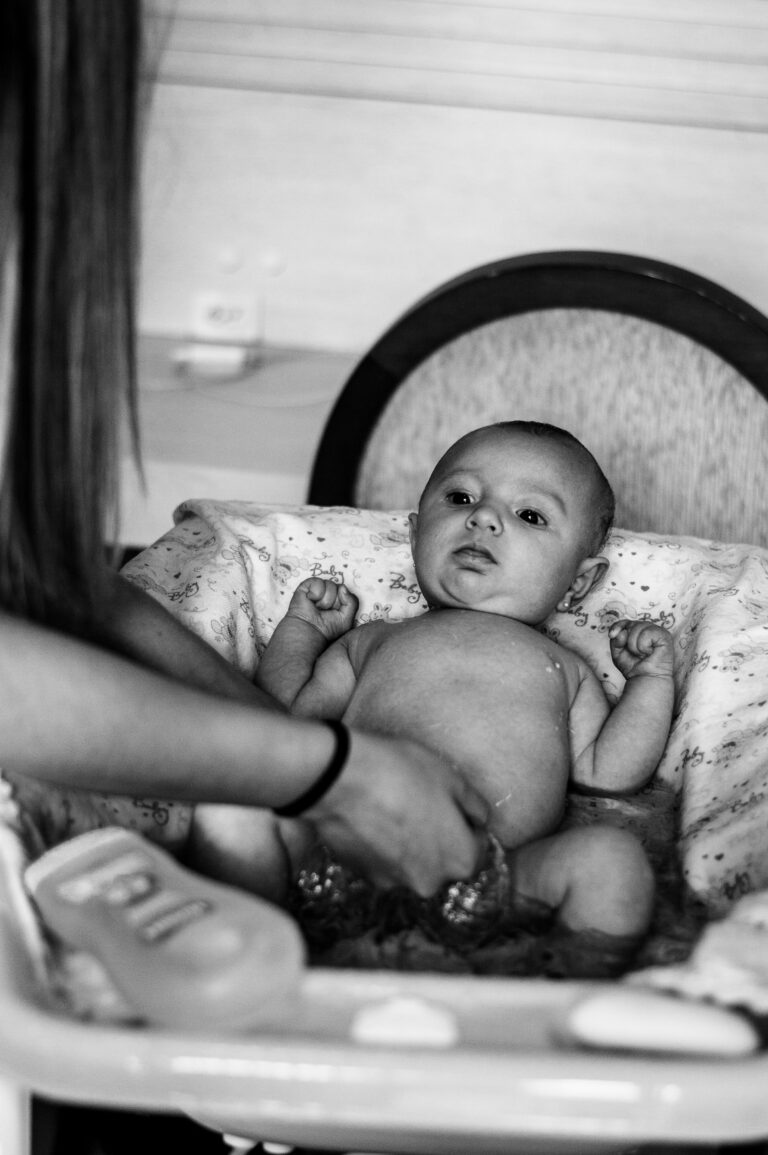
Staring at your baby’s tiny belly in the dark, waiting for the next rise? Many parents do. Baby breathing can look fast, uneven, even noisy—because the lungs, chest wall, airways, and the brain’s respiratory “autopilot” are still maturing. The goal is simple: spot what’s typical, soothe what’s uncomfortable, and recognize the signs that call for medical help.
Baby breathing basics for new parents
Why newborn breathing looks different from adult breathing
Right after birth, the cardiopulmonary system is recalibrating: oxygen needs are high, the rib cage is soft, and the brainstem’s respiratory control centers are still fine-tuning rhythm. So baby breathing may be faster, less steady, and more “stop-and-start” than adult breathing.
Small airways add another twist. A bit of mucus or mild swelling from a cold can narrow the passage and amplify sound—without the lungs being severely affected.
Belly breathing and the diaphragm: why the tummy moves more than the chest
Most infants breathe mainly with the diaphragm (the main breathing muscle under the lungs). Because the ribs are flexible, the belly often rises more than the chest. That classic “tummy breathing” is usually reassuring.


Often reassuring:
- chest and belly rising together
- smooth movement, little effort
- relaxed face and normal color
More concerning:
- visible pulling-in between ribs, under the ribs, or above the collarbones (retractions)
- “seesaw” breathing (chest sinks while belly rises)
- persistent grimacing or distress
Nose breathing and why it can sound noisy
Newborns are preferential nasal breathers. Their nasal passages are narrow, dry air, milk residue, or minor congestion can create snuffles, snorts, or a rattly sound. In many cases, baby breathing is noisy but easy.
Noise deserves faster attention when it pairs with fast breathing at rest, trouble feeding, unusual sleepiness, or a blue/gray tone around lips or face.
Baby breathing rate by age: what’s typical
Breathing rate shifts with sleep stage, fever, crying, a warm room, digestion, and even a diaper change. The trick is to assess baby breathing when calm.
Typical respiratory rates
Approximate ranges when relaxed:
- Newborn: ~40–60 breaths/min (often 30–40/min in deep sleep)
- 0–12 months: commonly 30–60/min (wide variation with activity)
- After 1 year: often 20–30/min, gradually slowing with age
If baby breathing stays over 60/min at rest (not after crying) and persists, contact a clinician.
How to count breaths without getting fooled
Pick a quiet moment. Watch the belly or chest rise and fall.
- Count for 60 seconds if you’re concerned.
- If you count 30 seconds, multiply by 2.
Jot down context (sleeping, just fed, warm, febrile). Context changes everything.
Normal baby breathing patterns that can surprise you
Irregular rhythm in the first weeks
In early life, the respiratory rhythm generator can “wander”: faster, slower, then faster again. If color is good, tone is normal, and feeding is steady, irregular baby breathing can simply reflect maturation.
Periodic breathing (short pauses + faster breaths)
Periodic breathing is common, especially in premature infants: a brief pause followed by a cluster of quicker breaths, then back to baseline.
Typical features:
- pauses around 5–10 seconds
- no color change, no limpness
Pauses: what’s typical vs too long
Brief pauses (often 5–10 seconds) can happen during sleep.
Seek medical advice when pauses:
- repeat frequently and go beyond ~10 seconds
- come with pallor, blue/gray color, limpness, or poor responsiveness
An episode around 20 seconds, or any pause with difficulty restarting normal baby breathing, is an emergency.
Baby breathing during sleep: why it looks odd at night
Quiet sleep vs active (REM) sleep
Sleep is not one steady state.
- Quiet sleep: slower, more regular baby breathing
- Active/REM sleep: facial twitches, small startles, faster/irregular breathing, occasional brief pauses
That contrast reflects autonomic nervous system maturation (the system that regulates breathing, heart rate, temperature).
Why baby breathing can sound louder when lying down
Secretions pool in the nose and throat when supine, so airflow sounds louder. If your baby settles, stays pink, and breathes without effort, the sound is often more dramatic than the illness.
Noisy breathing: decoding the sound (and the effort)
A single sound rarely tells the whole story. Pair what you hear with the work of breathing, color, feeding, and alertness.
Nasal congestion: the most common cause
Because babies rely heavily on nasal airflow, mild congestion can disrupt sleep and feeding. Baby breathing may sound like snoring or rattling, yet the lungs can be clear.
Wheeze vs stridor vs stertor
Different noises point to different locations:
- Wheezing: musical/whistling, often on exhale → lower airway narrowing (frequent with bronchiolitis)
- Stridor: harsh/high-pitched, often on inhale → upper airway narrowing (seen with croup or laryngomalacia)
- Stertor: low snoring-like sound → nose/throat congestion
Stridor at rest, worsening wheeze with distress, or any noisy baby breathing with color change needs urgent assessment.
Grunting: sometimes normal, sometimes a warning
A brief grunt with a bowel movement can be normal.
Grunting that accompanies baby breathing at rest can signal your baby is trying to keep air in the lungs (a sign of respiratory distress). If it comes with retractions, fast breathing, poor feeding, or unusual sleepiness, seek care.
Laryngomalacia: persistent inspiratory noise
Laryngomalacia is a common cause of chronic inspiratory stridor: soft tissue above the vocal cords folds inward during inhalation. It often worsens with crying or feeding and improves as the airway stiffens (often by 6–18 months).
Follow-up matters if baby breathing noise is constant, feeding is affected, weight gain slows, or pauses/distress appear.
When baby breathing is not normal
Fast breathing that persists while calm
One count right after crying can mislead. Recheck once settled.
- Persistent >60 breaths/min at rest, especially in young infants, deserves prompt medical advice.
Signs of increased work of breathing
Look for:
- retractions (ribs/collarbones)
- nasal flaring
- grunting at rest
- visible neck muscle use
- seesaw pattern
These signs mean baby breathing is costing extra energy.
Color and behavior changes
Call emergency services if you see:
- blue/gray lips, tongue, or face
- marked limpness or poor responsiveness
Other red flags that need urgent medical input:
- unusual paleness/gray tone when ill
- very hard to wake, or suddenly “not like himself”
Feeding: the early, practical alarm bell
Suck–swallow–breathe coordination is demanding. When breathing is difficult, feeding often becomes the first struggle.
Watch for:
- frequent pauses to catch breath
- shorter, tiring feeds or refusal
- sweating with feeds
- fewer wet diapers (possible dehydration)
Breathing concern + clear feeding drop = call for advice.
Common reasons for fast or difficult baby breathing
Viral colds and upper airway congestion
Most infants catch viral colds. The nose swells, mucus increases, and baby breathing sounds louder. The biggest day-to-day issue is often feeding.
RSV and bronchiolitis
Bronchiolitis (often due to RSV) inflames small airways (bronchioles). Typical features include cough, wheeze or crackles, tachypnea (fast breathing), retractions, and reduced intake. Dehydration can develop quickly when breathing speeds up and feeding drops.
Higher risk of a tougher course: very young infants (often under ~3 months) and premature babies.
Croup
Croup causes swelling around the larynx and trachea. Hallmarks: barking cough, hoarse voice, and stridor—often worse at night. Stridor at rest or increasing effort warrants urgent evaluation.
Pneumonia
Pneumonia can present with fever, cough, fast baby breathing, retractions, grunting, low energy, and poor feeding. Assessment may include examination, oxygen saturation, and sometimes imaging.
Reflux-related airway irritation
Gastroesophageal reflux can irritate the upper airway and trigger cough, gagging, discomfort after feeds, regurgitation, or hoarseness. If symptoms cluster after eating, or weight gain slows, discuss it with a clinician.
Newborn period: transient tachypnea of the newborn (TTN)
In the first days, transient tachypnea of the newborn (TTN) can cause rapid breathing due to delayed clearance of lung fluid. It often improves within 24–72 hours with monitoring and supportive care, and is more common after cesarean birth.
Sudden onset during eating or play
A sudden coughing fit with breathing trouble can suggest foreign body aspiration. Treat as an emergency.
How to check baby breathing at home (safely, without spiraling)
Quick observation checklist
When you’re unsure about baby breathing, check:
- rate at rest (60-second count)
- retractions, nasal flaring, grunting
- color around lips/face
- alertness and ease of waking
- feeding stamina and wet diapers
- temperature (and how it was measured)
A short video of the chest/neck during breathing can be extremely helpful for a clinician.
Pulse oximeters and smart monitors: useful, but limited
Home pulse oximeters can misread with motion, cold extremities, or poor fit. A normal number does not cancel out visible respiratory effort.
Smart breathing monitors may reduce worry for some families, yet false alarms are common. They do not prevent SIDS and should never delay care when baby breathing looks wrong.
Helping your baby breathe more comfortably at home
Saline + gentle suction for a stuffy nose
- Place saline drops in each nostril.
- Wait 30–60 seconds.
- Suction gently if needed (do not insert deeply).
Over-suctioning can inflame the nasal lining and worsen congestion.
Environment: air quality, humidity, temperature
- Keep air smoke-free, avoid vaping aerosols.
- Skip strong fragrances and irritating sprays.
- Keep the room comfortably cool (often 18–20°C / 64–68°F suits many babies).
- Aim for moderate humidity (40–60%) and clean humidifiers carefully to avoid mold.
Positioning when awake
Upright cuddling can ease congestion and reflux discomfort. Skin-to-skin can steady breathing and calm fussiness.
Sleep safety that supports baby breathing
Back to sleep, every sleep, on a firm flat surface (crib, bassinet, play yard) with a fitted sheet only.
Keep the space clear:
- no pillows
- no loose blankets
- no stuffed toys
- no bumper pads
Inclined sleepers are not advised: babies can slump forward and obstruct the airway, and reflux outcomes do not consistently improve.
When to call the doctor vs go to the emergency room
Seek same-day medical advice
- baby breathing faster than usual at rest and not settling
- new or worsening noisy breathing that persists
- feeding drops, tiring during feeds, fewer wet diapers
- fever plus a baby who seems unwell
- pauses that seem longer than usual or happen repeatedly
Emergency: go now / call emergency services
- blue/gray lips, tongue, or face
- severe retractions, nasal flaring, or grunting at rest
- pause around 20 seconds, or any pause with limpness/poor responsiveness
- cannot feed at all, or becomes very sleepy and hard to wake
What to share with the clinician
- age, prematurity, known heart/lung issues
- symptom timeline
- calm breathing rate you counted
- what you see (retractions, flaring) and hear (wheeze/stridor)
- temperature and method
- feeding amounts and wet diapers
- short video if available
First aid if a baby is choking or stops breathing
If your baby cannot breathe, cough, or cry effectively:
- 5 back blows (between shoulder blades), baby face-down along your forearm, head lower than chest
- 5 chest thrusts (two fingers on the lower half of the breastbone, just below the nipple line)
- alternate until breathing returns or help arrives
If unresponsive: call emergency services and start CPR.
Key takeaways
- Baby breathing is naturally faster than adult breathing and varies with sleep, temperature, crying, and feeds.
- Irregular rhythm and periodic breathing with pauses around 5–10 seconds can be normal in newborns.
- Pauses repeatedly over ~10 seconds deserve medical advice, a pause around 20 seconds or any pause with color change/limpness is an emergency.
- Noisy breathing is often nasal congestion, but stridor at rest, worsening wheeze, or grunting at rest needs assessment.
- Retractions, nasal flaring, color change, unusual sleepiness, and feeding decline are key warning signs.
- Professionals can help you decide what to do next, you can also download the Heloa app for personalized tips and free child health questionnaires.
Questions Parents Ask
Why does my baby hold their breath, then breathe quickly again?
No worries—many newborns show “periodic breathing,” especially during sleep. You may notice a brief pause, then a few faster breaths, and then things settle. If your baby stays pink, moves normally, and seems comfortable, it’s often part of normal maturation. For peace of mind, you can time the pause and note how your baby looks (color, tone, responsiveness). If pauses seem to be happening often, last longer than you’re used to, or come with limpness, unusual sleepiness, or a blue/gray color around the lips or face, reaching out for medical advice is a good idea.
Can reflux cause noisy breathing in babies?
Yes—some babies have reflux that irritates the throat and upper airway. This can show up as intermittent noisy breathing, throat-clearing sounds, cough after feeds, hoarseness, frequent spit-ups, or discomfort when lying flat. Gentle, practical steps can help: paced feeds, keeping your baby upright for a short time after feeding while awake, and checking nipple flow if bottle-feeding. If noisy breathing is persistent, feeding becomes stressful, or weight gain slows, it’s important to discuss it with a clinician so you can get tailored support.
Is a monitor enough to know my baby is breathing OK?
Monitors can feel reassuring, but they can also give false alarms and may miss what your eyes catch. It’s often more helpful to focus on how your baby looks: easy breathing, normal color, and usual alertness are reassuring signs. If something looks “off,” trusting your instincts and seeking medical advice is always reasonable.
Further reading:
- Difficulty breathing or noisy breathing (https://www.alderhey.nhs.uk/conditions/symptoms-checker/difficulty-breathing/)
- Assessing your baby’s breathing (https://rightdecisions.scot.nhs.uk/media/ocojach5/assessingyourbabys_breathing.pdf)
- Breathing Problems | Children’s Hospital of Philadelphia (https://www.chop.edu/conditions-diseases/breathing-problems#:~:text=Rapid%20or%20irregular%20breathing.&text=A%20baby%20who%20is%20overheated,can%20be%20a%20serious%20problem.)