
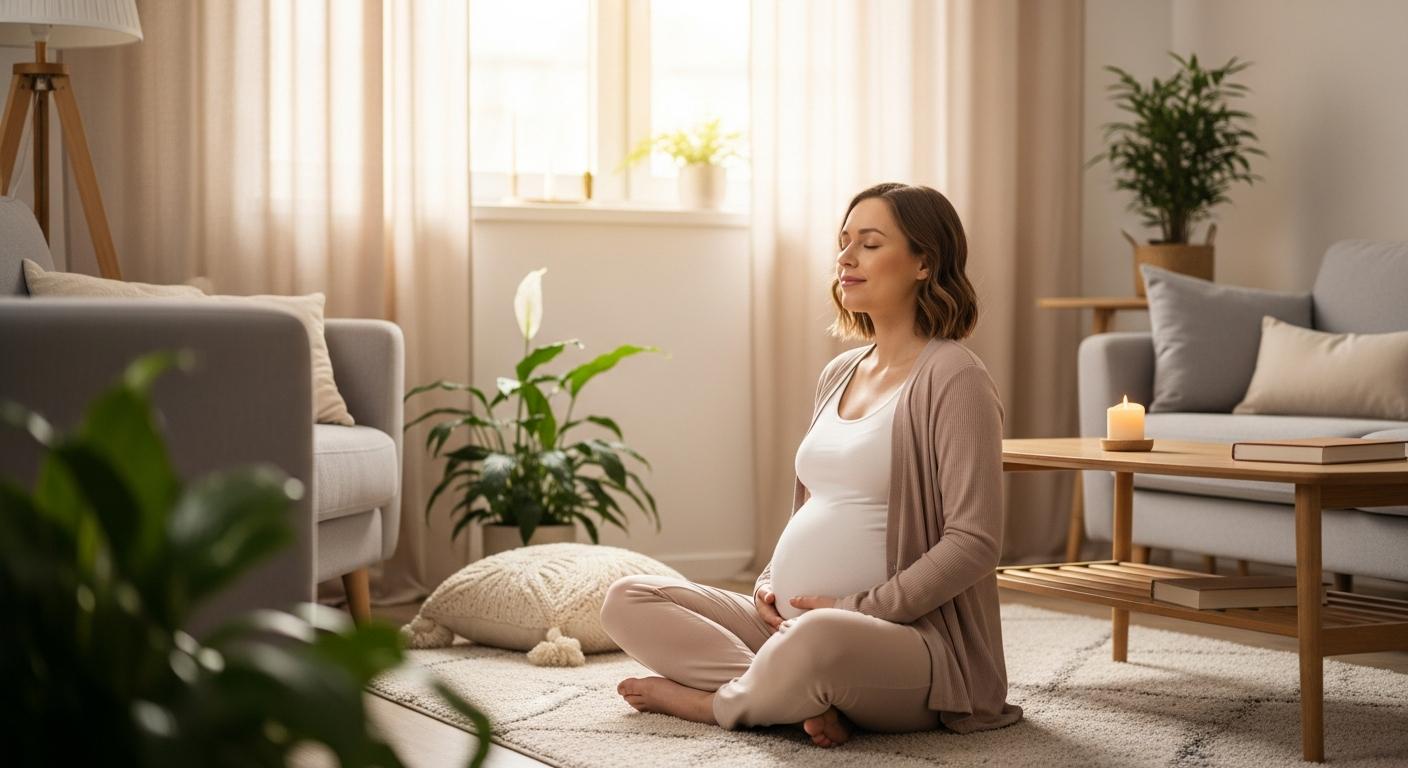
Pregnancy can be joyful—and strangely loud inside the mind. One minute you are planning names, the next, your shoulders are up by your ears, your jaw is locked, and sleep feels like a rumor. Prenatal relaxation offers small, repeatable ways to bring the body back toward calm, even when life does not slow down. Breathing, guided imagery, mindfulness, progressive muscle release, and gentle movement can ease stress chemistry (think cortisol), support steadier sleep, and—bonus—double as coping skills for labor.
Prenatal relaxation: what it means (and what it does not)
A practical definition
Prenatal relaxation refers to mind–body techniques adapted for pregnancy that help reduce stress reactivity and soften muscular tension. It often includes diaphragmatic breathing, progressive muscle relaxation (PMR), guided imagery, mindfulness, and prenatal yoga or other gentle movement.
What it is not: a promise that you will feel zen all day. Worry is not a character flaw, it is a nervous system doing its job. The aim is simpler—creating a “reset button” you can press on purpose.
Why pregnancy changes the equation
General stress management is broad: planning, social support, exercise, boundaries. Prenatal relaxation stays closer to pregnancy reality: shortness of breath from a growing uterus, reflux that dislikes lying flat, pelvic pressure, and the safety detail many people forget—after roughly 20 weeks, long periods on your back can trigger supine hypotension (compression of major blood vessels, causing dizziness or nausea).


What stress does biologically (HPA axis, cortisol, muscle tone)
When stress spikes, the hypothalamic–pituitary–adrenal (HPA) axis increases cortisol and other stress mediators. The placenta has protective enzymes that limit fetal exposure, yet persistent stress can still raise overall exposure. Meanwhile, the autonomic nervous system shifts toward sympathetic “fight-or-flight”: heart rate climbs, breathing becomes shallow, muscles brace.
You might recognize it as:
- clenched jaw, tight shoulders
- headaches, palpitations
- “wired but tired” evenings
- a pelvic floor that feels held, not heavy
The counterweight is parasympathetic (often linked to vagal tone): slower exhale, softer muscles, steadier rhythm.
Why the breath is such a powerful lever
Slow, comfortable breathing—especially with a longer exhale—often nudges the parasympathetic system on. Heart rate can slow, blood pressure may ease slightly, the body reads “safer.” Research on paced breathing also links steadier breathing patterns to improved heart rate variability (a marker of flexible stress adaptation). No need to chase a perfect number. If counting makes you tense, drop it.
Benefits parents often notice with prenatal relaxation
Less anxiety, fewer stress spirals
Many clinical trials of mind–body interventions in pregnancy show small-to-moderate reductions in perceived stress and anxiety. Parents frequently describe something subtle but precious: fewer runaway thoughts after an appointment, less dread before blood tests, more ability to pause.
Better sleep quality (even when nights are still broken)
Pregnancy sleep can fragment for many reasons—frequent urination, ligament discomfort, reflux, fetal movement, and a mind that chooses 2 a.m. for budgeting. Prenatal relaxation will not erase the causes, but it can shorten the “back to sleep” runway. A slow-breath + mini body scan is often more effective than trying to force sleep.
Emotional balance and perinatal mental health support
Hormones, life changes, and uncertainty can amplify emotions. Relaxation skills encourage observing emotions as experiences that rise and fall. They can support perinatal mental health, but they are not a replacement for professional care when symptoms are intense, persistent, or impairing.
More physical comfort: neck, back, jaw… and pelvic floor
Stress commonly lands in the jaw, shoulders, upper back, and pelvic floor. Lowering muscle tone can ease aches and reduce that “armor” feeling.
Labor preparation you can actually use
One reason clinicians like prenatal relaxation is practical transfer. In labor, many people reflexively tense and hold their breath, that increases overall tone and can intensify pain perception. Training a long exhale, a loose jaw, and a released pelvic floor builds a skill set that shows up on the day.
Safety first: practicing prenatal relaxation with confidence
Gentle, breath-led, comfort-first
If a technique feels unpleasant, scale it down.
- Keep breathing natural, avoid breath holding.
- Choose supported positions.
- Use pillows liberally.
When to check with your clinician
Ask your obstetrician or midwife before adding movement-based practices if you have activity restrictions or a higher-risk situation (examples: placenta previa, preeclampsia concerns, multiple pregnancy, threatened preterm labor). Medical conditions such as hypertension, heart disease, or poorly controlled diabetes may call for shorter, gentler sessions focused on breathing and imagery.
Stop and seek medical advice if you notice red flags
Stop the practice and contact a healthcare professional if you develop:
- dizziness or fainting
- chest pain or trouble breathing at rest
- vaginal bleeding
- fluid loss
- severe headache or vision changes
- severe abdominal pain
- regular painful contractions before term
- reduced fetal movement
Positions that tend to work well
- Side-lying with pillows (between knees, under belly, behind back)
- Supported sitting (great for reflux)
- Semi-reclined (rest without lying flat)
After about 20 weeks, avoid prolonged flat-on-the-back rest to reduce the risk of supine hypotension. If you end up there briefly, roll to your side.
Heat, environment, and overheating
Skip hot tubs and saunas. Warm showers or baths can be soothing, but keep water warm—not hot—and get out if you feel flushed, dizzy, or nauseated.
Core principles that make prenatal relaxation stick
Make comfort the first “technique”
A pillow under the belly, one behind the back, one between knees—suddenly the nervous system stops arguing with gravity.
Short and frequent beats long and rare
Two minutes counts. So does one long exhale while washing your hands.
Personalize your menu
Pick:
- one breathing practice
- one muscle release practice
- one attention anchor (music, imagery, body scan)
Breathing techniques for prenatal relaxation
Diaphragmatic breathing (pregnancy-friendly)
Place one hand on the belly and one on the chest.
- Inhale gently through the nose, let the belly rise more than the chest.
- Exhale slowly through the nose or softly pursed lips.
Try a comfortable rhythm such as 4 seconds in, 6 seconds out—without forcing depth.
Exhale-focused breathing for fast calming
Inhale for 3–4, exhale for 6–8. Longer exhale = stronger “brake” signal for many people. Keep the jaw loose.
Paced breathing (counting without striving)
Choose a steady pattern you can maintain: 4 in / 4 out or 3 in / 3 out if you feel short of breath.
“No-hold box” option
Classic box breathing uses breath holds. In pregnancy, skip holds:
- 4 in / 4 out for 1–3 minutes
Straw breathing (labor-friendly control)
Exhale slowly through the mouth as if blowing through a straw—thin, continuous airflow. Often very effective when intensity rises.
A 60-second reset for stress spikes
Six cycles of: inhale 4, exhale 6–8. If you feel dizzy, drop the counting.
Progressive muscle relaxation (PMR) adapted for pregnancy
Why PMR works
PMR alternates gentle tension and release, teaching the body to recognize hidden holding patterns.
A step-by-step sequence
Settle side-lying or supported sitting. Breathe naturally.
For each area: tense lightly for 3–5 seconds, then release for 15–30 seconds.
- forehead/eyes
- jaw (gentle clench)
- shoulders (lift slightly, then drop)
- hands/arms (make fists, then soften)
- upper back (tiny shoulder-blade squeeze)
- abdomen (very gentle, or skip)
- glutes/hips
- thighs
- calves
- feet/toes
Guided imagery: using the brain to change the feeling in the body
What guided imagery is
Guided imagery for pregnancy uses imagination to create sensory calm—safe places, warmth, supportive images.
A simple 3-minute script
Breathe slowly. Picture a place that feels safe. Add three details (sound, temperature, light). On each exhale, release jaw, shoulders, hips.
Mindfulness and meditation during pregnancy
The basic skill: returning
Mindfulness during pregnancy is noticing breath, sensations, and emotions without judging yourself. Thoughts will appear. The practice is returning.
Handling intrusive thoughts
Label it: “worry.” Then go back to an anchor: breath, sound, feet on the floor, or a hand on the belly.
Prenatal yoga and gentle movement that supports prenatal relaxation
Breath-led movement improves circulation and reduces muscle guarding. Options that are often well tolerated: cat–cow, pelvic tilts, hip circles, supported standing poses, short walks, side-lying stretches.
Avoid deep twists that compress the abdomen, strong backbends, and prolonged supine holds later in pregnancy. Stretch to a comfortable edge—joint laxity increases.
Pelvic floor relaxation: the missing half of the story
The pelvic floor supports bladder, uterus, and bowel. Kegels train contraction, relaxation trains lengthening and release. Inhale: belly expands. Exhale: imagine pelvic floor melting downward and widening. No pushing—softening only.
A surprisingly effective cue: loosen the jaw first, then check the pelvic floor again.
Prenatal relaxation for sleep: a wind-down routine
- Dim lights and step away from screens 30–60 minutes before bed.
- Five minutes: inhale 4, exhale 6.
- Two minutes: quick PMR (jaw, shoulders, hands, thighs, feet).
- Two minutes: safe-place imagery.
If you are wide awake after about 20 minutes, get up for a quiet activity in dim light, then return when drowsy.
Prenatal relaxation by trimester
First trimester
Short sessions (3–8 minutes), seated or side-lying. Nausea-friendly: gentle breathing, minimal scent.
Second trimester
A good window for consistency: 5–15 minutes most days. Add gentle movement and practice steady breathing rhythms you can reuse in labor.
Third trimester
Prioritize comfort and circulation: side-lying rest, leg elevation, ankle circles. Avoid prolonged flat-on-the-back positions.
Using prenatal relaxation during labor and birth
At the start of a contraction, find your breath rhythm. As intensity rises: soften jaw, shoulders, hands—then let that release travel toward hips and pelvic floor. Between contractions, rest fully.
A cue many parents like: Loose jaw, soft hands, open pelvis.
Key takeaways
- Prenatal relaxation includes breathing, muscle release, imagery, mindfulness, and gentle movement adapted for pregnancy, it can ease stress, support sleep, and strengthen coping.
- Slow breathing with a longer exhale supports parasympathetic activity, use it before appointments, during nausea, at bedtime, and during labor.
- Comfort-first matters: side-lying, supported sitting, and semi-reclined positions tend to work best, avoid prolonged flat-on-the-back rest after about 20 weeks.
- Stop and seek medical advice for dizziness/fainting, chest pain/shortness of breath at rest, bleeding, fluid loss, severe headache/vision changes, severe abdominal pain, regular painful contractions before term, or reduced fetal movement.
- For tailored tips and free child health questionnaires, you can download the Heloa app and keep professional resources close at hand.
Questions Parents Ask
Can I practice prenatal relaxation in the first trimester, even with nausea or fatigue?
Yes—many parents find it helpful early on, and it can stay very gentle. If nausea is strong, shorter sessions often feel more manageable: 30–90 seconds of slow breathing, a brief body scan, or listening to a calm audio while sitting upright. Some days, “relaxation” is simply choosing a comfortable position and loosening the jaw and shoulders. If a technique makes symptoms worse, you can switch to a different one without worry.
Are essential oils a safe way to relax during pregnancy?
It depends. During pregnancy, stronger scents can trigger nausea or headaches, and some essential oils are not recommended. If you enjoy fragrance, it’s usually best to keep it light: good ventilation, minimal quantity, and stopping right away if you feel dizzy, irritated, or unwell. For many parents, scent-free options (music, guided imagery, warm shower, breathing) provide the same calming effect with fewer uncertainties. When in doubt—especially with asthma, migraines, or a higher-risk pregnancy—checking with a clinician is reassuring.
Can prenatal relaxation be done at home without classes or special equipment?
Absolutely. A pillow, a chair, and a few minutes can be enough. You can try: a longer exhale for 1–2 minutes, a mini muscle release (jaw, shoulders, hands), or a short safe-place visualization. Consistency matters more than duration—small, repeatable moments often feel the most supportive.
Further reading: