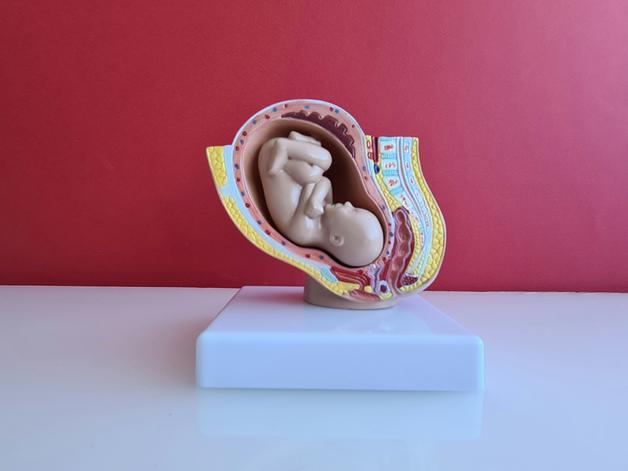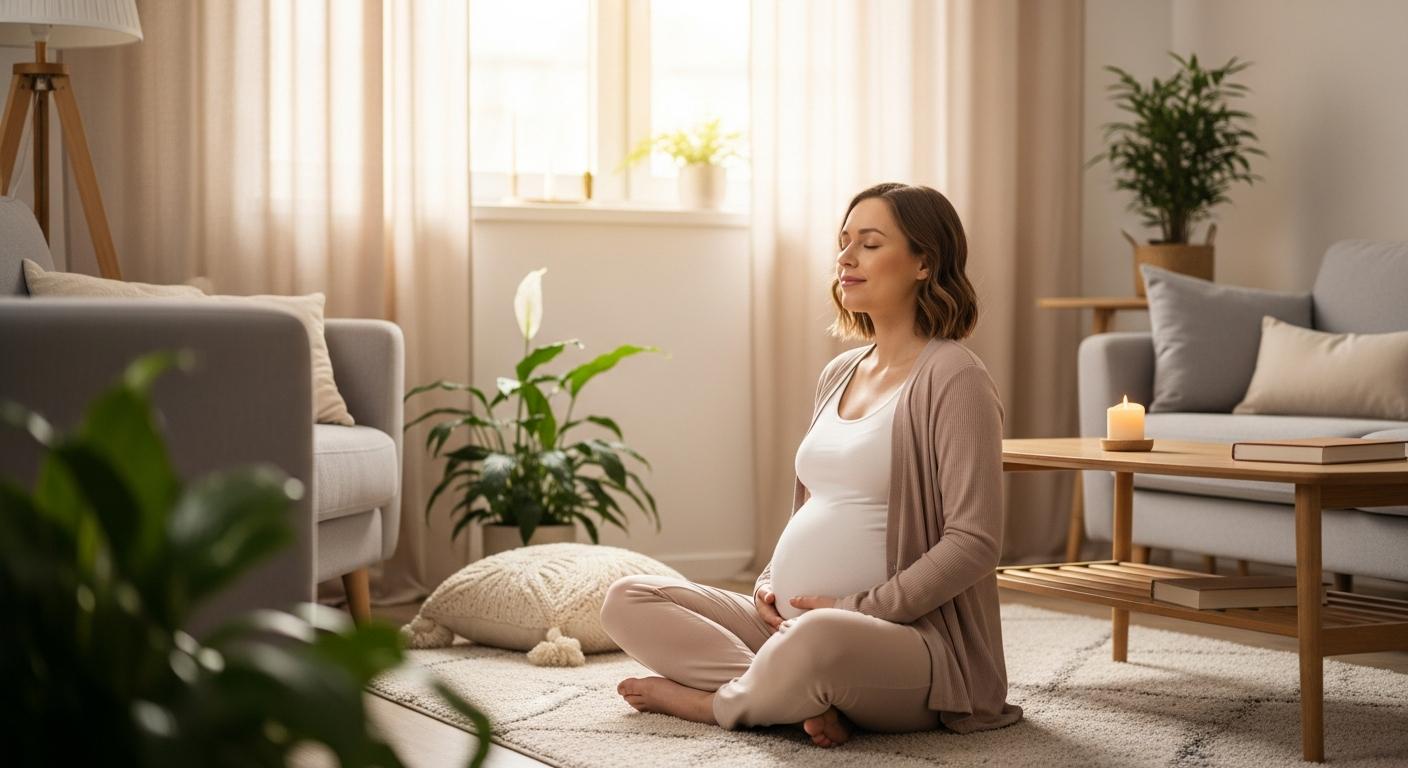
Pregnancy can feel like two tracks running at once: the body doing extraordinary work, and the mind running its own marathon. One day you are excited, the next, you are alert for every twinge, every test result, every story shared in a family WhatsApp group. Prenatal relaxation offers simple, pregnancy-safe ways to settle the nervous system—without forcing you to stay positive or pretend you are not worried. We will look at what prenatal relaxation is, how stress biology works (cortisol, autonomic nervous system), which techniques are safe at home, how to adjust by trimester, and how these skills can also support labour coping.
Prenatal relaxation: what it is and why it matters
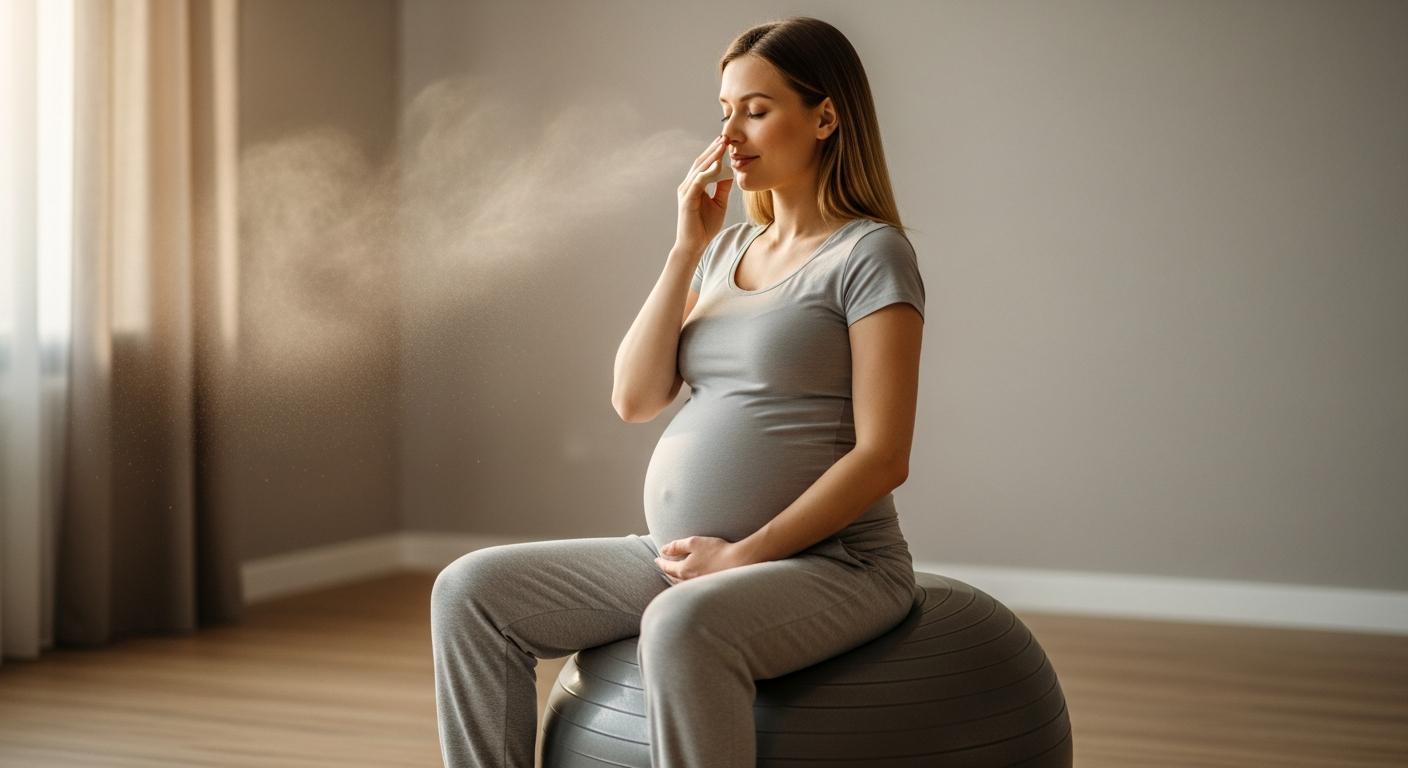
Prenatal relaxation is a set of gentle mind-body skills used during pregnancy to reduce stress and bring the body back towards calm. It often includes diaphragmatic breathing, progressive muscle relaxation (PMR), guided imagery, mindfulness, and pregnancy-adapted movement. The aim is not to empty your mind, it is to create small, repeatable pauses where breathing steadies and muscles soften.
When stress rises, the body activates the hypothalamic-pituitary-adrenal (HPA) axis and releases stress hormones like cortisol. The placenta partly limits fetal exposure through protective enzymes, but frequent or intense stress may still increase exposure. Stress also pushes the autonomic nervous system towards sympathetic fight-or-flight, which can raise heart rate, blood pressure, and muscle tone. Many pregnant women notice tight shoulders and jaw, headaches, palpitations, fast breathing, a guarded belly, or a clenched pelvic floor.
Breath-led prenatal relaxation supports parasympathetic (often called vagal) activity. A slower exhale tends to act like the body’s brake: heart rate can slow, muscles may release, and the mind feels less pushed.

Benefits of prenatal relaxation during pregnancy
Regular prenatal relaxation is linked in studies to lower perceived stress and anxiety (often small-to-moderate effects). Parents commonly describe fewer worry spirals before scans or blood tests and a greater sense of steadiness.
Sleep can also improve. Pregnancy nights are easily disturbed—urination, reflux, ligament discomfort, congestion, or simply a brain that becomes very active at bedtime. Prenatal relaxation will not remove every cause, but it can shorten the time needed to settle again.
Many women also notice physical comfort gains. When muscle tone drops, jaw, shoulders, upper back, and the pelvic floor often feel less braced. That can mean fewer tension headaches and a lighter, less overwhelmed body.
Finally, practising prenatal relaxation can be practical labour preparation. When pain rises, many people tense and hold their breath, this increases overall tone and may amplify pain perception. Training a long exhale, soft jaw, and pelvic floor release becomes a reusable coping skill.
Safety first: how to practise prenatal relaxation with confidence
Keep sessions gentle and unforced. Avoid breath holding. Choose positions that feel supportive and use pillows generously. If a technique makes you feel worse, simplify: sit upright, keep eyes open, and return to slow exhale breathing.
When to check with a healthcare provider
Speak with your obstetrician or midwife if you have activity restrictions or a higher-risk pregnancy (for example placenta previa, preeclampsia concerns, multiple pregnancy, threatened preterm labour), or if you have significant medical issues like hypertension, heart disease, or poorly controlled diabetes.
Stop and seek medical advice if you notice red flags
- Dizziness or fainting
- Chest pain or trouble breathing at rest
- Vaginal bleeding
- Fluid leakage
- Severe headache or vision changes
- Severe abdominal pain
- Regular painful contractions before term
- Reduced fetal movement
Supportive positions (and back-lying caution)
Side-lying with pillows between knees and supporting belly/back is often the most comfortable. Supported sitting is useful for reflux. Semi-reclined positions can help you rest without lying flat.
After about 20 weeks, prolonged flat-on-the-back rest can compress major blood vessels and cause supine hypotension (lightheadedness, nausea, sweating). Prefer side-lying or semi-reclined, if you end up on your back briefly, roll to your side and re-support with pillows.
Heat and environment (important in Indian weather)
Avoid overheating. Skip hot tubs and saunas. Keep baths warm, not hot. In hot months, choose a ventilated room, a fan, and light clothing for prenatal relaxation.
Core principles to make prenatal relaxation easier to maintain
- Comfort first: a pillow under the belly, one between knees, and a supportive chair can change everything.
- Short and frequent beats long and rare: two minutes, a few times a day, is meaningful.
- Personalise: keep one breathing technique, one muscle release technique, and one attention anchor (music, imagery, body scan).
- If body-focused relaxation feels uncomfortable, keep eyes open, sit upright, or use sound as your anchor.
How to start prenatal relaxation at home
Choose a quiet corner, silence notifications, and keep water nearby. A chair is perfectly fine if the floor feels uncomfortable.
Pick a time you can repeat: morning reset, midday pause, or bedtime wind-down. Start with 5 minutes daily for 1–2 weeks, build towards 10 minutes if it feels good. On difficult days, drop to 2–3 minutes rather than skipping.
Focus on one anchor at a time: air moving at the nostrils, feet on the floor, the support of pillows, or a steady sound like a fan.
Breathing practices for prenatal relaxation
Diaphragmatic breathing
- One hand on belly, one on chest.
- Inhale gently through the nose, let the belly rise more than the chest.
- Exhale slowly through the nose or softly pursed lips.
A comfortable pattern is 4 counts in and 6 counts out, without forcing.
Exhale-focused breathing
Inhale for 3–4 counts, exhale for 6–8 counts. Keep the jaw loose.
Paced breathing and no-hold box
Use an even rhythm you can maintain: 4 in / 4 out, or 3 in / 3 out if you feel breathless. If you like structure, try a no-hold box: 4 in / 4 out for 1–3 minutes.
Straw breathing
Exhale very slowly through the mouth as if blowing through a straw—thin, continuous flow. Many women find it helpful during labour practice.
Progressive muscle relaxation (PMR) in pregnancy
PMR alternates gentle tensing and releasing to teach your body the difference between holding and letting go.
In side-lying or supported sitting, tense lightly for 3–5 seconds and release for 15–30 seconds:
- forehead/eyes
- jaw
- shoulders
- hands/arms
- upper back
- abdomen (very gentle, or skip)
- glutes/hips
- thighs
- calves
- feet/toes
Avoid over-tensing and do not hold your breath.
Guided imagery and mindfulness
Guided imagery uses imagination to create a calming sensory experience—safe place, warmth, support. Keep it simple: choose one place, add three details (sound, temperature, light), and on each exhale release jaw and shoulders.
Mindfulness is noticing what is happening now—breath, sensations, emotions—without judging yourself. When worries show up, label them worry and return to your anchor.
Prenatal yoga, gentle movement, and pelvic floor release
Breath-led movement can reduce stiffness and improve circulation: cat–cow, pelvic tilts, gentle hip circles, supported standing poses, short walks, side-lying stretches. Avoid deep twists that compress the abdomen, strong backbends, and prolonged lying flat later in pregnancy.
Pelvic floor release matters as much as strengthening. Inhale and let the belly expand. Exhale and imagine the pelvic floor melting and widening—softening, not pushing. A helpful trick: relax jaw and hands first, then check the pelvic floor again.
Prenatal relaxation for sleep: a simple wind-down
- Dim lights and reduce screens 30–60 minutes before bed.
- 5 minutes of slow breathing (4 seconds in, 6 seconds out).
- A short PMR sequence (jaw, shoulders, hands, thighs, feet).
- A brief safe-place image.
If you are not sleepy after about 20 minutes, get up for a quiet activity in dim light and return when drowsy.
Prenatal relaxation by trimester
- First trimester: keep it short (3–8 minutes), seated or side-lying, gentle breathing works well if nausea is present.
- Second trimester: build routine (5–15 minutes most days) and add gentle movement.
- Third trimester: prioritise comfort and circulation, emphasise pelvic floor release and avoid prolonged flat-on-the-back rest.
Using prenatal relaxation for labour and birth
At the start of each contraction, find your breath rhythm. As intensity rises, soften jaw, shoulders, and hands, and let that release travel down to hips and pelvic floor. Between contractions, rest fully.
A simple cue many women like: loose jaw, soft hands, open pelvis.
To remember
- Prenatal relaxation combines breathing, muscle release, imagery, mindfulness, and gentle movement to support stress reduction, sleep, and coping.
- Slow breathing with a longer exhale can be used before appointments, during nausea, at bedtime, and in labour.
- Comfort-first matters, avoid prolonged back-lying after about 20 weeks.
- Stop and seek medical advice for red flags like bleeding, fluid leakage, severe headache/vision changes, chest pain, trouble breathing at rest, severe abdominal pain, regular painful contractions before term, fainting, or reduced fetal movement.
- Support exists: your obstetrician, midwife, physiotherapist, and mental health professionals can guide you. You can also download the Heloa app for personalised tips and free child health questionnaires.
Further reading: